Rock and Roll Hall of Fame and Museum

Muddy Waters

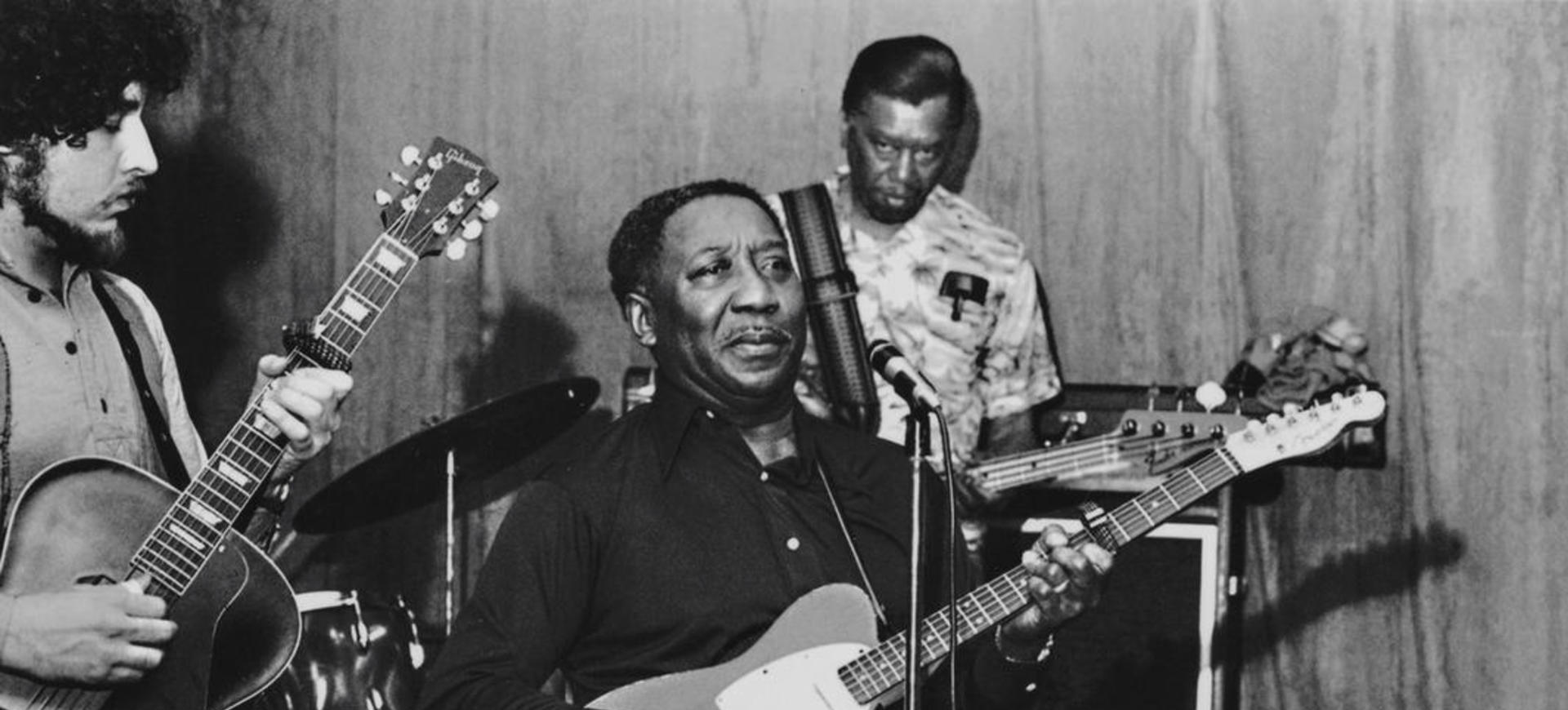
The Rock and Roll Hall of Fame and Museum will open a companion exhibit to this year’s American Music Masters series, Muddy Waters: Got My Mojo Working. Located in the circular gallery of the Ahmet Ertegun Exhibition Hall, the exhibit includes guitars, outfits, original recordings photographs and a timeline covering the career of one of the greatest electric blues artists.

Playing at the blues bars on Chicago’s South Side in the Forties, Muddy Waters assembled what, in retrospect, became the prototypical rock band. Playing electric guitar and singing in a raw, impassioned shouting style, Waters and a shifting company of stellar sidemen played hard-edged, unadulterated blues. His bands consisted of bass, drums, two guitars, piano and harmonica, and they had all the earmarks—in size, volume and attitude—of rock combos to come. Waters also created some of rock’s classic cover material: “Hoochie Coochie Man,” “I Just Want to Make Love to You,” “Got My Mojo Working.” In addition, he helped Chuck Berry get his deal with Chess Records and inadvertently provided the Rolling Stones with their name (lifted from the title of one of his songs).
Born McKinley Morganfield in 1915, Waters was dubbed Muddy by his grandmother, who reared him on the Stovall Plantation, near Clarksdale, Mississippi; his playmates added Waters. At age 10, he taught himself to play the harmonica; at 17, he ordered his first guitar from Sears and Roebuck. In 1941, folklorist Alan Lomax discovered Waters at the Stovall Plantation and recorded some of his songs for the Library of Congress. “I Be’s Troubled” and “Country Blues” were included on the Library’s folk anthology and revealed the influence of Delta bluesmen Robert Johnson and Son House.

In 1943, Waters left the Mississippi Delta for Chicago. There, the commingling of country traditions and new urban values was changing the shape of the blues. With the help of Big Bill Broonzy, Waters broke into the city’s thriving scene. For a while, he played behind John Lee “Sonny Boy” Williamson. A few years after taking up electric guitar in 1944, Waters recorded “I Can’t Be Satisfied” and “I Feel Like Going Home” for Leonard and Phil Chess’ Aristocrat label. Released in 1948, the songs became hits, prompting the Chess brothers to form Chess Records, which released Waters’ “Rollin’ Stone” as its second single.

Thanks largely to Waters, Chess became the premier blues label, attracting the country’s best musicians, who came looking for their own deals or the chance to work with Waters. He collaborated most notably with pianist Otis Spann, harmonica player Little Walter and guitarist Jimmy Rogers.

Waters released his first album, The Best of Muddy Waters, in 1958; the album was a collection of his hit singles. In 1960, he released Muddy Waters at Newport, which captured him and his high-voltage band at the top of their game. He delved back into his rural roots with an acoustic set, Muddy Waters Folk Singer. Throughout the rest of the Sixties and into the Seventies, Chess issued several albums by Waters. He left the label in the mid-Seventies and signed with Blue Sky. There, he made the highly acclaimed Hard Again with fan and collaborator Johnny Winter. By then, he was an acknowledged American folk hero. Martin Scorsese immortalized him on film in The Last Waltz, a documentary on the Band’s final concert, devoting six minutes to Waters’ performance of “Mannish Boy.” Jimmy Carter even asked Waters to play at one of his celebrated White House picnics.

Waters, who brought the soul of the South to the sound of the city, made his last public appearance as Eric Clapton’s guest at a June 1982 concert. Upon Waters’ death the next year, Clapton remarked to Rolling Stone magazine, “I felt so much love for him. I felt like he was my father and I was his adopted son...But I was in love with Muddy before I even met him. And that’s the great thing. His records will always be there.”

Exhibition Celebrations

September 18-24, 2000

The fifth annual American Music Masters Series celebrated blues legend Muddy Waters. Got My Mojo Working: Muddy Waters and Modern Blues included films, discussions, a day-long conference and performances.

The month-long celebration opened with films and performances at the Museum. The films included rare performances by Muddy Waters and documentaries followed, by commentary from directors and blues historians. Museum performances featured such local blues artists as Travis Haddix, Backlash with Frank “Silk” Smith, the Jimi Dyson Blues Band, Walkin’ Cane and the Relatively Jammin’ Blues Band.

Plugged In, the Museum’s official affiliate membership group, sponsored “My Home is in the Delta,” a panel discussion that also included live performances. Case Western Reserve University co-produced, with the Hall of Fame, a full-day conference on Muddy Waters and the blues.

The series ended with two weekend concerts. On Saturday, September 23, Muddy Waters’ House Party, at the Odeon Concert Club, showcased artists whose music and styles have been influenced by the master. An all-star concert at Severance Hall followed the next day. Admirers, followers and bandmates of Muddy Waters took the stage to honor the blues legend. One highlight from the evening was Paul Rodgers, backed by Deborah Coleman, Jon Cleary, Hubert Sumlin and Chris Layton and Tommy Shannon of Double Trouble doing songs from Rodgers’ album Muddy Waters Blues. But the most exciting moment was Bonnie Raitt leading the all-star cast of performers in a grand finale of “Got My Mojo Working.”


LaVern Baker's Blue And White Beaded Dress

Photo by Design Photography
Gift of LaVern Baker