Rock and Roll Hall of Fame and Museum

Aerosmith

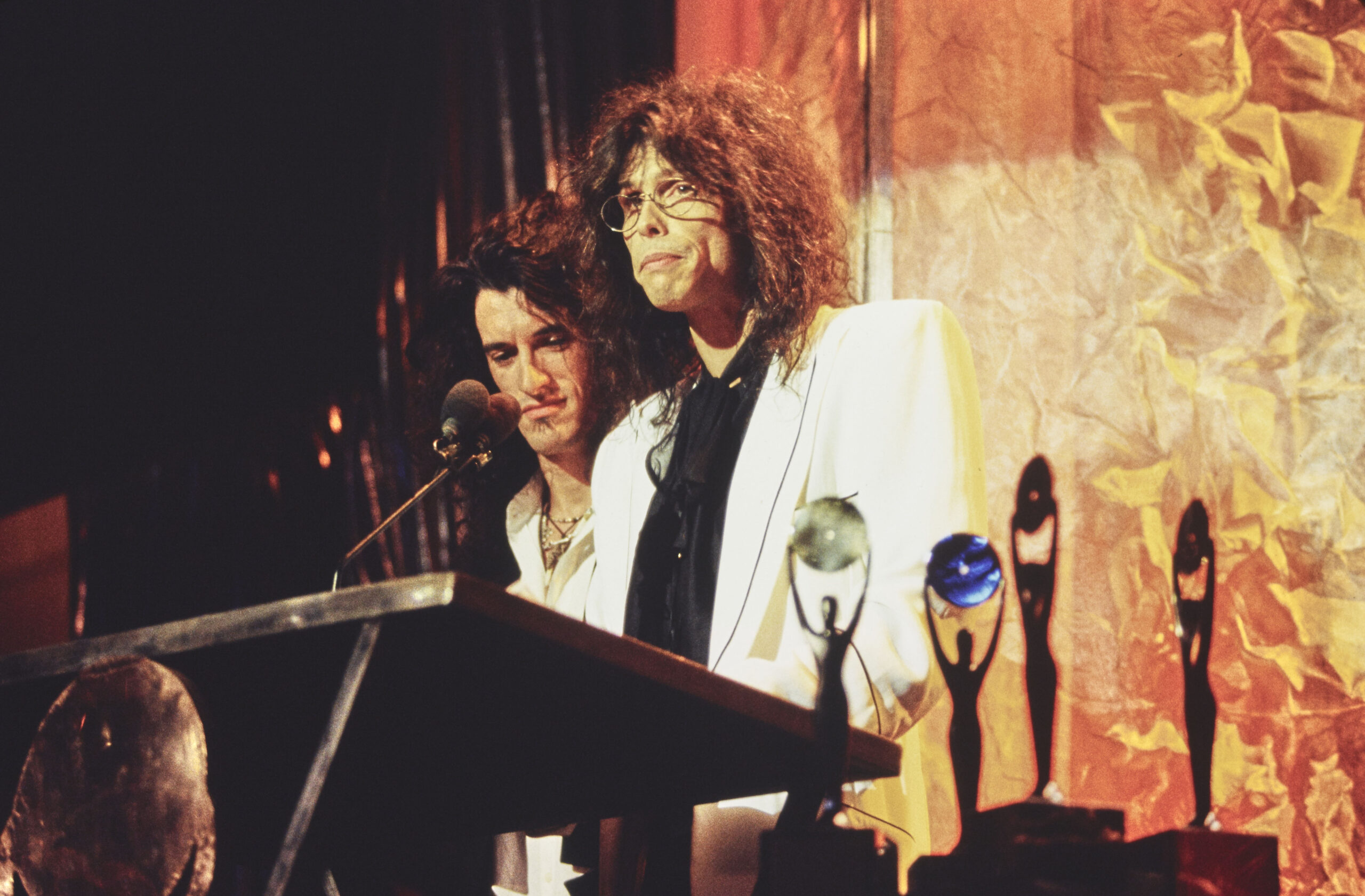
Induction Year: 2001

Induction Category: Performer


Inductees: Tom Hamilton (bass; born December 31, 1951), Joey Kramer (drums; born June 21, 1950), Joe Perry (guitar; born September 10, 1950), Steven Tyler (vocals; born March 26, 1948), Brad Whitford (guitar; born February 23, 1952)

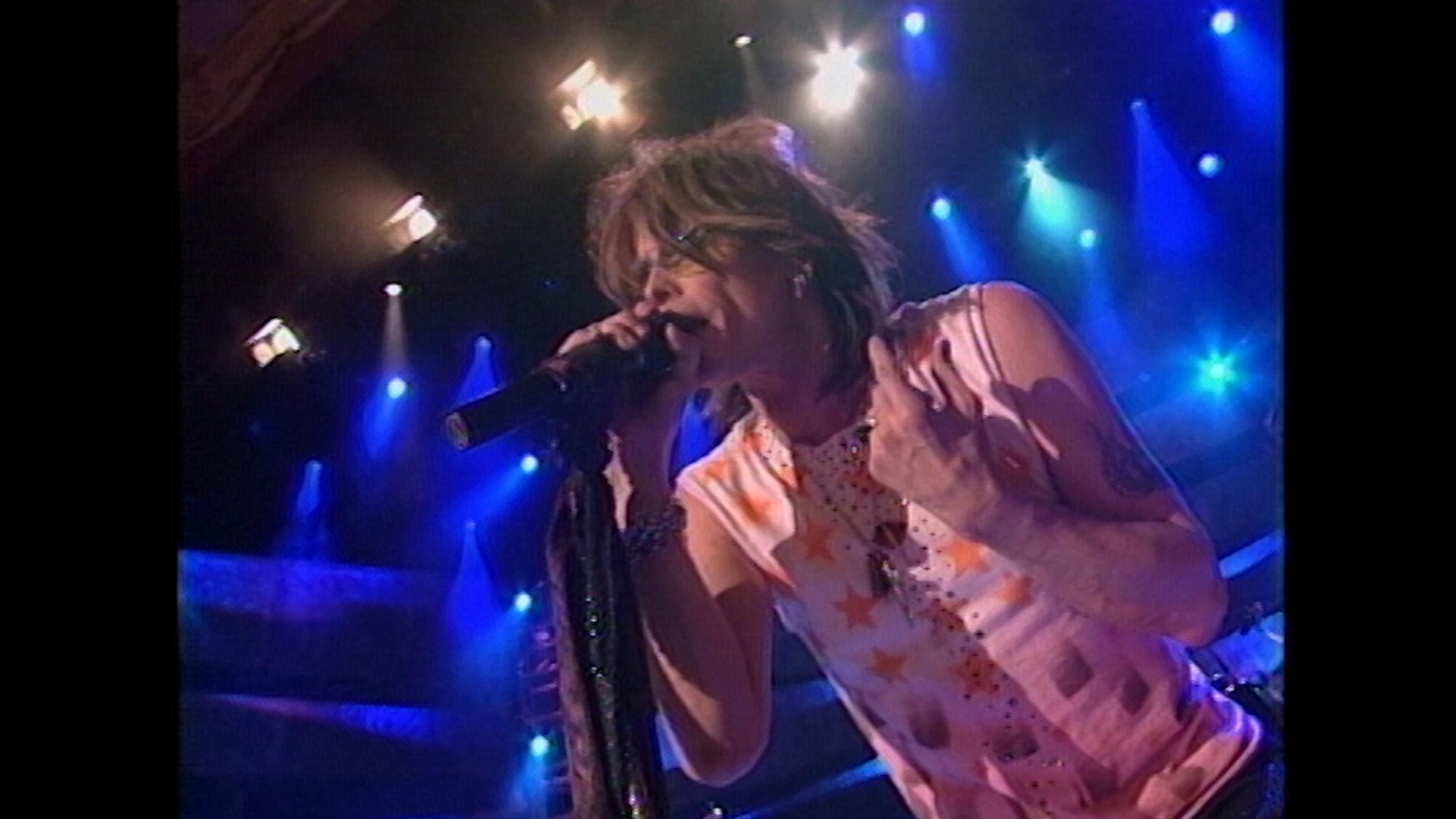
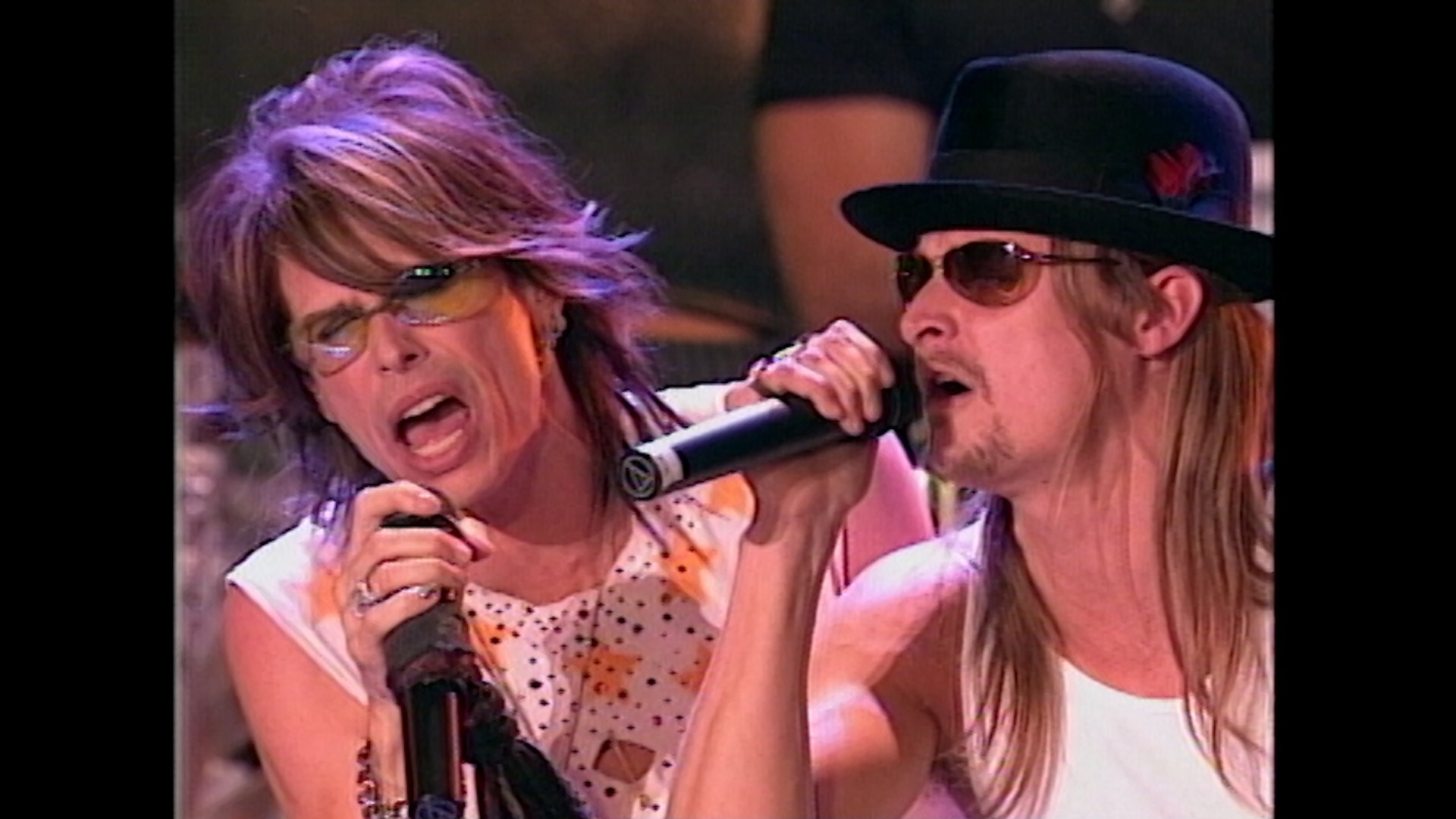
Aerosmith were America’s feisty retort to hard-rocking British groups like , , , , Deep Purple and . Almost alone among American bands, Aerosmith matched those British legends in power, intensity, and notoriety. Moreover, they’ve long since surpassed many of their influences in terms of longevity and popularity. In the words of vocalist Steven Tyler, “We weren’t too ambitious when we started out. We just wanted to be the biggest thing that ever walked the planet, the greatest rock band that ever was.”

“We were America’s band,” Joe Perry proclaimed with no false modesty. “We were the garage band that made it really big - the ultimate party band.” No less an authority than Jimmy Page has called them “the ideal rock and roll band.” Thirty years after forming, the “bad boys from Boston” remain a vital, ongoing force whose unshakable spirit and boundless energy virtually define rock and roll. Surviving shifting tastes and trends in popular music, Aerosmith has solidly epitomized the bedrock virtues and raucous magic that comes from a simple yet combustible recipe of guitars, bass, drums, vocals and attitude.

Aerosmith’s philosophy is best expressed by the flamboyant Tyler: “Kick ass and leave a footprint.” The group has left indelible footprints on the rock and roll landscape with such milestone albums as Toys in the Attic, Rocks and Pump and classic songs like “Dream On,” “Walk This Way,” and “Janie’s Got a Gun,” to name only a few. Aerosmith is built around the Jagger/Richards-style chemistry between singer Tyler and guitarist Perry, but group is a solid five-way proposition whose success would have been unthinkable without the solid musicianship of guitarist Brad Whitford, bassist Tom Hamilton and drummer Joey Kramer.

Appropriately, for a band that would dominate the Seventies rock scene, the Aerosmith saga began at the dawn of that decade in Sunapee, New Hampshire, a summer resort town. Steve Tyler (born Steven Tallarico), late of the bands Chain Reaction and William Proud, hooked up with guitarist Joe Perry and bassist Tom Hamilton, formerly of the Jam Band. Drummer Joey Kramer and guitarist Brad Whitford rounded out the lineup. They called themselves Aerosmith, an “imaginary band name” dreamed up and doodled on notebooks by Kramer in high school.

Aerosmith drew upon rock and roll tradition, evincing blues-based British Invasion influences. Yet they were flashier and more hard-hitting than their precursors, helping to draft a new blueprint for rock music in the brave new world of the Seventies. The liner notes to their self-titled debut album, released in 1973, describe them as “third-generation rockers with a desire to create something new.” Aerosmith contained unpolished hard-rock nuggets like “Make It” and “Mama Kin,” along with might well be rock’s first power ballad, “Dream On,” which found them sounding wise beyond their years. They followed with three strong albums of genre-defining rock music - Get Your Wings, Toys in the Attic and Rocks - that established them as America’s band in the Seventies. Toys in the Attic, their most solid effort of the decade, included the riff-driven classics “Walk This Way,” “Sweet Emotion” (Aerosmith’s first Top 40 hit), and the driving title track.

At this point in their career, Aerosmith made good on every boast implied by their music and image. Then things began unraveling for them. After being on top for much of the Seventies, Aerosmith nearly lost it all to substance abuse. “Our story was basically that we had it all and we pissed it all away,” says Joe Perry. Sessions for 1977’s Draw the Line were slowed due to the excesses of Tyler and Perry. Though that album had its share of strong tracks, including the title track, Aerosmith was beginning to sag under the weight of their collective addictions. Their contribution to the 1978 film Sgt. Pepper’s Lonely Heart’s Club Band, a sassy remake of the Beatles’ “Come Together,” proved to be the last time Aerosmith graced the Top Forty for nearly a decade. Tyler and Perry became known as “the Toxic Twins.” Aerosmith’s downward spiral accelerated with the hostile 1979 departure of Perry (replaced by Jimmy Crespo), a horrific 1980 motorcycle accident that sidelined Tyler for a year, and the 1981 exodus of Brad Whitford (replaced by Rick Dufay). Perry embarked upon a solo career, while Aerosmith moved from arenas to clubs.

The members of Aerosmith began mending their fences when Perry and Whitford showed up backstage after a February 1984 Aerosmith concert in Boston. They put the band back together, embarked on the lengthy “Back in the Saddle” tour, and signed with Geffen Records. Most important of all, exhibiting the dogged tenacity that’s typified their approach to music, the group members got clean and sober in 1987 and thereafter reclaimed their rock and roll throne with some of the most passionate and hard-hitting music of their career.

No group in rock history has ever engineered a Phoenix-like resurrection to rival Aerosmith’s remarkable recovery and rebound. Remarkably, their chart success from 1987 onward eclipsed their first rise to the top in the 1970s. Turning more towards power ballads without abandoning their hard-rocking base, Aerosmith conquered the music and video charts with such songs as “Angel,” “Love On an Elevator,” “Janie’s Got a Gun,” “Cryin’” and “Crazy” (which was voted the #1 All-Time Favorite Video by MTV viewers in 1994). In the early 1990s, they signed a contract worth $30 million that brought Aerosmith back home to Columbia Records. In 1998, they scaled another career milestone when “I Don’t Want to Miss a Thing” became their first #1 single.

Aerosmith released its 13th studio album, Just Push Play, in the spring of 2001. It came on the heels of a halftime Superbowl performance that found them joined by - and yielding no quarter to - youthful upstarts Britney Spears, N’Sync, Mary J. Blige and Nelly. It was another shot of career momentum for a band that refuses to roll over. Meanwhile, their canon of great music and reputation as an unbeatable live act continues to grow. Perhaps most notably, the same five musicians who came together as Aerosmith in 1970 are still together more than 30 years later, as their train keeps a-rolling with no end in sight.

TIMELINE

March 26, 1948: Steven Tyler of Aerosmith is born.

June 21, 1950: Joey Kramer of Aerosmith is born.

September 10, 1950: Joe Perry of Aerosmith is born.

December 31, 1951: Tom Hamilton of Aerosmith is born.

February 23, 1952: Brad Whitford of Aerosmith is born.

1970: Aerosmith comes together in Sunapee, New Hampshire, a summer resort.

January 13, 1973: Aerosmith’s self-titled debut is released. It contains the band staples “Dream On” and “Mama Kin.”

April 3, 1975: Aerosmith releases ‘Toys in the Attic,’ including the hit singles “Sweet Emotion” (#36) and “Walk This Way” (#10).

July 19, 1975: Aerosmith hits #36 with “Sweet Emotion”.

February 10, 1976: “Dream On,” from Aerosmith’s debut album, is re-released as a single and reaches #6.

August 7, 1976: Aerosmith hits #21 with “Last Child”.

September 30, 1978: Aerosmith hits #23 with “Come Together”.

October 10, 1978: Joe Perry and Steven Tyler of Aerosmith are injured in Philadelphia when a fan tosses a cherry bomb onstage.

October 3, 1980: Aerosmith’s ‘Greatest Hits’ collection is released. It remains their best-selling album to date, having sold 10 million copies.

February 14, 1984: Guitarists-in-exile Joe Perry and Brad Whitford attend Aerosmith’s show at Boston’s Orpheum. Afterward, they agree to put the original quintet back together.

November 3, 1985: The re-formed Aerosmith releases Done With Mirrors, the first of four studio albums for their new label, Geffen Records.

September 27, 1986: Run DMC hits #4 with their remake of Aerosmith’s “Walk This Way”.

October 16, 1986: Run-D.M.C.’s remake of “Walk This Way,” a collaboration with Aerosmith’s Steven Tyler and Joe Perry, enters the Top Forty. It becomes the first big rap-rock crossover hit, reaching #4.

November 12, 1987: “Dude (Looks Like a Lady)” becomes Aerosmith’s first Top Forty hit in nine years. Two more singles from ‘Permanent Vacation,’ the group’s first album since getting clean and sober, race up the charts: “Angel” (#3) and “Rag Doll” (#17).

April 30, 1988: Aerosmith hits #3 with “Angel”.

August 20, 1988: Aerosmith hits #17 with “Rag Doll”.

September 3, 1989: ‘Pump,’ the cornerstone album of Aerosmith’s post-sobriety renaissance, is released. It yields a bumper crop of hit singles: “Love in an Elevator” (#5), “Janie’s Got a Gun” (#4), “What It Takes” (#9) and “The Other Side” (#22)

October 28, 1989: Aerosmith hits #5 with “Love In An Elevator”.

November 3, 1991: ‘Pandora’s Box,’ a three-CD box set retrospective of Aerosmith’s years on Columbia (1973-1982), is released. The previous month, it was announced the Aerosmith had re-signed to Geffen Records in a deal worth $30 million.

June 5, 1992: Aerosmith hits #18 with “Living on the Edge”.

May 8, 1993: ‘Get a Grip,’ Aerosmith’s 11th studio album, debuts at #1. It goes on to sell 7 million copies in the U.S. and more than 10 million worldwide. It also ushers forth another quartet of hits: “Livin’ On the Edge” (#18), “Cryin’” (#12), “Amazing” (#24) and “Crazy” (#17).

October 8, 1993: Aerosmith hits #12 with “Cryin’”.

July 30, 1994: Aerosmith hits #17 with “Crazy”.

September 8, 1994: The 11th Annual “MTV Video Music Awards” airs live from New York’s Radio City Music Hall, after an eight-year absence from the Big Apple. Rosanne is the host and Aerosmith wins three awards, including “Video of the Year” for “Cryin’”.

March 7, 1998: Aerosmith hits #29 with “Pink”.

September 5, 1998: “I Don’t Want to Miss a Thing,” from the soundtrack to the film Armageddon, becomes Aerosmith’s first #1 hit. It holds down the top spot for a full month.

Essential Recordings


Walk This Way
Dream On
Sweet Emotion
Janie’s Got a Gun
Draw the Line
Back in the Saddle
Toys in the Attic
Dude (Looks Like a Lady)
Crazy
Love in an Elevator

Recommended Reading


Walk This Way: The Autobiography of Aerosmith
Aerosmith with Stephen J. Davis. New York: William Morrow and Co., 1999.

Aerosmith: The Fall and Rise of Rock’s Greatest Band
Martin Huxley. New York: St. Martin’s Press, 1995.

The Fall and Rise of Aerosmith
Mark Putterford with Chris Charlesworth (editor). London: Omnibus Press, 1997.

“Aerosmith: Inside Rock’s Longest-Running Dysfunctional Family Sitcom.”
Rob Sheffield. Rolling Stone (April 26, 2001): 40-45, 69+.


LaVern Baker's Blue And White Beaded Dress

Photo by Design Photography
Gift of LaVern Baker