Rock and Roll Hall of Fame and Museum

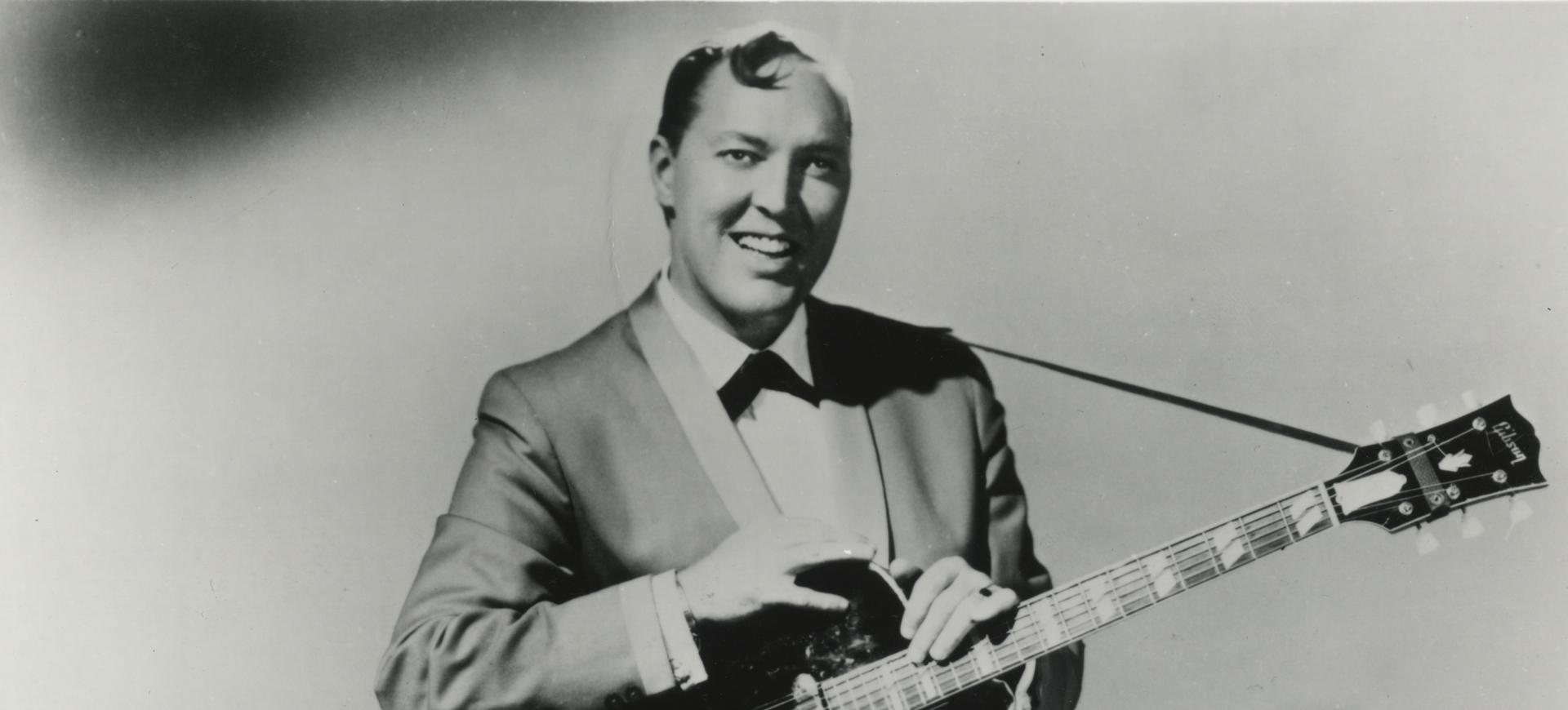
Bill Haley

Induction Year: 1987

Induction Category: Performer


Bill Haley (vocals, guitar; born July 6, 1925, died February 9, 1981)

In 1954 bandleader Bill Haley and His Comets recorded “Rock Around the Clock,” a rock and roll anthem that stayed at Number One for eight weeks and sold an estimated twenty-five million copies worldwide. “Rock Around the Clock” re-entered the British charts seven times, most recently in 1974.

If only for the impact of “Rock Around the Clock,” Haley would deserve a place in the Rock and Roll Hall of Fame. Yet his impact in the early days of rock and roll went well beyond that milestone. Two years earlier he’d put out “Crazy, Man, Crazy” an original amalgam of country and R&B that arguably became the first rock and roll record to register on Billboard’s pop chart. For most of the Fifties, Haley was a presence on the record charts, and he appeared in several rock and roll movies aimed at teenagers. It is estimated that Haley and His Comets have sold 60 million records worldwide. How important was “Rock Around the Clock”?

“Before it became a hit in summer 1955 - more than a year after it was recorded - rock ‘n’ roll was virtually an underground movement, something kids listened to on the sly,” wrote journalist Alex Frazer-Harrison. “This changed after ‘Rock Around the Clock.’ The music was everywhere.”

Haley has been called “the father of rock and roll” and “rock ‘n’ roll’s first star.” “We premiered it,” he told Rolling Stone in 1967. “We put country & western together with rhythm & blues, and that was rock. The first three years were ours, all ours, till [Elvis] Presley came along.” Haley argued that he even helped give rock and roll its name. Haley penned a song called “Rock-A-Beatin’ Boogie” - whose chorus went “Rock, rock, rock everybody/Roll, roll, roll everybody” - that was recorded by the Treniers in 1953 and adopted by disc jockey on his Cleveland-based Moondog radio show.

Haley broke into rock and roll via country and western music. He was a member of the Downhomers and musical director for the Saddlemen. The latter group had a regular radio show at a Chester, Pennsylvania, radio station. Haley brought different sounds into the Saddlemen’s repertoire in an attempt to blend “country and western, Dixieland and the old-style rhythm & blues.” In 1951, Haley cut a version of Jackie Brenston’s “Rocket 88”- arguably the first rock and roll record - which would make Haley’s cover “the first rock and roll recording by a white artist,” according to The Billboard Book of Number One Hits. In 1952, Haley and the Saddlemen released “Rock This Joint,” a rocked-up R&B song, on the Essex label. Decades later, writer Nick Tosches would single it out as “one of the first instances of a white boy really getting down to the art of hep.” By 1953, the group had changed its name to Bill Haley and His Comets and recorded the slang-filled “Crazy, Man, Crazy,” a bonafide rock and roll hit whose title derived from the teenage slang Haley picked up from performing at high schools. Haley and His Comets thereupon got signed to Decca Records. At their first session for Decca in 1954, they cut “Rock Around the Clock” (which had originally been recorded in 1952 by Sunny Dae and His Knights). The fast-fingered guitar solo was provided by session musician Danny Cedrone, who basically reprised the solo he’d contributed to Haley’s “Rock The Joint” two years earlier. In a sad irony, Cedrone died from a fall in July 1954, nearly a year before “Rock Around the Clock” took off.

Little attention was paid to “Rock Around the Clock” when it first appeared as the B side of “Thirteen Women” in May 1954. The group followed it with their cover version of Big Joe Turner’s “Shake, Rattle and Roll,” which cracked the Top Ten in July 1954 and sold a million copies. “Rock Around the Clock” got a second lease on life after being picked for the soundtrack to The Blackboard Jungle, a 1955 movie about high-school delinquency that generated controversy in the press and pandemonium among the young. In effect, “Rock Around the Clock” became an anthem for rebellious Fifties youth. It hung on the charts for nearly half a year and set sales records that have yet to be broken. The 1956 movie Rock Around the Clock, which featured nine lip-synched performances by Haley, made him a spit-curled star here and abroad. His celebrity was particularly long-lived in Britain, where he came to be regarded as rock and roll royalty. Haley had his third million-selling hit in 1956 with “See You Later, Alligator,” which had been an R&B hit for Bobby Charles the previous year. More hits followed in the same rocking vein - “R.O.C.K.” (#16), “The Saints Rock ‘n’ Roll” (#18), “Rip It Up” (#25), “Rudy’s Rock” (#34) and “Skinny Minnie” (#22) - although the ascent of took some of the wind out of the less charismatic Haley’s sails in the later Fifties.

The year 1962 was a disastrous one for Haley that saw the breakup of the Comets and his marriage, among other problems. Haley found steady work again when Sixties rock fans began discovering the music’s roots at events such as the highly successful “Rock ‘n’ Roll Revival” concerts, first staged by promoter Richard Nader in 1969. Haley’s career got more big lifts in the early Seventies. He re-recorded “Rock Around the Clock” in 1973, and it was this version that played over the opening credits for the popular TV show Happy Days. The original recording appeared on the 1974 soundtrack for American Graffiti and became a hit in the U.S. for the second time that year.
Saxophonist Rudy Pompilli - the longest-lived of Haley’s Comet of all, having been with him since the mid-Fifties - died in 1976. Haley himself, having spent much of the Seventies in failing health, gave his last performance in 1980 and died of a heart attack in 1981. He was 55 years old.

TIMELINE

July 6, 1925: William John Clifton Haley (a.k.a. Bill Haley) is born in Highland Park, Michigan.

June 1951: Bill Haley records a cover of Jackie Brenston’s “Rocket 88,” possibly qualifying it as the first rock and roll record by a white artist.

1952: Bill Haley records a rocking version of the R&B song “Rock This Joint,” which had been a theme song for disc jockey Jimmy Preston.

1953: Bill Haley records “Crazy, Man, Crazy,” one of the first times a performer incorporated teen slang into a popular song.

April 12, 1954: Bill Haley and His Comets record “Rock Around the Clock” at Pythian Temple, a New York studio.

May 10, 1954: “Rock Around the Clock” debuts as the B side of “Thirteen Women,” reaching #56.

November 11, 1954: “Shake, Rattle and Roll,” Bill Haley and the Comets’ cover of Big Joe Turner’s R&B hit, reaches #7.

July 9, 1955: “Rock Around the Clock,” by Bill Haley and His Comets, reaches Number One for the first of eight weeks.

October 20, 1955: and Bill Haley share a bill at a high school in Cleveland, Ohio.

December 12, 1955: Bill Haley and the Comets record “See You Later, Alligator,” the latest in a series of R&B covers. It will enter the Top Forty in January 1956 and peak at #6.

December 1956: Bill Haley and the Comets, , and embark on rock and roll’s first package tour, dubbed “Galaxy of the Stars.”

October 18, 1969: Bill Haley, , , , and others perform at a “Rock ‘n’ Roll Revival” concert at New York’s Madison Square Garden.

August 5, 1972: Bill Haley headlines the U.K.’s first Rock ‘n’ Roll Revival Show at London’s Wembley Stadium. Also on the bill are , , and .

May 25, 1974: “Rock Around the Clock” enters the U.S. charts for a second time.

March 1981: Bill Haley records his finals album, Everybody Can Rock ‘n’ Roll, in London and Muscle Shoals, Alabama.

February 9, 1981: Bill Haley dies of a heart attack at home in Harlingen, Texas.

February 24, 1982: “Rock Around the Clock,” by Bill Haley and His Comets, is inducted into the National Academy of Recording Arts and Science’s Hall of Fame at the Grammy Awards in Los Angeles.

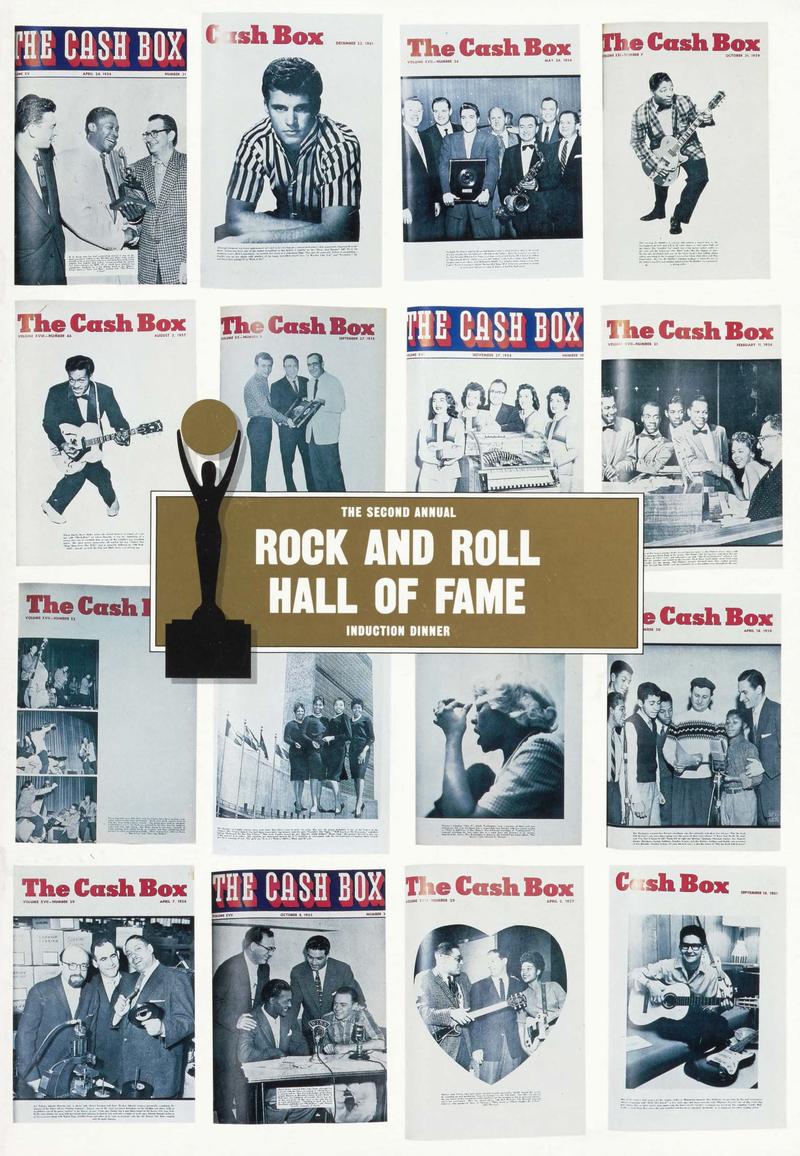
January 21, 1987: Bill Haley is inducted into the Rock and Roll Hall of Fame at the second annual induction dinner. is his presenter.

April 12, 2004: The 50th anniversary of “Rock Around the Clock,” by Bill Haley and the Comets, is marked in Europe - where Haley is still revered as a rock and roll pioneer – with radio and TV documentaries.

Essential Recordings

Rock Around the Clock
Shake, Rattle and Roll
See You Later, Alligator
Burn That Candle
Rock-A-Beatin’ Boogie
Birth of the Boogie
Razzle-Dazzle
R-O-C-K
Skinny Minnie
Two Hound Dogs

Recommended Reading

“Indisputably - The First.”
Colin Escott. Goldmine (April 19, 1991): 12-26+.

“Bill Haley: February 9th, 1981.”
Chet Flippo. Rolling Stone (March 19, 1981): 76.

“Bill Haley’s ‘Rock Around the Clock’ Brought Rock ‘n’ Roll to the Mainstream.”
Alex Frazer-Harrison. Goldmine (July 9, 2004): 14-20.

Sound and Glory: The Incredible Story of Bill Haley, the Father of Rock ‘n’ Roll and the Music That Shook the World.
John W. Haley. and John von Hoelle. Wilmington, DE: Dyne-American Publishing, 1990.

Bill Haley
John Swenson. London: W.H. Allen, 1983.


Otis Redding Plane Part, 1967.

Recovered from Madison, WI crash site 12/10/67.

Photo by Design Photography
Collection of the Rock and Roll Hall of Fame and Museum