Bill Monroe
Induction Year: 1997
Induction Category: Early Influence
Inductee: Bill Monroe (vocals, mandolin, guitar; born September 13, 1911, died September 9, 1996)
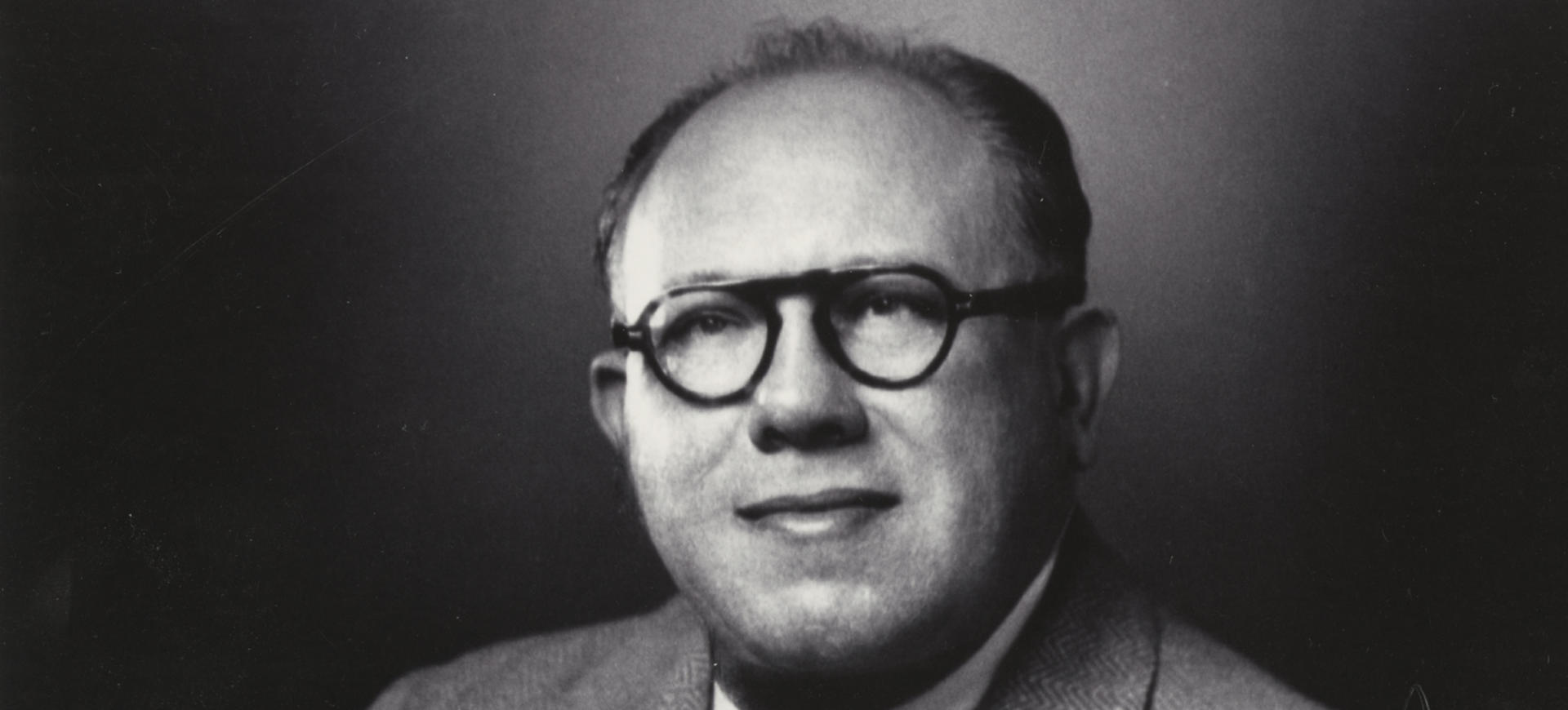
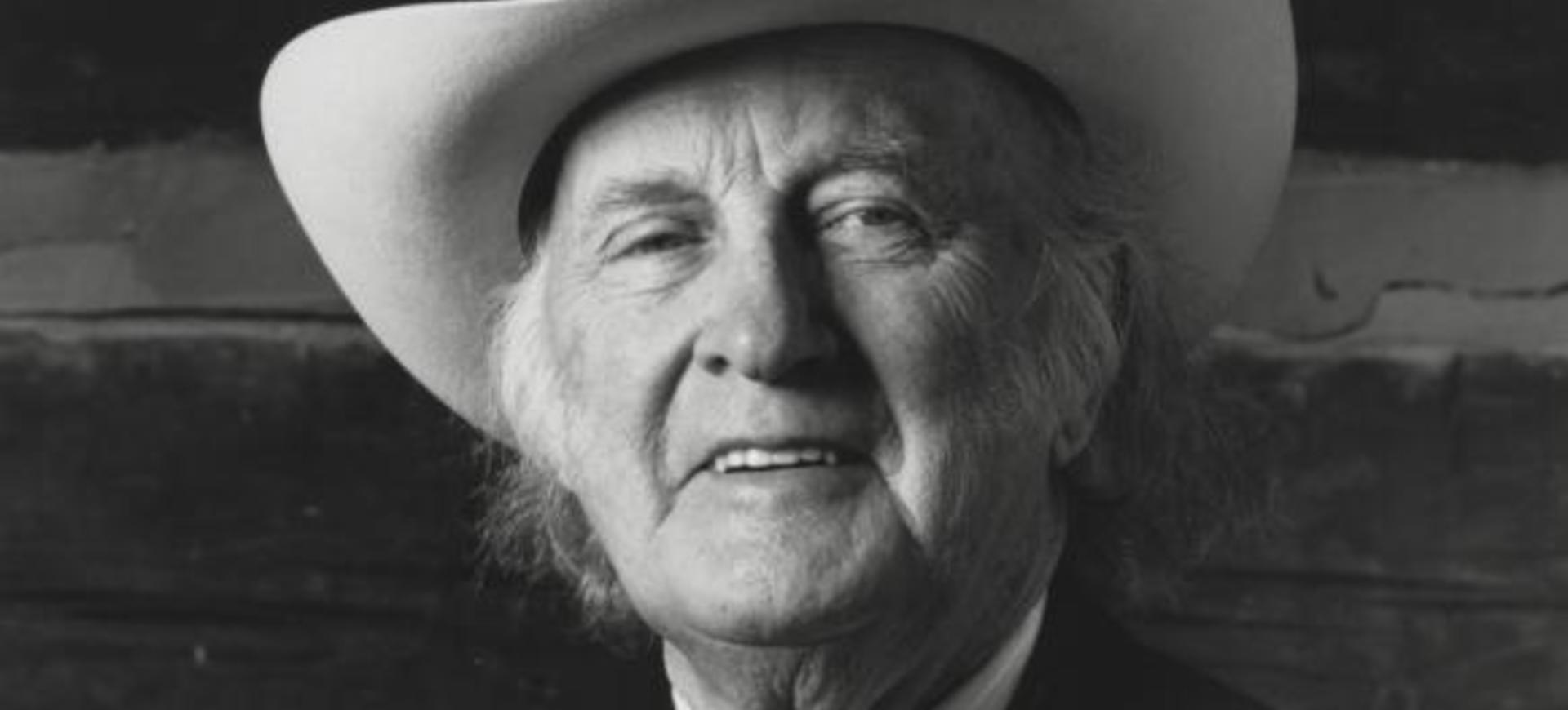
Musical pioneer Bill Monroe is known as “the father of bluegrass music.” While Monroe would humbly say, “I’m a farmer with a mandolin and a high tenor voice,” he and His Blue Grass Boys essentially created a new musical genre out of the regional stirrings that also led to the birth of such related genres as Western Swing and honky-tonk. From his founding of the original bluegrass band in the Thirties, he refined his craft during six decades of performing. In so doing, he brought a new level of musical sophistication to what had previously been dismissed as “rural music.” Both as ensemble players and as soloists, Monroe and his Blue Grass Boys upped the ante in their chosen genre much the way Duke Ellington’s and Miles Davis’s bands did in jazz. Moreover, the tight, rhythmic drive of Monroe’s string bands helped clear a path for rock and roll in the Fifties. That connection became clear when a reworked song of Monroe’s, “Blue Moon of Kentucky,” became part of rock and roll history as the B side of Elvis Presley’s first single for Sun Records in 1954. Carl Perkins claimed that the first words Presley spoke to him were, “Do you like Bill Monroe?”
Born on a farm near Rosine, Kentucky, in 1911, Monroe’s music reflected his rural upbringing and the musical inputs, both black and white, he absorbed while learning to play guitar and mandolin as a child. By age 12, he was performing at country dances with his uncle, Pendleton Vandiver (later immortalized as “Uncle Pen” in one of Monroe’s best-known songs). By 1932, Monroe and his two brothers were working as square dancers for a Midwestern rival of Nashville’s Grand Ole Opry. The Monroe brothers launched a radio show in 1934 and steadily built a following throughout the Midwest and South. Monroe went on to form the first incarnation of his Blue Grass Boys in 1938 and was hired as a regular performer on the Grand Ole Opry. The first recordings of Bill Monroe and His Blue Grass Boys were made in 1940 for the Bluebird label. He enjoyed a fruitful association with Columbia Records beginning in 1945.
At this time, he came into his own as a singer, songwriter, mandolin player, bandleader and musical revolutionary. from 1945 to 1948, Monroe’s Blue Grass Band existed in its classic lineup, which included now-legendary banjo player Earl Scruggs (whose three-finger style set the bluegrass standard) and guitarist Lester Flatt. The instrumental configuration of Monroe’s Forties quintet—mandolin, banjo, fiddle, guitar and standup bass—defined the standard lineup in bluegrass music as well
Monroe was a towering figure on the cultural landscape of the South by the early Fifties. His golden years as a songwriter lasted from the mid-Forties through the mid-Fifties, during which he authored a string of classics that form the basis of the bluegrass repertoire. The best of Monroe’s “true life” songs—so-named for Monroe’s “True Life Blues,” a haunted number that typified his frankness of feeling—possessed an emotional resonance reminiscent of Hank Williams. After the mid-Fifties, Monroe largely turned his attention to instrumentals, often showcasing double- and triple-fiddle harmonies. He described the music he made with these words: “It’s got a hard drive to it. It’s Scotch bagpipes and old-time fiddling.... It’s blues and jazz, and it has a high lonesome sound. It’s plain music that tells a story. It’s played from my heart to your heart, and it will touch you.”
The plaque commemorating Monroe’s induction into the Country Music Hall of Fame reads: “The Father of Bluegrass Music, Bill Monroe developed and perfected this music form and taught it to a great many names in the industry.” The list of musicians who have passed through Monroe’s band is a virtual who’s who of bluegrass and country music. They include Earl Scruggs, Lester Flatt, Carter Stanley, Sonny Osbourne, Vassar Clements and Ricky Skaggs. Of the term bluegrass, Monroe once mused, “There’s not a prettier name in the world.”
TIMELINE
September 13, 1911: William Smith Monroe (a.k.a. Bill Monroe) is born in Rosine, Kentucky.
1934: Bill and Charlie Monroe form the Monroe Brothers, a duet act that plays around the Midwest and Carolinas.
1936: The Monroe Brothers make their first recordings for the Bluebird label, an RCA subsidiary.
1938: After the Monroe Brothers part ways, Bill Monroe forms his own bands: the Kentuckians (in Little Rock, Arkansas) and then the Blue Grass Boys (in Atlanta, Georgia).
1939: Bill Monroe & His Bluegrass Boys make their first appearance on the Grand Ol’ Opry.
1945: Lester Flatt (guitar) and Earl Scruggs (banjo) join Bill Monroe and His Blue Grass Boys. After a three-year stint, they leave in 1948 to form their own group, the Foggy Mountain Boys.
1951: Bill Monroe sets up a “country park” in Bean Blossom, Indiana, which becomes the site of bluegrass festivals.
1963: Bill Monroe performs at the Newport Folk Festival, bringing his music to a younger audience.
1970: Bill Monroe is elected to the Country Music Hall of Fame.
1985: The album ‘Bill Monroe and Friends’—featuring folk and country stars like Johnny Cash, Willie Nelson and Emmylou Harris—is released.
1991: ‘Cryin’ Holy Unto the Lord’, a gospel album by Bill Monroe, is released on MCA the same year the bluegrass icon turns 80.
1993: Bill Monroe receives a Lifetime Achievement Award from the National Association of Recording Arts and Sciences at the Grammy Awards.
1995: Bill Monroe receives the National Medal of the Arts from President Bill Clinton.
September 9, 1996: Four days shy of his 85th birthday, Bill Monroe dies in Springfield, Tennessee. He had suffered a stroke the previous April.
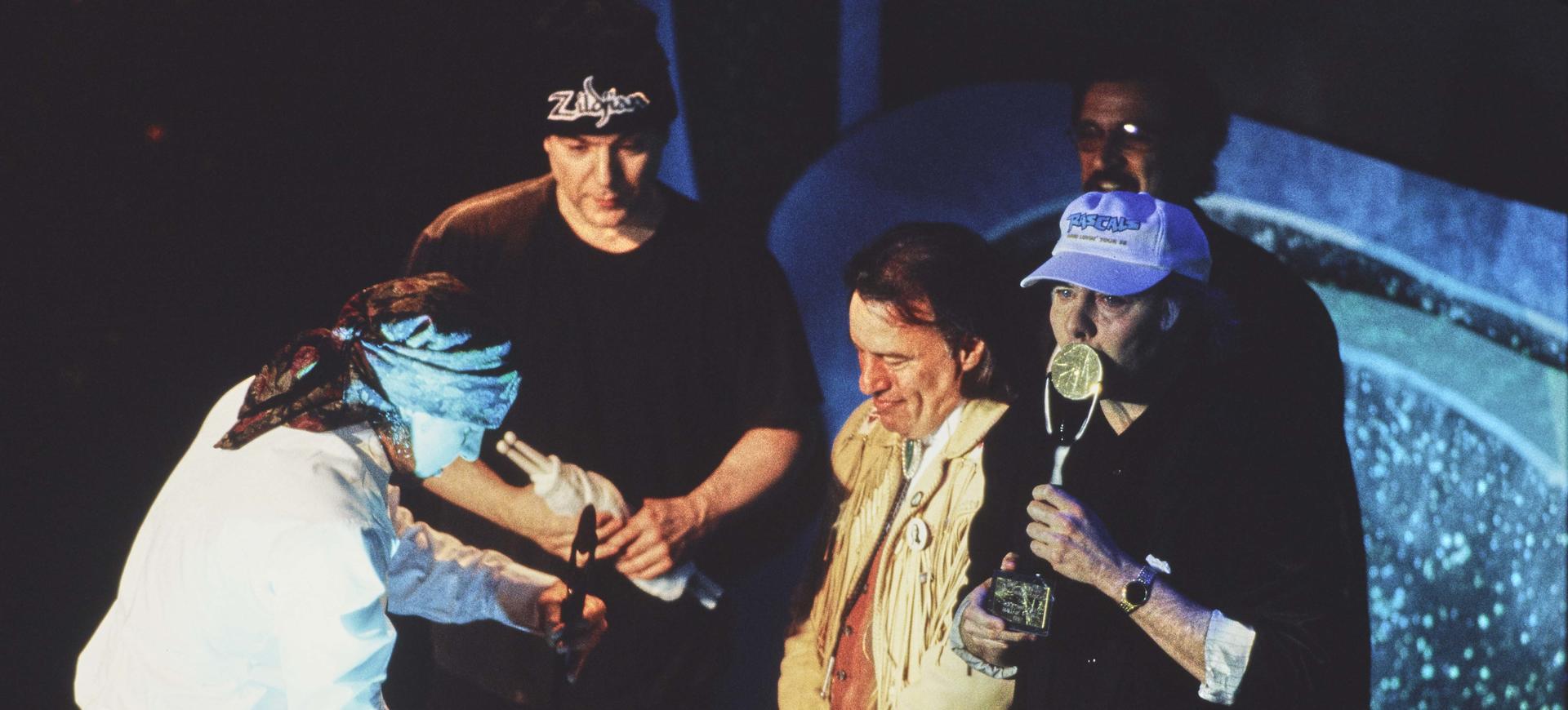
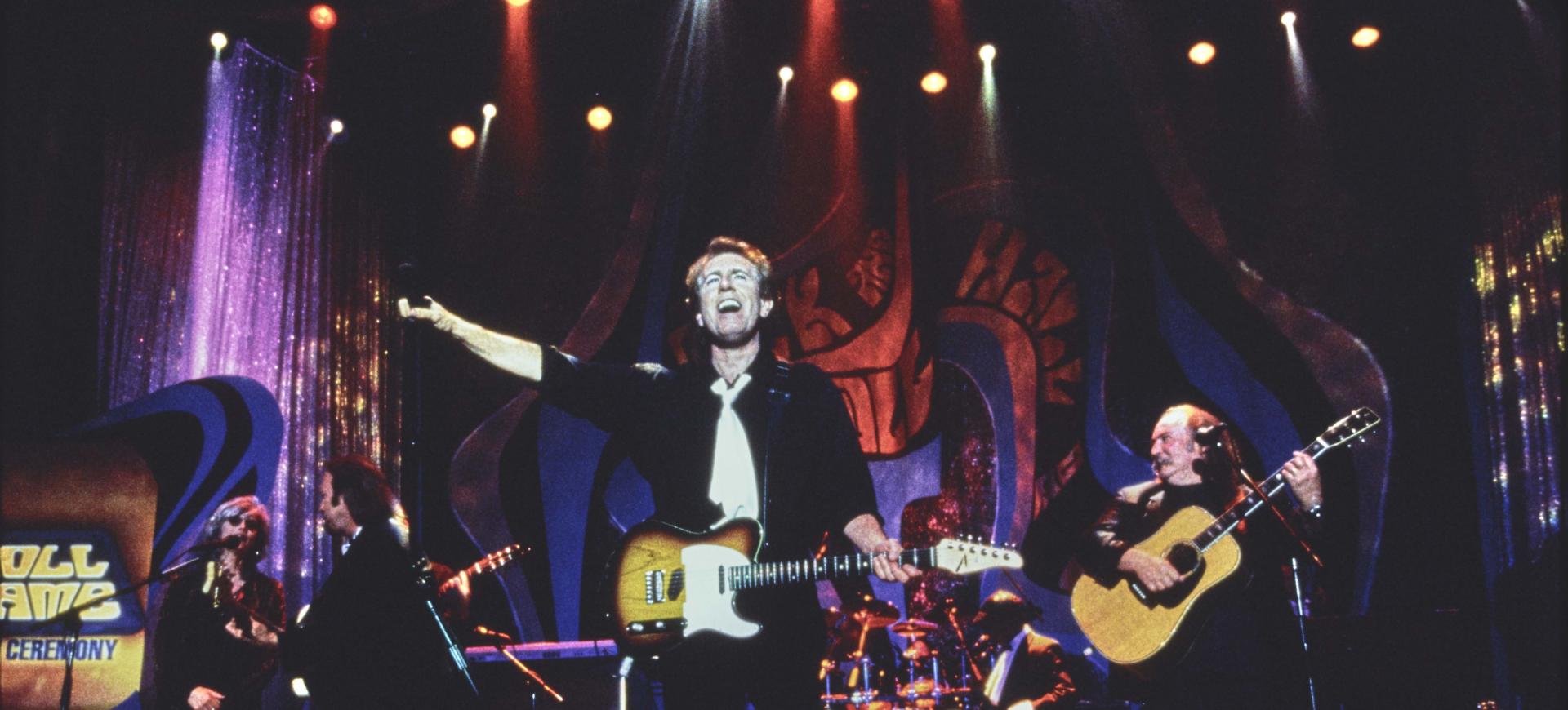
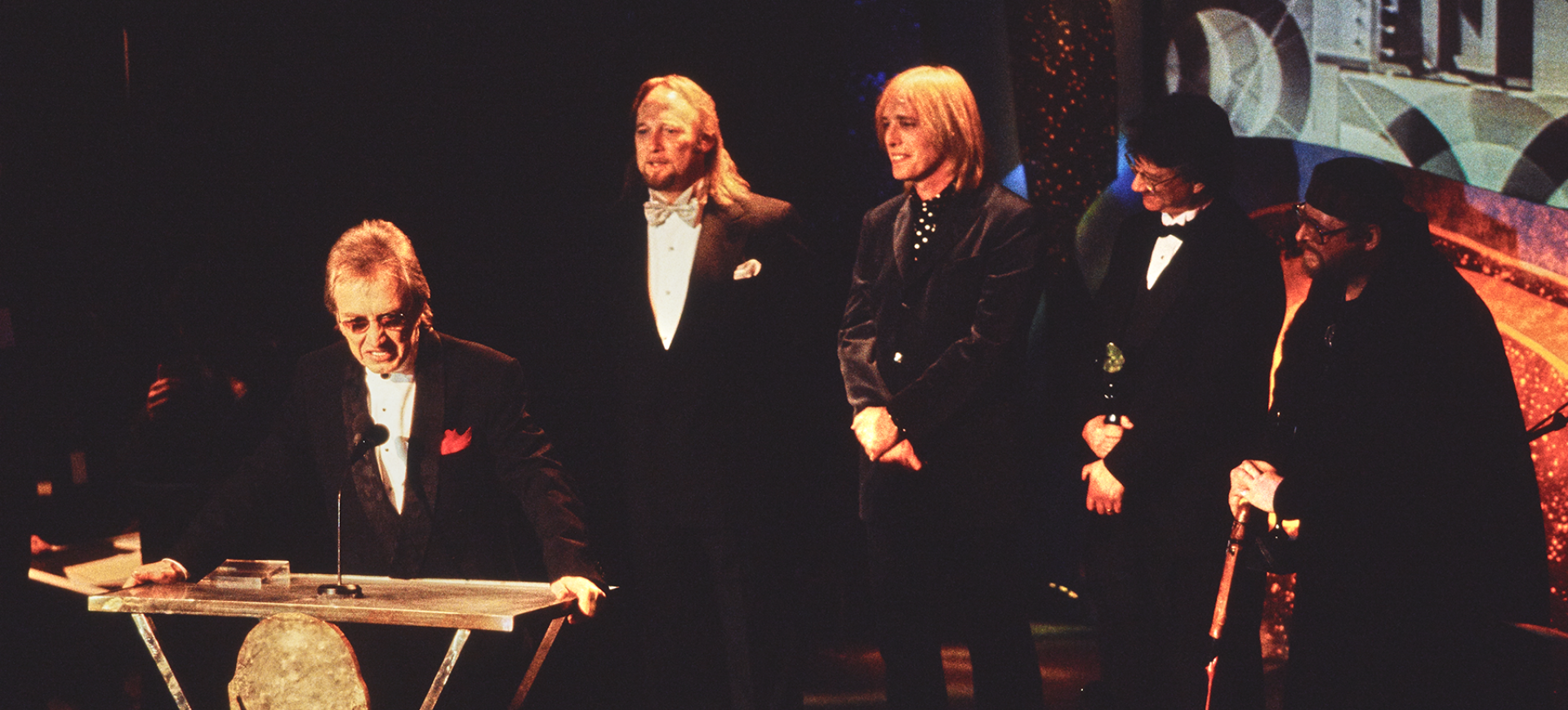
May 6, 1997: Bill Monroe is inducted into the Rock and Roll Hall of Fame at the twelfth annual induction dinner. Ricky Skaggs and Emmylou Harris are his presenters.
Essential Songs
Blue Moon of Kentucky
Uncle Pen
Mule Skinner Blues
Kentucky Waltz
Footprints in the Snow
True Life Blues
I’m Sitting On Top of the World
Blue Grass Special
My Sweet Blue Eyed Darlin’
I’m Working On a Building
Recommended Reading
Bluegrass Breakdown: The Making of the Old Southern Sound
Robert Cantwell. Urbana, IL: University of Illinois Press, 1984.
The Bill Monroe Reader
Tom Ewing. Urbana, IL: University of Illinois Press, 2000.
Bossmen: Bill Monroe and Muddy Waters
James Rooney. New York: Doubleday, 1971.
Can’t You Hear Me Callin’: The Life of Bill Monroe, Father of Bluegrass
Richard D. Smith. New York: Little, Brown & Co., 2000.