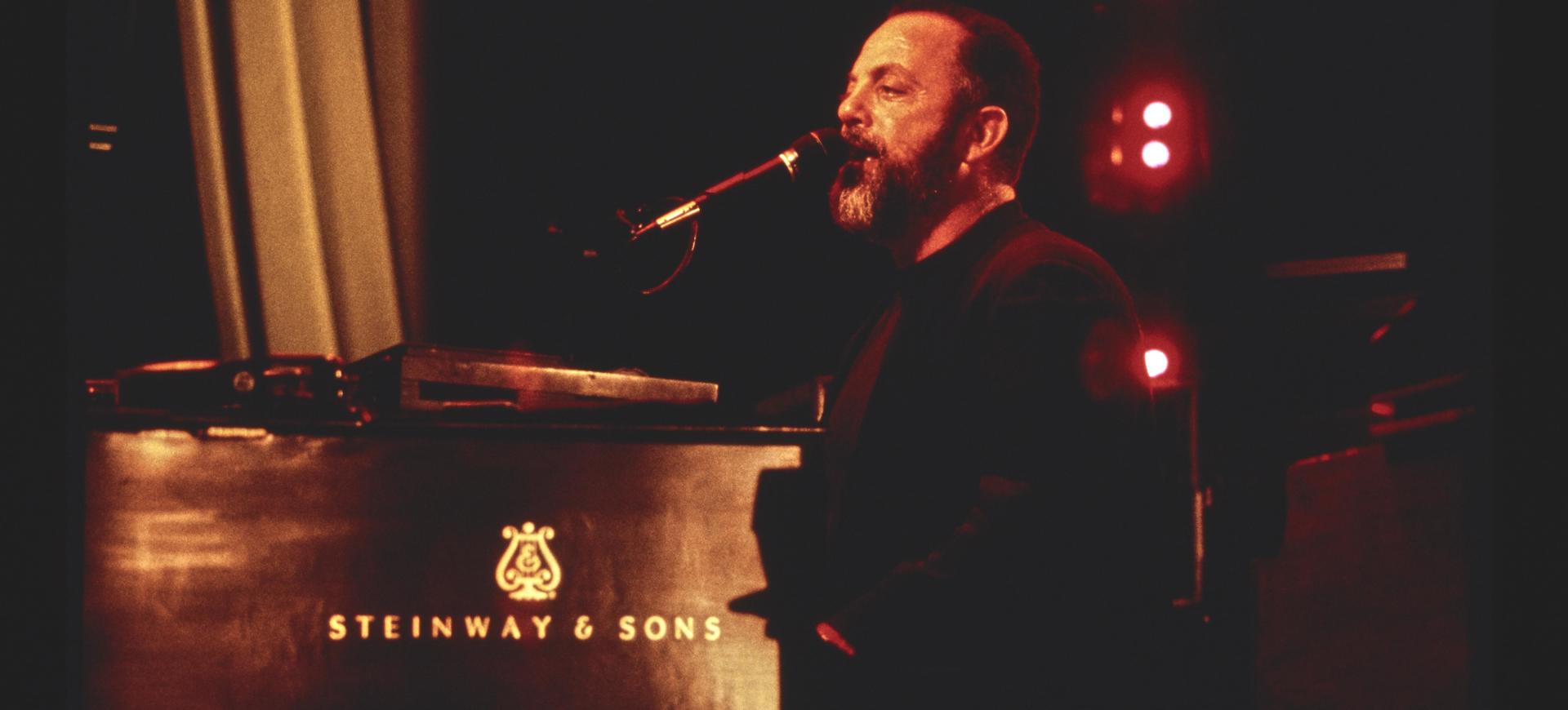
Billy Joel
Induction Year: 1999
Induction Category: Performer
"Inductee: Billy Joel (piano, vocals; born 5/9/49)
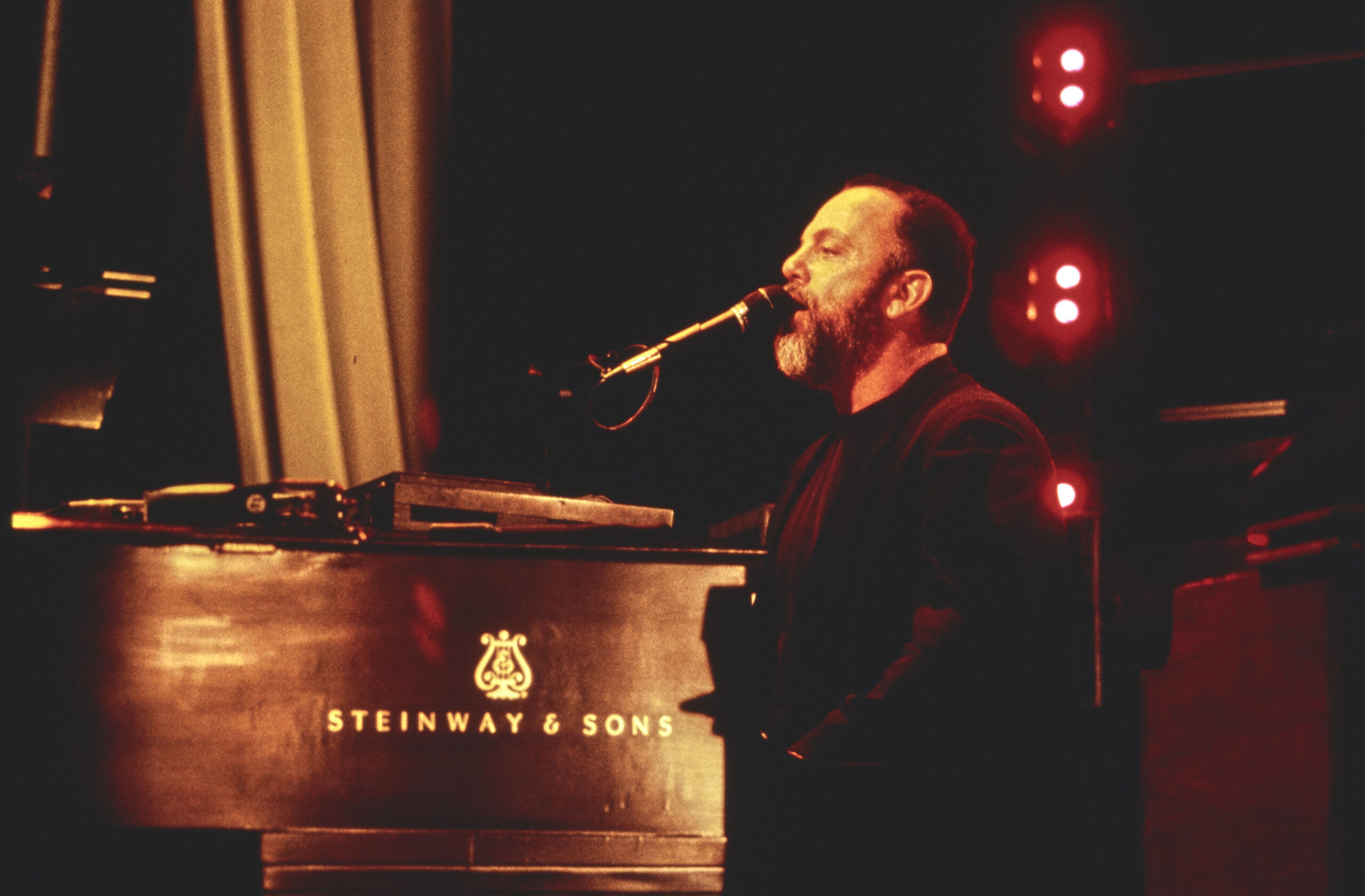
Billy Joel ranks among rock and roll’s most talented musicians and accomplished songwriters. His classical training and reverence for Broadway musicals have been counterpointed by his early grounding in the Long Island bar-band scene and his love of rhythm & blues, resulting in an enthusiastic yet musically sophisticated approach to rock and roll. His diverse influences include Beethoven, the Beatles, Dave Brubeck, George Gershwin, Phil Spector, Ray Charles and Fats Domino, whom Joel inducted into the Hall of Fame in 1986. From romantic balladry to hard-rocking material, with elements of jazz, pop and soul thrown into the mix, Joel has applied his skills in a diversity of settings. He is the pop crooner of “Piano Man” and the jazz-tinged romantic of “Just the Way You Are.” Yet he’s also capable of harder-rocking fare (Glass Houses), production-heavy pop with a Sixties influence (The Nylon Curtain) and vocal-group soul and doo-wop (An Innocent Man).
As an artist, Joel has stated that his goal is to make music that “meant something during the time in which I lived...and transcended that time.” Joel’s popularity is such that he tied the Beatles for the most multi-platinum albums in the U.S. With the success of “Piano Man"-a slice-of-life autobiography, written about Joel’s extended gig as a lounge pianist-Joel inaugurated a staggering run of hit singles. Between 1974 and1993, Joel placed at least one single in the Top Forty in every year but three. To date, 13 of Joel’s 33 hits have made the Top Ten, and three of them-"It’s Still Rock and Roll to Me” (1980), “Tell Her About It” (1983) and “We Didn’t Start the Fire” (1989)-reached #1.
Billy Joel was born on May 9, 1949, in the Bronx. He displayed an early aptitude on the piano and began taking lessons at four. The training continued till he was sixteen, by which time Joel was already a veteran of three bands. In 1967, Joel joined the Hassles, a popular Long Island group that played blue-eyed soul with a twist of psychedelia. Gravitating back to the acoustic piano during the early stirrings of the Seventies singer-songwriter movement, Joel recorded Cold Spring Harbor, his debut as a solo artist. In a self-penned bio included with review copies, Joel wrote: “After seven years of trying to make it as a rock star, I decided to do what I always wanted to do-write about my own experiences.”
After the album flopped, Joel dropped out of sight, working as a lounge pianist in Los Angeles. He immortalized that experience in “Piano Man,” which served as the title track from his first album for Columbia Records. (He remains with the label to this day). His next album, Streetlife Serenade (1974), included “The Entertainer,” a withering portrait of the music industry. On Joel’s third album, the self-produced Turnstiles (1976), the singer/pianist stretched himself as a songwriter and stylist on a varied set that ranged from the Brill Building pop of “Say Goodbye to Hollywood” to the cabaret-styled tribute to his home turf, “New York State of Mind.” Joel made his commercial breakthrough with The Stranger, a hit-studded album that surpassed Simon and Garfunkel’s Bridge Over Troubled Water as the top-selling album in Columbia’s history (until Bruce Springsteen’s Born in the U.S.A. displaced it in the Eighties). With its jazzy sheen and compositional cunning, Joel hit his stride on The Stranger, which yielded “Just the Way You Are,” “Movin’ Out (Anthony’s Song)” and the suite-like “Scenes from an Italian Restaurant.” Its followup, 52nd Street, produced another round of hits, including the hard-rocking “Big Shot.”
Beneath their fluid, polished surface, Joel’s songs teem with a New Yorker’s brashness. Joel had boxed with his fists as a teenager and, on occasion, with his songs as an adult-no more so than on 1980’s Glass Houses. Its chart-topping first single, “It’s Still Rock and Roll to Me,” rebutted punk and New Wave acts who’d taken potshots at perceived old-wavers like Joel. This further inflamed a war of words with his detractors in the rock press. However, the critics came around to Joel’s corner on the strength of such albums as The Nylon Curtain, which couched social themes in ornate pop productions inspired by the late-period Beatles, and An Innocent Man, his fond tribute to the doo-wop era. Greatest Hits Volume 1 & Volume 2, a double album that collected his singles, became Joel’s seventh consecutive Top Ten album.
Joel further refined his craft on The Bridge (1986) and Storm Front (1989)-mature later works on which he assimilated various genres into a cohesive personal style. Joel’s historic tour of the Soviet Union in 1987 resulted in a live album and video. Joel also turned a history lesson into a hit single with his rapid-fire recitation of 20th-century names and places in “We Didn’t Start the Fire,” from Storm Front. Both single and album reached #1, as Joel’s superstar status remained unabated despite ongoing shifts in musical trends. His marriage to and divorce from model Christie Brinkley, along with various business-related lawsuits, raised his profile as a celebrity and newsmaker. In 1993, Joel released River of Dreams, his first album of new material in four years, which entered Billboard‘s album chart at #1.
Subsequently, Joel has toured with Elton John and on his own. He also has lectured on college campuses, released Greatest Hits Volume III and composed instrumental pieces in a classical vein. Joel has remained in a state of semi-retirement as a pop songwriter and recording artist since River of Dreams. Meanwhile, worldwide sales of his back catalog topped the 100 million mark in 1999. Joel closed out the century with a gala Millennium Eve concert at New York’s Madison Square Garden.”
TIMELINE
May 9, 1949: William Martin Joel is born in The Bronx, New York.
1967: Billy Joel leaves his first rock group, the Lost Souls, to join the Hassles. One of the most popular bar bands on Long Island, the Hassles record two albums for United Artists: ‘The Hassles’ (1967) and ‘Hour of the Wolf’ (1969).
July 1, 1970: Attila, a keyboard-drums duo comprising Billy Joel and Hassles drummer Jon Small, release their obscure self-titled album on Columbia Records.
November 1, 1971: ‘Cold Spring Harbor’, Billy Joel’s debut as a solo artist, is issued on the Family Productions label, a Paramount subsidiary. It didn’t chart until being remixed and re-released by Columbia Records in 1984.
December 1, 1972: Having moved to the West Coast, a dispirited Billy Joel begins a six-month stint as a lounge pianist under the name Bill Martin. He encapsulates the experience in a song that will serve as his creative and commercial breakthrough, “Piano Man.”
May 1, 1973: Pursued by Clive Davis shortly before the latter’s firing, Billy Joel signs to Columbia Records. He writes his first album in Malibu that fall.
April 6, 1974: Billy Joel’s “Piano Man” enters the ‘Billboard’ singles chart. It is the first in a string of Top Forty hits that numbers 33, to date.
January 1, 1975: Billy Joel hits #34 with “The Entertainer.”
May 1, 1976: ‘Turnstiles’, Billy Joel’s ambitious fourth album, offers a brace of FM radio and concert favorites: “New York State of Mind,” “Summer, Highland Falls” and “Say Goodbye to Hollywood.”
September 1, 1977: ‘The Stranger’, which inaugurates a ten-year association between Billy Joel and producer Phil Ramone, is released. This milestone makes a superstar of Billy Joel and launches four hit singles: “Just the Way You Are” (#3), “Movin’ Out (Anthony’s Song)” (#17), “Only the Good Die Young” (#24) and “She’s Always a Woman” (#17). It is certified platinum in January 1978.
November 1, 1978: ‘52nd Street’ tops the Billboard album chart—a first for Billy Joel. He also finds success on AM radio with the singles “My Life” (#3), “Big Shot” (#14) and “Honesty” (#24).
February 15, 1979: “Just the Way You Are” by Billy Joel wins Grammies for Record of the Year and Song of the Year.
February 27, 1980: ‘52nd Street’ wins Grammies for Album of the Year and Best Pop Vocal Performance, Male. Beginning in March, Glass Houses, Billy Joel’s sixth album, tops the album chart for six weeks that spring and launches his first #1 single, “It’s Still Rock and Roll to Me.”
July 13, 1980: It’s Still Rock and Roll To Me (Billy Joel) was a hit.
April 15, 1982: Billy Joel is hospitalized for a month after the motorcycle he’s riding is broadsided by a car on Long Island. Despite multiple fractures of the left hand, the pianist returns to work on ‘The Nylon Curtain’. The lushly produced concept album about America’s “diminishing horizons” is released in July.
1983: Billy Joel reaches #3 with “Uptown Girl”.
July 1, 1983: ‘An Innocent Man’, Billy Joel’s homage to the early rock and roll and doo-wop music that he grew up with, is released. It yields a staggering half-dozen Top Forty hits, including Billy Joel’s second #1 single, “Tell Her About It.”
September 18, 1983: Tell Her About It (Billy Joel) was a hit.
1984: Billy Joel reaches #14 with “The Longest Time”.
July 1, 1985: Billy Joel’s ‘Greatest Hits, Volume I & Volume II’ is released. By 1999, the hit-filled double album will have surpassed 10 million in sales, earning the RIAA’s Diamond Award.
July 1, 1987: Taking advantage of ‘Glasnost’, a new policy of cultural exchange between U.S. and the U.S.S.R., Billy Joel becomes the first American rock star to tour Russia with a fully staged show. ‘Kohuept’, a double live album recorded in Leningrad, is released in October.
September 1, 1989: “We Didn’t Start the Fire” is released as the leadoff single from Storm Front, and the catchy tune-cum-history-lesson becomes Billy Joel’s third #1 hit.
June 22-23, 1990: Billy Joel is the first rock act to perform at New York’s Yankee Stadium, selling out the 100,000+ sports venue for back-to-back shows. A concert video, ‘Live at Yankee Stadium’, is culled from the shows.
August 1, 1993: ‘River of Dreams’, Billy Joel’s 12th studio album, is released. Featuring a cover painted by then-wife Christie Brinkley, it yields hits in “All About Soul” and the title track.
July 13, 1994: Elton John and Billy Joel team up for a joint tour for the first time. The union of two piano-playing rock and roll superstars virtually guarantees sellouts.
December 7, 1994: Billy Joel is given Billboard’s Century Award.
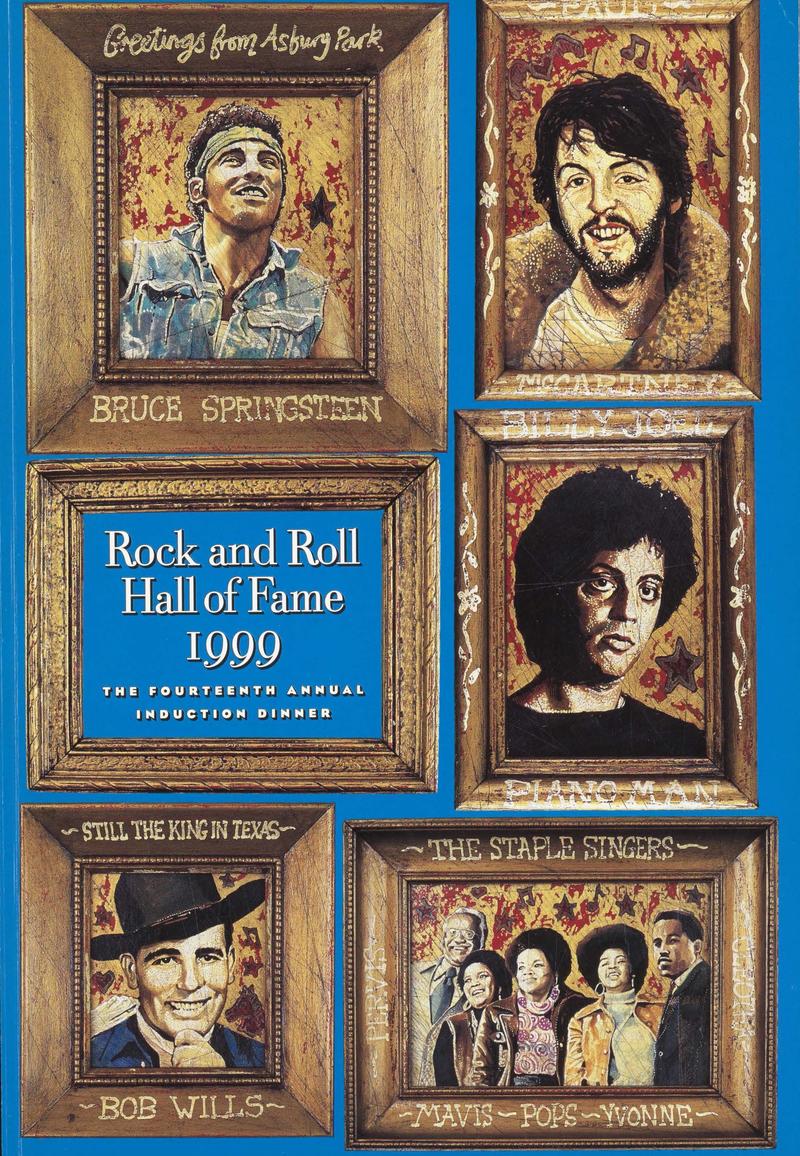
March 15, 1999: Billy Joel is inducted into the Rock and Roll Hall of Fame at the fourteenth annual induction dinner. Ray Charles is his presenter.
December 31, 1999: Billy Joel and band perform in New York on Millennium Eve at a sold-out Madison Square Garden. The show is released in May 2000 as 2000 Years —The Millennium Concert.
Essential Recordings
Piano Man
Scenes from an Italian Restaurant
New York State of Mind
River of Dreams
Say Goodbye to Hollywood
Allentown
Uptown Girl
Just the Way You Are
We Didn’t Start the Fire
It’s Still Rock and Roll to Me
Recommended Reading
Billy Joel: Keeping the Faith
William Ruhlmann. Goldmine (January 7, 1994): 16-52.
Billy Joel: All About Soul
Richard Scott. New York: Vantage Press, 2000.
Billy Joel Is Angry: The Rolling Stone Interview.
Timothy White. Rolling Stone (September 4, 1980): 37-40.