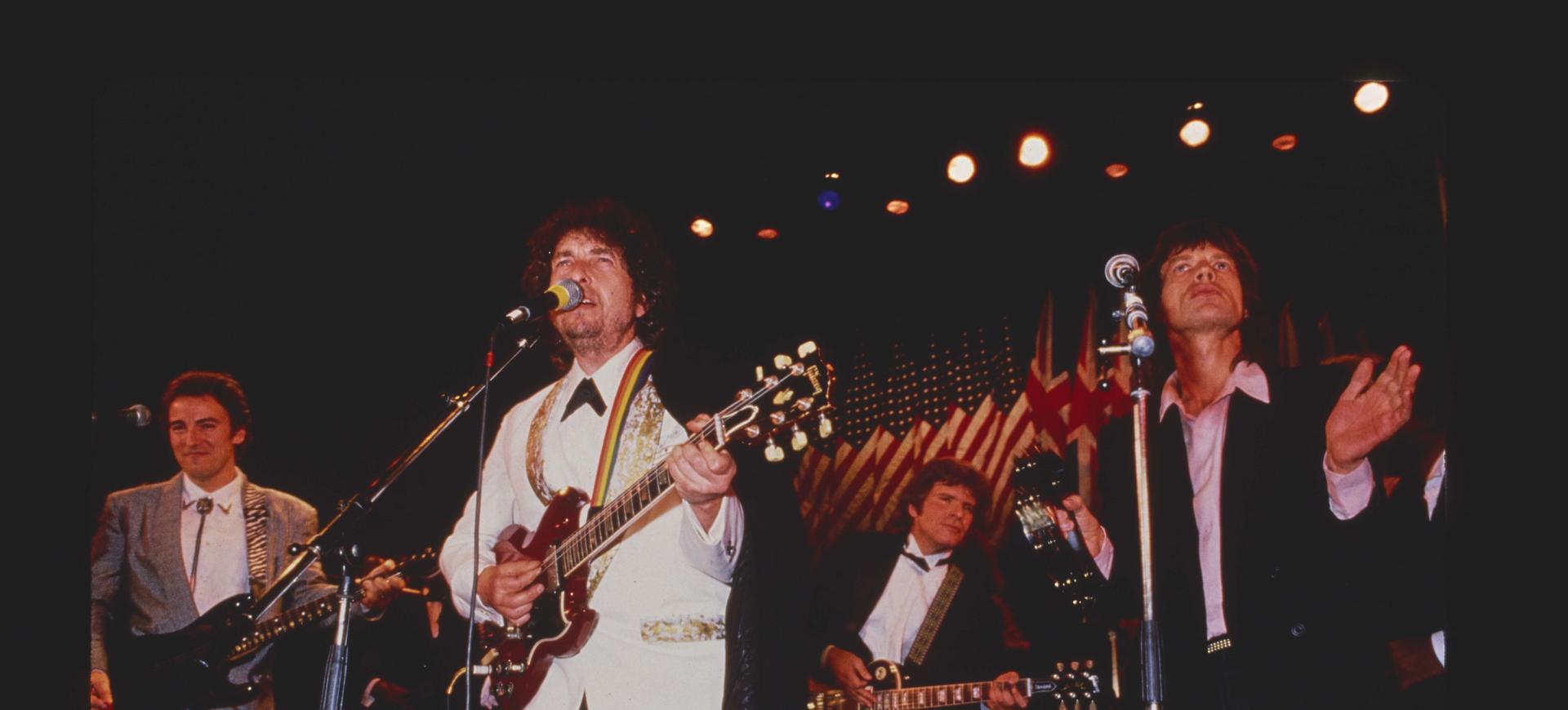
Bob Dylan
Induction Year: 1988
Induction Category: Performer
Bob Dylan (vocals, guitar, keyboards, harmonica; born May 24, 1941)
Bob Dylan is the uncontested poet laureate of the rock and roll era and the pre-eminent singer/songwriter of modern times. Whether singing a topical folk song, exploring rootsy rock and blues, or delivering one of his more abstract, allegorical compositions, Dylan has consistently demonstrated the rare ability to reach and affect listeners with thoughtful, sophisticated lyrics.
Dylan re-energized the folk-music genre in the early Sixties; brought about the lyrical maturation of rock and roll when he went electric at mid-decade; and bridged the worlds of rock and country by recording in Nashville throughout the latter half of the Sixties. As much as he’s played the role of renegade throughout his career, Dylan has also kept the rock and roll community mindful of its roots by returning to them. With his songs, Dylan has provided a running commentary on our restless age. His biting, imagistic and often cryptic lyrics served to capture and define the mood of a generation.
For this, he’s been elevated to the role of spokesmen - and yet the elusive Dylan won’t even admit to being a poet. “I don’t call myself a poet because I don’t like the word,” he has said. “I’m a trapeze artist.”
Bob Dylan was born Robert Zimmerman on May, 24th, 1941, in Duluth, Minnesota and grew up in the iron-mining town of Hibbing. He learned to play harmonica and piano by age ten and was a self-taught guitarist. As a high-school student in the late Fifties, he listened to everyone from Hank Williams and Woody Guthrie to Roy Orbison and Chuck Berry, cultivating a lifelong appreciation for traditional folk, country and rock and roll. While attending the University of Minnesota, Dylan traded his electric guitar for an acoustic instrument and began to pattern himself after quixotic folksingers of the previous generation.
In January 1961, Dylan moved to New York City, where he gravitated to the folk and blues scene on Bleecker Street in Greenwich Village. He debuted at the premiere Village folk club, Gerde’s Folk City, on April 11th, 1961, opening for bluesman John Lee Hooker. After playing harmonica on a session for folksinger Carolyn Hester, Dylan was signed by producer John Hammond to a contract with Columbia Records. Except for a brief hiatus in the early Seventies, Dylan has recorded for and remained with the label since 1961. Near the outset, fellow folksinger Pete Seeger remarked, “He’ll be America’s greatest troubadour, if he doesn’t explode.”
On Dylan’s self-titled first album he recorded topical folk songs, accompanying himself on harmonica and guitar. Bob Dylan contained only two originals ("Song for Woody” and “Talking New York"). Made in a matter of hours, it cost $402 to record, according to John Hammond. By contrast, The Freewheelin’ Bob Dylan, released in May 1963, was almost entirely self-composed. That album included three classic antiwar songs - “Blowin’ in the Wind,” “Masters of War” and “A Hard Rain’s A-Gonna Fall” – that astonished the cognoscenti in folk circles and established Dylan as a formidable composer and rising star.
In early 1964, as the Beatles began conquering young America, the articulate and challenging Dylan occupied the minds of a slightly older set. He released two albums that year: The Times They Are a-Changin’, his most overtly message-oriented album, and Another Side of Bob Dylan, which represented the artist in a more introspective and personal guise with such songs as “My Back Pages” and “It Ain’t Me, Babe.”
Dylan’s gradual move from folk to rock and roll was inspired by the Beatles (whom Dylan “secretly dug") and the Byrds (whose electrified folk-rock arrangement of Dylan’s then-unreleased “Mr. Tambourine Man” eventually went to #1 in June 1965). Dylan tested the waters with Bringing It All Back Home, one side of which was acoustic and the other electric. His lyrics were as demanding and literate as ever, but on songs like “Subterranean Homesick Blues” they were now set to slangy, ramshackle rock and roll. In May 1965 Dylan undertook his first tour of the U.K., toting an acoustic guitar and an often confrontational attitude. That stormy affair was documented in stark black and white by filmmaker D.A. Pennebaker in Don’t Look Back. Dylan returned to the States fit for battle, and the next skirmish occurred with the folk-music crowd that had so revered him. On July 25th, 1965, Dylan strode onstage at the Newport Festival with an electric guitar in hand and the Paul Butterfield Blues Band backing him up. He was booed offstage after only three songs, at which point he returned with an acoustic guitar and a message for all the folk purists: “It’s All Over Now, Baby Blue.”
A few weeks after the Newport debacle, Dylan notched his first major hit with “Like a Rolling Stone,” a scornful six-minute epistle whose distinctively ruminative mood owes much to organist Al Kooper and guitarist Michael Bloomfield. “Like a Rolling Stone” was the opening track on Highway 61 Revisited, a landmark pop album that set Dylan’s surrealistic verse to raw, careening rock and roll. Early in 1966 he headed to Nashville to record the double album Blonde on Blonde, a career milestone that even Dylan allows was “the closest I ever got to the sound I hear in my mind...It’s that thin, that wild mercury sound.” Recorded in Nashville with the cream of country-music sessionmen, Blonde On Blonde included the hit singles “Rainy Day Women #12 & 35” and “I Want You,” as well as deeper, more ambitious pieces such as “Just Like a Woman,” “Visions of Johanna” and the side-long “Sad-Eyed Lady of the Lowlands.”
That spring, he embarked on a tempestuous world tour that found him backed by the Hawks (later known as The Band) and facing down audiences that still hadn’t forgiven him for “going electric.” On July 29, he was seriously injured in a motorcycle accident near his home in Woodstock, New York. Dylan dropped out of sight for a year and a half, rehearsing and recording with The Band at their rustic basement studio at a home (christened “Big Pink”) in nearby Saugerties while he recovered. The quaint, quirky songs from those sessions turned up on some of rock’s first bootlegs (such as The Great White Wonder), serving an audience that hungered for anything Dylan-related. A selection of these fascinating, low-fidelity Dylan and Band tracks saw legitimate release as The Basement Tapes, a double album, in 1975.
Dylan’s first post-accident release was John Wesley Harding, a folk-country album that found Dylan penning inscrutable parables about historical characters and outlaws as a metaphorical means of deflating the audience-hero relationship. Jimi Hendrix took one of its songs, “All Along the Watchtower,” and turned it into an electrified, apocalyptic anthem for the ages. Dylan changed course in December 1969 with his most overtly “country” record, Nashville Skyline, which found him singing engaging, accessible songs like “Lay Lady Lay” in a newly mellow voice.
Overall, Dylan proved less consistent on record in the Seventies, especially on such relatively minor works as Self-Portrait (1970), a misbegotten collection that included some ill-chosen covers (e.g., Paul Simon’s “The Boxer” and Joni Mitchell’s “Big Yellow Taxi”); Planet Waves (1974), a studio album hastily cut in three days with The Band; and Street-Legal (1978), which had a distinctly sour mood. There were also a number of live albums, but with the exception of Before the Flood - a compelling document of his 1974 tour with The Band - none is as memorable as what would later be released in The Bootleg Series.
Dylan struck the mark at mid-decade with such essential recordings as Blood On the Tracks (1975), partially recorded back home in Minnesota, and Desire (1976), which contained “Hurricane,” his most trenchant protest song since the Sixties. Between the release of those albums, Dylan organized the Rolling Thunder Revue, an unwieldy but inspired caravan of troubadours and hangers-on. Dylan’s rollicking cast of characters included Rambling Jack Elliot, Allen Ginsberg, Bob Neuwirth, Joan Baez, Roger McGuinn, Joni Mitchell and Mick Ronson (late of David Bowie’s Spiders from Mars). A watershed year for Dylan fans, 1975 also saw the release of Dylan and the Band’s often-bootlegged Basement Tapes.
In 1976, Dylan provided some of the most riveting performances at The Band’s farewell concert, The Last Waltz, recorded at San Francisco’s Winterland. Beginning in 1979, Dylan took his most unexpected career turns by embracing fundamentalist Christianity on a trilogy of albums: Slow Train Coming, Saved and Shot of Love. Thereafter, he turned his attention to the state of the world, offering moralistic commentary on three albums that are the core of his work in the Eighties: Infidels (1983), Empire Burlesque (1985) and Oh Mercy (1989).
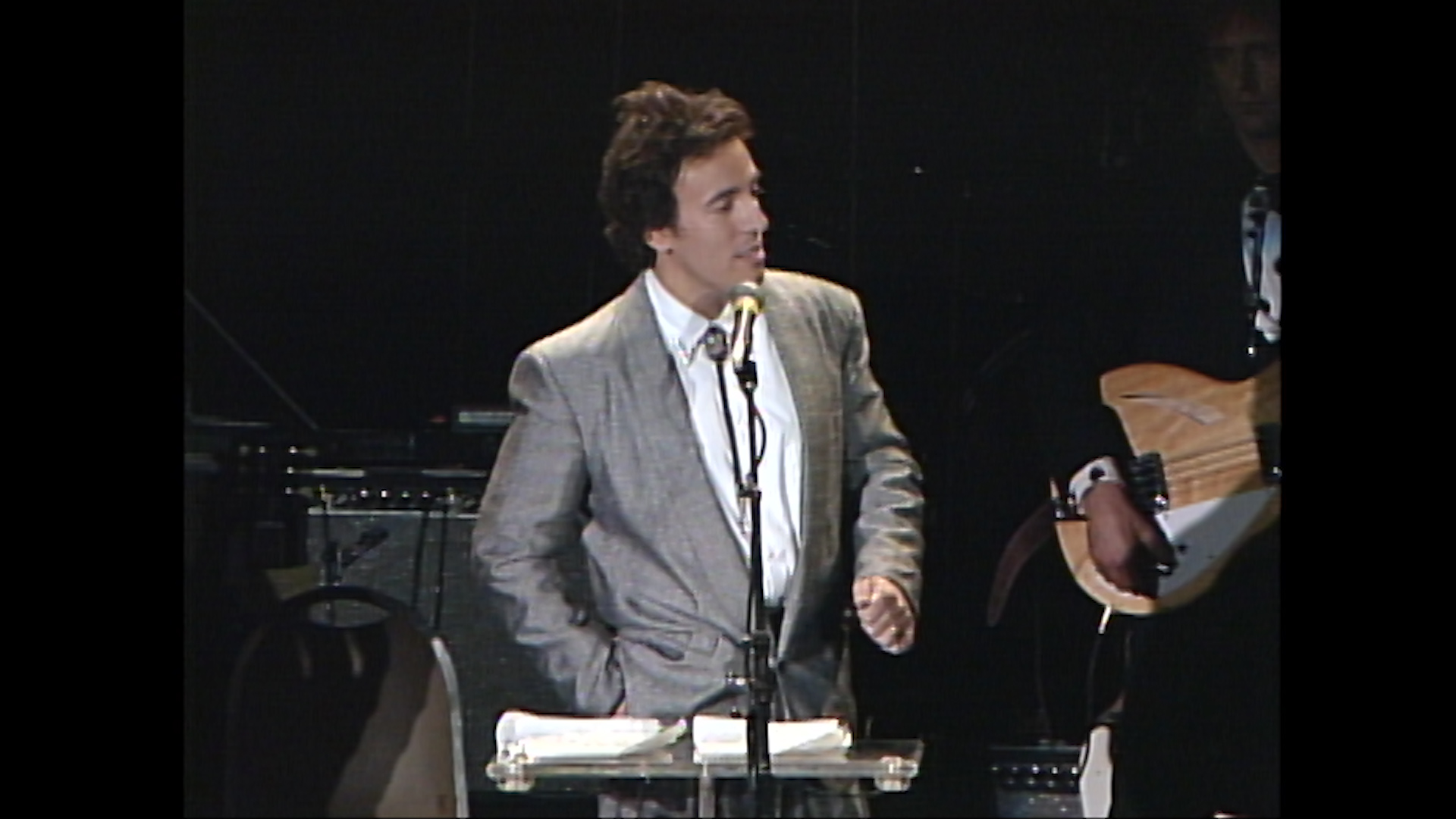
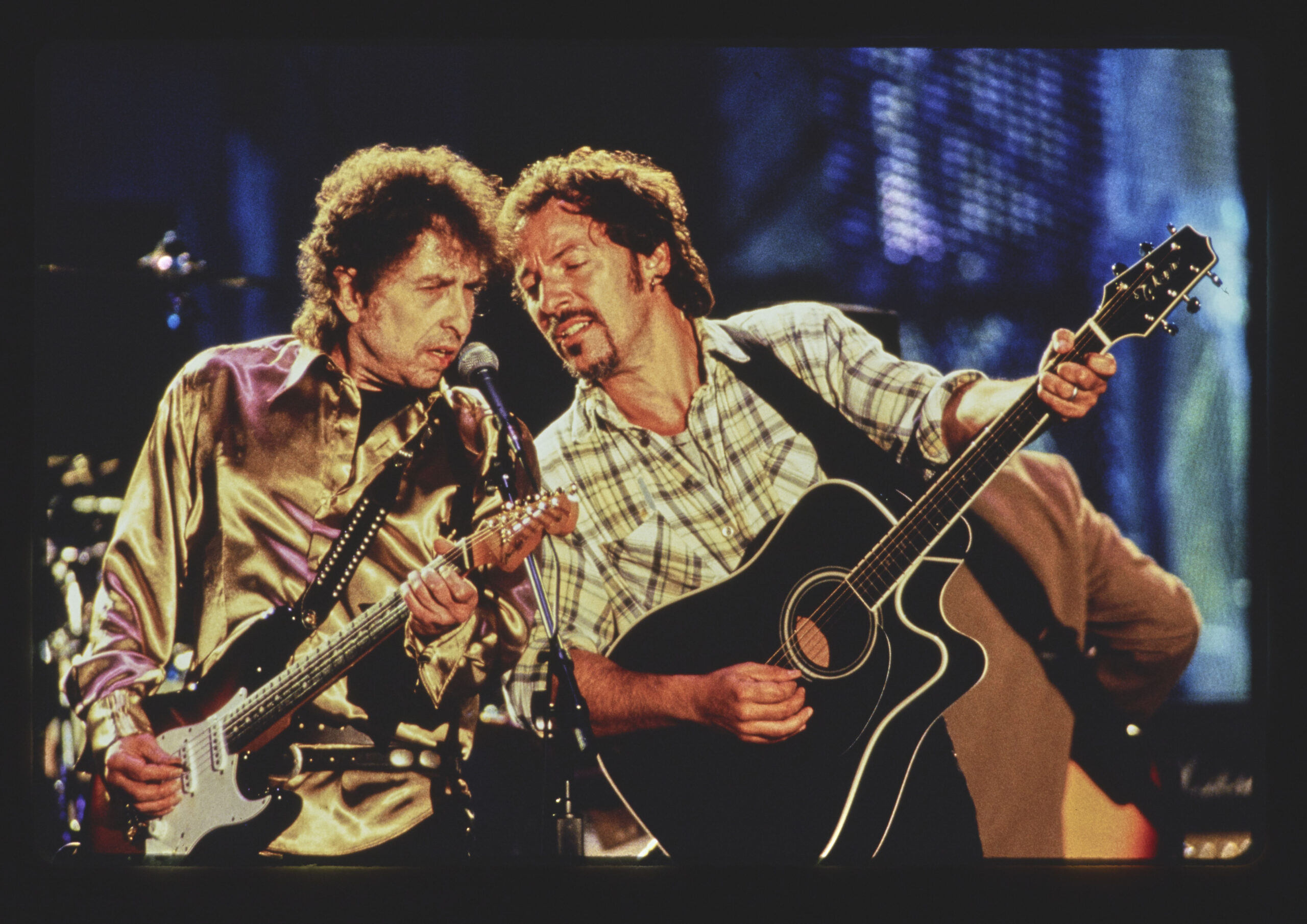
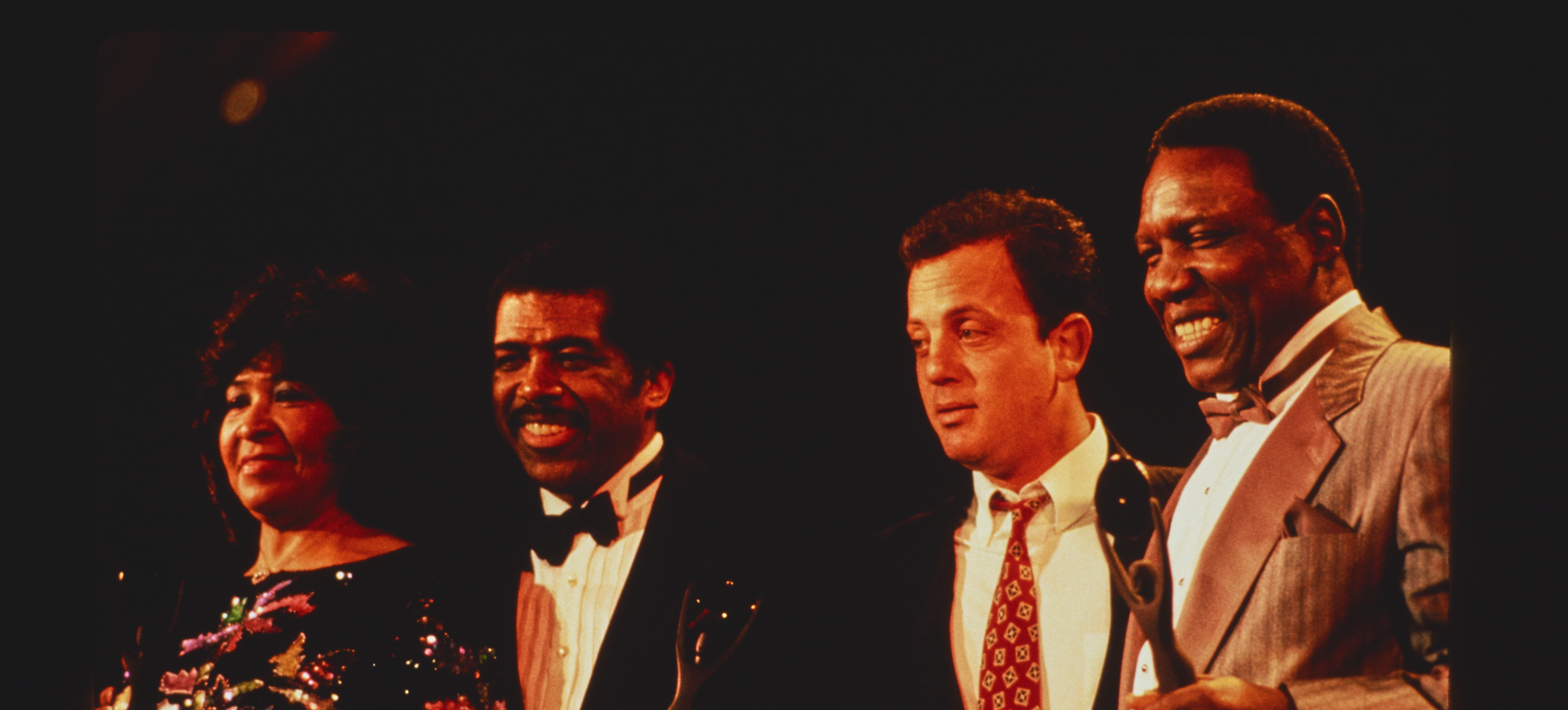
Bob Dylan was inducted into the Rock and Roll Hall of Fame in 1988, the same year as the Beatles. His presenter was Bruce Springsteen, who’d derived no small amount of influence from Dylan’s career. “Bob freed your mind the way Elvis freed your body,” said Springsteen. “To this day, wherever great rock music is being made, there is the shadow of Bob Dylan.”
Dylan’s career was retrospectively appraised to great effect in the boxed sets Biograph (1985) and The Bootleg Series, Vol. 1-3 (1991). His first album of new material in the Nineties, the star-studded Under the Red Sky, included cameos from the varied likes of Stevie Ray Vaughan, Slash, George Harrison, Elton John, Bruce Hornsby and Al Kooper. Thereafter, Dylan recorded two consecutive albums – Good As I’ve Been to You and World Gone Wrong – of unadorned folk songs drawn from the public domain. In a sense, these recordings brought Dylan full circle, echoing the eponymous first album of folk songs he’d cut three decades earlier. Between those releases, in October 1992, Dylan’s 30th anniversary as a recording artist was recognized with a lengthy tribute concert at Madison Square Garden. Participants included Eric Clapton, George Harrison, Tom Petty, John Mellencamp, Neil Young and Stevie Wonder. Privately, Dylan himself was disinclined to celebrate former glories. “Nostalgia is death,” he remarked earlier that year to Robert Hilburn of the Los Angeles Times.
In 1997, Dylan inaugurated a stunning late-career renaissance as a recording artist. The pace of releases slowed down, resulting in fewer but stronger albums. Though only three appeared over the course of a decade – Time Out of Mind (1997), Love and Theft (2001) and Modern Times (2006) – each was a certifiable classic that could stand next to Dylan’s best work. Whether atmospheric in texture, like the Daniel Lanois-produced Time Out of Mind, or stripped down to basics, as with Dylan’s self-produced Love and Theft and Modern Times, all three captured an artist in peak form, with much to say and in complete control of his materials. Dylan’s embedded his words in flinty, blues- and country-inflected grooves. These albums personified the term “Americana,” coined to describe a more ecumenical approach to roots music adopted by a wave of younger musicians around this time. When Modern Times debuted at #1 – representing Dylan’s first chart-topper since Desire in 1976 – the then 65-year-old singer/songwriter set a record for longest span between #1 albums by a living artist.
Dylan has spent much time on the road over the past few decades. In 1986 he toured with Tom Petty and the Heartbreakers as his backing group, and in 1987 he did the same with the Grateful Dead (who had always been one of his strongest interpreters). In 1988, Dylan embarked on what has since been dubbed the Never Ending Tour (“NET,” for short). The seeds for Dylan’s wholehearted embrace of live performance began with a revelation during a concert in Locarno, Switzerland, on October 5, 1987. “That night, it all just came to me,” he recalled in 2002. “All of a sudden, I could sing anything.” He also gives credit to the evolving ensemble of musicians he put together.
“This is the best band I’ve ever been in, I’ve ever had, man for man,” Dylan told Rolling Stone in 2006. “I got guys now in my band, they can whip up anything, they surprise even me.” The Never Ending Tour is said to have commenced on June 7, 1988, and Dylan has not been far from a stage in the ensuing 20 years.
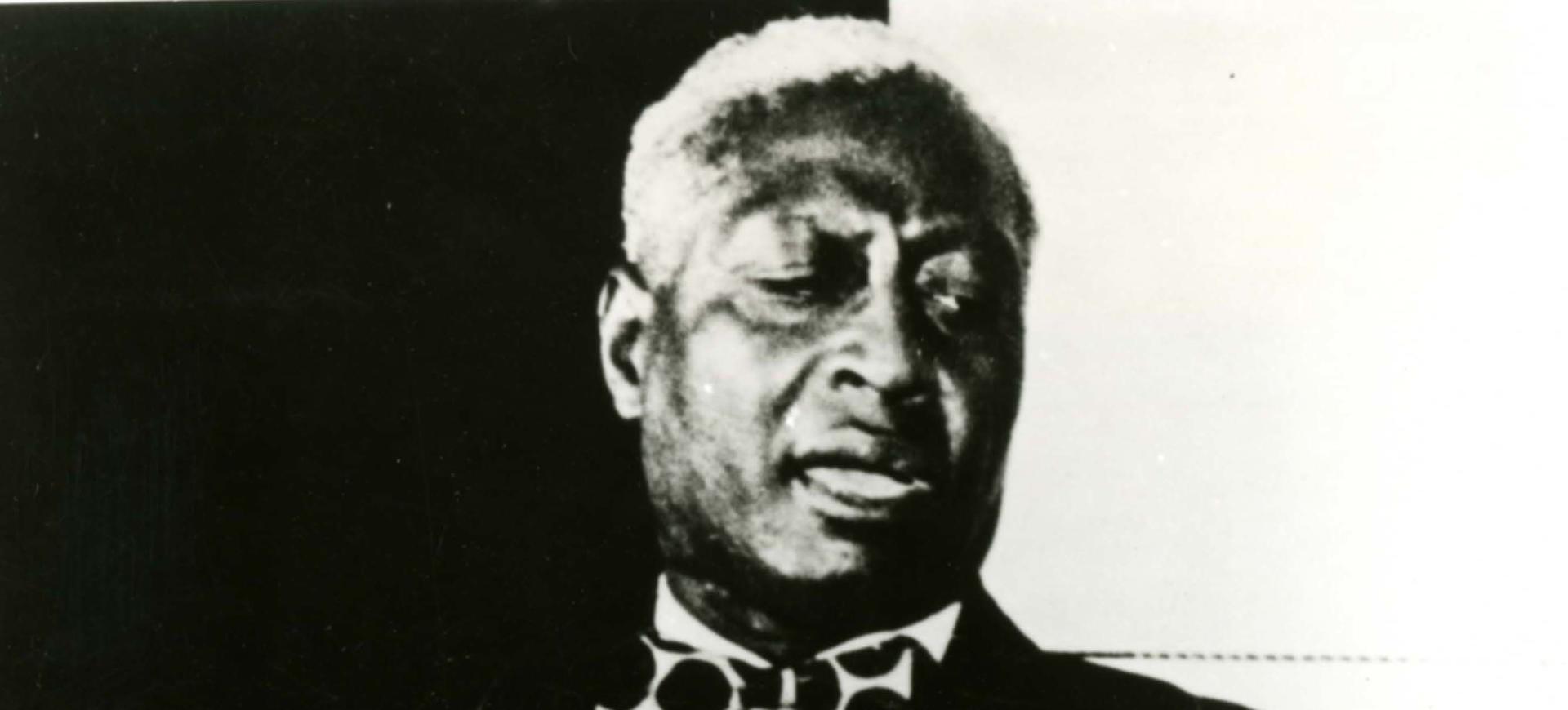
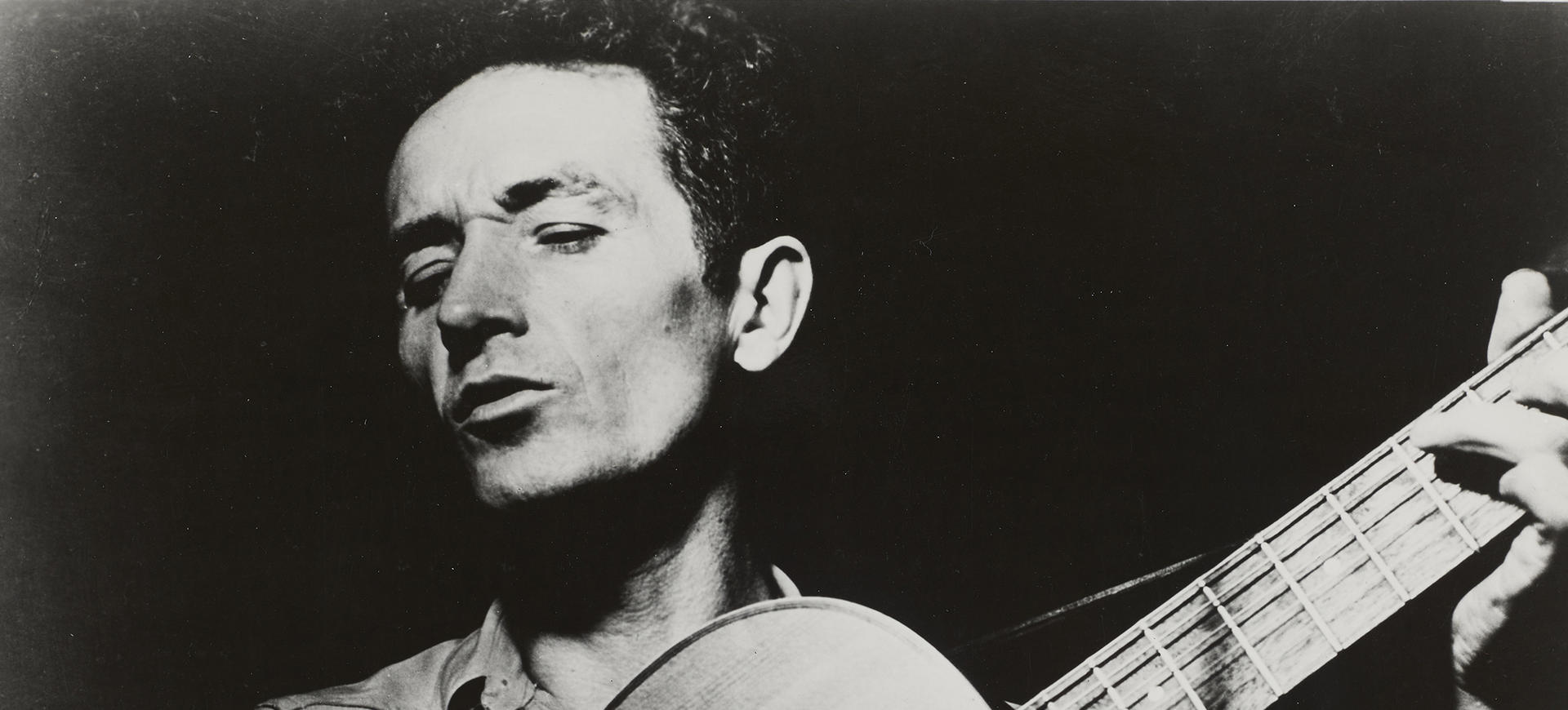
Back 1964, Dylan said he hoped to carry himself like Big Joe Williams, Woody Guthrie, Leadbelly and Lightnin’ Hopkins when he was older, and indeed he has done just that. Having embraced the role of wandering troubadour, Dylan is doing what his mentor Woody Guthrie no doubt would have done, had failing health not prevented him: performing his songs for people till the end of his days.
“If you are going to go out every three years or so, like I was doing for awhile, that’s when you lose your touch,” Dylan has said. “If you are going to be a performer, you’ve got to give it your all.” And so this uniquely American legend remains alive and well, not to mention highly accessible as a performer.
In 2008, Bob Dylan’s unique contributions to American arts and letters received acknowledgement in the form of a Pulitzer Prize. His is the first popular musician to receive the honor. The citation from the Pulitzer committee recognized his “profound impact on popular music and American culture, marked by lyrical compositions of extraordinary poetic power.”
TIMELINE
May 24, 1941: Bob Dylan is born in Duluth, Minnesota. His birth name is Robert Allen Zimmerman.
October 1959: Using the stage name Bob Dylan, the former Robert Zimmerman performs as a folksinger at the Ten O’Clock Scholar, a Minneapolis coffeehouse.
January 24, 1961: Bob Dylan arrives in New York City, performing a few songs this same night at a hoot night at the Cafe Wha? Dylan had relocated here in order to visit his idol, Woody Guthrie, who lay dying in a New Jersey hospital.
April 11, 1961: Having impressed folk-scene gatekeeper and mainstay Dave Van Ronk, Bob Dylan performs at Gerde’s Folk City, in New York’s Greenwich Village.
March 19, 1962: Bob Dylan’s self-titled first album, produced by John Hammond, is released on Columbia Records. Its highlight is Dylan’s “Song for Woody.”
April 12, 1963: Bob Dylan performs his first major solo concert, at New York City’s Town Hall. He concludes with a poem, “Last Thoughts on Woody Guthrie.”
September 7, 1963: The Freewheelin’ Bob Dylan, the singer/songwriter’s second album, enters Billboard’s album chart, where it will peak at #22.
January 13, 1964: Bob Dylan’s The Times They Are A-Changin’ is released. It is his first completely self-composed album, and the prophetic title track is a highlight.
August 8, 1964: Bob Dylan’s fourth album, Another Side of Bob Dylan, is released. Marking a turn towards more personal material, it includes “Chimes of Freedom,” “My Back Pages” and “Spanish Harlem Incident.”
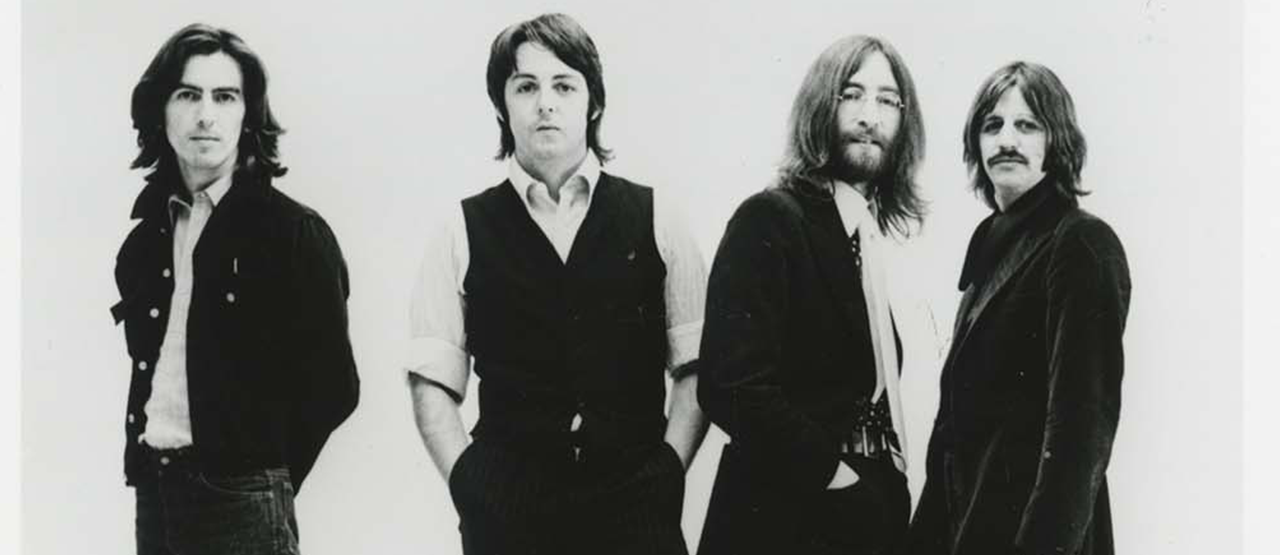
August 28, 1964: Bob Dylan and the Beatles meet in a New York hotel room. According to Paul McCartney, Dylan turned the Fab Four on to marijuana for the first time.
March 1965: Bringing It All Back Home, by Bob Dylan, his half-electric and half-acoustic fifth album, is released. It includes “Mr. Tambourine Man,” “Maggie’s Farm” and “It’s All Over Now, Baby Blue.”
April 3, 1965: “Subterranean Homesick Blues” becomes Bob Dylan’s first Top Forty single, reaching #39 for one week.
June 26, 1965: The Byrds’ recording of Bob Dylan’s “Mr. Tambourine Man” reaches #1 on Billboard’s singles chart. It is the first and only #1 hit penned by Dylan.
July 25, 1965: Bob Dylan is booed for “going electric” at the Newport Folk Festival when he is backed by the Paul Butterfield Blues Band and keyboardists Barry Goldberg and Al Kooper.
August 1965: Highway 61 Revisited, by Bob Dylan, is released. Featuring keyboardist Al Kooper and guitarist Mike Bloomfield, it is his first all-electric album. It includes “Highway 61 Revisited,” “Desolation Row” and “Like a Rolling Stone.”
May 1966: Bob Dylan’s double-album classic, Blonde on Blonde, is released. Recorded in Nashville with session musicians, along with stalwart Dylan accompanists Mike Bloomfield and Al Kooper, it yields such classics as “I Want You,” “Rainy Day Women #12 & 35,” “Just Like a Woman” and “Visions of Johanna.”
May 17, 1966: Bob Dylan performs with the Hawks (better known as The Band) at the Free Trade Hall in Manchester, England. This electrifying concert becomes a popular bootleg, erroneously titled The Royal Albert Hall Concert. It is officially released as Live 1966, the fourth volume in Dylan’s Bootleg Series, in 1998.
May 21, 1966: “Rainy Day Women #12 & 35,” by Bob Dylan, peaks at #2 on Billboard’s singles chart.
July 29, 1966: Bob Dylan is injured in a motorcycle accident near Woodstock, New York. During his recovery he casually records new material with The Band. Selections from the roughly 100 songs they laid down are released, nearly ten years later, as The Basement Tapes.
March 10, 1967: Woody Guthrie dies of Huntington’s Chorea at the age of 55. Dylan will perform at the Woody Guthrie Memorial Concerts, at New York’s Carnegie Hall, the following January.
March 27, 1967: Bob Dylan’s Greatest Hits is issued while the artist is out of commission. It becomes his best-selling album and was, in 2001, certified five times platinum (5 million copies sold) by the RIAA.
December 1967: Bob Dylan releases John Wesley Harding, an album of apocalyptic folks songs recorded with country musicians in Nashville. Among them are “All Along the Watchtower,” which Jimi Hendrix will recast in a rock arrangement.
April 9, 1969: Bob Dylan releases his most unabashedly country-sounding record, Nashville Skyline, which yields the Top Ten hit “Lay Lady Lay.”
June 9, 1970: Bob Dylan receives an honorary doctorate from Princeton University.
November 1970: Bob Dylan’s New Morning is released only four months after Self-Portrait. It is a return to form for Dylan after the poorly received double album that preceded it.
October 27, 1973: “Knockin’ On Heaven’s Door,” by Bob Dylan, peaks at #12 on Billboard’s singles chart. It is the highlight of Dylan’s soundtrack to the film Pat Garrett & Billy the Kid.
February 17, 1974: Planet Waves, Bob Dylan’s first #1 album – and only studio album during a brief hiatus with Asylum Records - tops the charts for the first of five weeks.
March 1, 1975: Bob Dylan’s Blood on the Tracks reaches #1 on Billboard’s album chart for the first of two weeks. It also produces a hit single: “Tangled Up in Blue” (#31)
October 30, 1975: Bob Dylan’s Rolling Thunder Revue Tour commences in Plymouth, Massachusetts.
February 7, 1976: Desire, by Bob Dylan, tops Billboard’s album chart for the first of five weeks. It also yields two charting singles: “Hurricane” (#33) and “Mozambique” (#54).
January 25, 1978: Renaldo & Clara, filmed during Bob Dylan’s rambling Rolling Thunder Revue, is released to scathing reviews. The nearly four-hour film had been edited down from 80 hours of tour footage.
August 1979: Slow Train Coming, the first of three Christian-themed albums by Bob Dylan, is released. It is coproduced by Jerry Wexler and Barry Beckett and features Mark Knopfler (of Dire Straits) on guitar.
October 20, 1979: Bob Dylan appears on Saturday Night Live, performing “Gotta Serve Somebody” and two other songs.
March 15, 1982: Bob Dylan is inducted into the Songwriters Hall of Fame at a ceremony in New York. Dylan wryly notes: “I think it’s pretty amazing, really, because I can’t read or write a note of music.”
November 1, 1983: Bob Dylan releases Infidels, coproduced with Mark Knopfler of Dire Straits. Memorable tracks include “Jokerman” and “Sweetheart Like You.”
June 8, 1985: Empire Burlesque, by Bob Dylan, is released. Curiously, it is mixed by dance-music producer Arthur Baker.
September 22, 1985: Bob Dylan participates at the first Farm Aid concert, a yearly event that was inspired by a comment he made from the stage at the Live Aid concert.
December 7, 1985: Biograph, a 53-track compilation of highlights and rarities spanning Bob Dylan’s career, is released. Selling strongly for a box set, it reaches #33 on the album chart.
October 5, 1987: During a concert in Locarno, Switzerland, Bob Dylan experiences a personal epiphany concerning live performing, laying the groundwork for his Never Ending Tour.
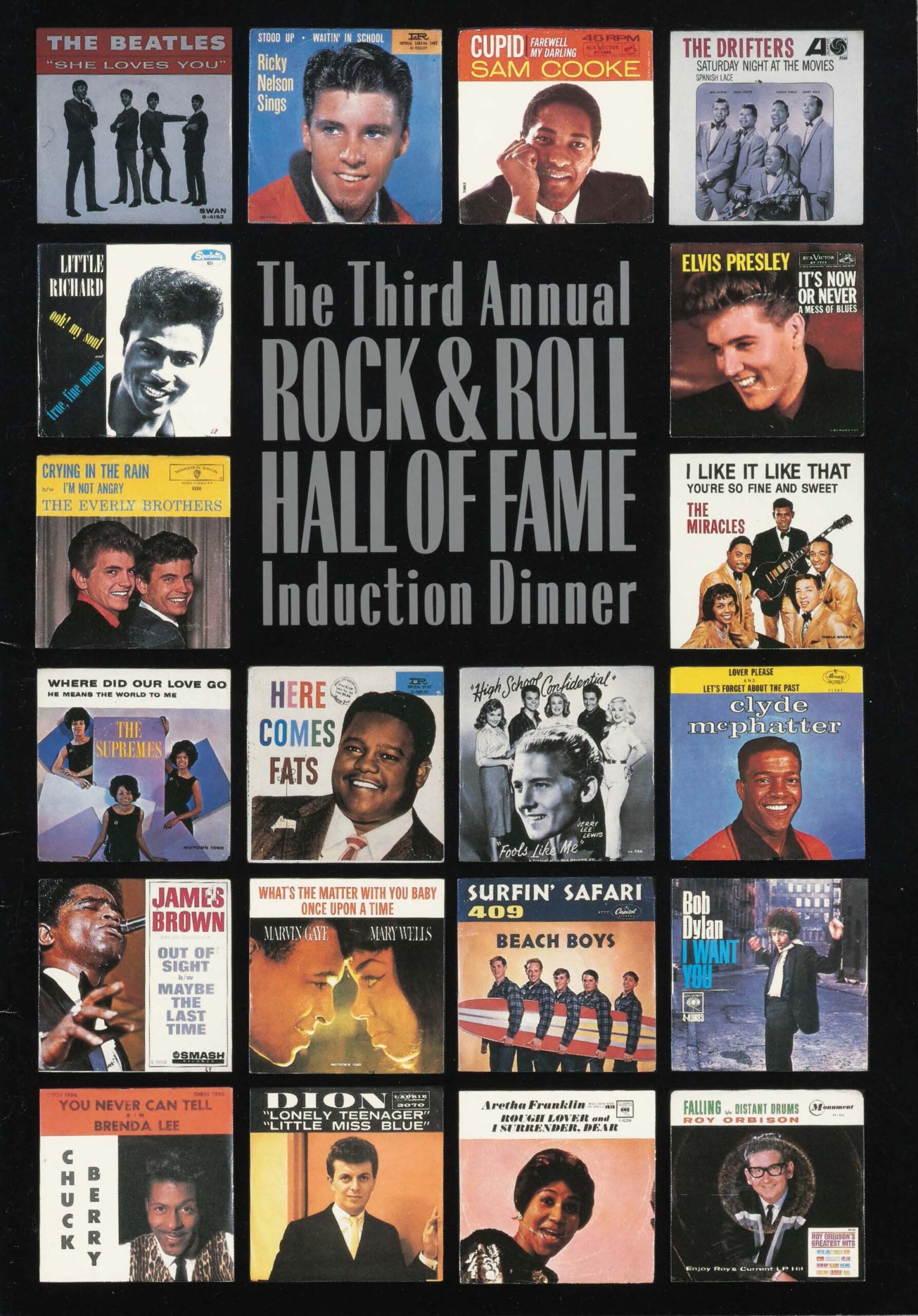
January 20, 1988: Bob Dylan is inducted into the Rock and Roll Hall of Fame at the 3rd annual induction dinner. Bruce Springsteen is his presenter.
February 25, 1988: Time Out of Mind, by Bob Dylan, wins Album of the Year at the 40th annual Grammy Awards. He also wins Best Male Rock Vocal Performance for “Cold Iron Bounds.” These are the first Grammy Awards of his career.
October 18, 1988: Volume One, by the Traveling Wilburys, is released. This anonymous supergroup comprises Nelson Wilbury (George Harrison), Lucky Wilbury (Bob Dylan), Lefty Wilbury (Roy Orbison), Otis Wilbury (Jeff Lynne) and Charlie T. Wilbury, Jr. (Tom Petty). The album is a hit, reaching #3 and selling more than 3 million copies.
September 1989: Oh Mercy, by Bob Dylan, is released. Recorded in New Orleans with Louisiana musicians, it includes “Political World” and “Everything Is Broken.”
February 20, 1991: Bob Dylan receives the Lifetime Achievement Grammy. In his brief acceptance speech, he quotes his father: “You know, it’s possible to become so defiled in this world that your own father and mother will abandon you, and if that happens,
God will always believe in your ability to mend your ways.”
October 16, 1992: An all-star gathering of musicians pays tribute to Bob Dylan to mark his 30th anniversary as a recording artist. An edited version of the marathon-length Madison Square Garden concert is released in audio and video formats.
November 3, 1993: Good as I Been to You, an album of old folk and blues songs by Bob Dylan, is released. it is his first solo acoustic recording since Another Side of Bob Dylan in 1964.
October 26, 1993: World Gone Wrong, Bob Dylan’s 40th album – and second set of traditional folk songs in a row – is released.
December 7, 1997: Bob Dylan is honored at the Kennedy Center. Dylan, actress Lauren Bacall, actor Charlton Heston, singer Jessye Norman and ballet dancer Edward Villella are recognized for making “significant and lasting contributions to the performing arts. They have been instrumental in uplifting the hearts and spirit of the American people.”
May 24, 2001: Bob Dylan turns 60.
September 11, 2001: Bob Dylan’s Love and Theft is released the same day that religious extremists attack the U.S. using hijacked airplanes.
February 27, 2002: Love and Theft, by Bob Dylan, wins Best Contemporary Folk Album at the 44th annual Grammy Awards.
August 19, 2003: Fifteen of Bob Dylan’s albums are released in the hybrid Super Audio CD (SACD) format, representing a significant sonic upgrade of Dylan’s catalog. The titles are available individually or as a box set.
September 26, 2005: No Direction Home, a Bob Dylan documentary produced by Martin Scorsese, debuts on PBS.
August 29, 2006: Modern Times, by Bob Dylan, is released. It debuts at #1 on Billboard’s album chart.
February 11, 2007: Bob Dylan’s Modern Times wins Best Contemporary Folk/Americana Album at the 49th annual Grammy Awards.
November 21, 2007: I’m Not There, a film that imagines the life and times of Bob Dylan, opens in U.S. theaters. A half-dozen actors (including Cate Blanchett) represent different phases of Dylan’s career.
April 7, 2008: Bob Dylan is awarded a Pulitzer Prize, making him the first rock and roll musician to be accorded this high journalistic honor.
Essential Songs
Like a Rolling Stone
Mr. Tambourine Man
Tangled Up in Blue
Visions of Johanna
Masters of War
Blowin’ in the Wind
It’s All Over Now, Baby Blue
The Times They Are A-Changing
Highway 61 Revisited
Sad Eyed Lady of the Lowlands