Rock and Roll Hall of Fame and Museum

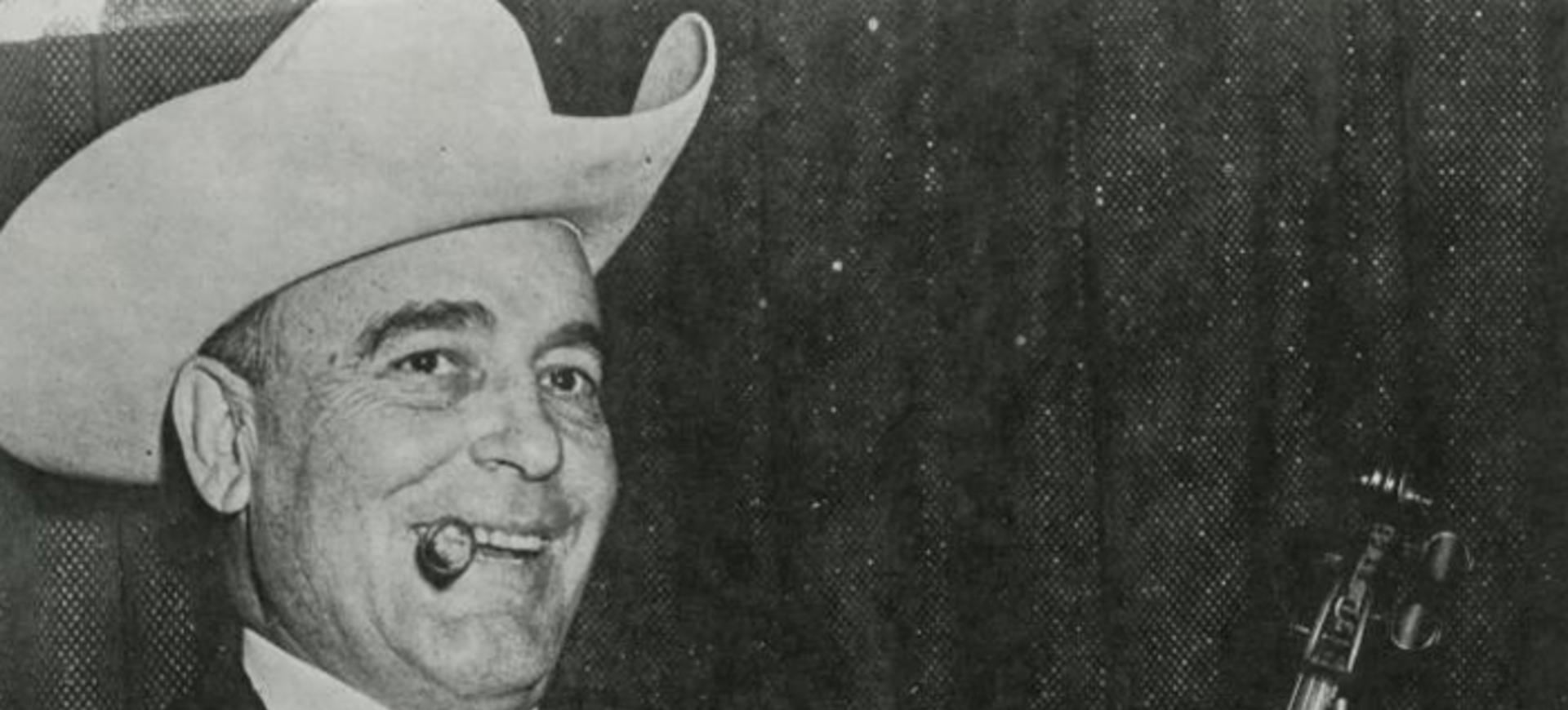
Bob Wills and His Texas Playboys

Induction Year: 1999

Induction Category: Early Influence


Inductees: Bob Wills ( fiddle, mandolin, vocals, bandleader; born 3/6/05, died 5/13/75), Tommy Duncan (vocals), Leon McAuliffe (vocals, steel guitar), Johnny Gimble (fiddle, electric mandolin), Joe “Jody” Holley (fiddle), Tiny Moore (fiddle, electric mandolin), Herb Remington (steel guitar), Eldon Shamblin (guitar), Al Stricklin (piano)

Bob Wills was the driving force behind Western Swing, a form of country & western that was broader in scope than the parent genre. A master at synthesizing styles, Wills brought jazz, hillbilly, boogie, blues, big-band swing, rhumba, mariachi, jitterbug music and more under his ecumenical umbrella. He has been called “the King of Western Swing” and “the first great amalgamator of American music.” Wills grew up in a part of Texas where diverse cultures and forms of music overlapped. His enthusiasm and mastery were such that he assimilated disparate genres into what might best be termed American music. (Wills called it “Texas fiddle music.") “We’re the most versatile band in America,” Wills forthrightly asserted in 1944. He might’ve added that they were most innovative band as well. Certainly, they forced country music to open up in its acceptance of electric instruments. Even rock and roll’s freewheeling spirit of stylistic recombination has antecedents in the work of Bob Wills and His Texas Playboys.

Wills was born into a family of fiddlers that included his father, John Wills, who regularly won Texas fiddling competitions. Bob Wills learned how to play fiddle and mandolin from his father. As a young man, Wills performed at house dances, medicine shows and on the radio.  With commercial sponsorship, Wills’ bands performed on radio in the early Thirties as the Aladdin Laddies (for the Aladdin Lamp Co.) and the Light Crust Doughboys (for Light Crust Flour). Following a salary dispute, Wills renamed his band the Texas Playboys and relocated to Tulsa, Oklahoma, where he had a live radio show. This exposure led to a contract with American Recording Corp. (later absorbed into Columbia Records).

In 1935, Bob Wills and His Texas Playboys laid down 24 tunes during their historic first session at a makeshift recording studio in Dallas.  The group recorded prolifically in the late Thirties and early Forties, laying down such classics as “Steel Guitar Rag” (written by Leon McAuliffe, the Texas Playboys’ longtime steel guitar player), “Take Me Back to Tulsa” and Wills’ signature song, “New San Antonio Rose.” Their biggest hit, “New Spanish Two Step,” topped the country charts for 16 weeks in 1946. Wills’ mix of horns, fiddles and steel guitar made for a uniquely swinging sound that grabbed the public’s ear at mid-century. The Texas Playboys always had fine singers like Tommy Duncan and Leon McAuliffe, and Wills punctuated the tunes with jive talking, falsetto asides and cries of “ah-ha!” He’d call out soloists by name and instrument, good-naturedly goading them on to rollicking performances.

In terms of personnel, the Texas Playboys expanded and contracted like an accordion over the years, according to Wills’ desires and the whims of the market. At one point the Texas Playboys were 22 pieces strong, although the band more typically numbered between 9 and 18 members. There were personnel changes and musical shifts as Wills struggled to adapt to the changing face of America in the postwar era. Nonetheless, there was always a solid core of loyal regulars in the Texas Playboys. After leaving Columbia in 1947, Wills continued to record prolifically for such labels as MGM, Decca, Longhorn and Kapp. The group also toured the country and often performed at a Wills-owned dancehall in Sacramento, California.

In 1968, Wills was inducted into the Country Music Hall of Fame. A year later, he suffered a debilitating stroke. There were reunions and recording sessions with many of the old Texas Playboys in 1971 and 1973. Wills’ final stroke came in his sleep following the first day of recording for a December 1973 session that resulted in the double album For the Last Time. Confined to a wheelchair, he’d reprised his role as bandleader that day with a group of musicians that included former Texas Playboys. He never regained consciousness and died 18 months later.

Wills has been revered by such country-music legends as Merle Haggard (whose band, the Strangers, was configured in the style of the Texas Playboys) and Willie Nelson (who covered Wills’ “Stay a Little Longer"). The contemporary Western Swing group Asleep at the Wheel cut a pair of tribute albums that have kept Wills’ name before the public: the star-studded Tribute to the Music of Bob Wills & the Texas Playboys (1994) and Ride With Bob (1999). Every year, Bob Wills Day is celebrated on the last Saturday in April in Turkey, Texas.

TIMELINE

March 6, 1905: James Robert Wills is born on a farm in East Texas, near Waco.

1929: Bob Wills forms the Wills Fiddle Band in Forth Worth, Texas.

1931: Now called the Light Crust Doughboys, Bob Wills’ group gets its own radio show.

1934: After forming a new band, the Playboys, in Waco, Texas, the year before, Bob Wills moves to Oklahoma. He continues work on radio and renames his band the Texas Playboys.

September 23, 1935: Bob Wills’ first recording session yields “Maiden’s Prayer.” It is cut in Dallas for the American Recording Company (ARC), which becomes part of Columbia Records, for whom he’ll record for 12 years. Wills’ singles during this period appear on the Vocalion, OKeh and Columbia labels.

1938: Roy Acuff makes first appearance on Grand Ol Opry; Bob Wills and His Texas Playboys record “San Antonio Rose.”

February 25, 1941: The Bob Wills classics’ “Take Me Back to Tulsa” (formerly “Take Me Back to Texas") and “Cherokee Maiden” (a #1 hit for Merle Haggard in 1976) are recorded at the same landmark session.

January 8, 1944: “New San Antonio Rose,” a vocal version of Bob Willis’ 1938 instrumental classic “San Antonio Rose,” hits #3 on the country-music chart. It is one of two gold records for Columbia this year, the other being by Frank Sinatra.

1946-1947: Bob Wills and His Texas Playboys record a series of transcriptions in California that are intended as syndicated radio programs. Half a century later, they are in print on Rhino Records as The Tiffany Transcriptions, with nine volumes appearing between 1990 and 1993.

May 4, 1946: “New Spanish Two Step,” a vocal version of Bob Willis’ 1935 instrumental “Spanish Two Step,” enters the country chart, which it will top for 16 weeks.

October 30, 1947: After a dozen years at Columbia, Bob Wills records his first single ("Deep Water") for a new label, MGM, where he’ll have three hits: “Thorn in My Heart” (#10), “Ida Red” (#10) and “Faded Love” (#8).

March 9, 1954: Bob Wills records “Cadillac in Model ‘A’,” his final single for MGM. He moves on to the Decca and Liberty labels.

August 8, 1960: “Heart to Heart Talk,” Bob Wills’ last major hit, reunites him with vocalist Tommy Duncan. It reaches #5 on the country chart.

1962: Bob Wills suffers the first in a series of heart attacks over the next decade.

October 26, 1968: Bob Wills is inducted into the Country Music Hall of Fame.

December 3, 1973: Bob Wills suffers a crippling stroke in his sleep after the first day of sessions for a album that is released as ‘For the Last Time’. He remains in a coma until his death.

May 13, 1975: Bob Wills dies of pneumonia at a Fort Worth, Texas, nursing home.

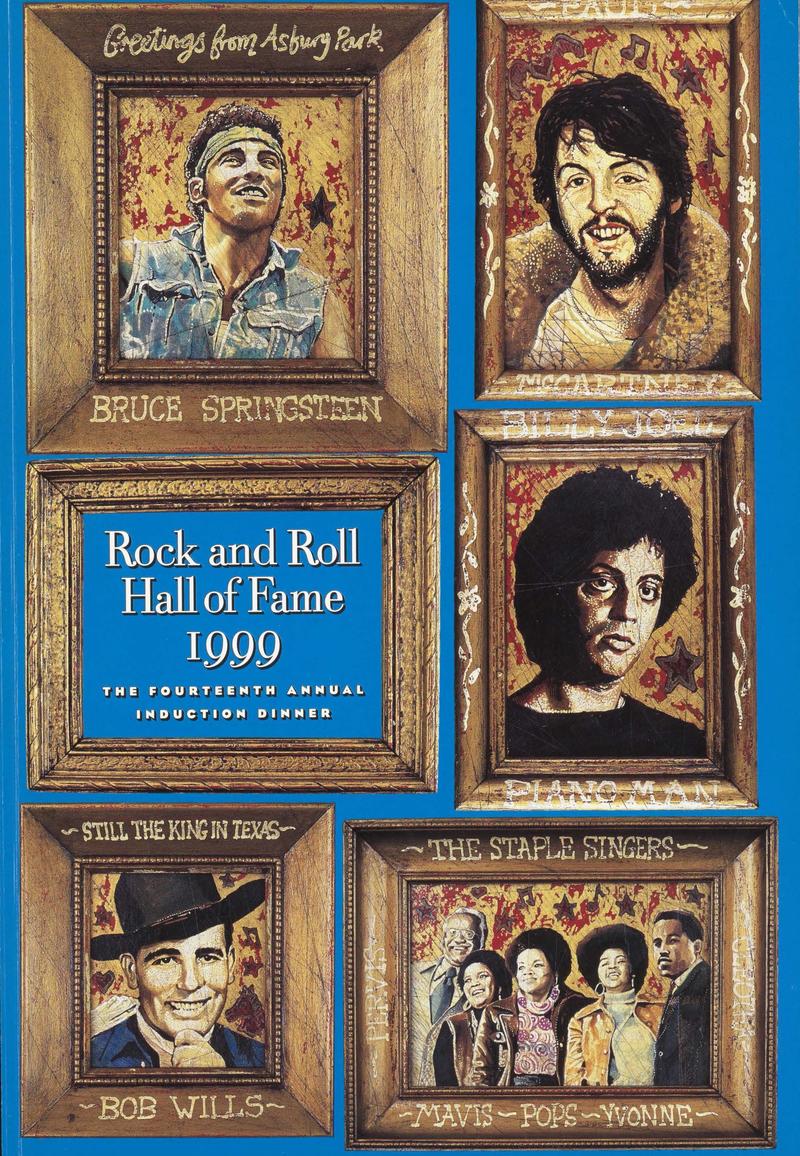
March 15, 1999: Bob Wills and His Texas Playboys are inducted into the Rock and Roll Hall of Fame at the fourteenth annual induction dinner.

Essential Recordings


New San Antonio Rose
Take Me Back to Tulsa
Steel Guitar Rag
Faded Love
Cherokee Maiden
Stay a Little Longer
New Spanish Two Step
Ida Red
St. Louis Blues
Bubbles in My Beer

Recommended Reading


Bob Wills: American Amalgamator
Kit Kiefer. Goldmine (October 5, 1990), 9-14.

Bob Wills: Hubbin’ It
Ruth Sheldon. Country Music Foundation Press, 1995.

San Antonio Rose: The Life and Music of Bob Wills
Charles R. Townshend. Champaign, IL: University of Illinois Press, 1976.

The King of Western Swing: Bob Wills Remembered
Rosetta Wills. Toronto: Watson-Guptill Publications, 1998.


Chuck Berry's Gibson ES-335 Electric Guitar

Photo by Andrew Moore
Collection of Chuck Berry