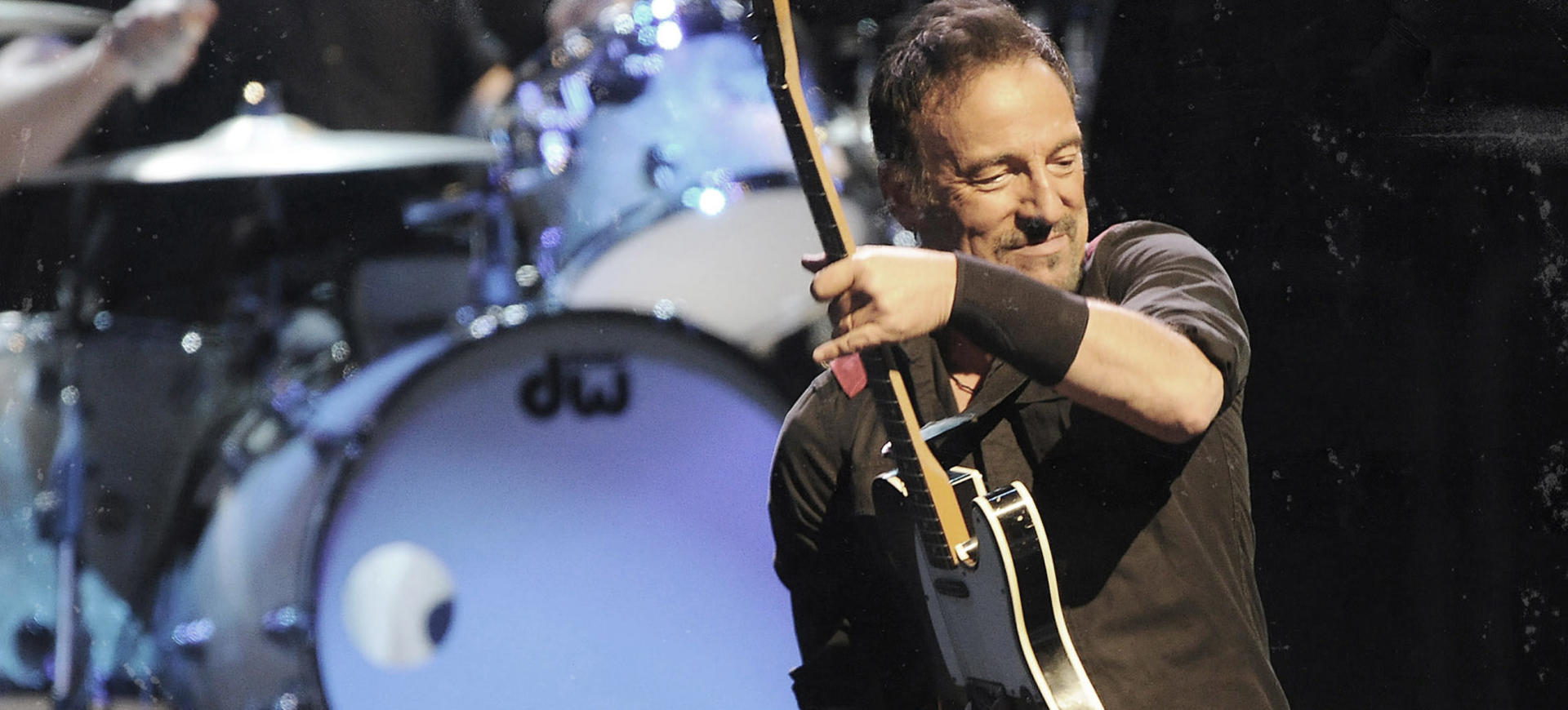
Bruce Springsteen
Induction Year: 1999
Induction Category: Performer
Inductee: Bruce Springsteen (vocals, guitar; born 9/23/49)
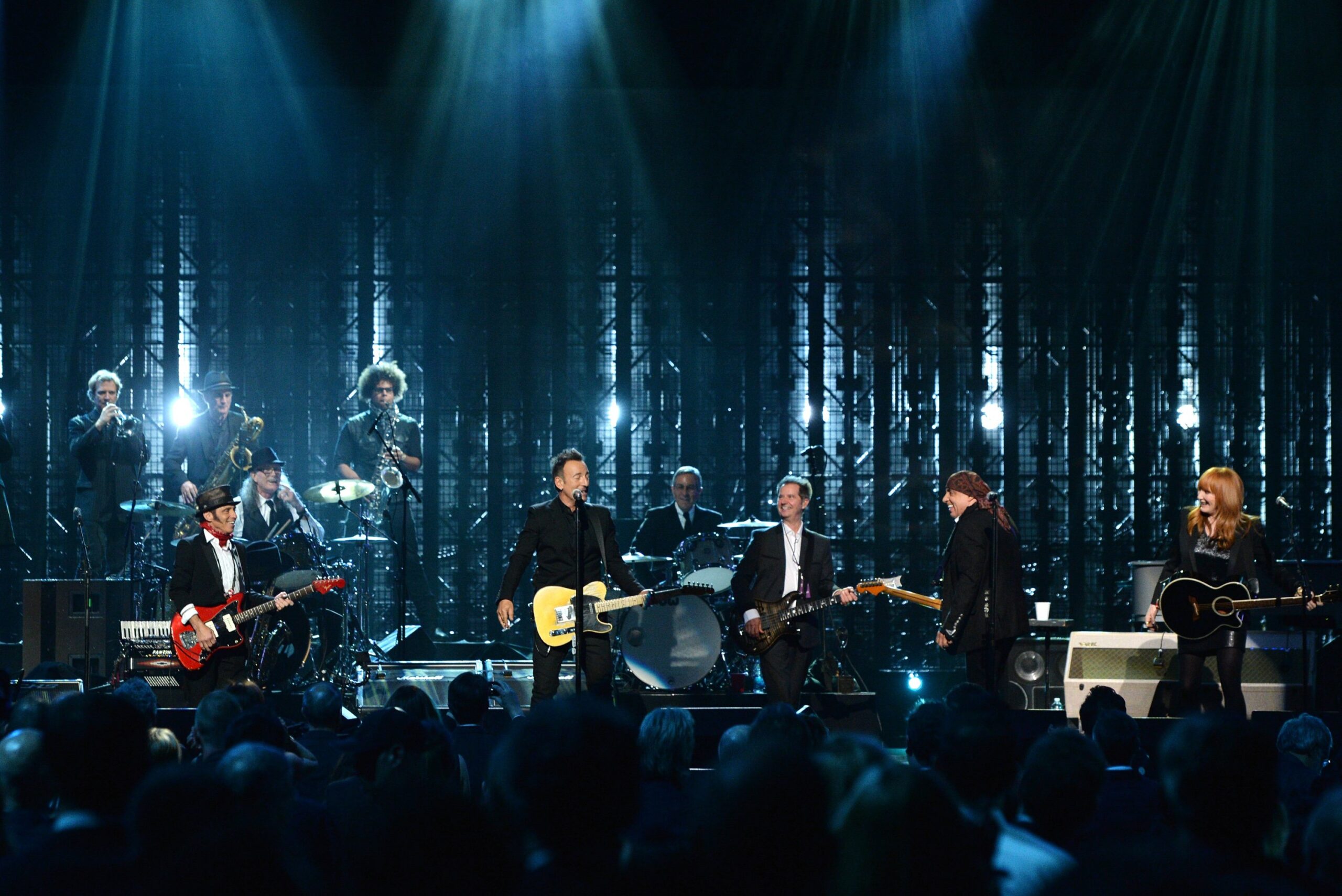
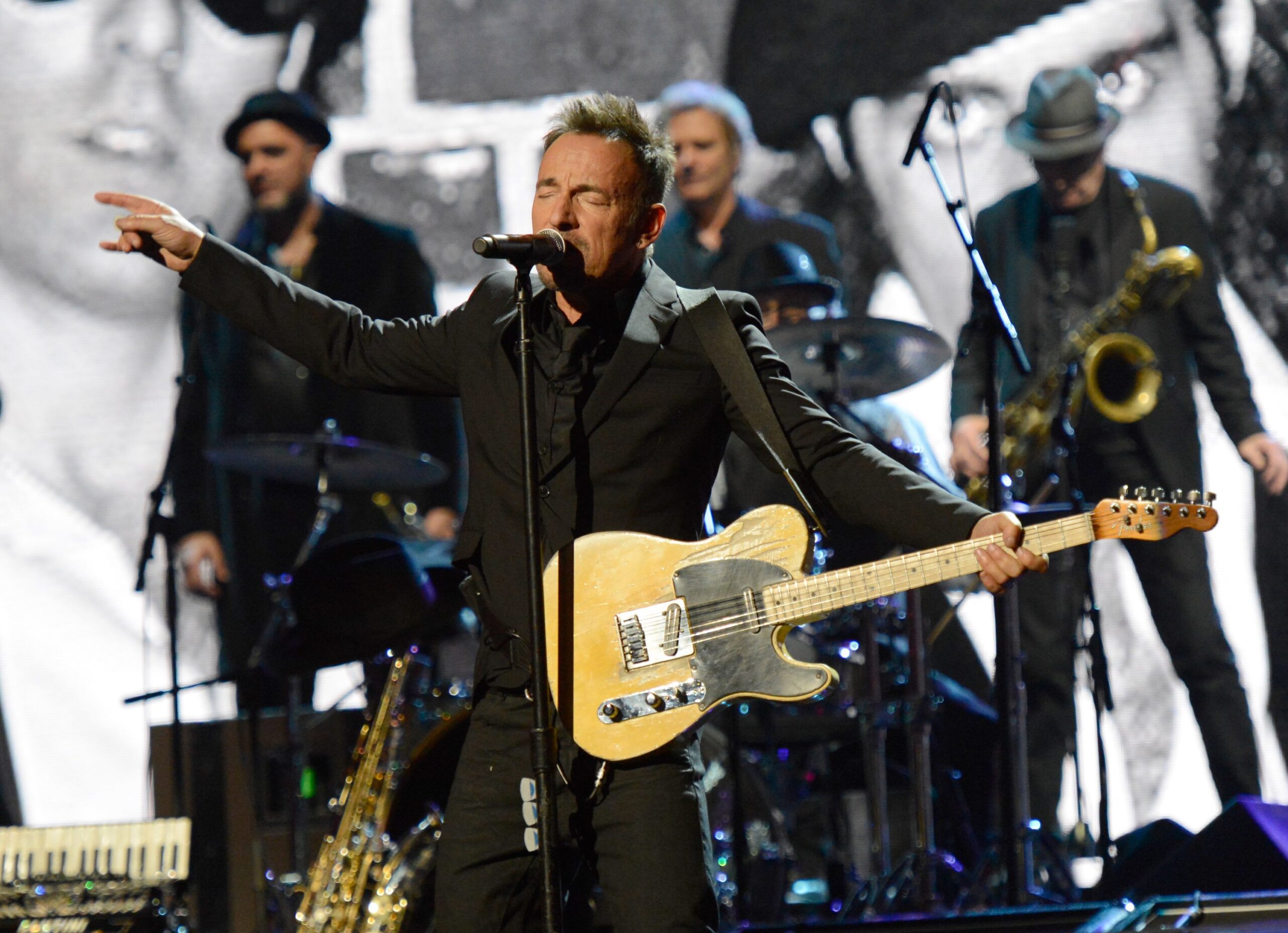
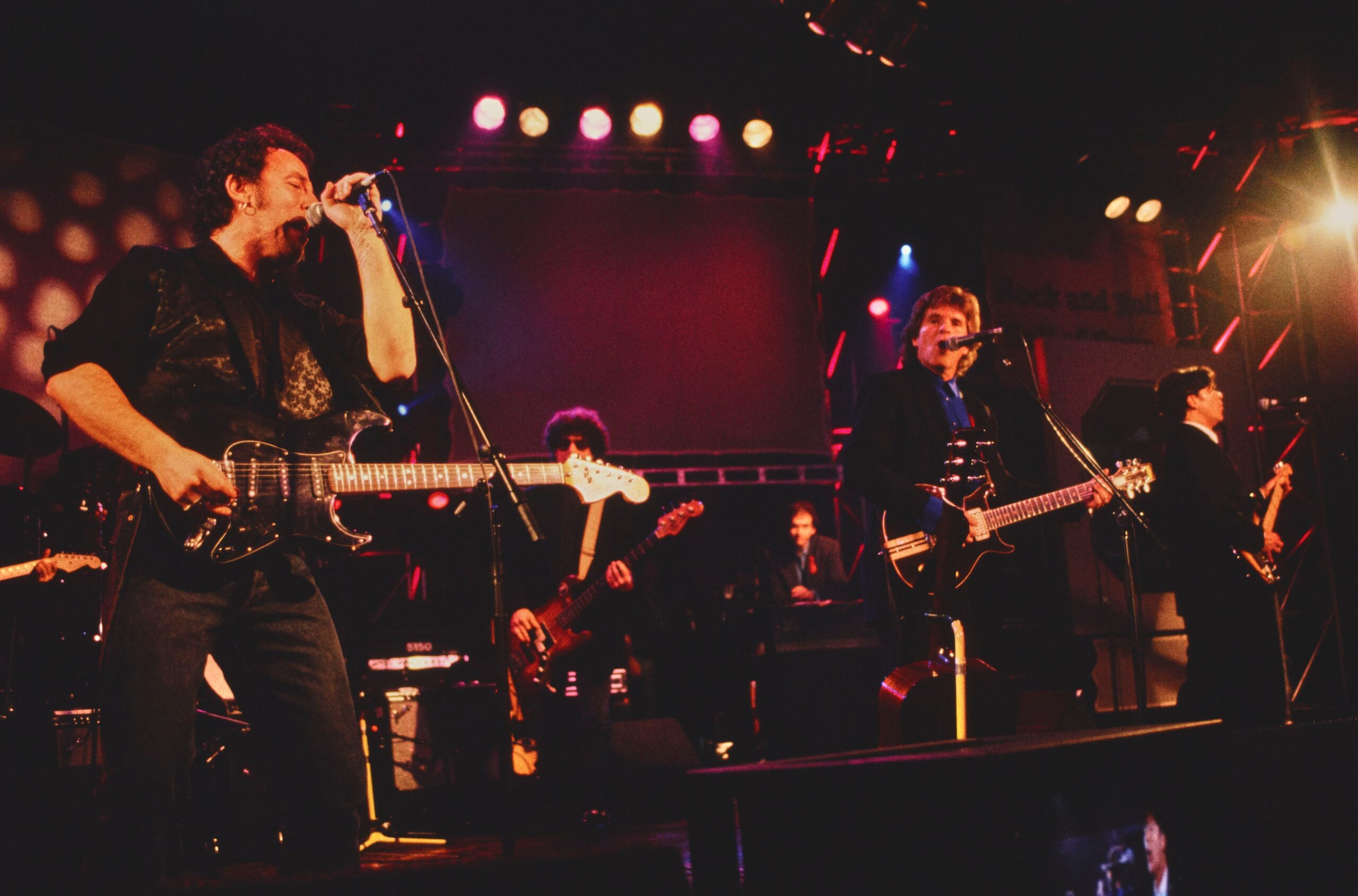
Bruce Springsteen ranks alongside such rock and roll figureheads as Chuck Berry, Elvis Presley, the Beatles and Bob Dylan. Just as those artists shaped popular music, Springsteen served as a pivotal figure in its evolution with his rise to prominence in the mid-Seventies. Early on, he was touted as one of several heirs to Bob Dylan’s mantle. All of these would-be “new Dylans"-who also included Loudon Wainwright, John Prine and Elliott Murphy-rose above the hype, but Springsteen soared highest, catapulting himself to fame on the unrestrained energy of his live shows, the evocative power of his songwriting, and the direct connection he forged with his listeners.
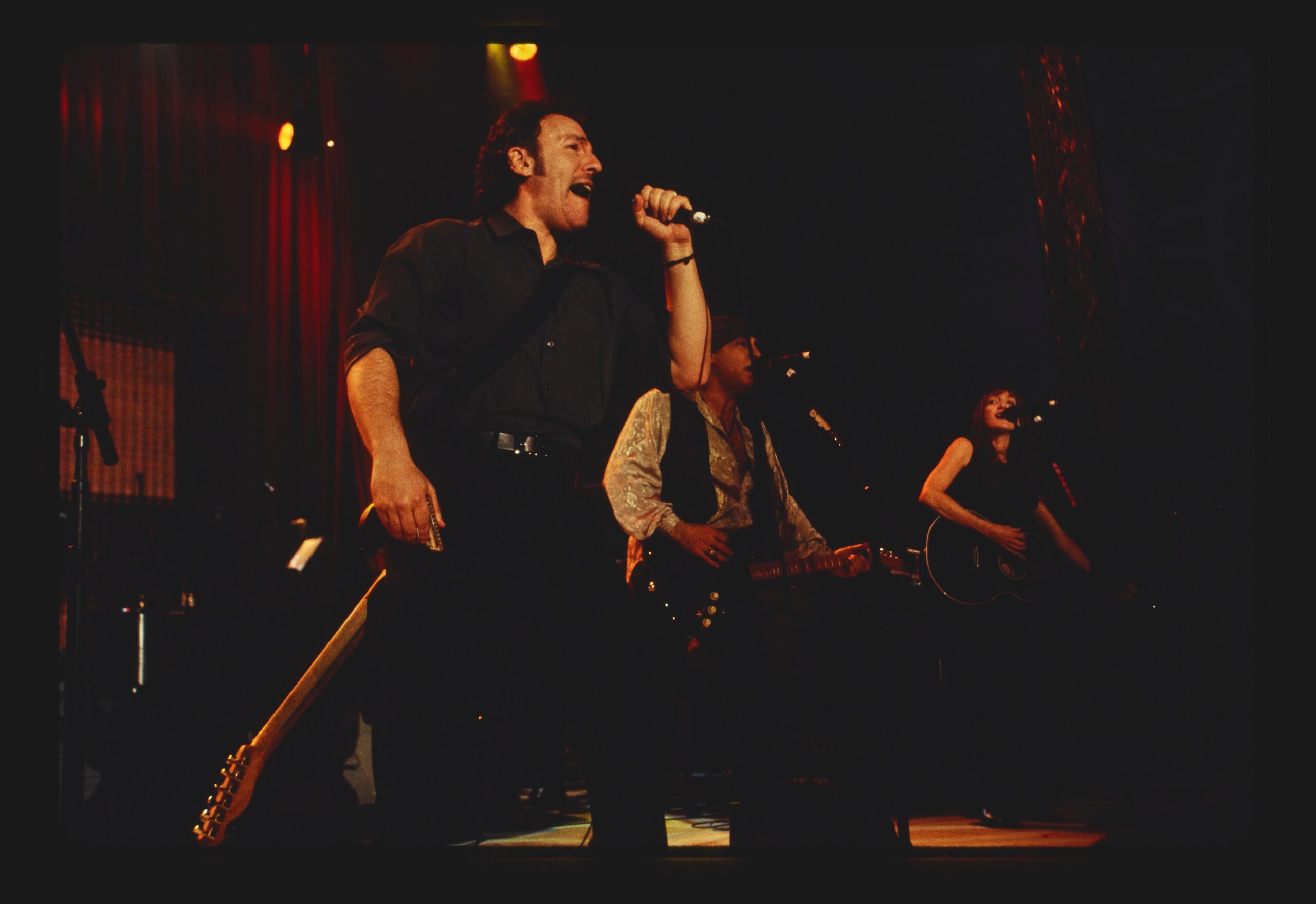
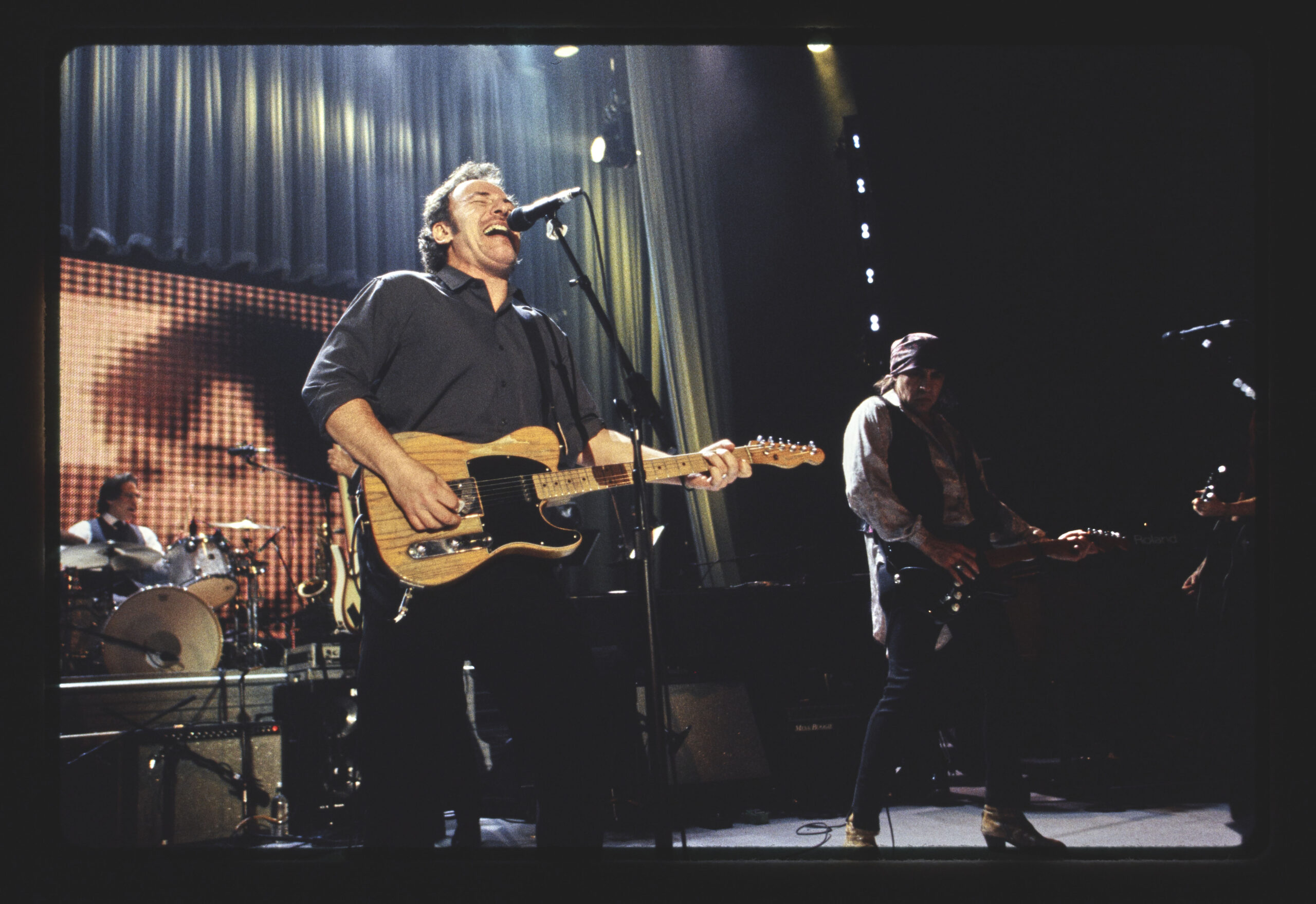
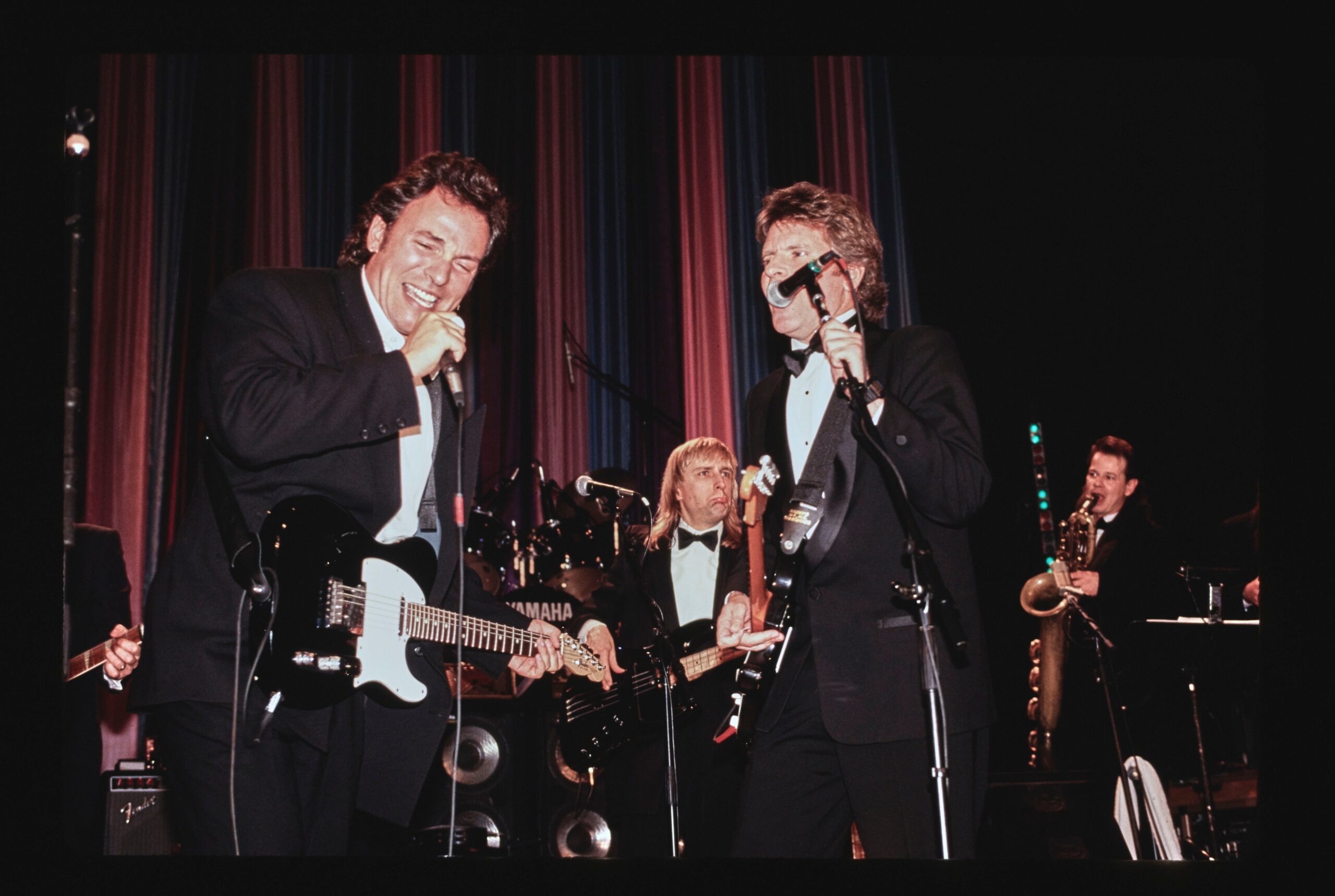
Springsteen lifted rock and roll from its early Seventies doldrums, providing continuity and renewal at a point when it was sorely in need of both. During a decade in which disco, glam-rock, heavy-metal and arena-rock provided different forms of escape into fantasy, Springsteen restored a note of urgency and realism to the rock and roll landscape. Each painstakingly crafted album since his 1973 debut, Greetings from Asbury Park, N.J., has served as a literate pulse-taking of a generation’s fortunes. As a live performer, he offers himself as a “prisoner” of the music he loves, and each concert has been played as if it might be his last.
Springsteen grew up in the nondescript working-class town of Freehold, New Jersey. “Rock & roll was the only thing I ever liked about myself,” he once remarked. Prior to the release of Greetings from Asbury Park, Springsteen had been a struggling rocker on the Jersey shore for nearly a decade. His early groups included the Rogues, the Castiles, Earth, Child, Steel Mill, Dr. Zoom and the Sonic Boom and the Bruce Springsteen Band. His break came in 1972, when manager Mike Appel landed him an audience with Columbia Records executive John Hammond Sr. Moving between guitar and piano, Springsteen performed 12 originals at that May 3rd audition and was signed to Columbia, where he remains to this day.
Greetings from Asbury Park didn’t even make the Top 200 until it was belatedly pulled onto the charts by the success of Born to Run in 1975. All the same, it ignited a groundswell of support for Springsteen with such favorites as “Blinded by the Light,” “Growin’ Up” and “Spirit in the Night” Greetings featured such Jersey Shore vets as saxman Clarence Clemons, bassist Garry Tallent, keyboardist David Sancious and drummer Vini Lopez. Rounded out by keyboardist Danny Federici, a longtime Springsteen accompanist, this outfit was tagged “the E Street Band,” after a street in Belmar, New Jersey, where Sancious’ mother lived. Touring incessantly, Bruce Springsteen and the E Street Band built a grassroots following. Their profile was further raised with the November 1973 release of The Wild, the Innocent & the E Street Shuffle, which included the rousing anthem “Rosalita (Come Out Tonight).”
Springsteen’s national breakout came at mid-decade with Born to Run, a recording milestone that consumed a full year. Densely layered in the rock-orchestral style of producer Phil Spector, every song conveyed an epic sweep, from “Born to Run” and “Thunder Road” to the lengthy side-closers “Backstreets” and “Jungleland.” Prior to its release, Springsteen played a legendary five-night stand at New York’s Bottom Line. By this time, the E Street Band’s classic lineup was set, with Springsteen accompanied by keyboardists Federici and Roy Bittan, guitarist Steve Van Zandt, saxophonist Clemons, bassist Tallent and drummer Max Weinberg.
Fame came quickly for the ascendant star, who simultaneously made the covers of Time and Newsweek in November 1975. However, internal problems were brewing, as Springsteen and Appel squared off in court over management contracts signed years earlier. Springsteen filed a massive suit, charging fraud, undue influence and breach of trust. Appel responded with an injunction that prevented Springsteen from recording. During the two-year legal imbroglio, Springsteen funneled songs to other artists, including Southside Johnny and the Asbury Jukes ("Fever") and Patti Smith ("Because the Night"). After the bruising lawsuit was settled out of court in 1977, Springsteen turned to Jon Landau-a former Rolling Stone writer/editor and a coproducer of Born to Run-for management. (It was Landau who had written, in a 1974 concert review, “I saw rock and roll’s future-and its name is Bruce Springsteen.") He also began work on his fourth album, Darkness On the Edge of Town.
A year later-and nearly three years after Born to Run-one of rock’s most eagerly anticipated albums was released. Darkness was noticeably sparer than Born to Run, reflecting “a certain loss of innocence-more so than in the other albums,” according to Springsteen. His next release, The River (1980), was a 20-song, four-sided tour de force that exchanged thematic unity for a mix of songs and styles, from playful party rockers to more sobering material like “Independence Day” and “Hungry Heart,” which reached #5 in December 1980. On tour, Springsteen’s live shows were now running upward of four hours.
Springsteen’s followup to his hard-won stardom was Nebraska, a low-fi, homemade album that found him putting the brakes on his swelling celebrity. It was a brief respite, however, as 1984’s Born in the U.S.A. album and tour catapulted Springsteen to a level of fame few have ever known. As an album, Born in the U.S.A. loomed larger than life, much like Michael Jackson’s Thriller and Prince’s Purple Rain from the same period. Born in the U.S.A. ultimately sold 15 million copies, making it Columbia Records all-time best seller. Seven songs from Born in the U.S.A.-more than half the album’s contents-became Top Ten hits in 1984 and 1985. The four-night finale to the 15-month Born in the U.S.A. Tour drew 330,000 people to the Los Angeles Memorial Coliseum.
Springsteen had become one of rock’s most revered figures, and he didn’t take the charge lightly, saying: “I believe that the life of a rock & roll band will last as long as you look down into the audience and can see yourself, and your audience looks up at you and can see themselves-and as long as those reflections are human, realistic ones.” Even off the road, the Springsteen phenomenon roared on. Lines formed at stores across the country when Live/1975-85 went on sale in the fall of 1986. It wound up selling 3 million copies-an amazing feat for a box set. His next studio record, Tunnel of Love (1987), addressed one-on-one relationships rather than the larger rites of community that had been his preoccupation on Born in the U.S.A.
The longest break between Bruce Springsteen albums was the nearly five years that passed between Tunnel of Love and its followups, Human Touch and Lucky Town, released simultaneously in April 1992. During that hiatus, Springsteen parted ways with the E Street Band, married singer Patty Scialfa and began raising a family. He supported Human Touch and Lucky Town with a tour for which he assembled a new band, retaining only keyboardist Roy Bittan from the old crew. In 1994, Springsteen contributed the somber “Streets of Philadelphia” to the soundtrack of the film Philadelphia. It became his first Top Ten single since “Tunnel of Love” and won four Grammys and an Academy Award.
Springsteen’s Greatest Hits retrospective appeared in late 1995, entering the charts at #1 and reuniting him with the E Street Band on a clutch of new tracks. The video Blood Brothers, which contained unreleased material, documented their low-key studio reconvening. Springsteen closed the year by releasing The Ghost of Tom Joad, a largely acoustic album of spectral songs about marginalized characters struggling to survive in an increasingly troubled America. He supported it with a solo acoustic tour of small halls. It was a far cry from the celebratory rock and roll marathons of the Born in the U.S.A. era, now fully a decade in the past.
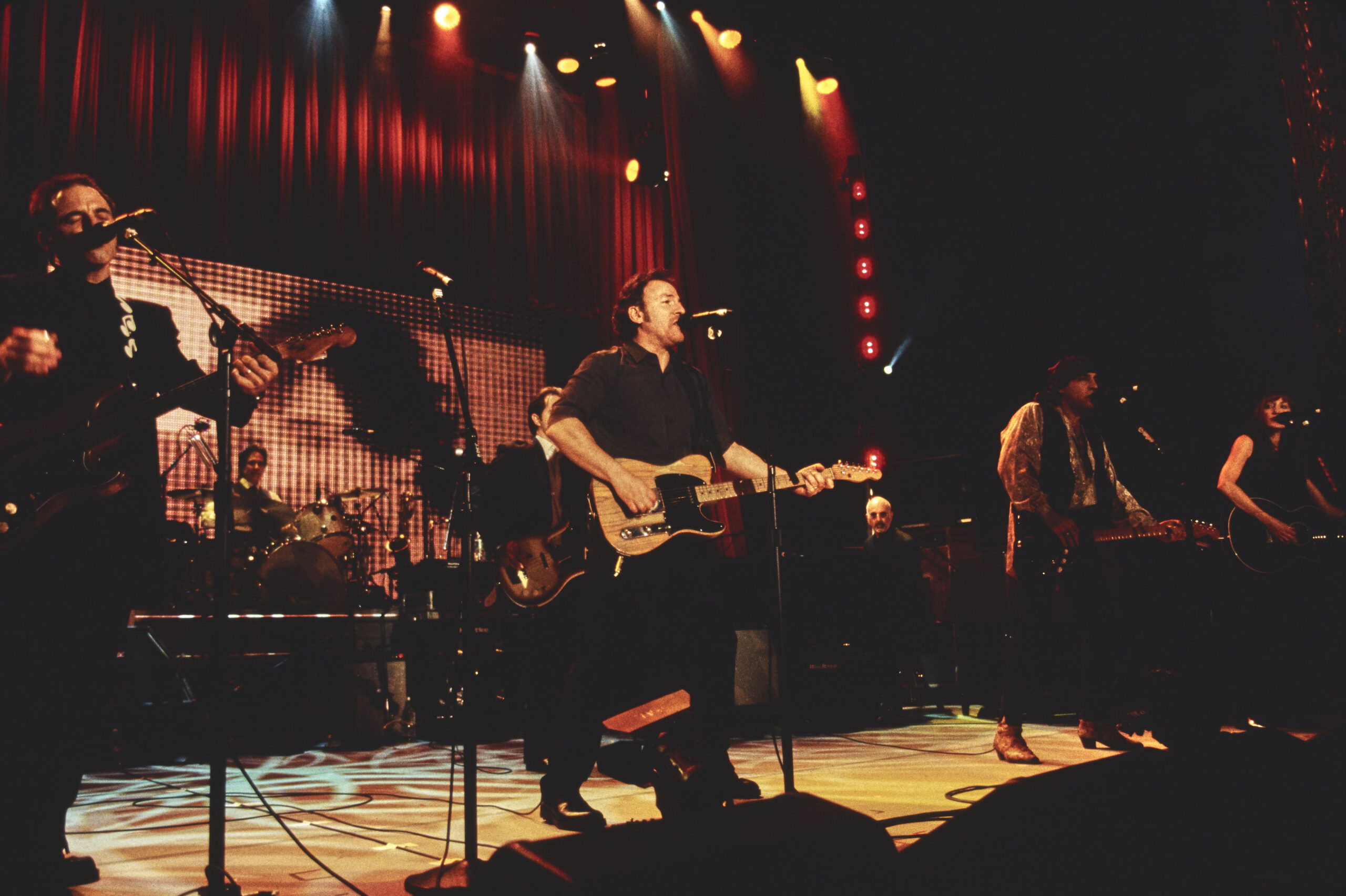
The four-CD box set Tracks, which appeared in November 1998, offered 56 unreleased performances and 10 non-album B sides. A single-disc set of highlights, 18 Tracks, came out in April 1999. That same month, Springsteen reunited with the E Street Band for a world tour for the first time since 1988-89’s “Human Rights Now! Amnesty International Tour.” This time, the E Street lineup included both Steve Van Zandt and Nils Lofgren on guitar. With its near-instant sellouts and three-hour performances, it was just like old times for the band and their fans. Springsteen set a record by performing 15 consecutive sold-out shows at the Continental Airlines Arena (formerly the Meadowlands) in New Jersey. He also anted up a new recording-"Lift Me Up,” from the soundtrack for the John Sayles movie Limbo-in 1999. Meanwhile, the tour headed toward a July 1, 2000, finale at New York’s Madison Square Garden.
TIMELINE
September 23, 1949: Bruce Springsteen is born in Freehold, New Jersey.
May 3, 1972: Bruce Springsteen auditions for Columbia Records A&R man John Hammond at his office in New York. He signs with the label a month later.
January 1, 1973: ‘Greetings from Asbury Park, N.J.’, Bruce Springsteen’s debut album, is released.
January 31, 1973: Bruce Springsteen performs in New York City for the first time.
November 1, 1973: The Wild, the Innocent and the E Street Shuffle’, Bruce Springsteen’s second album in less than a year, is released. Though neither album charts until 1975, Bruce Springsteen and his newly christened E Street Band steadily win fans on the road with their powerful two-hour sets.
May 22, 1974: A performance in Cambridge, Massachusetts, inspires music journalist Jon Landau to write, “I saw rock and roll’s future—and its name is Bruce Springsteen.”
September 6, 1975: ‘Born to Run’ by Bruce Springsteen and the E Street Band is released. The album garners critical raves, and Springsteen appears on the covers of both ‘Time’ and ‘Newsweek’ at the end of October.
October 27, 1975: Bruce Springsteen appears simultaneously on the covers of ‘Newsweek’ and ‘Time’ after ‘Born to Run’, his much-anticipated third album, quickly vaults to #3 on the album chart.
November 1, 1975: Bruce Springsteen hits #23 with “Born to Run”.
July 1976 - May 1977: Bruce Springsteen is engaged in a legal battle with manager Mike Appel, during which time an injunction prohibits Bruce Springsteen from recording with ‘Born to Run’ coproducer and soon-to-be manager Jon Landau.
June 1, 1977: After a settlement is reached in his lawsuits on May 28, Bruce Springsteen begins work on ‘Darkness On the Edge of Town’, his long-delayed fourth album. It is released on almost exactly a year later.
May 23, 1978: Bruce Springsteen and the E Street Band kick off their first major arena tour in Buffalo, New York. It ends seven months and 109 cities later in Cleveland on January 1, 1979.
September 23, 1979: On the very day he turns 30, Bruce Springsteen performs a set at New York’s Madison Square Garden as part of the Musicians United for Safe Energy (MUSE) benefit concert. His “Mitch Ryder Medley” is a favorite part of the multi-artist three-album set, No Nukes, culled from the concert.
November 1, 1980: ‘The River’, Bruce Springsteen’s sprawling double-album masterwork, enters the U.S. charts, which it tops for four consecutive weeks. Bruce Springsteen and the E Street Band kick off another marathon tour on November 3. It ends ten and a half months later in Cincinnati, on September 14, 1981.
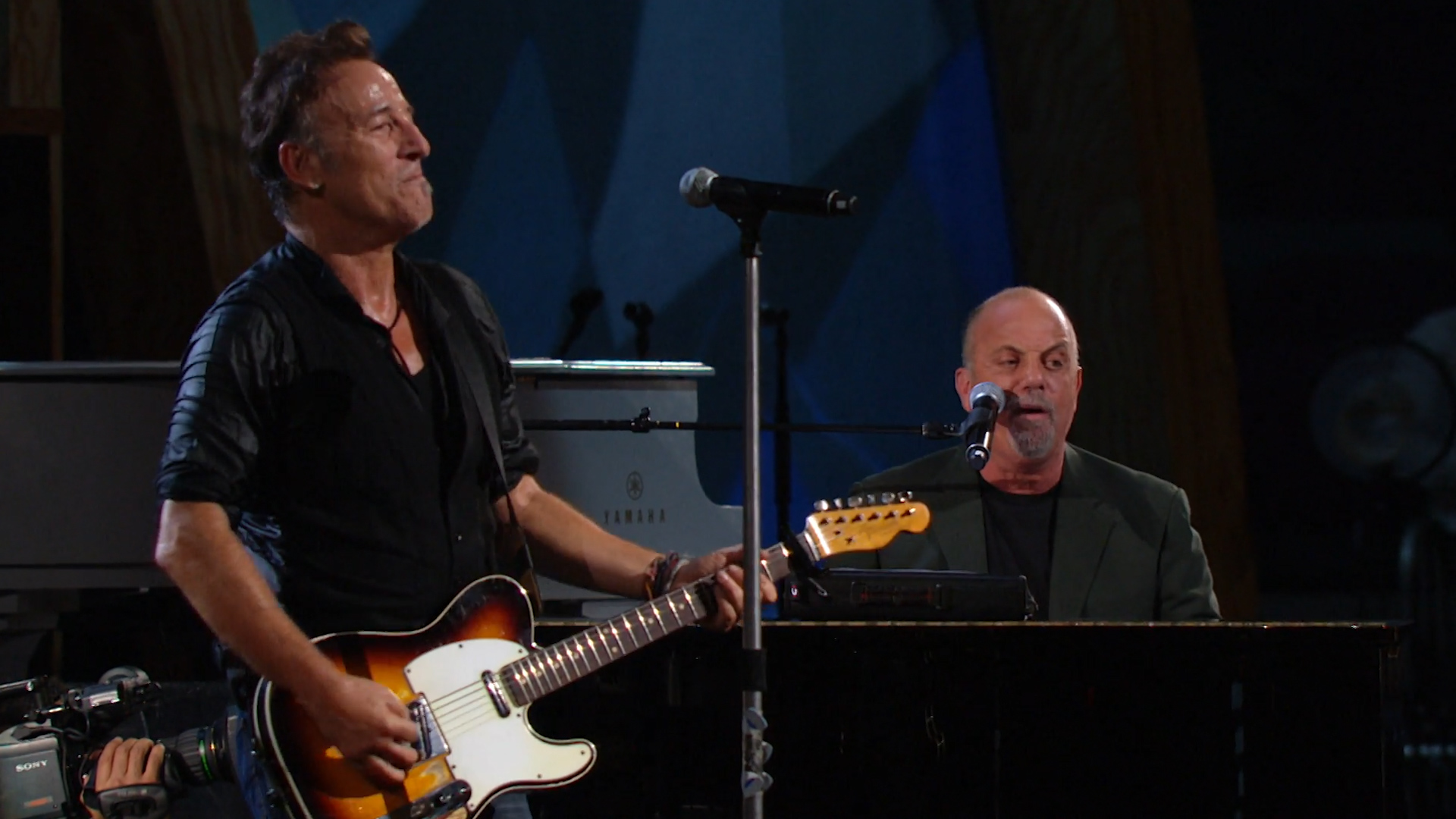
1982: Bruce Springsteen releases his mostly acoustic, folk-flavored album ‘Nebraska’.
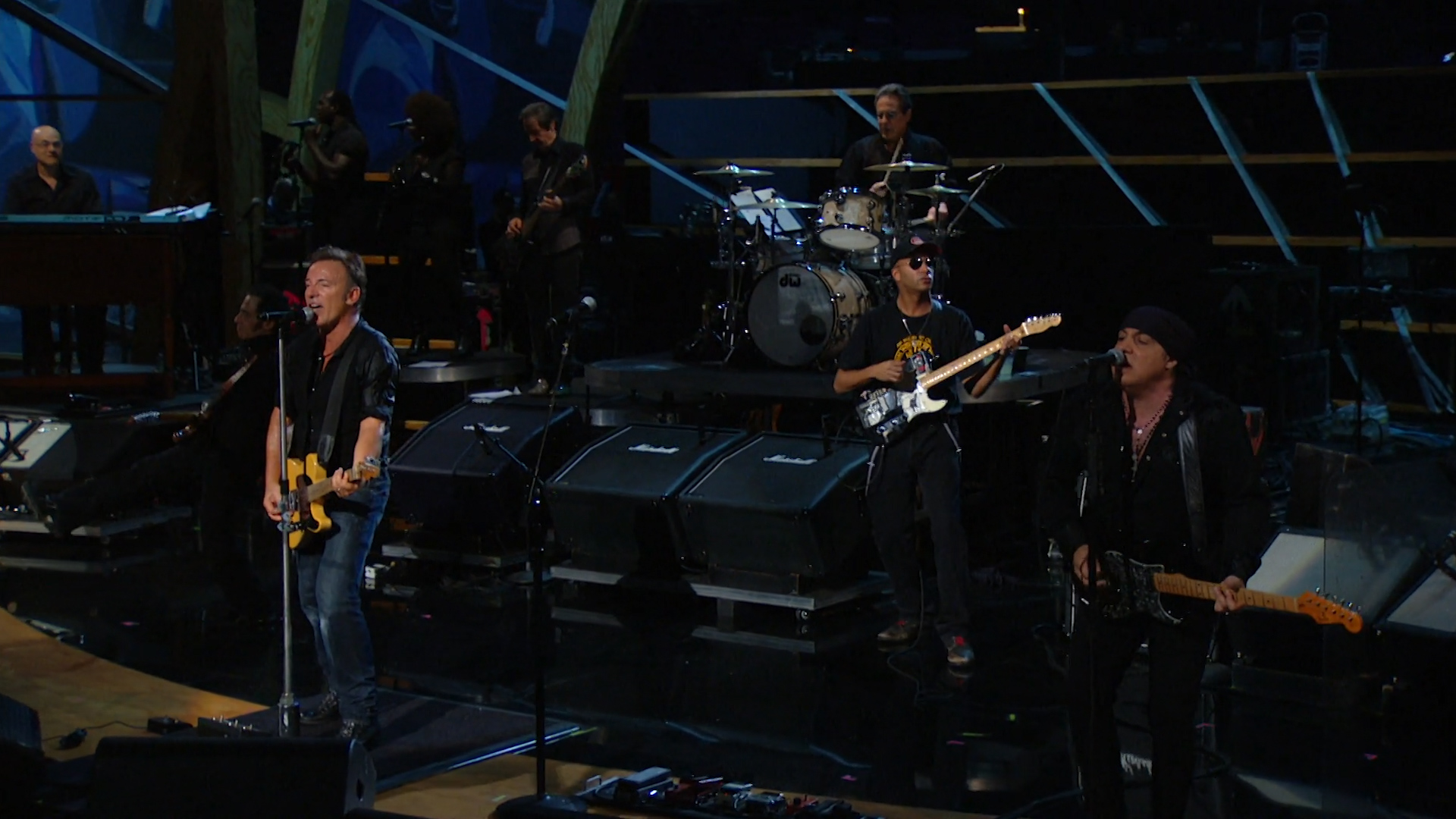
September 1, 1982: Bruce Springsteen’s Nebraska, an acoustic solo set of dark-themed material cut at home on a four-track cassette recorder—and originally intended as a demo tape of new material for the E Street Band to learn—is released as is.
June 17, 1984: Culled from roughly 100 songs recorded over the previous year and a half, Bruce Springsteen’s ‘Born in the U.S.A.’ is released. It becomes one of the biggest albums of the Eighties, remaining at #1 for seven weeks and selling more than 15 million copies. It also launches seven Top Ten singles: “Dancing in the Dark” (#2), “Cover Me” (#7), “Born in the U.S.A.” (#9), “I’m On Fire” (#6), “Glory Days” (#5), “I’m Goin’ Down” (#9) and “My Hometown” (#6).
October 2, 1985: Bruce Springsteen’s globe-trotting Born in the U.S.A. Tour draws to a close at the Los Angeles Memorial Coliseum. The 15-month, 150-date outing found him performing at mammoth outdoor stadiums and indoor arenas.
November 29, 1986: Bruce-mania remains in full swing as Bruce Springsteen’s hotly anticipated five-album box set, Live/1975-85, becomes a retail sensation at Christmastime. The decade-spanning collection of concert recordings enters the chart at #1.
November 5, 1987: ‘Tunnel of Love’ becomes Bruce Springsteen’s fourth #1 album, following ‘The River’, ‘Born in the U.S.A.’ and ‘Live 1975-85’. According to ‘Billboard’, he is the only artist to amass four #1 albums in the past ten years.
January 31, 1989: The 18-song Video Anthology/1978-88, which contains every Bruce Springsteen video to date, is released.
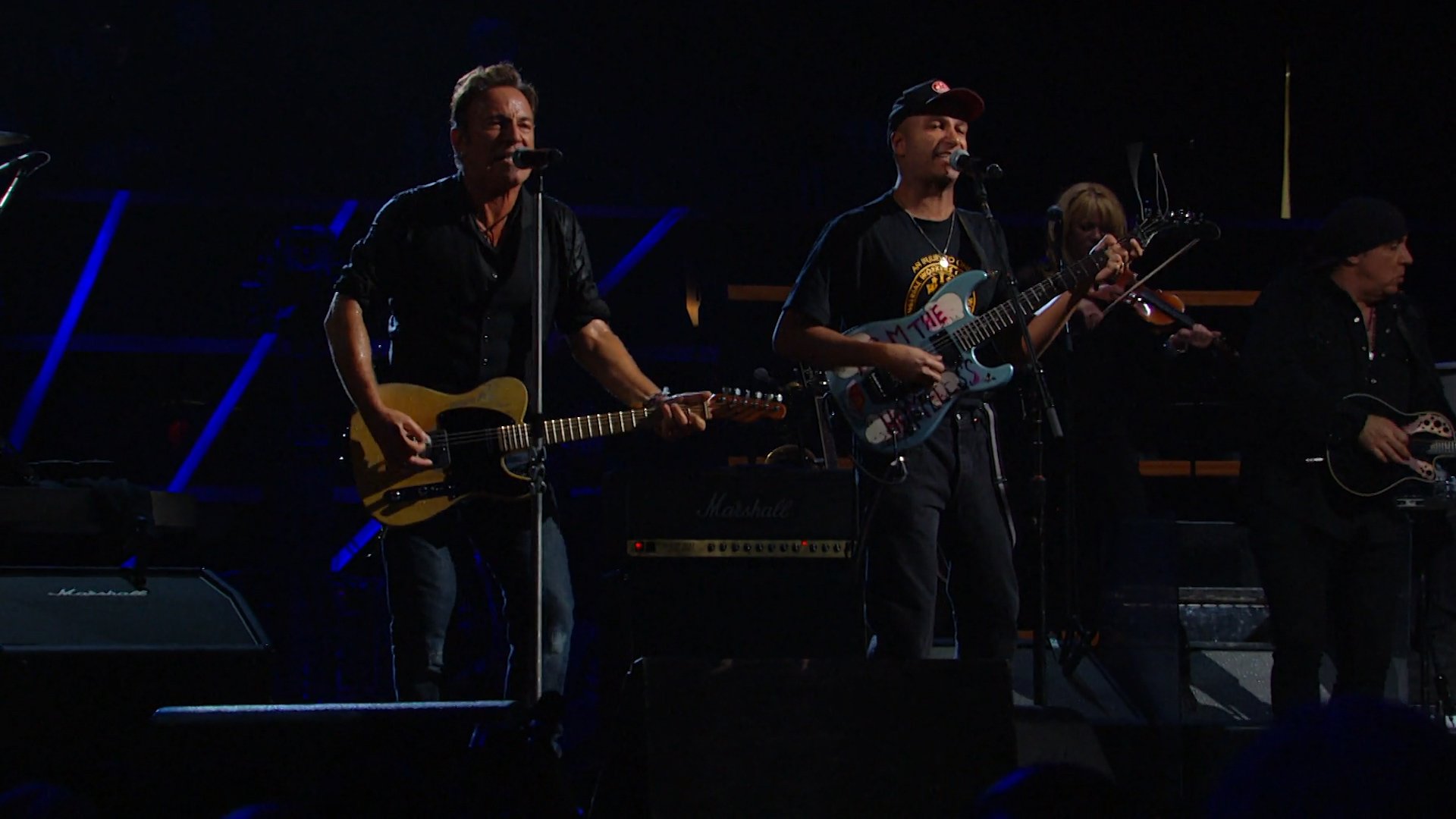
June 9, 1991: Bruce Springsteen and Patti Scialfa, a member of his E Street Band since 1984, are married in a ceremony at their home in Beverly Hills, California.
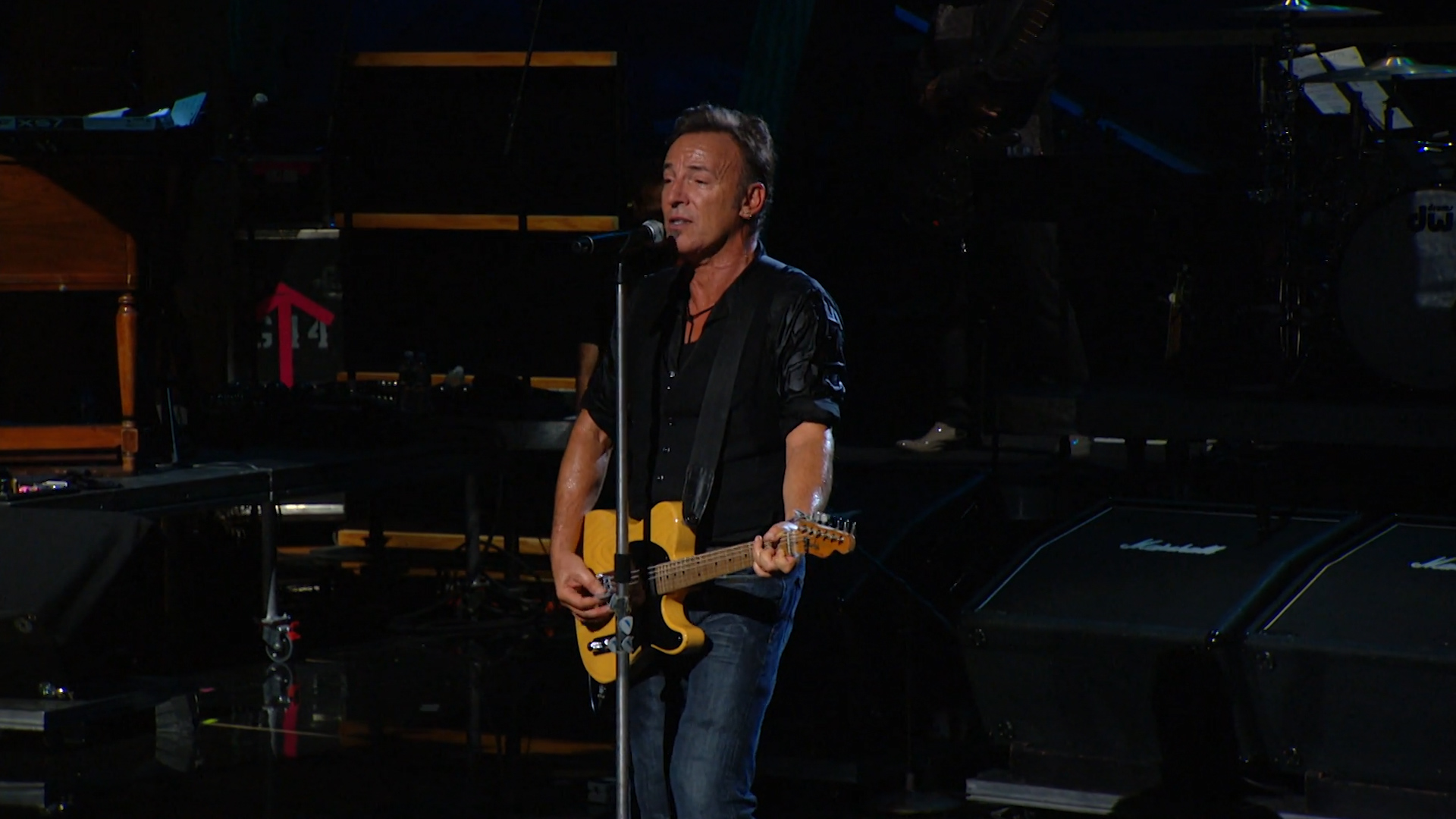
April 18, 1992: ‘Human Touch’ and ‘Lucky Town’, two simultaneously released studio albums by Bruce Springsteen, debut at #2 and #3, respectively.
November 11, 1992: A live-in-the-studio performance by a fully plugged-in Bruce Springsteen and band premieres on MTV’s “Unplugged” series. The show is released on home video a month later as ‘Bruce Springsteen: MTV Plugged’ and appears on CD in 1997.
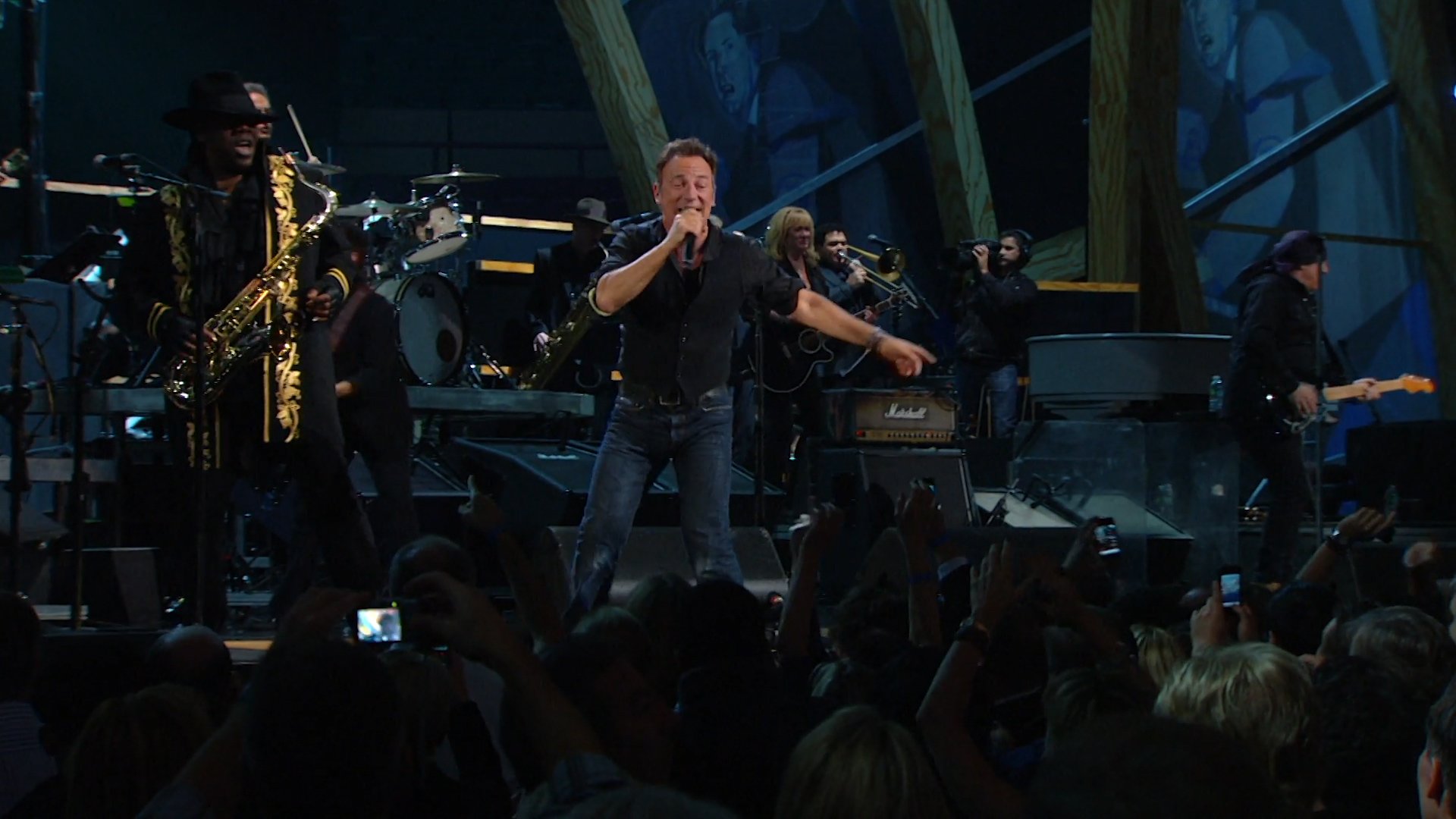
November 11, 1992: MTV presents Bruce Springsteen in a first-ever televised concert performance “Bruce Springsteen Plugged.”
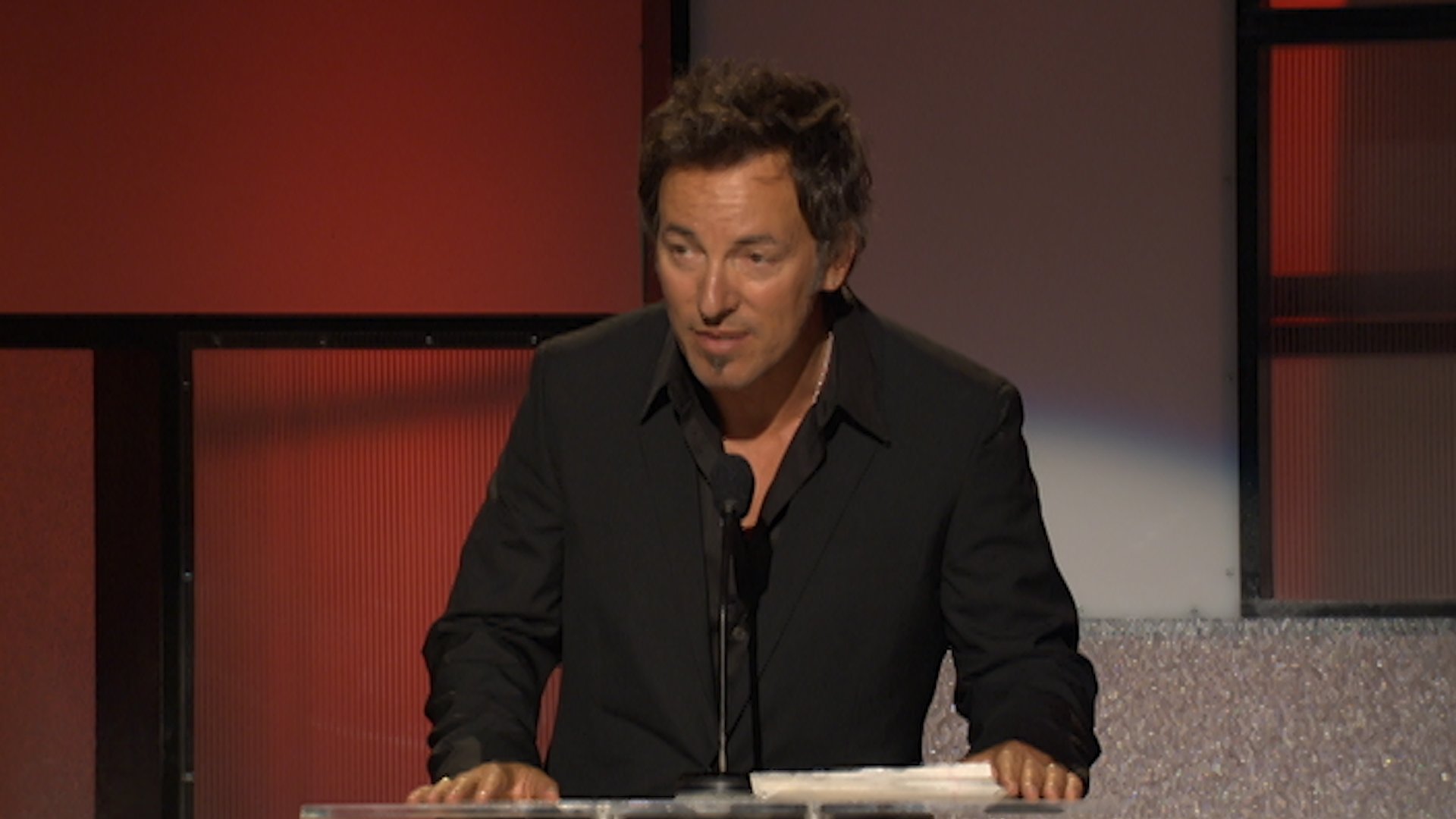
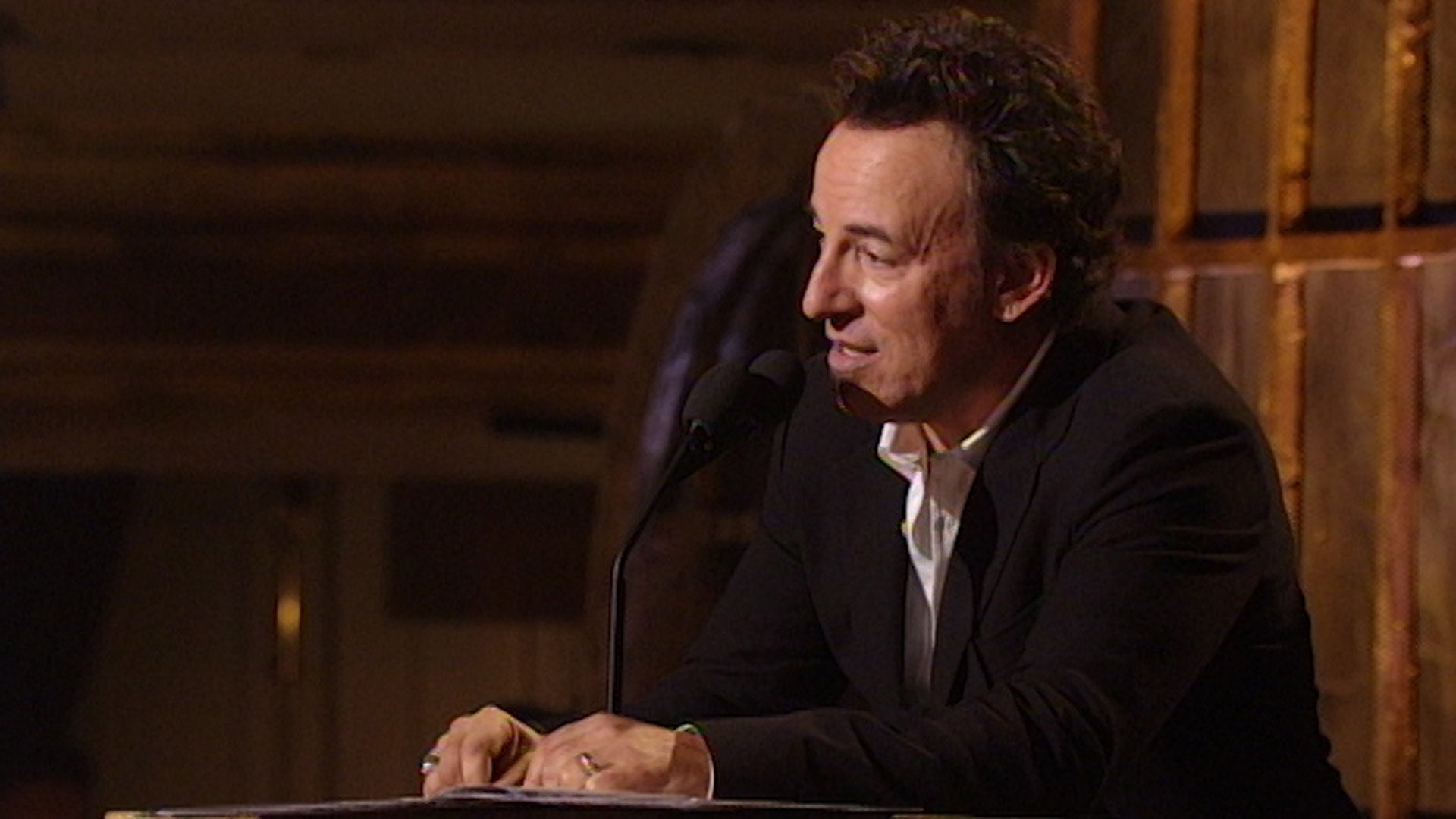
April 23, 1994: “Streets of Philadelphia,” Bruce Springsteen’s contribution to the film AIDS-themed film ‘Philadelphia’, becomes his first Top Ten hit since “Tunnel of Love” in 1987.
March 18, 1995: ‘Greatest Hits’, an 18-track anthology that includes newly recorded tracks by Bruce Springsteen and the E Street Band, enters the album chart at #1. A video documentary of the studio reunion is released in 1998 as ‘Blood Brothers’.
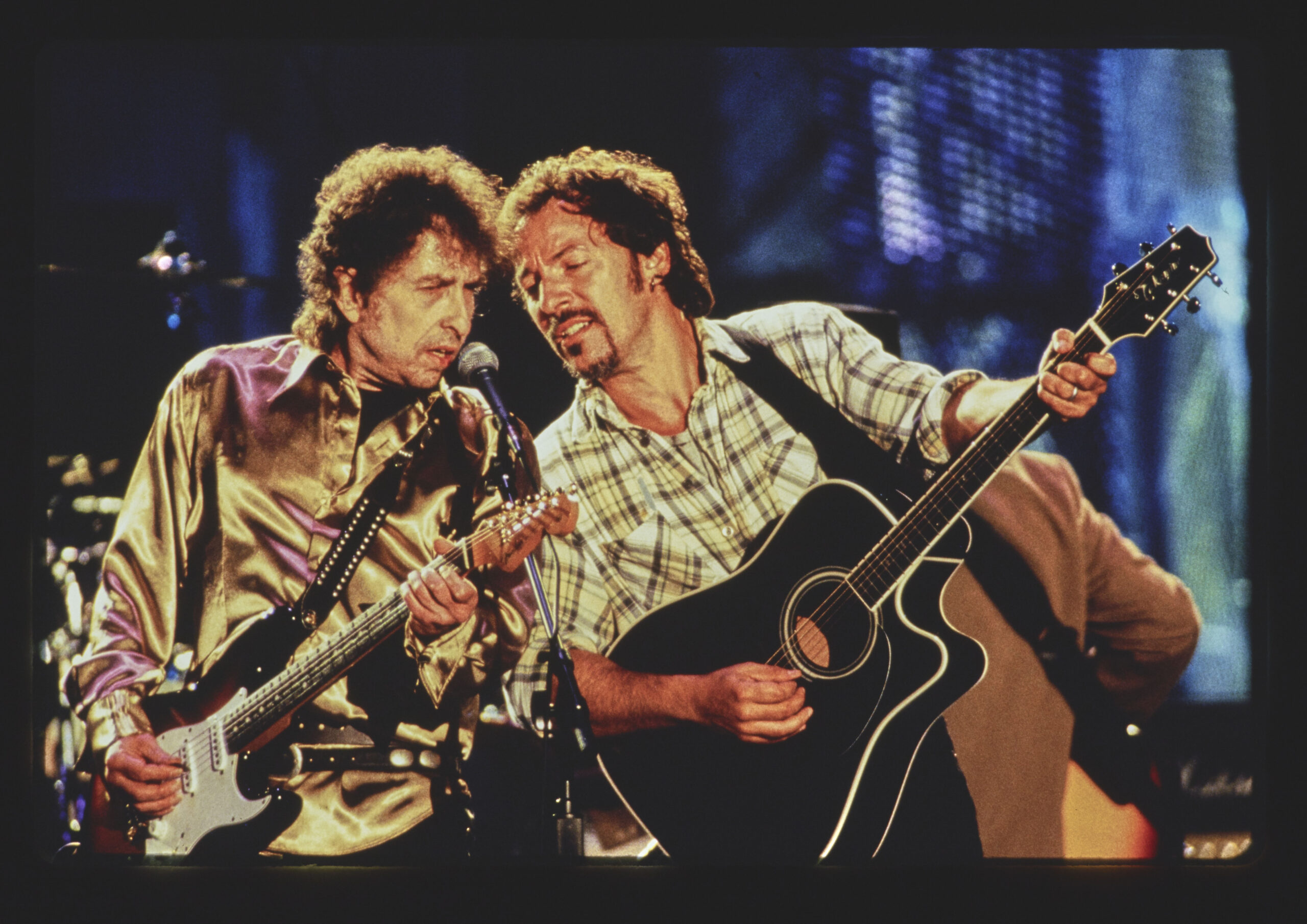
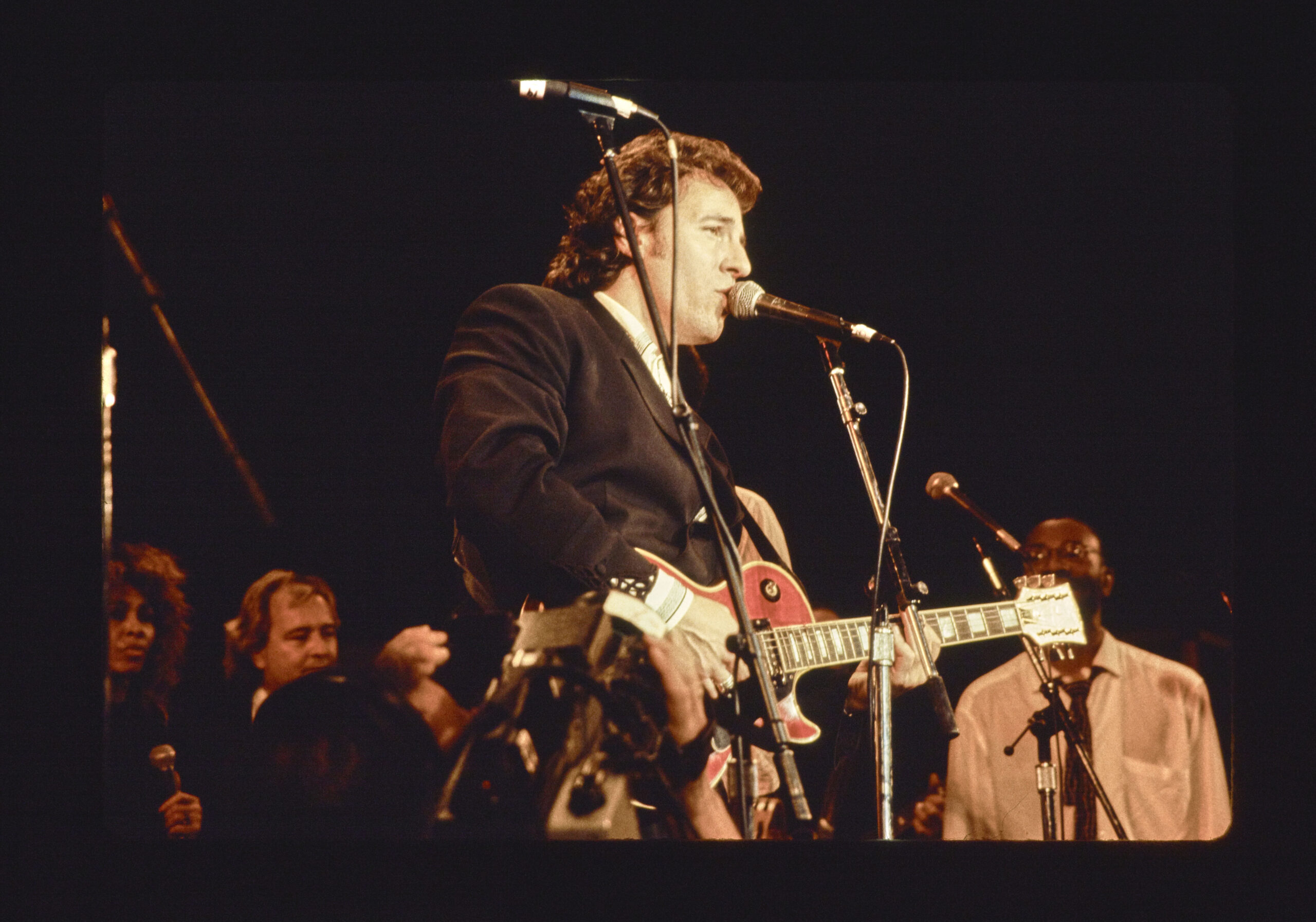
September 2, 1995: Backed by Bruce Springsteen and the E Street Band, Jerry Lee Lewis sings “Whole Lotta Shakin’ Goin’ On” and “Great Balls of Fire” at the Concert for the Rock and Roll Hall of Fame in Cleveland.
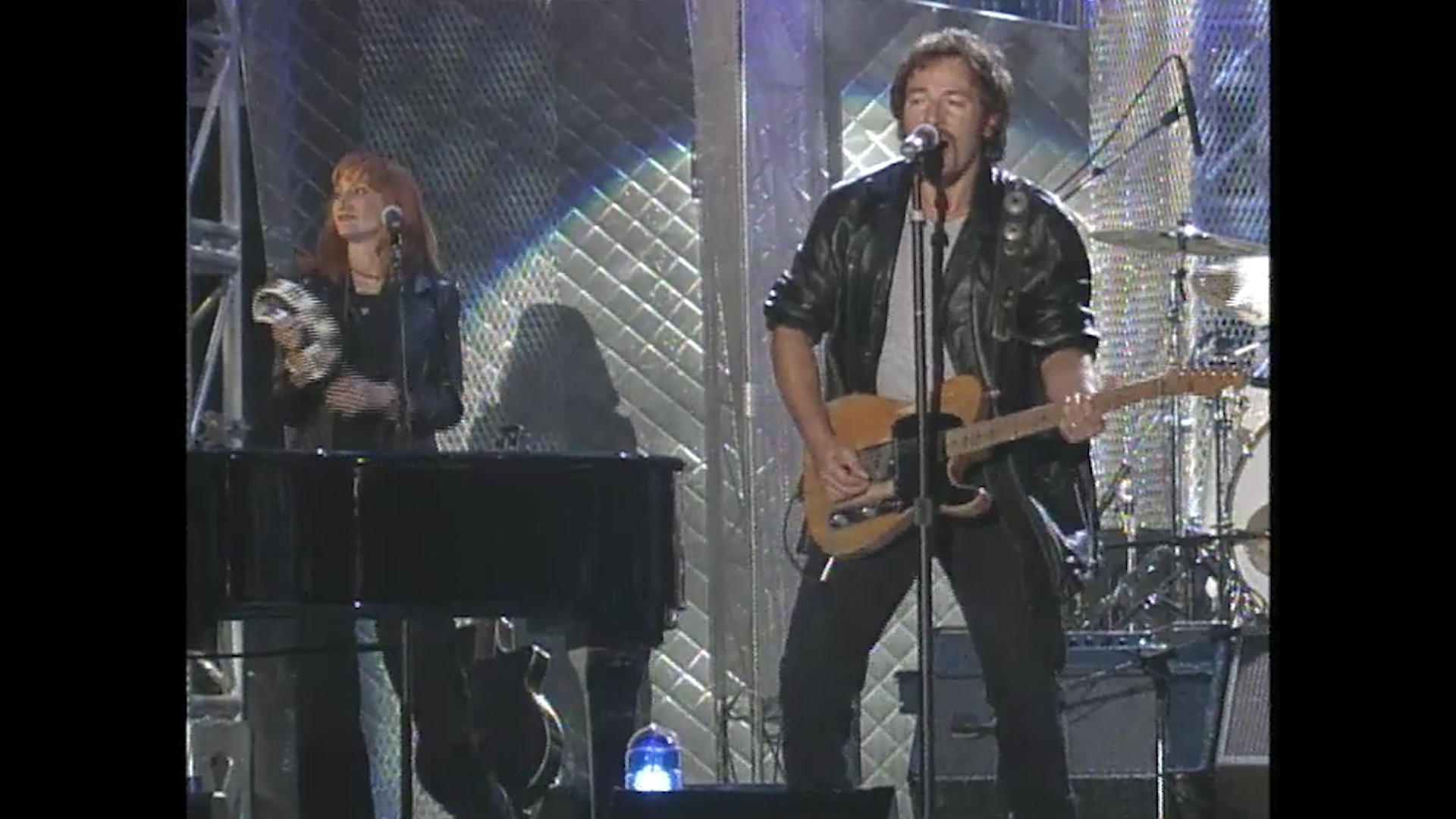
September 2, 1995: Backed by Bruce Springsteen and the E Street Band, Chuck Berry performs “Johnny B. Goode” and “Rock and Roll Music” at the Concert for the Rock and Roll Hall of Fame in Cleveland.
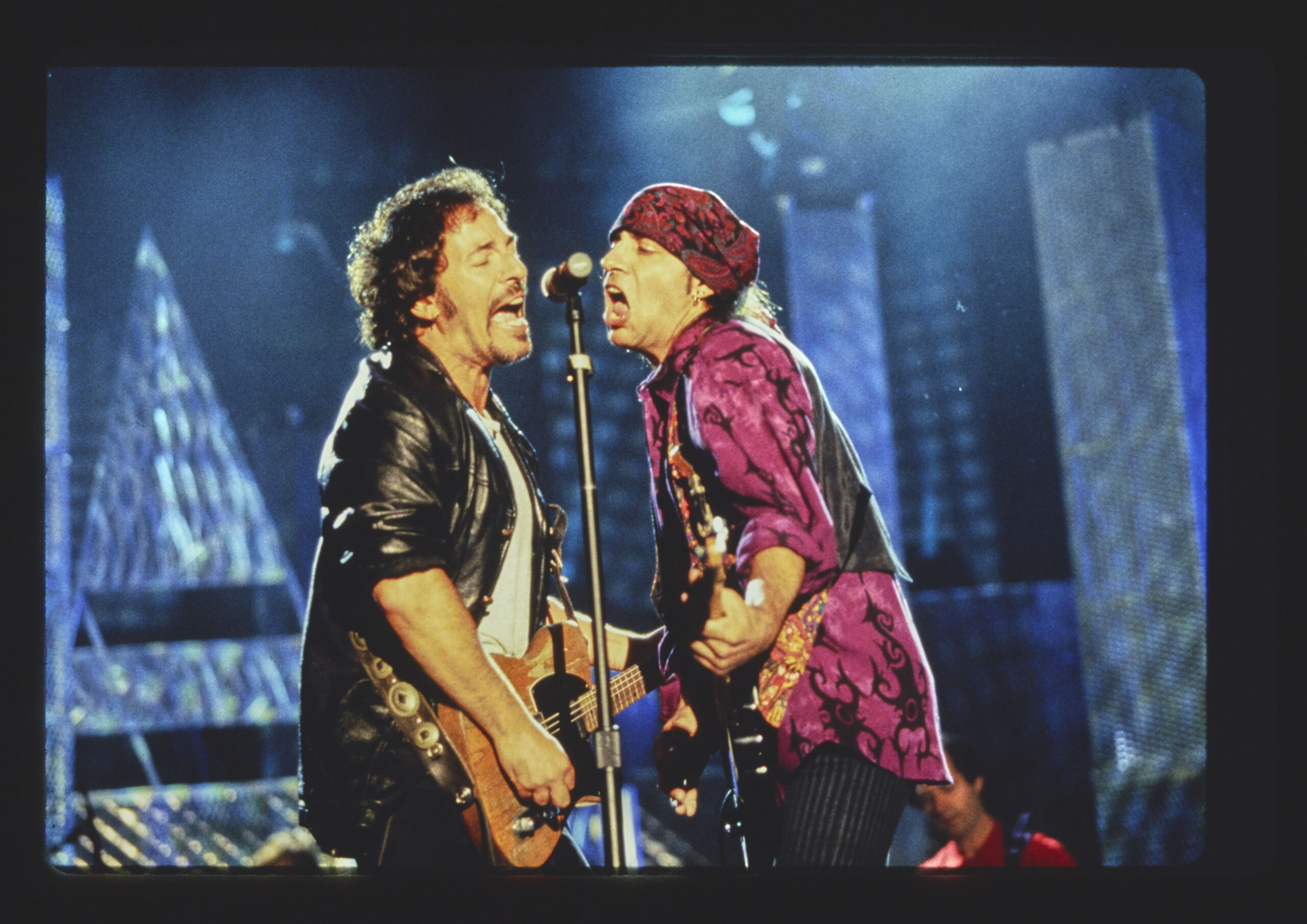
November 26, 1996: Bruce Springsteen begins his first solo acoustic tour in Los Angeles, coinciding with the release of ‘The Ghost of Tom Joad’.
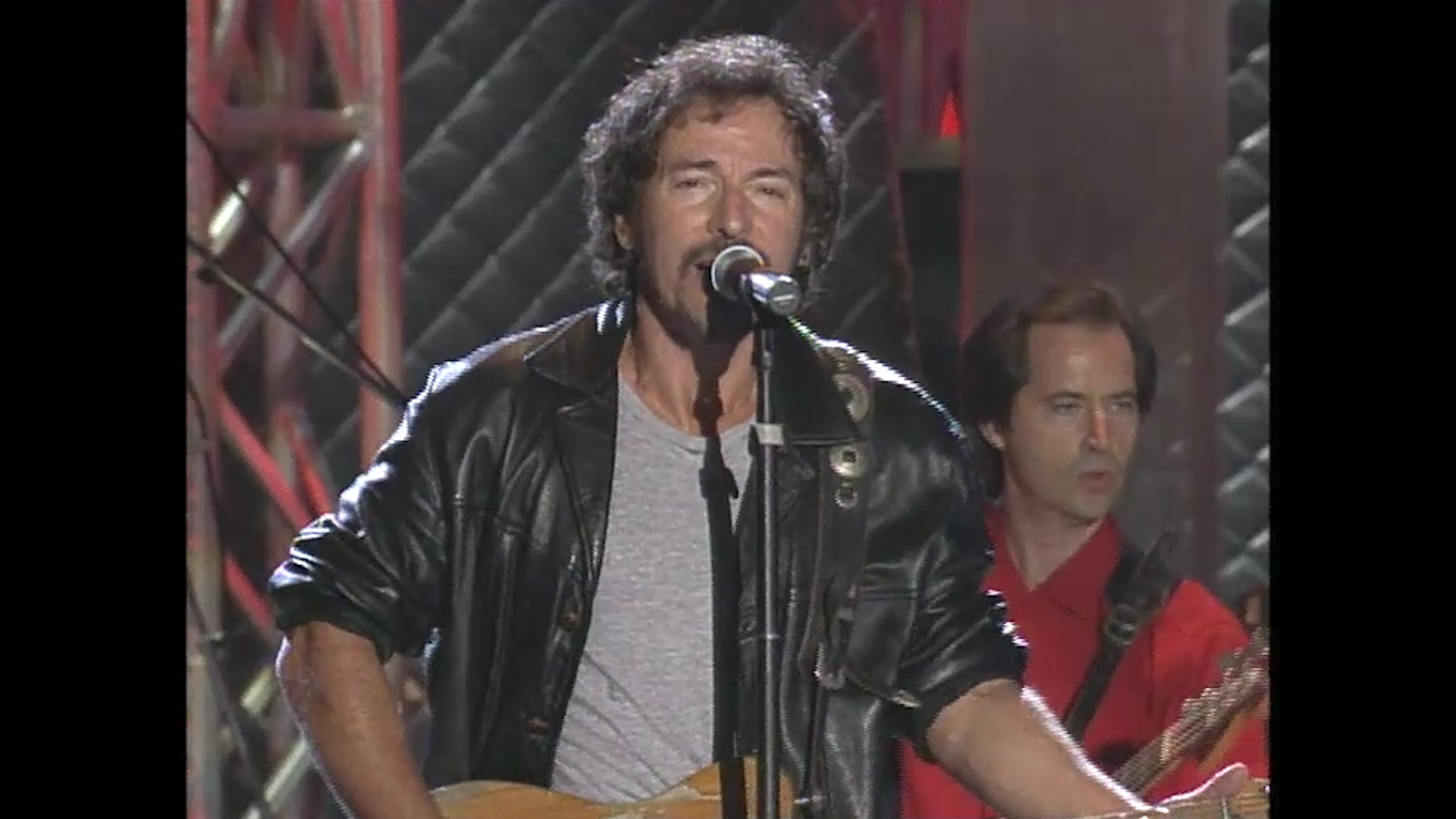
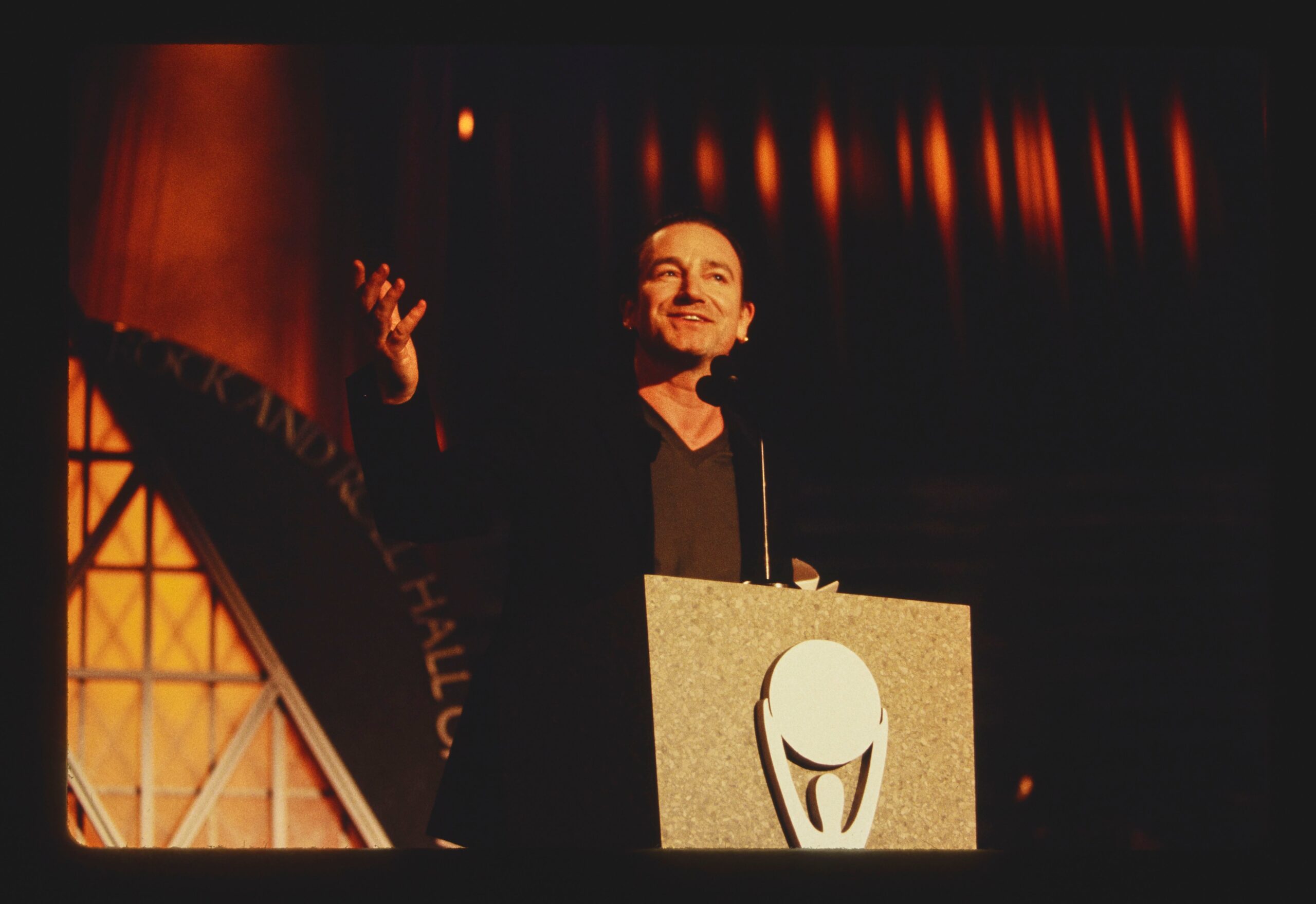
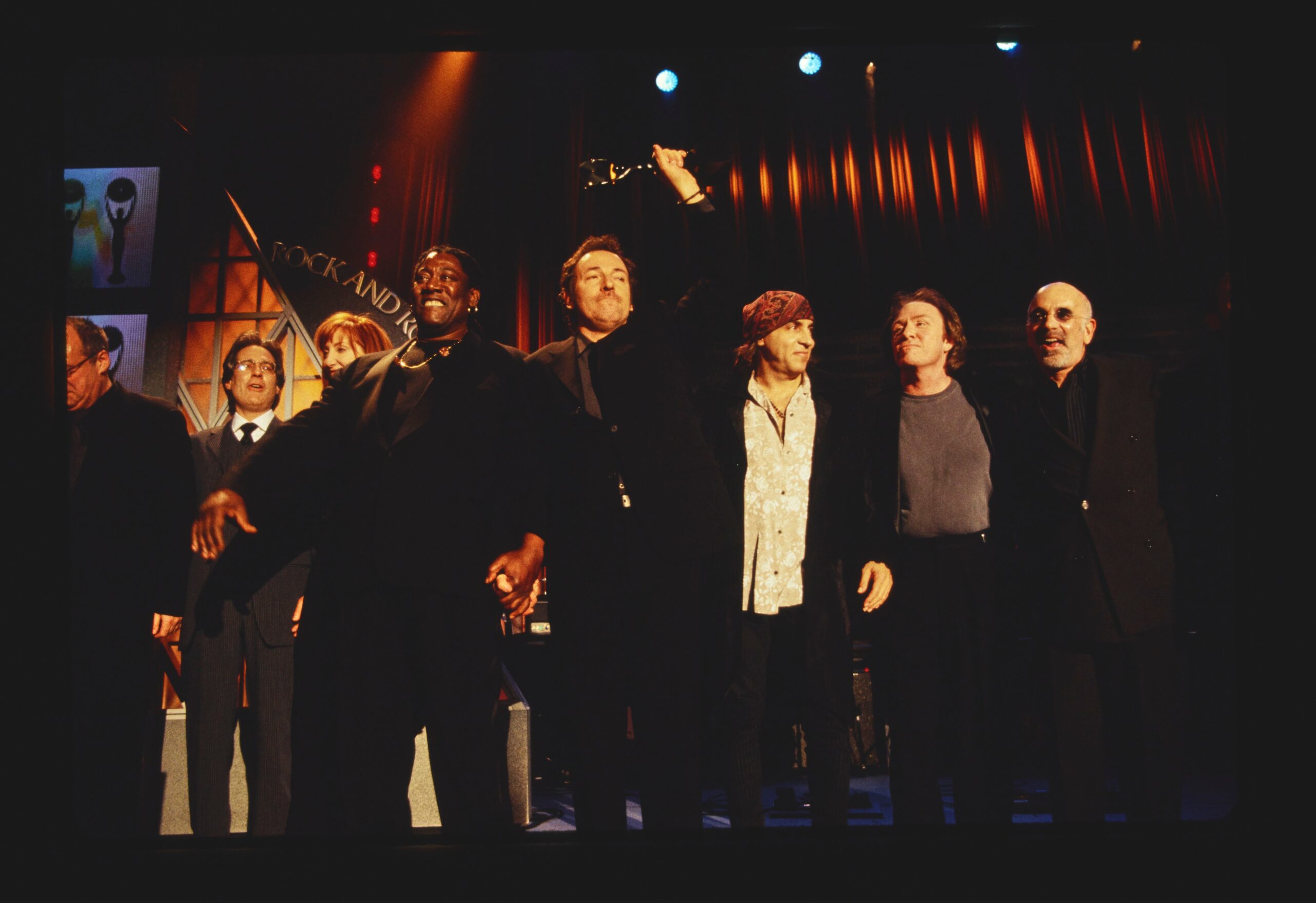
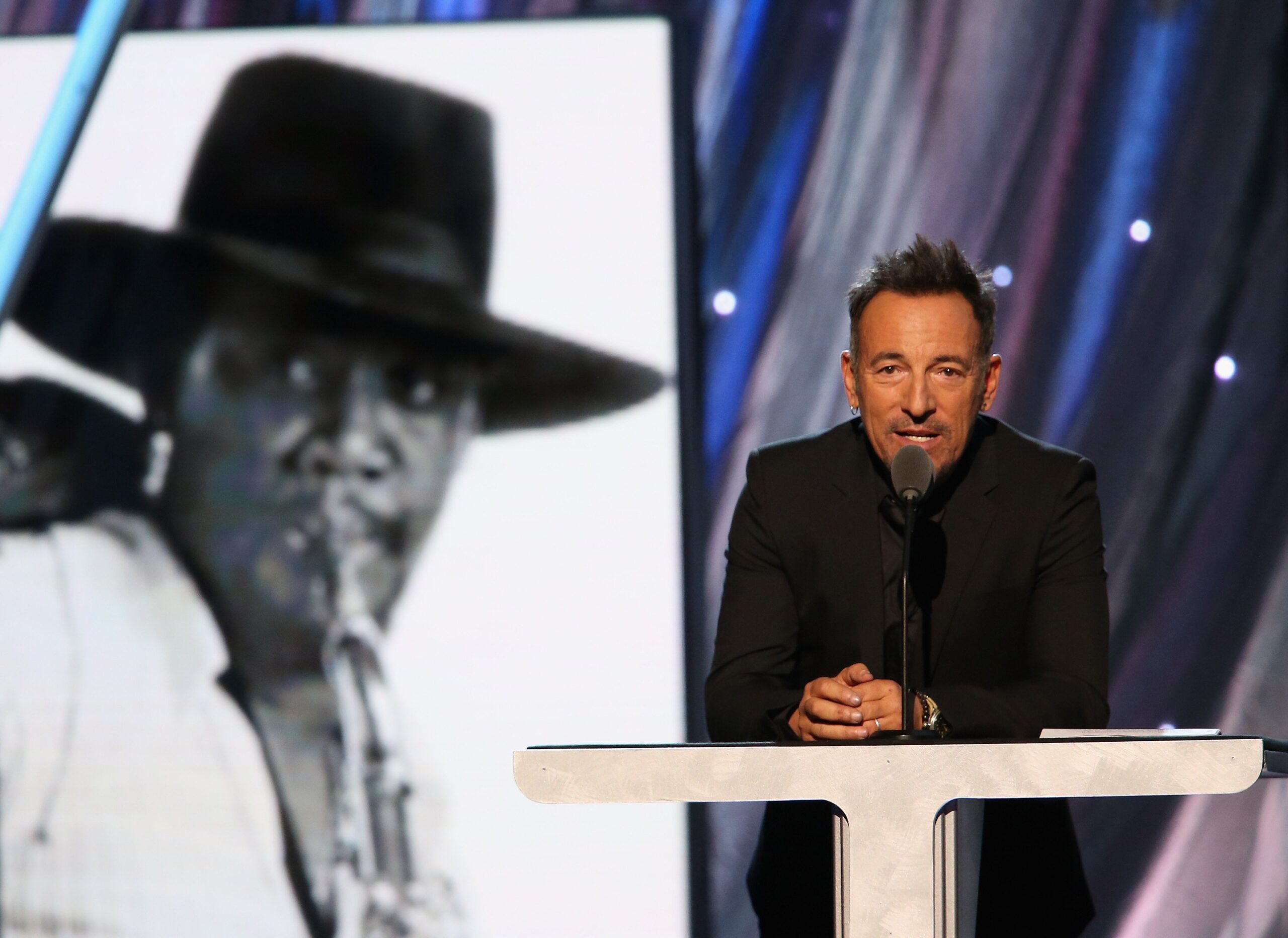
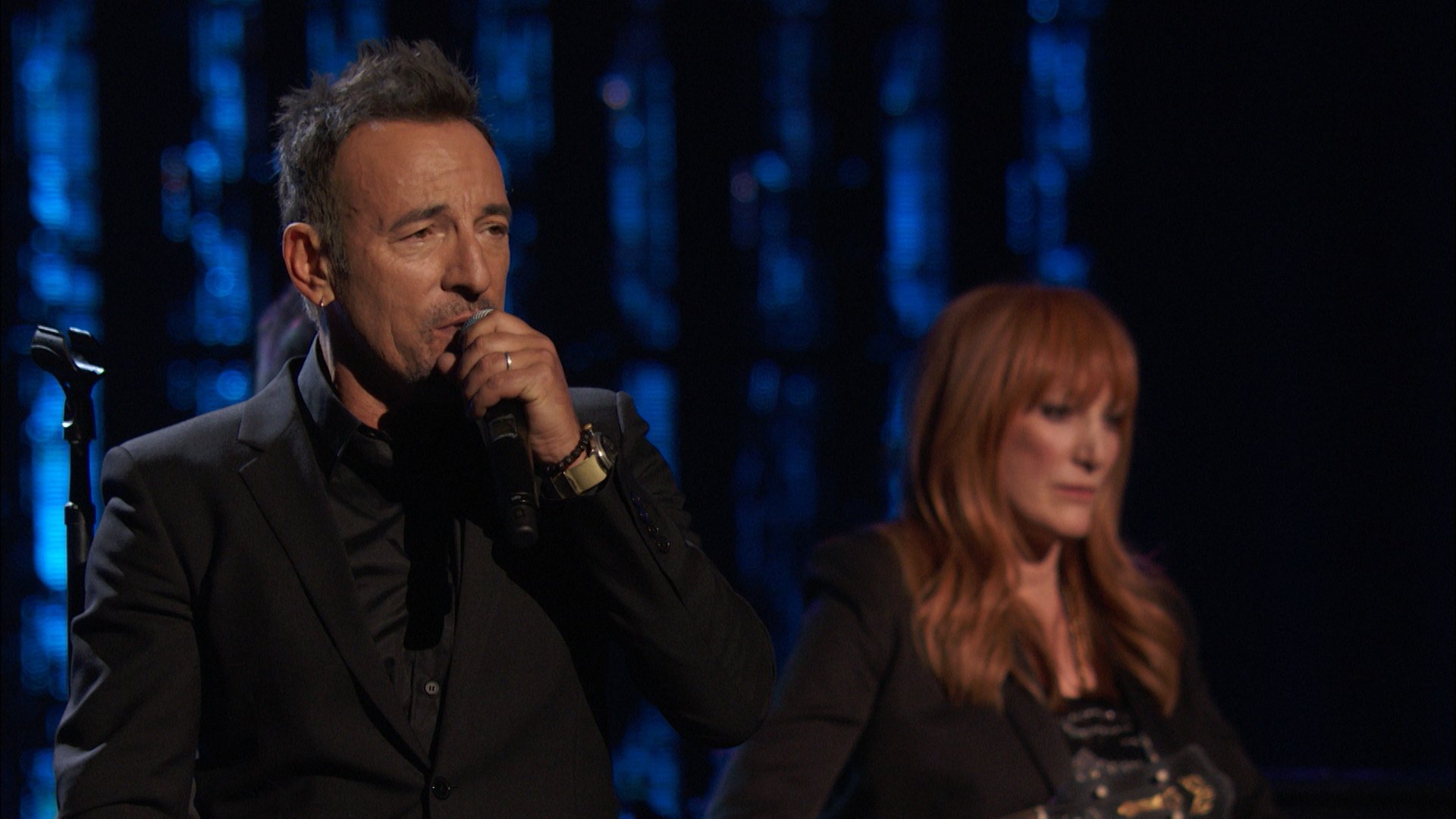
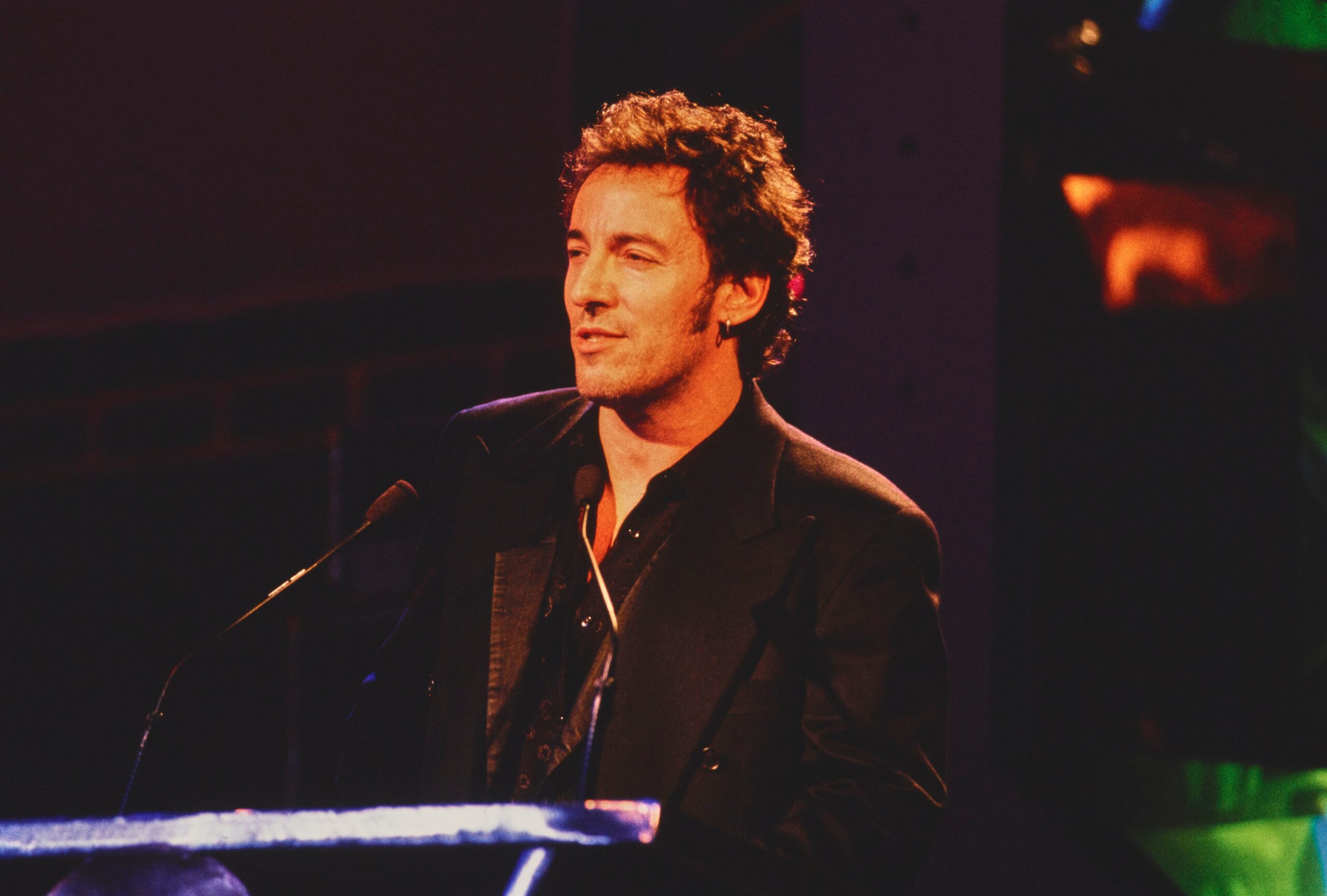
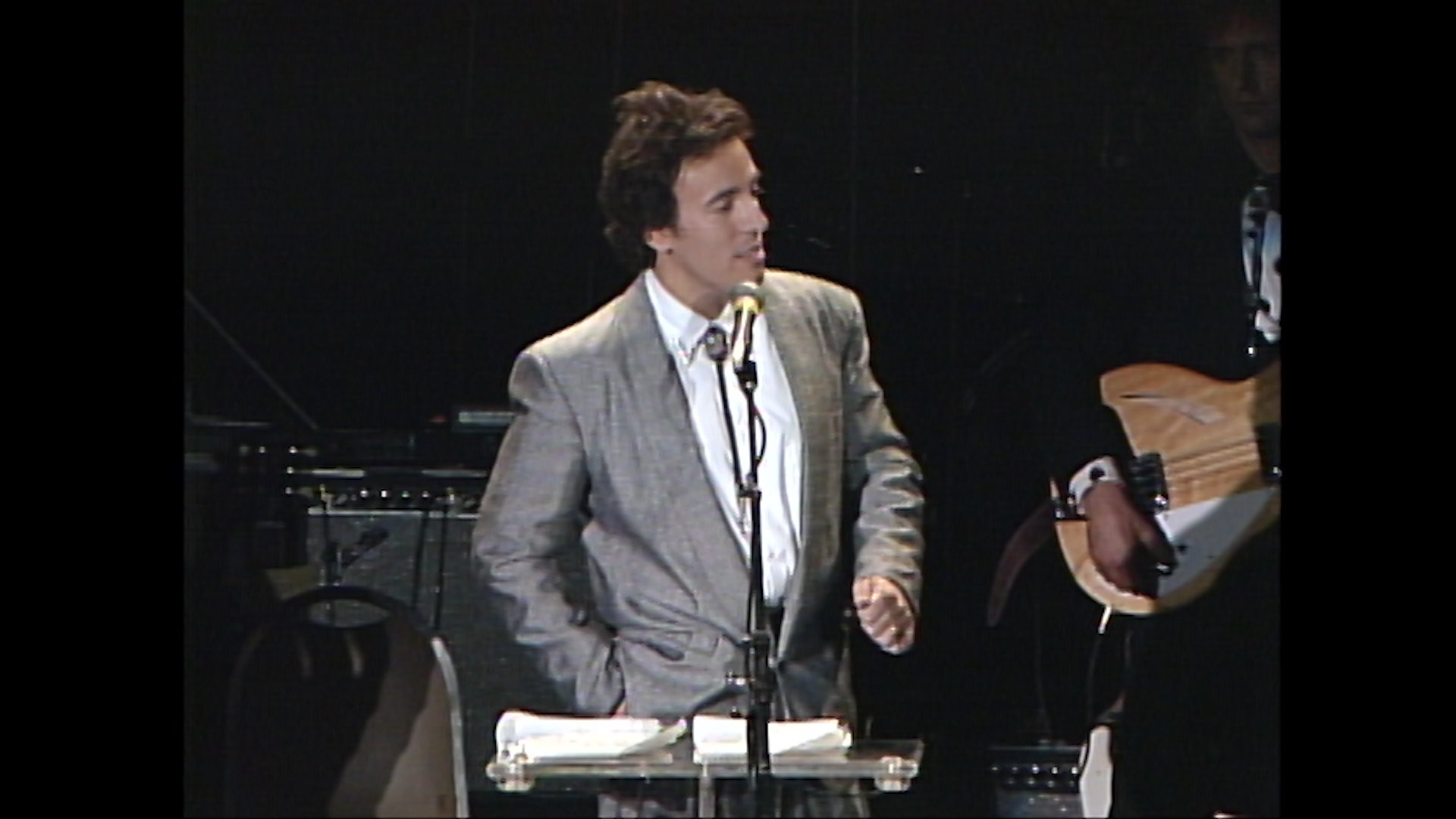
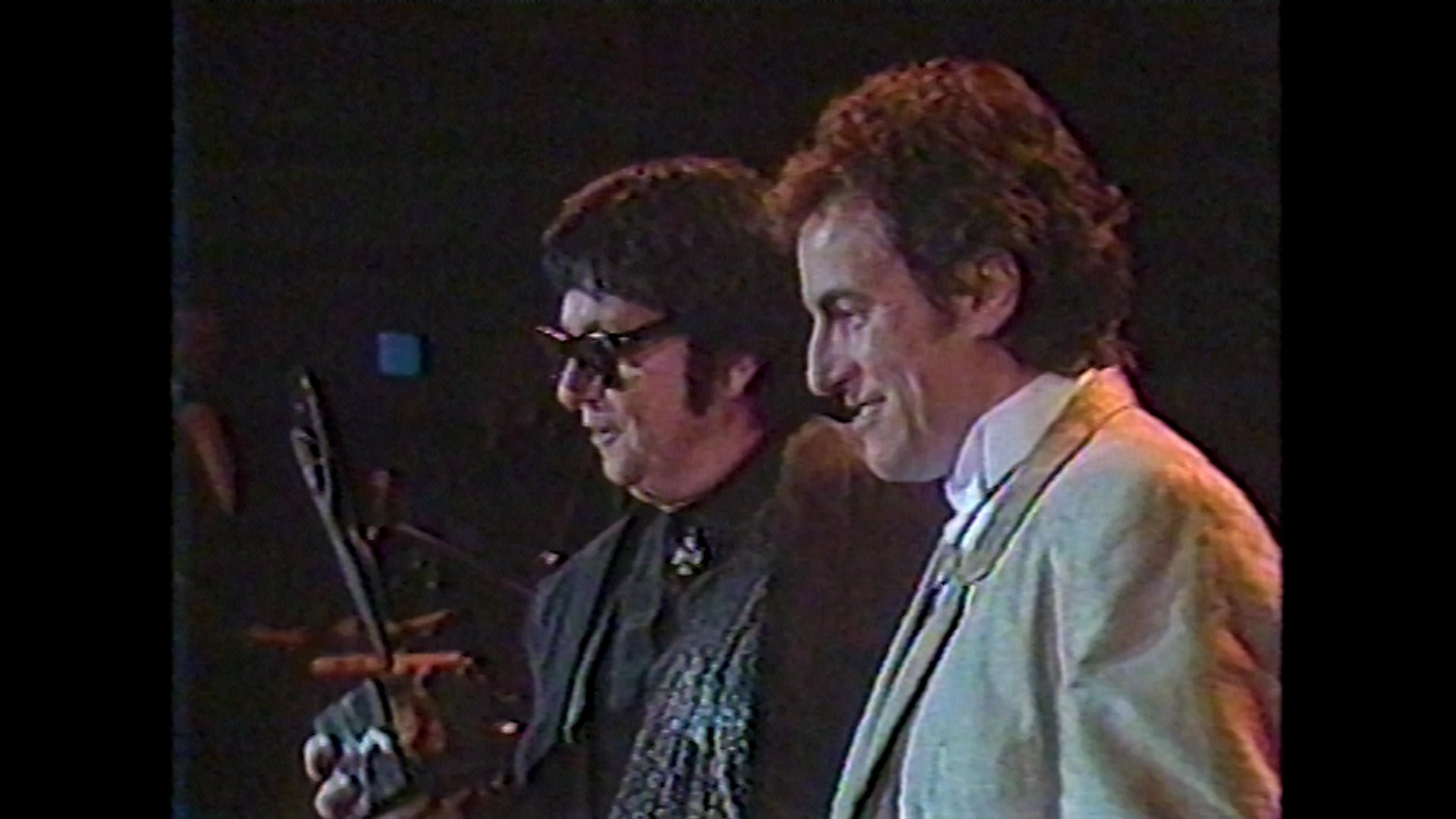
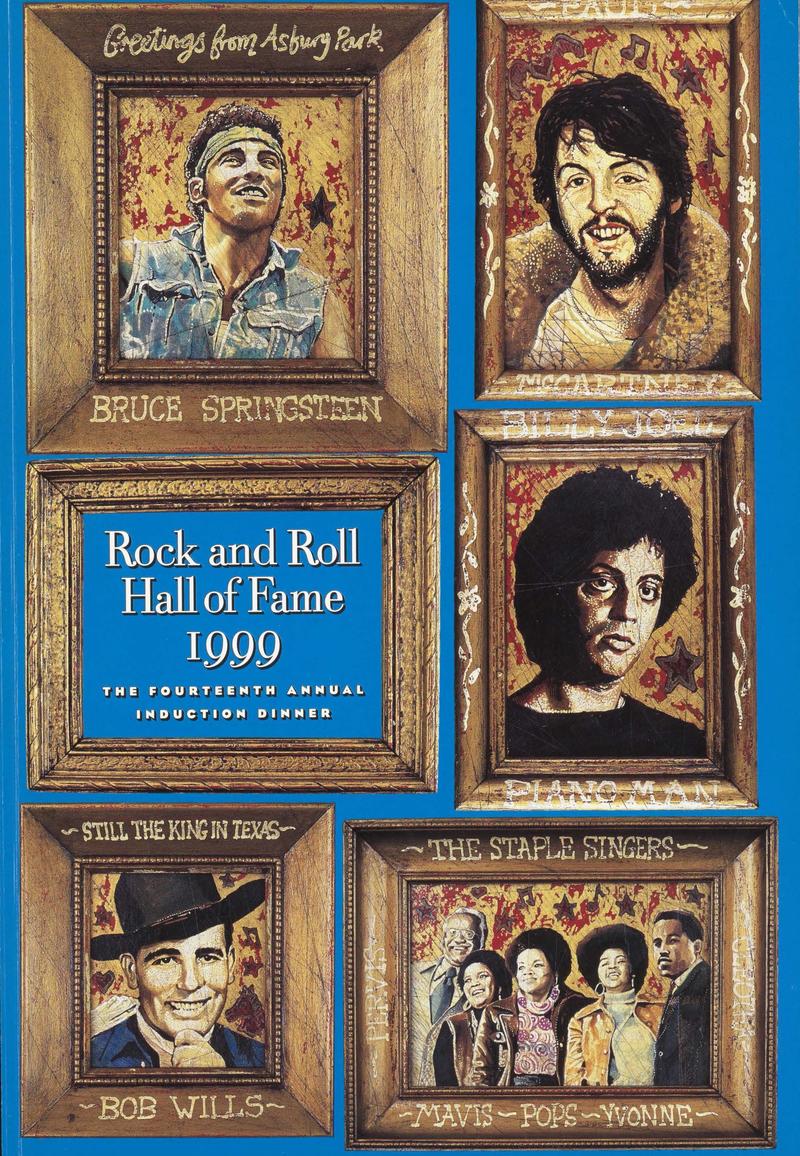
March 15, 1999: Bruce Springsteen is inducted into the Rock and Roll Hall of Fame at the fourteenth annual induction dinner. Bono (of U2) is his presenter.
April 9, 1999: Bruce Springsteen’s reunion tour with the E Street Band kicks off in Barcelona, Spain. The band plays for three hours without a break.
July 15, 1999: The U.S. leg of the Bruce Springsteen and the E-Street Band reunion tour commences with the first of 15 sold-out shows at New Jersey’s Continental Airlines Arena.
April 17, 2008: Danny Federici, keyboardist for Bruce Springsteen and the E Street Band, dies of melanoma in New York City.
Essential Recordings
Born to Run
Rosalita (Come Out Tonight)
Born in the U.S.A.
Darkness on the Edge of Town
Blinded by the Light
Jungleland
Dancing’ in the Dark
Tunnel of Love
The River
Better Days
Recommended Reading
It Ain’t No Sin to Be Glad You’re Alive: The Promise of Bruce Springsteen
Eric Alterman. New York: Little, Brown & Co., 1999.
Born to Run: The Bruce Springsteen Story
Dave Marsh. New York: Dell Publishing, 1981.
Glory Days: Bruce Springsteen in the 1980s
Dave Marsh. New York: Pantheon Books, 1987.
Bruce Springsteen: The Rolling Stone Files
Parke Puterbaugh and the editors of Rolling Stone. New York: Hyperion Books/Rolling Stone Press, 1996.