Rock and Roll Hall of Fame and Museum

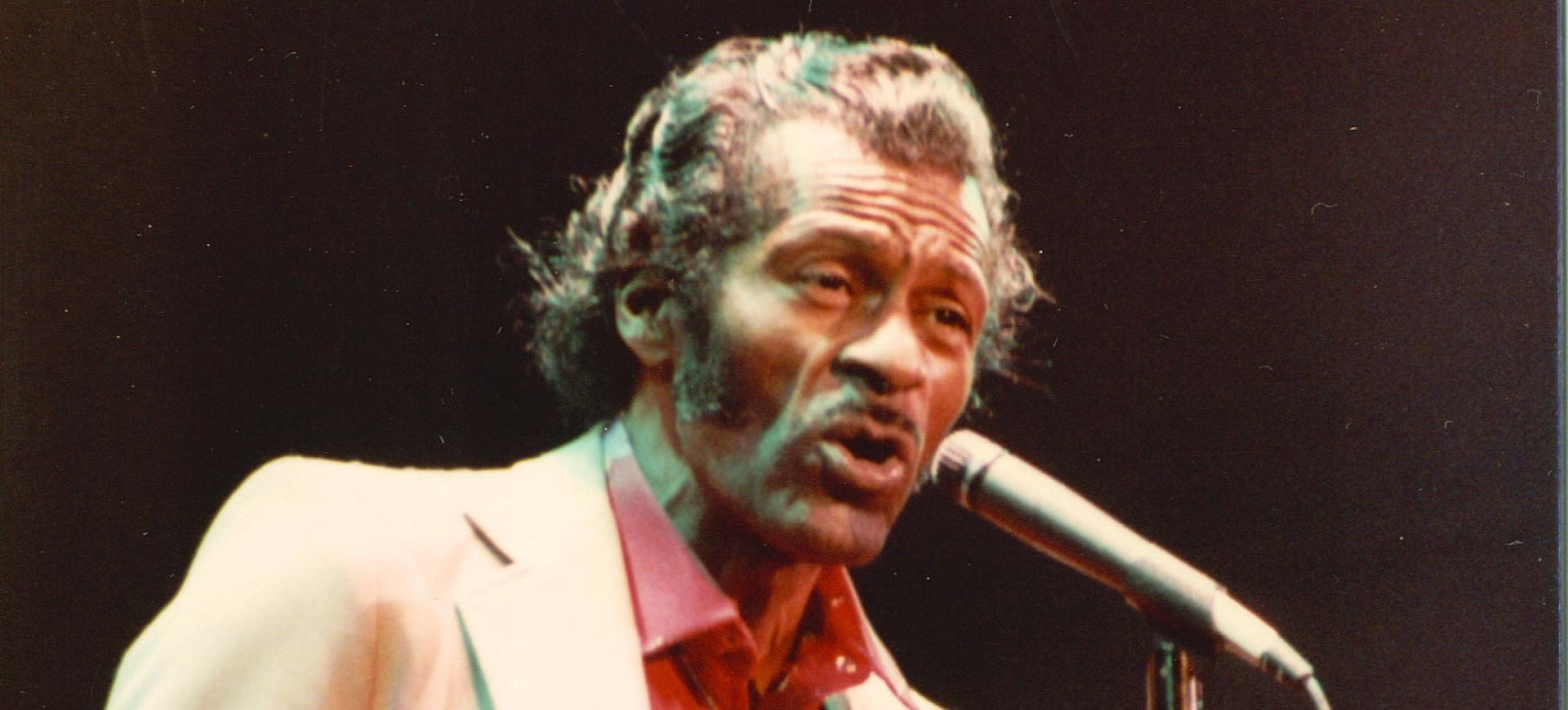
Chuck Berry

Induction Year: 1986

Induction Category: Performer


"While no individual can be said to have invented rock and roll, Chuck Berry comes the closest of any single figure to being the one who put all the essential pieces together. It was his particular genius to graft country & western guitar licks onto a rhythm & blues chassis in his very first single, “Maybellene.” Combined with quick-witted, rapid-fire lyrics full of sly insinuations about cars and girls, Berry laid the groundwork for not only a rock and roll sound but a rock and roll stance. The song included a brief but scorching guitar solo built around his trademark double-string licks. Accompanied by long-time piano player Johnnie Johnson and members of the Chess Records house band, including , Berry wrote and performed rock and roll for the ages. To this day, the cream of Berry’s repertoire—which includes “Johnny B. Goode,” “Sweet Little Sixteen,” “Rock and Roll Music” and “Roll Over Beethoven”—is required listening for any serious rock fan and required learning for any serious rock musician.

Charles Edward Berry was born in St. Louis on October 18, 1926. In the early Fifties, Berry led a popular blues trio by night and worked as a beautician by day. He befriended , who thought highly enough of Berry’s ability to introduce him to , head of Chicago-based Chess Records. It was not his bluesy numbers that convinced Chess to sign Berry but a song on his audition tape called “Ida Red,” an uptempo, R&B-country hybrid that Berry later reworked into “Maybellene.” Released on August 20, 1955, “Maybellene” went to Number 5 in Billboard and established Berry as a rarity: a black artist who successfully crossed over to the largely white pop charts. Asked why he made the transition when so many other deserving black artists in the Fifties had been locked out, Berry replied: “I think it had a lot to do with my diction. The pop fan could understand what I was saying better than many other singers.” It also had a lot to do with his knack for language. Berry offered eloquent testimony to the experience of being a teenager in the changing world of the Fifties, whether he was describing the boredom of classroom-bound students in “School Days” ("Soon as three o’clock rolls around/You finally lay your burden down") or the liberating appeal of rock and roll itself in “Rock and Roll Music” ("It’s got a backbeat, you can’t lose it"). In his words, “Everything I wrote about wasn’t about me, but about the people listening.”

Berry gave rock and roll an archetypal character in “Johnny B. Goode” and was responsible for one of its most recognizable stage moves, his “duckwalk.” All the while, his repertoire—not only the hits, but lesser-known songs like “Little Queenie” and “Let It Rock”—were being mastered by eager apprentices on the other side of the ocean, such as Keith Richards and . , and many other British Invasion acts covered Chuck Berry at a time when the master himself was serving two years in prison on what now appear to be trumped-up charges. Released in 1964, Berry proved he still had some rock and roll classics left in him ("No Particular Place to Go,” “You Never Can Tell,” “Promised Land"). All the while, even groups like plundered Berry for inspiration. Their 1963 hit “Surfin’ U.S.A.” so blatantly appropriated the melody and rhythm of Berry’s “Sweet Little Sixteen” that he sued and won a songwriting credit. Ironically, this venerable rock and roll pioneer achieved his one and only Number 1 hit, “My Ding-a-Ling”—a risque novelty song he’d long been performing in adult nightclub settings—in 1972. By this time, his music had grown so entrenched that he didn’t even tour with a band, preferring to recruit pickup musicians in each new town. In those days, if you knew how to play rock and roll, it was a given that you’d cut your teeth on the songs of Chuck Berry.”

TIMELINE

October 18, 1926: Charles ("Chuck") Edward Anderson Berry is born in St. Louis, Missouri.

December 31, 1952: Needing a replacement for an ailing saxophonist for a New Year’s Eve show, pianist/bandleader Johnnie Johnson calls a guitar-playing acquaintance named Chuck Berry.

1955: Chess releases Chuck Berry’s “Maybelline” and ’s “.” Diddley’s single is released on Chess Record’s subsidiary label, Checker.

May 1, 1955: Chuck Berry signs with Chess Records, landing a contract on the strength of his songwriting. Label head is particularly impressed with Berry’s version of an old country & western song, “Ida Red,” which he’s rewritten as “Maybellene.”

May 21, 1955: Chuck Berry records “Maybellene” – an uptempo rewrite of the country-flavored “Ida Red” – with pianist Johnnie Johnson, bass player and drummer Jasper Thomas. It is the first of Berry’s many hits for Chess Records.

1955: Chuck Berry hits #2 on the R&B chart with the Chess single “Thirty Days.”

August 1, 1955: “Maybellene” by Chuck Berry reaches #5 on Billboard’s Best Sellers chart and tops the R&B chart for eleven weeks.

June 30, 1956: Chuck Berry hits #2 on the R&B chart and #29 on the pop chart with the Chess single “Roll Over Beethoven.”

January 21, 1957: Chuck Berry records “School Days” on Chess Records.

May 1, 1957: Chuck Berry’s first LP, After School Session, is released. It contains such classics as “School Day,” “Too Much Monkey Business,” “Brown Eyed Handsome Man” and “Havana Moon.” Neither it nor its six successors—One Dozen Berrys, Berry Is On Top, Rockin’ At the Hops, New Juke Box Hits, Chuck Berry Twist and More Chuck Berry—will make Billboard’s album charts, as rock and roll is still largely a singles medium.

May 13, 1957: Chuck Berry hits #1 on the R&B chart and #3 on the pop chart with “School Day” and #6 on the R&B chart and #8 (12/23) on the pop chart with “Rock and Roll Music.” Both singles are released on Chess Records.

September - November, 1957: Chuck Berry tours with the “Biggest Show of Stars for ‘57,” sharing stages with , , Frankie Lymon & the Teenagers, , and more.

February 24, 1958: Chuck Berry’s biggest hit of the rock & roll era, “Sweet Little Sixteen,” is released. It reaches #2 on Billboard’s pop chart (held back from the top position by the Champs’ “Tequila") and #1 on the R&B chart.

March 17, 1958: Chuck Berry hits #1 on the R&B chart and #2 on the pop chart with “Sweet Little Sixteen” and #2 on the R&B chart and #8 (6/09) on the pop chart with “Johnny B. Goode.” Both singles are released on Chess Records.

June 14, 1958: The rock and roll classic “Johnny B. Goode,” written by Chuck Berry about pianist/sidekick Johnnie Johnson, makes the Top Ten.

1959: Chuck Berry hits #3 on the R&B chart and #32 (5/04) on the pop chart with the Chess single “Almost Grown.”

May 31, 1961: Berryland Amusement Park opens outside St. Louis.

April 13, 1963: “Surfin’ U.S.A.,” ’ thinly veiled rewrite of “Sweet Little Sixteen,” enters the Top 40 at a time when Chuck Berry is serving a term in a federal penitentiary for violating the Mann Act. Berry later sues for and receives a co-writing credit on “Surfin’ U.S.A.”

May 25, 1963: score their first Top Ten hit with “Surfin’ USA,” Brian Wilson’s reworking of Chuck Berry’s “Sweet Little Sixteen.”

October 24, 1964: Chuck Berry appears in the TAMI ("Teen-Age Music International") Show with , , , Jan and Dean, , , and the Miracles, and others. The concert, held in Santa Monica, California, is released the next year as a feature film.

October 28-29, 1964: The concert film ‘The TAMI Show’ is recorded in Santa Monica, CA, featuring , , Chuck Berry, and .

June 1, 1966: Chuck Berry leaves Chess for Mercury Records. Among his Mercury recordings are Live at the Fillmore Auditorium (1968), on which he’s backed by the Steve Miller Band. He ultimately re-signs with Chess in 1970.

May 1, 1972: ‘The London Chuck Berry Sessions’ is released. One side was recorded in a London studio on February 5th with members of the Faces, while the other comprised material from a concert in Lanchester two days earlier, including “My Ding-a-Ling.” It became Berry’s best-selling album, reaching #8 on the Billboard chart and earning gold-record status.

October 21, 1972: Chuck Berry’s only #1 hit, the novelty song “My Ding-a-Ling,” reaches the top of the charts. He’d originally recorded it as “My Tambourine” back in 1958.

1973: After 30 years, pianist Johnnie Johnson leaves Chuck Berry’s band.

March 1, 1978: Chuck Berry plays himself in ‘American Hot Wax’, a film biography of seminal rock and roll deejay .

June 1, 1979: Chuck Berry performs at the White House at the request of President Jimmy Carter. A month later, Berry begins a five-month sentence for income tax evasion.

February 26, 1985: Chuck Berry is given a Lifetime Achievement Award at the 27th Annual Grammy Awards. He is cited as “one of the most influential and creative innovators in the history of American popular music.”

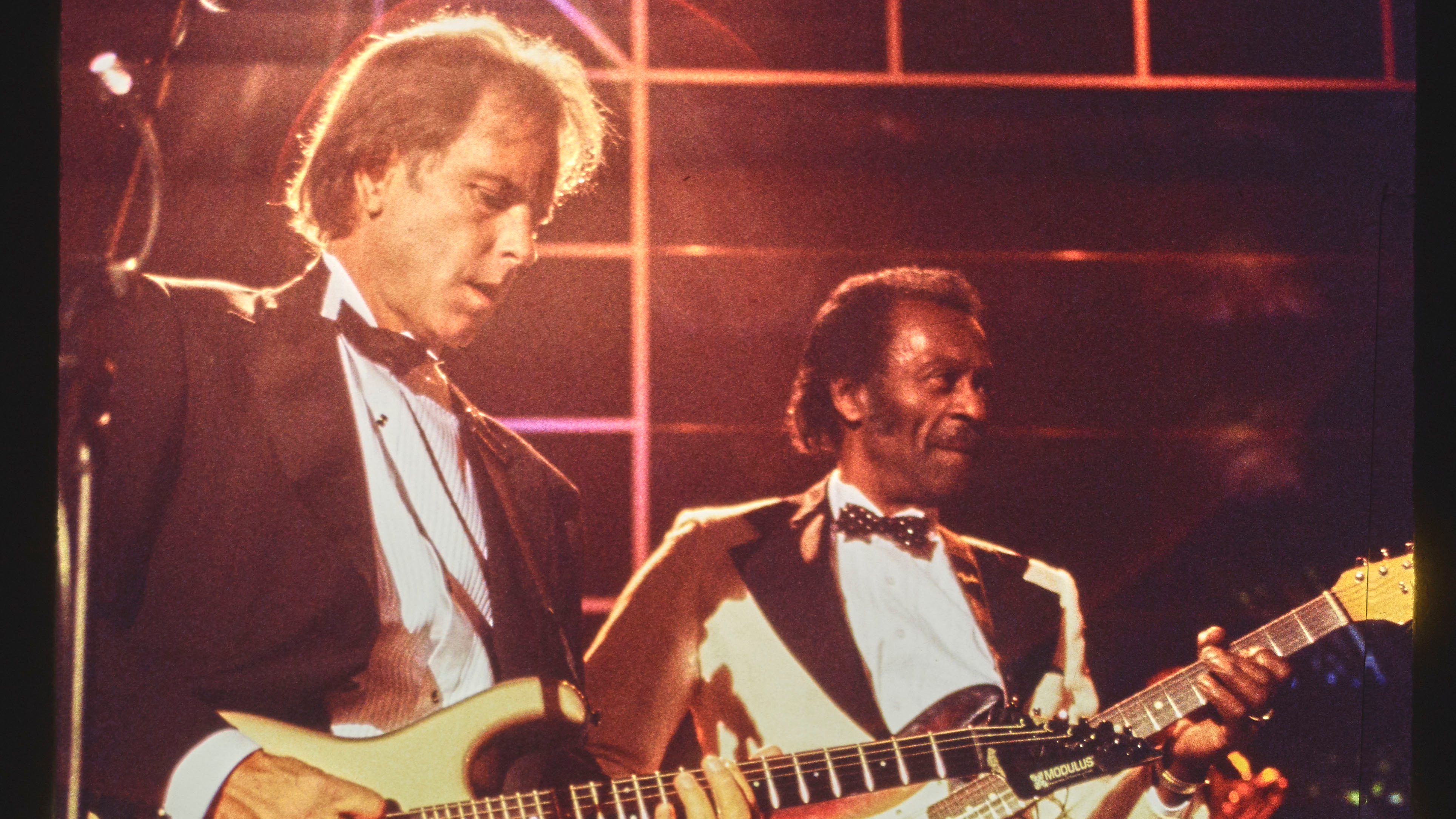
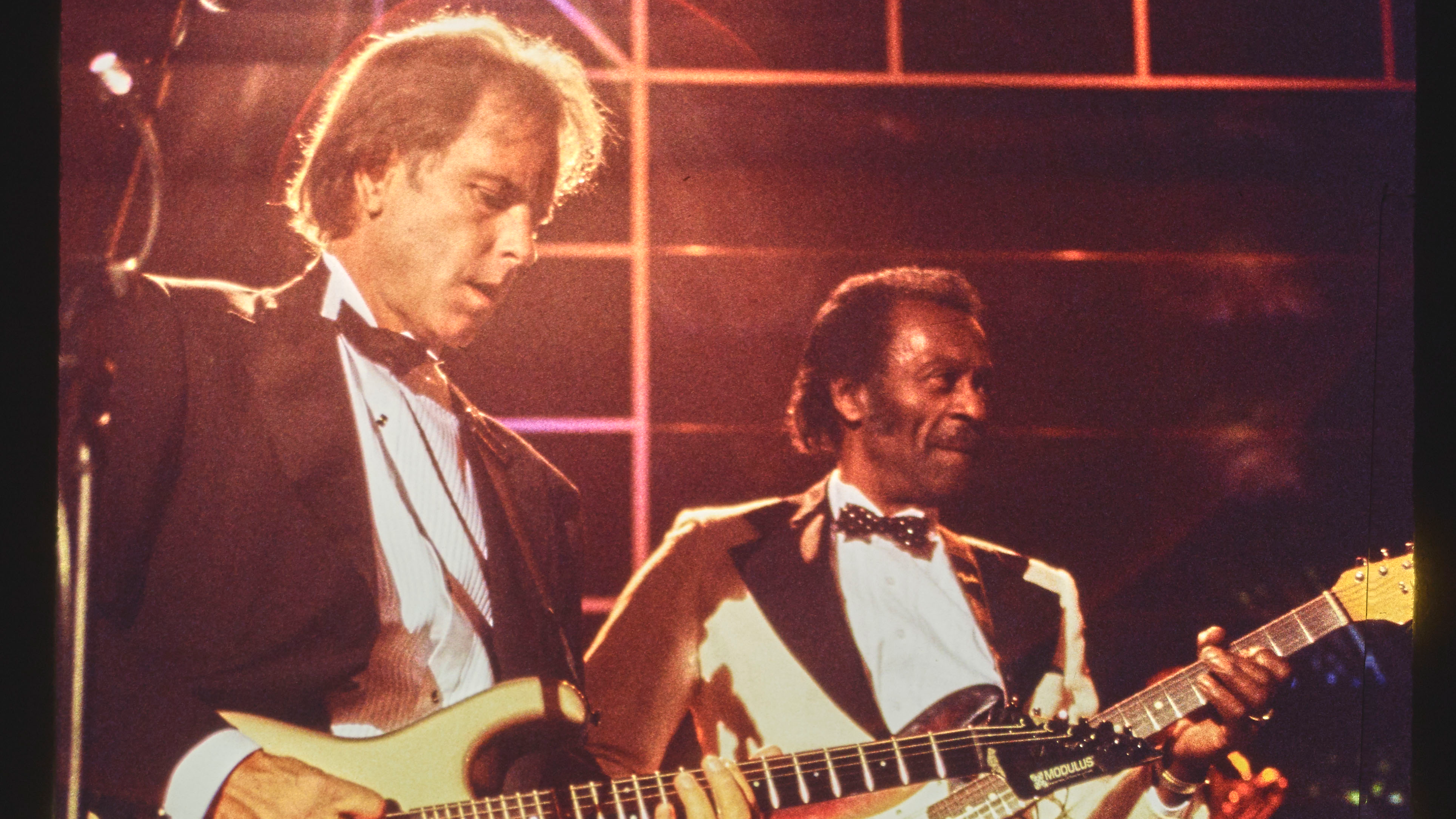
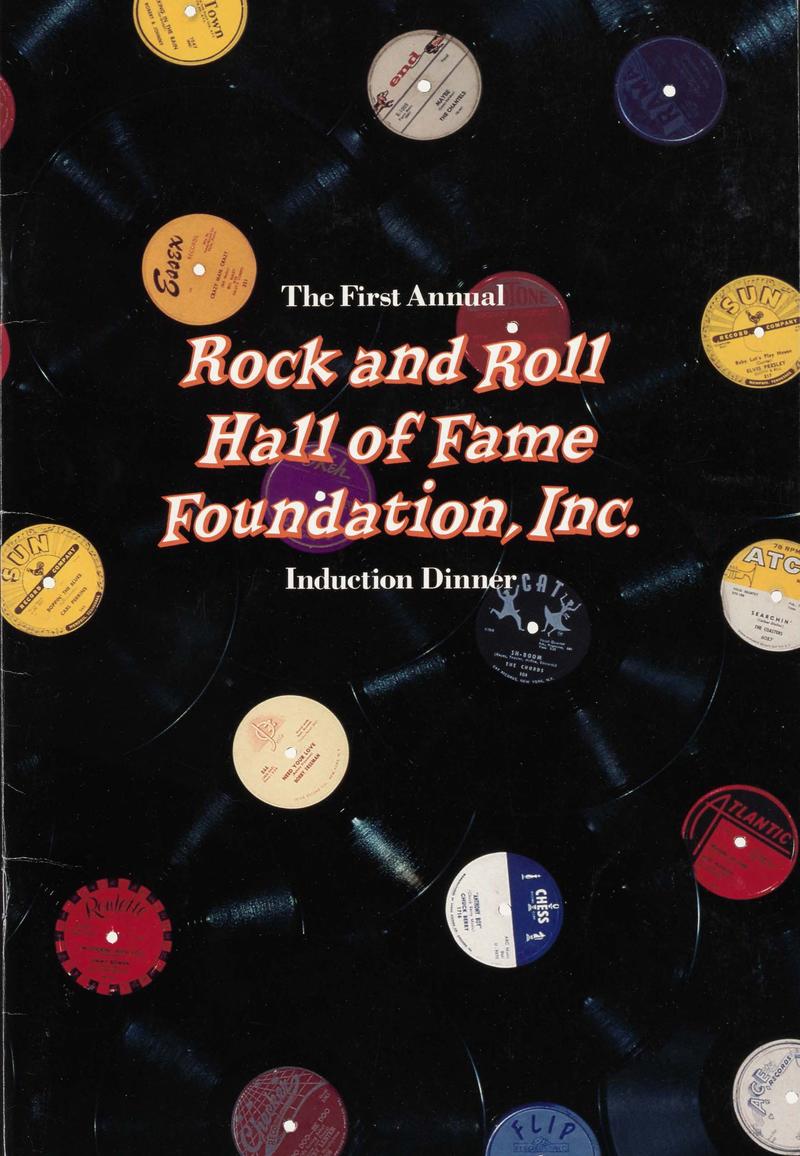
January 23, 1986: Chuck Berry is inducted into the Rock and Roll Hall of Fame at the first induction dinner, held in New York City. He is inducted by Rolling Stone Keith Richards, who said, “It’s hard for me to induct Chuck Berry, because I lifted every lick he ever played!”

October 8, 1987: ‘Hail! Hail! Rock ‘n’ Roll’, a movie documentary and concert tribute to Chuck Berry, with Keith Richards as musical director, debuts. A year later, Berry publishes his autobiography.

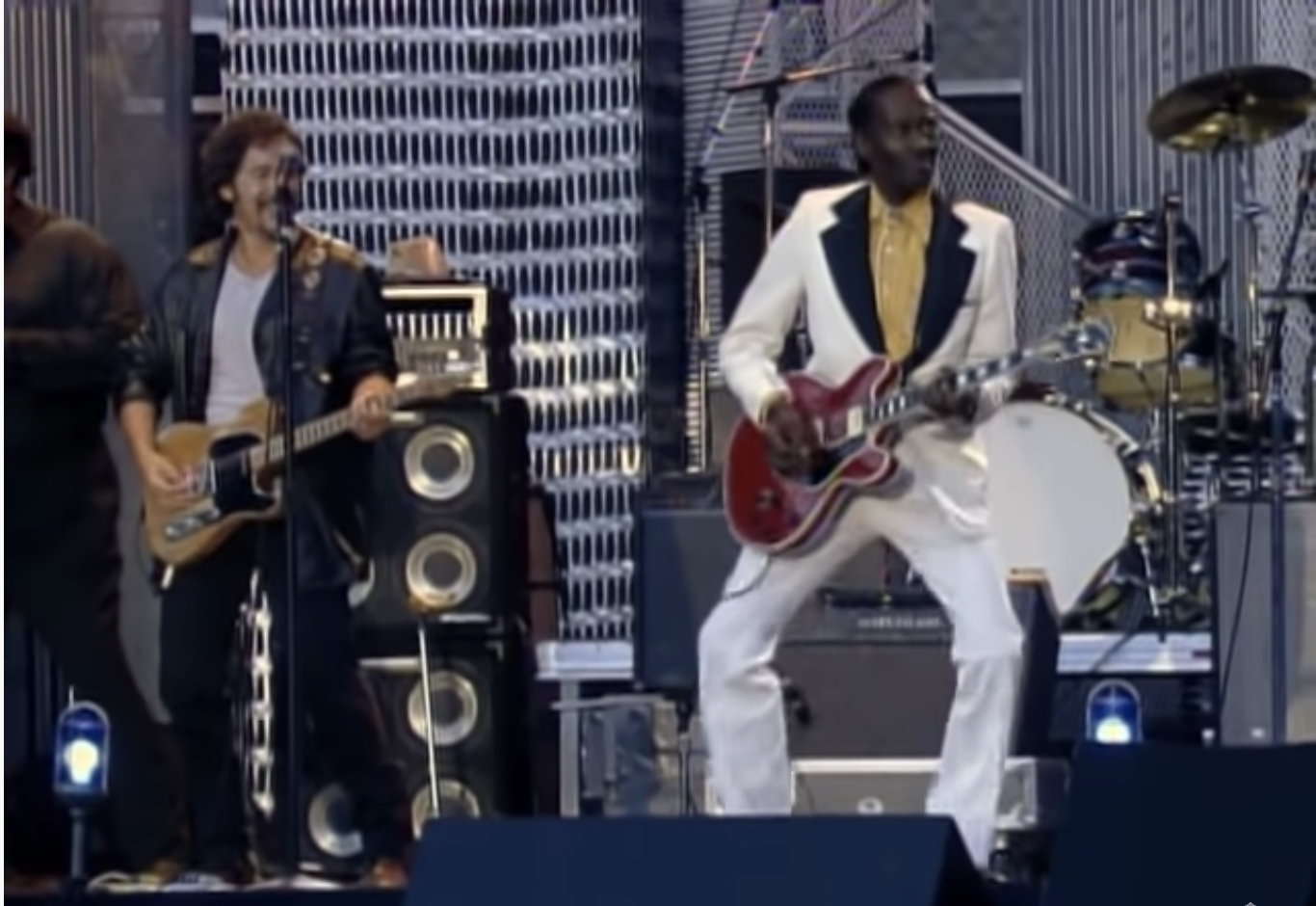
September 2, 1995: Backed by and the E Street Band, Chuck Berry performs “Johnny B. Goode” and “Rock and Roll Music” at the Concert for the Rock and Roll Hall of Fame in Cleveland.

November 30, 2001: A multi-count lawsuit against Chuck Berry is filed on behalf of pianist Johnny Johnson. It seeks a share of royalties for Johnson, who allegedly co-composed numerous hit songs with Berry that have heretofore been credited to Berry alone.

Essential Recordings

Back in the U.S.A.
Maybellene
Rock and Roll Music
Brown Eyed Handsome Man
Too Much Monkey Business
Roll Over Beethoven
Sweet Little Sixteen
School Day
Johnny B. Goode
Memphis


Ricky Nelson's LIFE Magazine Cover

Photo by Design Photography
Collection of the Estate of Rick Nelson