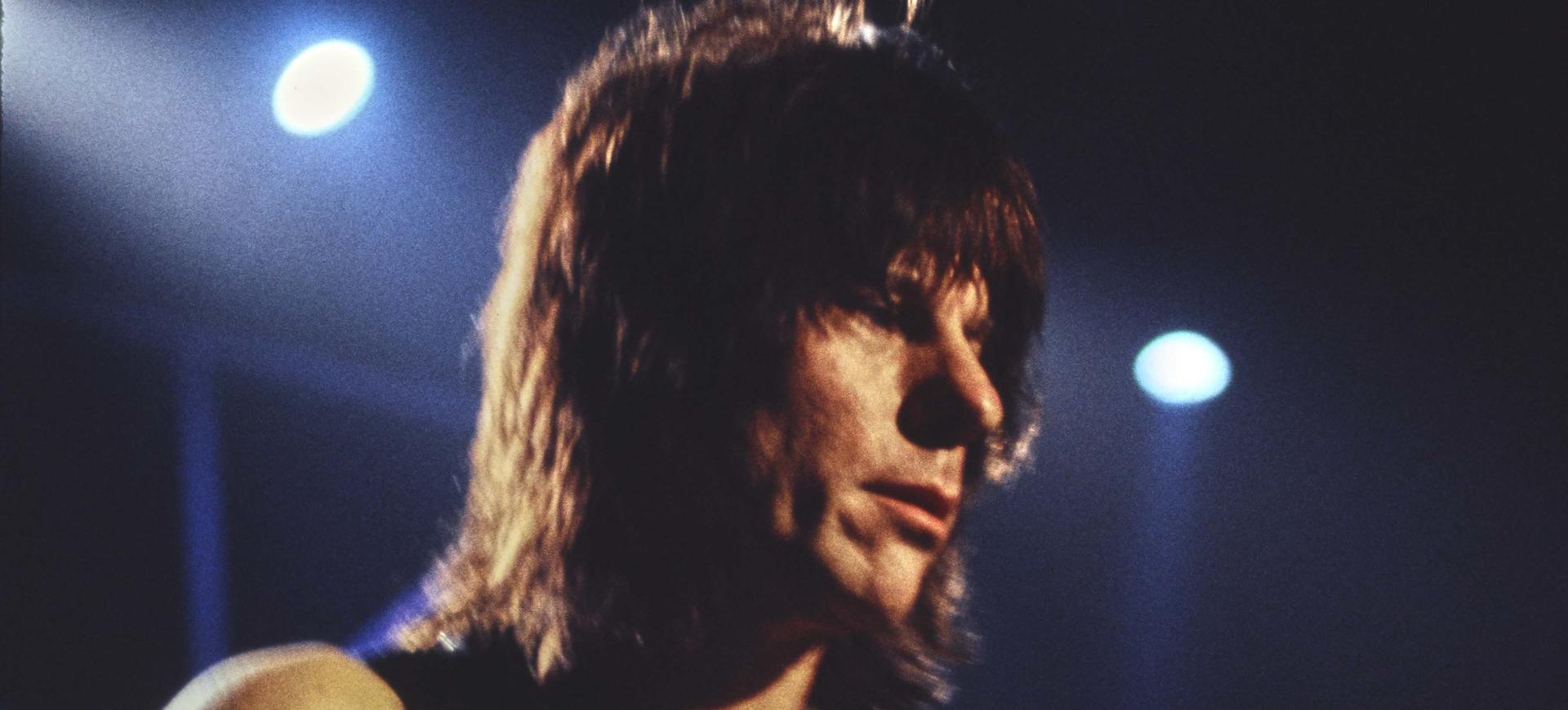
Jeff Beck
Induction Year: 2009
Induction Category: Performer
JEFF BECK
Performer, 2009
Jeff Beck (guitar; born June 24, 1944)
Jeff Beck is one of rock’s true virtuosos and among its most dynamic instrumentalists. He is not strictly a “rock” guitarist, having taken much from the world of jazz as well. His style is largely based on improvisation, and he’s cut hybrid jazz-rock albums on his own and with jazz-fusion titan Jan Hammer. Beck’s career has never followed a straight trajectory. Much like his solos, he zigs and zags wherever inspiration leads him. His quixotic career has included membership in the Yardbirds, two hard-hitting lineups of the Jeff Beck Group and a pair of albums from the mid-Seventies (Blow by Blow and Wired) that set a new standard for instrumental rock. He is one of a relative handful of musicians who have been twice inducted into the Rock and Roll Hall of Fame – with the Yardbirds and as a solo artist and bandleader.
Beck is a whiz at wresting precision-tooled melodies and explosive atmospherics from the guitar, combining awesome fretboard technique with mastery of effects and pedals. Writer Gene Santoro hailed “his strong vibrato, his fierce attack and fat tone, his acute microtonal sense of pitch when he bends or slides into a note, his sophisticated sense of melodic and rhythmic playing, his ability to wring painfully true notes from up by the guitar’s pickups, [and] his continuing use of the electric guitar to generate textures as well as notes.” Beck cultivated a singularly expressive voice on the guitar that obviated the need for a singer – or at least gave Beck the option of choosing to work with or without one throughout his career.
Jeff Beck was born in Wallington, Surrey, England, in 1944. Like Les Paul, Beck has always been a compulsive inventor and tinkerer. At 15, he built his first guitar and played it through a radio. His early heroes were rockabilly guitarists Cliff Gallup (of Gene Vincent’s Blue Caps) and James Burton (the mainstay of Ricky Nelson’s band). On the blues side, he gravitated to the fiery, pyrotechnic approaches of Chicago bluesmen Buddy Guy and Otis Rush. He combined all this with Les Paul’s accessible experimentalism in a dynamic, feedback-drenched style that helped shape the sound of rock guitar in the Sixties and beyond.
His early bands were the Deltones and the Tridents, but he didn’t really begin to make waves on the international rock scene until he joined the Yardbirds (see separate entry), where he succeeded Eric Clapton. Beck led this trailblazing blues-rock group through its most successful and creative period, which included the groundbreaking singles “Heart Full of Soul,” “I’m a Man” and “Shapes of Things.” He left the Yardbirds in 1967 and launched his career as bandleader. Initially he had a few solo hits, including “Hi Ho Silver Lining,” which reached #17 – the highest-charting single of his career in the U.K. – and featured a rare lead vocal from Beck. It’s become something of a singalong standard in Britain, although Beck’s own opinion of the song is dim: “I didn’t like the song,” he said 25 years later. “It was ghastly, stupid.” More in the mold of Beck’s evolving direction was its flip side, “Beck’s Bolero.” This instrumental showcase hybridized classical form with rock dynamics and featured the Who’s Keith Moon on drums.
The first edition of the Jeff Beck Group included future superstars Rod Stewart, who had been the singer for Steampacket, and Ron Wood, who’d piloted a group called the Birds. Wood switched from guitar to bass at Beck’s request. The first edition of the Jeff Beck Group was rounded out by pianist extraordinaire Nicky Hopkins and drummer Mick Waller (replaced by Tony Newman). This quintet cut Truth (1968) and Beck-Ola (1969), which showed off Beck’s searing guitar and Stewart’s raspy vocals. They also backed up Donavan on his 1969 hit “Barabajagal.” As with the Yardbirds, Beck’s volcanic guitar led the charge through an eclectic repertoire of hard-rocking metal-blues that ranged from rollicking originals (“Plynth [Water Down the Drain]” and the instrumental “Rice Pudding”) to remakes of Elvis Presley’s “Jailhouse Roc” and his former band’s “Shapes of Things.” The Jeff Beck Group, as tempestuous personally as they were musically, imploded shortly before the Woodstock Festival, which they had been slated to play. Wood and Stewart went on to greater fame and fortune with the Faces, while Wood eventually joined the Rolling Stones and Stewart pursued solo stardom.
Beck, who is as fanatical about cars as guitars, got sidelined for half a year with injuries suffered in a November 1969 crash. He rebounded with a solid new lineup of the Jeff Beck Group that included British drumming sensation Cozy Powell, as well as vocalist Bob Tench, keyboardist Max Middleton and bassist Clive Chaman. Like the original lineup, this second edition of the Jeff Beck Group recorded a pair of albums – Rough and Ready (1971) and Jeff Beck Group (1972) – and then called it quits. This time, however, the sound was different, more straightforward and less eclectic, drawing inspiration from American soul and R&B influences.
Beck next turned toward a heavier rock sound by hooking up with bassist Tim Bogert and drummer Carmen Appice. Those two had been the backbone of the hard-rock bands Vanilla Fudge and Cactus, and Beck had met them while touring America with the Jeff Beck Group. Billed as Jeff Beck, Tim Bogart, Carmine Appice – a.k.a. Beck, Bogart & Appice, or BBA, for short - were a power trio and boogie monster that lasted for just one self-titled studio album, released in 1973. (A double live album was issued in Japan that same year.) The highlight of Beck, Bogart, Appice was “Superstition,” which Stevie Wonder had written with Beck in mind.
After the trio’s dissolution, Beck began working almost exclusively in an instrumental vein on music with a jazzier complexion. Not having to accommodate or compete with a vocalist liberated Beck, whose guitar now occupied a front-and-center role. In 1975 he recorded his masterpiece, the all-instrumental Blow By Blow, under the artful direction of producer George Martin. Beck’s imagination had been fired by the jazz-fusion style of Mahavishnu Orchestra and others, but whereas they were jazz musicians who’d embraced rock dynamics, Beck’s situation was essentially the reverse, which made his fusion-ish odysseys more palatable to rock-trained ears. On Blow by Blow, Beck let his guitar sing as never before. His moving interpretation of Stevie Wonder’s “Cause We’ve Ended as Lovers” displayed his most lyrical playing. Blow by Blow broke into the Top Ten in America, bringing Beck his greatest success as a solo artist.
Beck adopted a more intense, hard-edged style on Wired, the followup album to Blow by Blow, which was also produced by Martin. Most of the compositions came from his bandmates, especially drummer Narada Michael Walden. Wired also contained a stunning reinvention of jazz bassist Charles Mingus’ “Goodbye Pork Pie Hat.” Thereafter, Beck toured with keyboardist Jan Hammer – a Mahavishnu alumnus – and this union resulted in Jeff Beck with the Jan Hammer Group Live. “Musical turbocharging, total self-propulsion,” is how Beck described it.
Beck kicked off the Eighties by recording There and Back, his first studio recording in five years. Subsequently, he has stuck to this script, emerging infrequently and popping out a few albums a decade. He’s continued to work primarily in an instrumental format, though he did reunite with Rod Stewart for a remake of the Impressions’ “People Get Ready,” a successful single from his 1985 album, Flash. Tony Hymas (keyboards) and Terry Bozzio (drums) have been Beck’s most frequent collaborators, as he delved into improvised and techno-spiced grooves on such releases as Jeff Beck’s Guitar Shop (1990). He also played guitar on projects by Tina Turner, Rod Stewart, Diana Ross, Mick Jagger, Robert Plant’s Honeydrippers, and many others. When his old mates in the Yardbirds regrouped as Box of Frogs, Beck provided guitar for their self-titled first album, too.
Beckology, a career-spanning three-disc box set issued in 1991, was cleverly packaged to resemble a vintage guitar case. Three years later, released Crazy Legs, a period-perfect rockabilly tribute to the guitarists in Gene Vincent’s Blue Caps, Cliff Gallup and Johnny Meeks. “It’s me playing exactly what I was trying to learn to play at age 15,” said Beck. At the end of the decade, Beck – who is nothing if not eclectic - released Who Else!, an electronica-influenced excursion. You Had It Coming (2001) and Jeff (2003) further explored his ongoing fascination with ambient, techno and trance music. Such stylistic turns are all in keeping with Beck’s ever-restless modernist musical outlook, which has been a key to understanding his work all the way back to the beginning.
His career has been filled with unpredictable twists and turns, yet there is consistency in the experimental streak that has always been a hallmark of his playing. Above all, Beck’s approach to guitar has reflected a philosophy of freedom and spontaneity supported by formidable technique. An innovator and iconoclast, Beck is a self-directed musician who picks up the guitar only when the spirit moves him. There is only one direction that you’ll find Jeff Beck and his guitar moving: forward.
TIMELINE
June 24, 1944: Guitarist Jeff Beck is born in Wallington, Surrey, England.
February 1964: Jeff Beck forms the Tridents after stints playing guitar for Screaming Lord Sutch and the Nightshifts.
March 1965: Guitarist Jeff Beck replaces Eric Clapton in the Yardbirds.
June 19, 1965: “Heart Full of Soul,” the first Yardbirds single to feature new guitarist Jeff Beck, is released. It reaches #9 in the U.S. and #2 in the U.K.
October 29, 1966: “Happenings Ten Years Time Ago,” the final Yardbirds single to feature guitarist Jeff Beck, is released. It reaches #30 in the U.S. and #43 in the U.K.
March 1967: Jeff Beck’s debut solo single, “Hi Ho Silver Lining,” is released. It reaches #14 on the British charts. It is reissued in 1972 and 1982, reaching #17 and #82, respectively.
June 1967: The Jeff Beck Group makes its American debut at New York’s Fillmore East.
July 1968: Truth, the first album by the Jeff Beck Group – which includes singer Rod Stewart – is released. It will reach #15 in America and not chart at all in Britain.
June 1969: Beck-Ola, the second and final album by the original lineup of the Jeff Beck Group, is released. It will reach #15 in America and #39 in Britain.
October 1971: Rough and Ready, which introduces a new lineup of the Jeff Beck Group, is released. It reaches #46 in America.
May 1972: Jeff Beck Group, the second album by the second edition of guitarist Beck’s ensemble, is released. It reaches #19 in America and #39 in Britain.
April 1973: A self-titled album by the short-lived power trio of Jeff Beck, Tim Bogert and Carmine Appice is released. It reaches #12 on Billboard’s album chart.
March 1975: Blow by Blow, by Jeff Beck, is released. This all-instrumental rock-jazz masterpiece will become Beck’s biggest album, reaching #4 on Billboard’s album chart and selling 2 million copies.
June 1976: Jeff Beck releases Wired, his second album with producer George Martin. It reaches #16 on Billboard’s album chart.
July 1980: There and Beck, by Jeff Beck, is released. It is his first studio recording in four years.
September 1981: Jeff Beck and Eric Clapton share a stage for one of a handful of times in their lives at the Secret Policemen’s Other Ball, a benefit concert for Amnesty International in London.
June 15, 1985: “People Get Ready,” by Jeff Beck and Rod Stewart, enters the Billboard singles chart, where it will peak at #48. It is taken from Beck’s new album, Flash.
November 21, 1986: Jeff Beck’s Blow by Blow and Wired albums are certified platinum (1 million copies sold) by the RIAA.
January 20, 1988: Jeff Beck is Les Paul’s presenter as Paul is inducted into the Rock and Roll Hall of Fame. “He’s given me 33 years of inspiration and good vibes,” said Beck.
February 21, 1990 Jeff Beck’s Guitar Shop – released the previous year and credited to Jeff Beck with Tony Hymas and Terry Bozzio - wins Best Rock Instrumental Album at the 32nd annual Grammy Awards.
November 1991: Beckology, a three-disc box set surveying guitarist Jeff Beck’s career, is released.
January 15, 1992: Jeff Beck is inducted into the Rock and Roll Hall of Fame for the first time as a member of the Yardbirds.
June 1993: Crazy Legs, credited to Jeff Beck and the Big Town Playboys, is released. It is a tribute to one of his biggest influences, rockabilly guitarist Cliff Gallup of Gene Vincent and the Blue Caps.
January 19, 1994: Jeff Beck is Rod Stewart’s presenter as Stewart is inducted into the Rock and Roll Hall of Fame. “We have a love-hate relationship,” quips Beck. “He loves me, and I hate him.”
March 16, 1999: Jeff Beck releases Who Else!, his first new album of original music in a decade.
August 2003: The suddenly prolific Jeff Beck releases Jeff. It is his third album in four years, following 1999’s Who Else! and 2001’s You Had It Coming.
2006: The Jeff Beck compilation Best of Beck is released on Epic/Legacy Records.
November 24, 2008: Jeff Beck releases a live album, Performing This Week...Live at Ronnie Scott’s Jazz Club. A DVD of the show follows in March 2009.
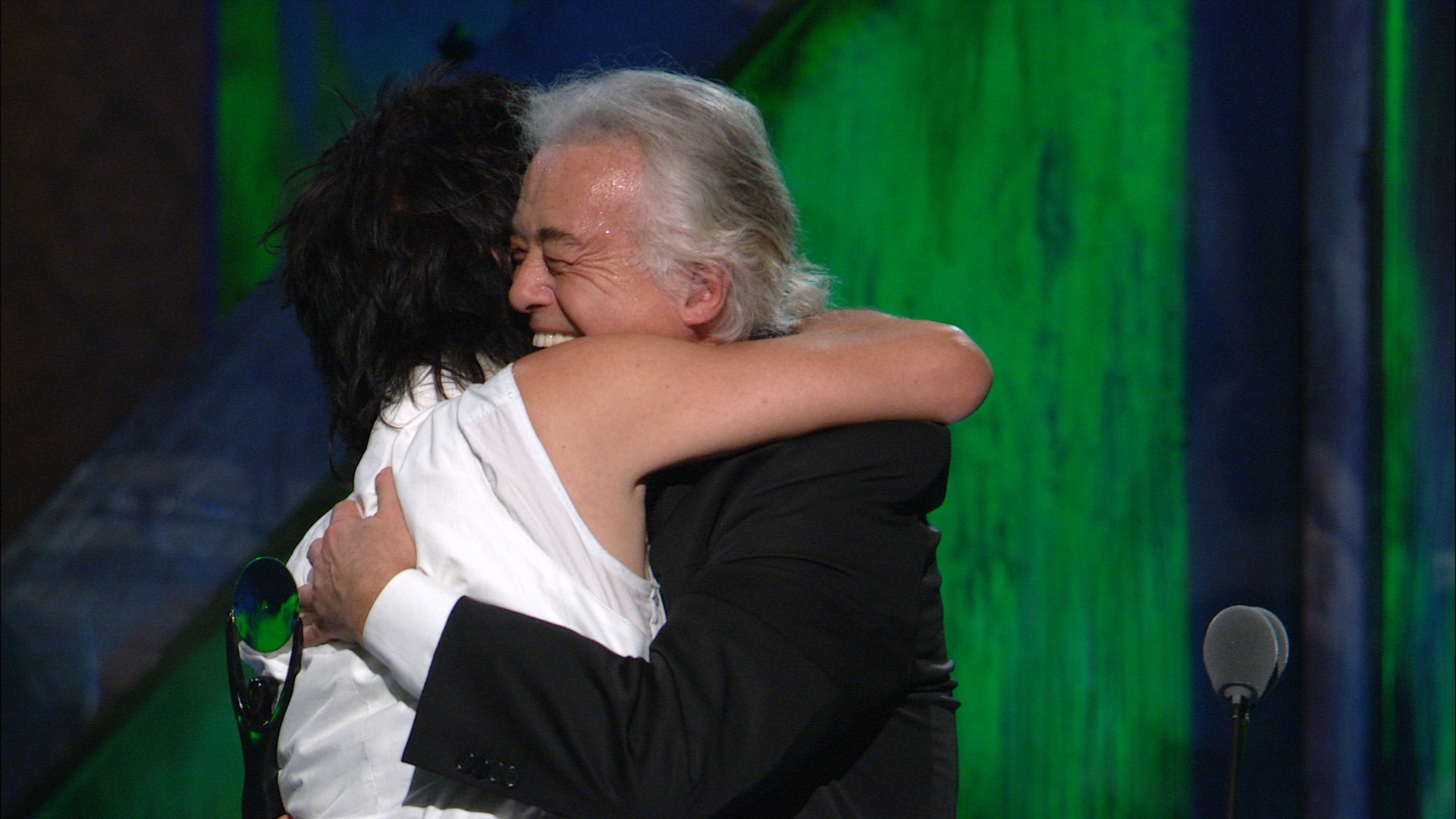
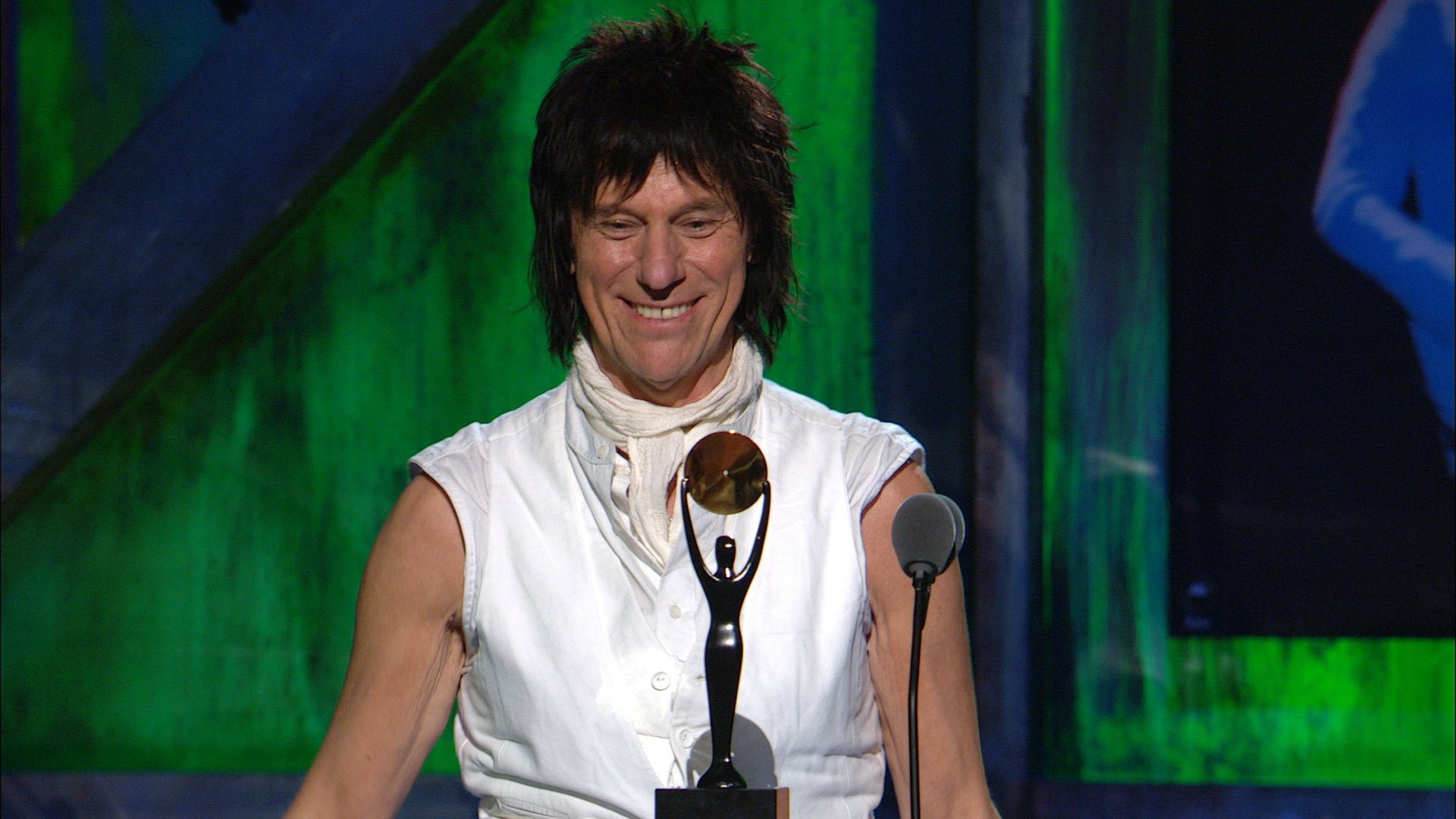
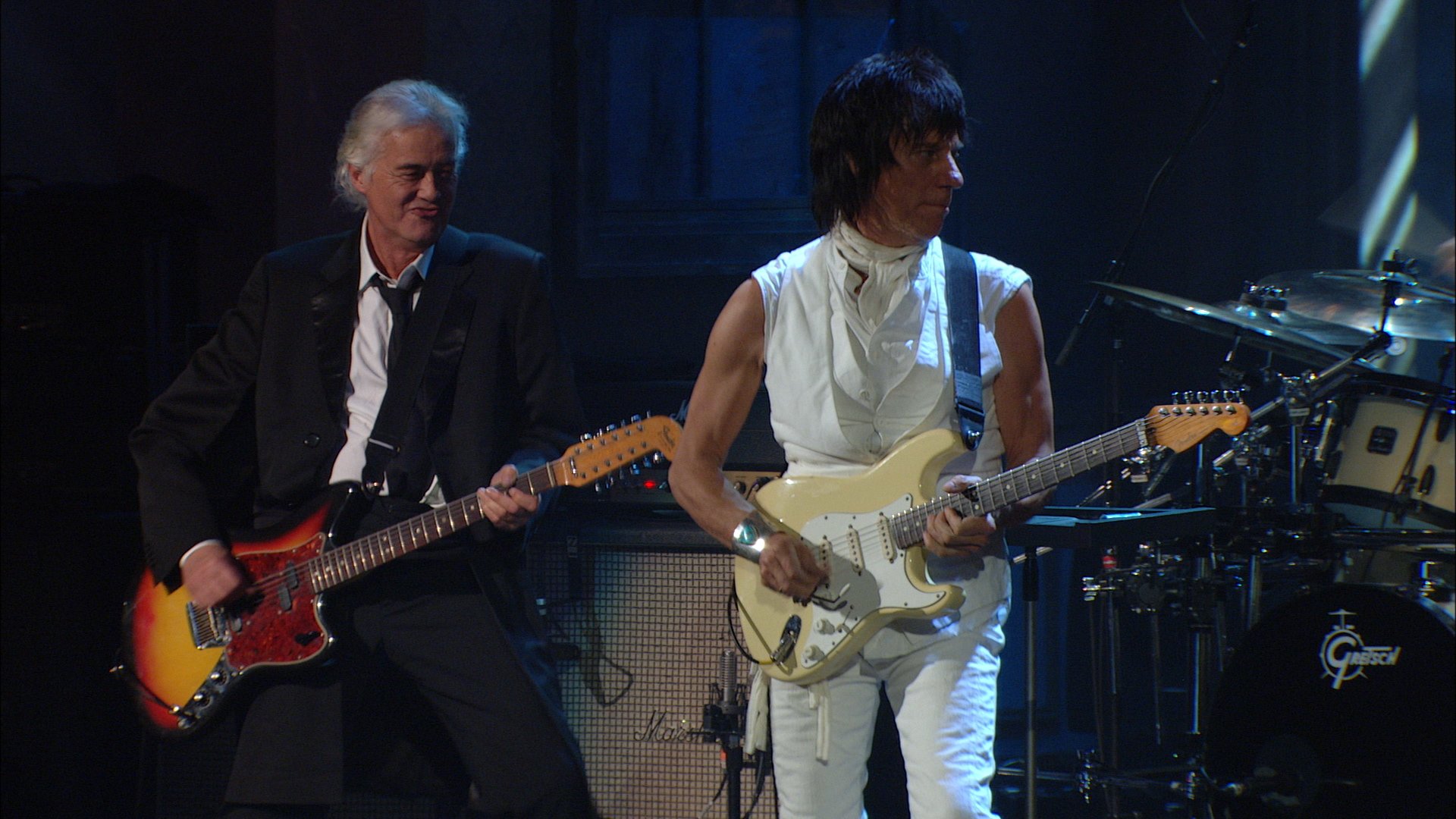
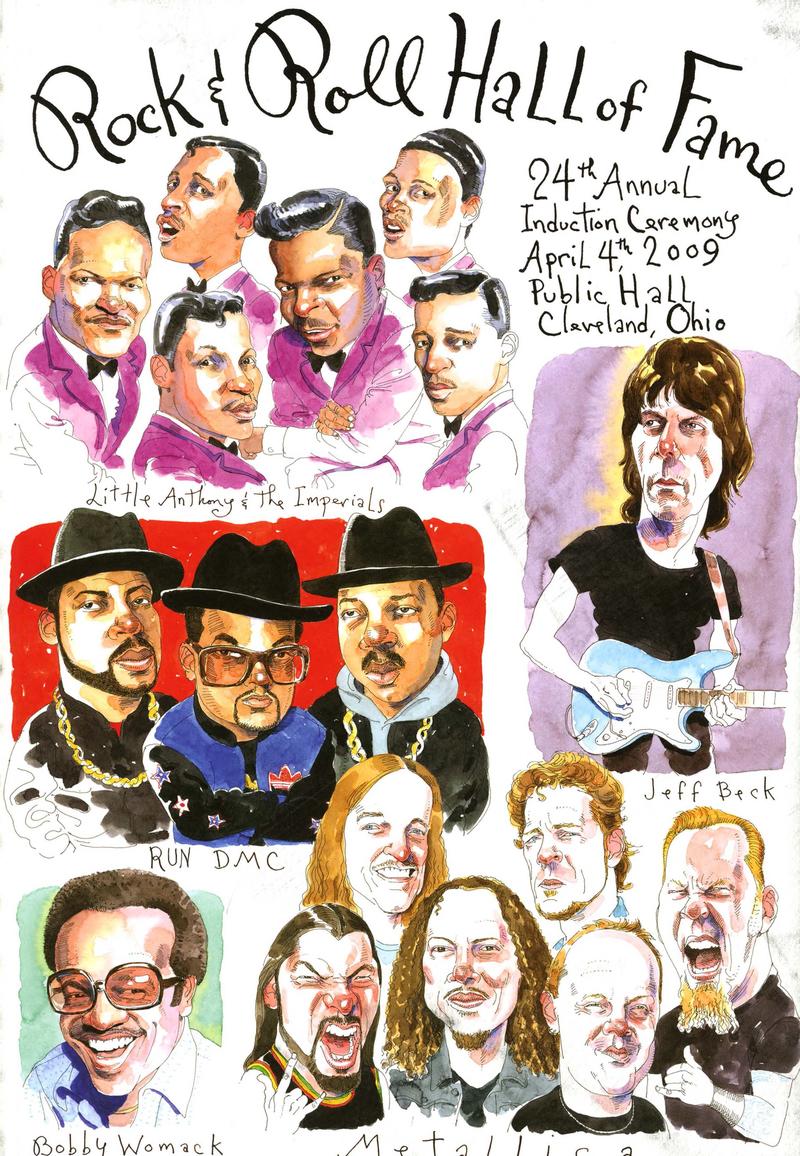
April 4, 2009: Jeff Beck is inducted into the Rock and Roll Hall of Fame at the 24th annual dinner. Jimmy Page is his presenter.
RECOMMENDED TRACKS
1. Because We’ve Ended as Lovers, by Jeff Beck
2. Freeway Jam, by Jeff Beck
3. Blue Wind, by Jeff Beck with the Jan Hammer Group
4. Beck’s Bolero, by Jeff Beck
5. Rice Pudding, by the Jeff Beck Group
6. Plynth (Water Down the Drain), by the Jeff Beck Group
7. Superstition, by Beck, Bogart & Appice
8. People Get Ready, by Jeff Beck and Rod Stewart
9. The Pump, by Jeff Beck
10. Where Were You, by Jeff Beck with Terry Bozzio and Tony Hymas
RECOMMENDED READING
Bernstein, Paul. “Jeff Beck: Third Time Around.” Rolling Stone (October 26, 1972): 6-8.
Carson, Annette. Jeff Beck: Crazy Fingers. San Francisco: Backbeat Books, 2001.
Hjort, Christopher and Doug Hinman. Jeff’s Book. Rock ‘n’ Roll Research Press, 2000.
Santoro, Gene. Liner notes for Beckology (box set), by Jeff Beck. Epic Records, 1991.
Terralavoro, David. “Jeff Beck: There and Beck.” Goldmine (November 20, 1987): 8-10+.