Jerry Lee Lewis
Induction Year: 1986
Induction Category: Performer
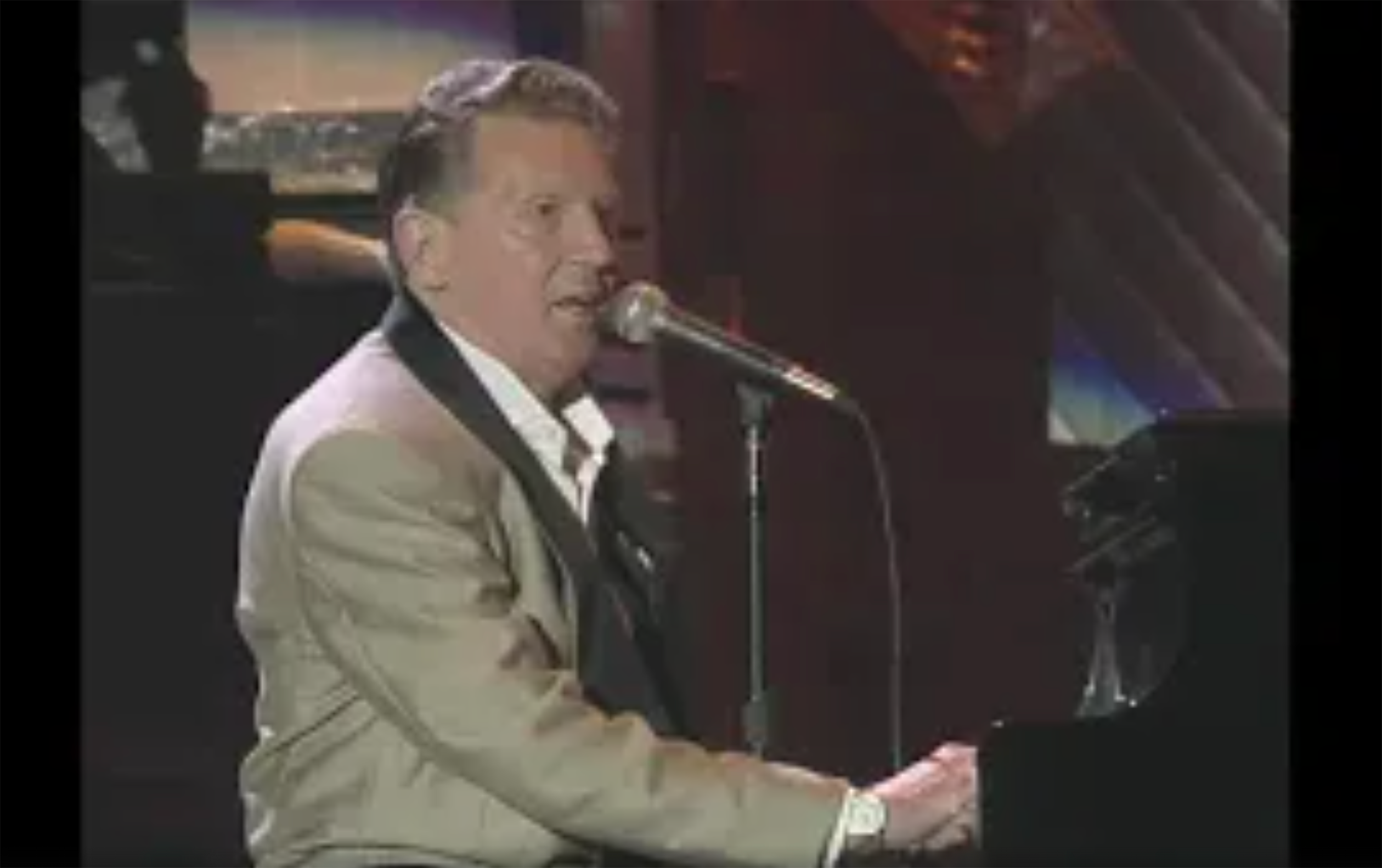
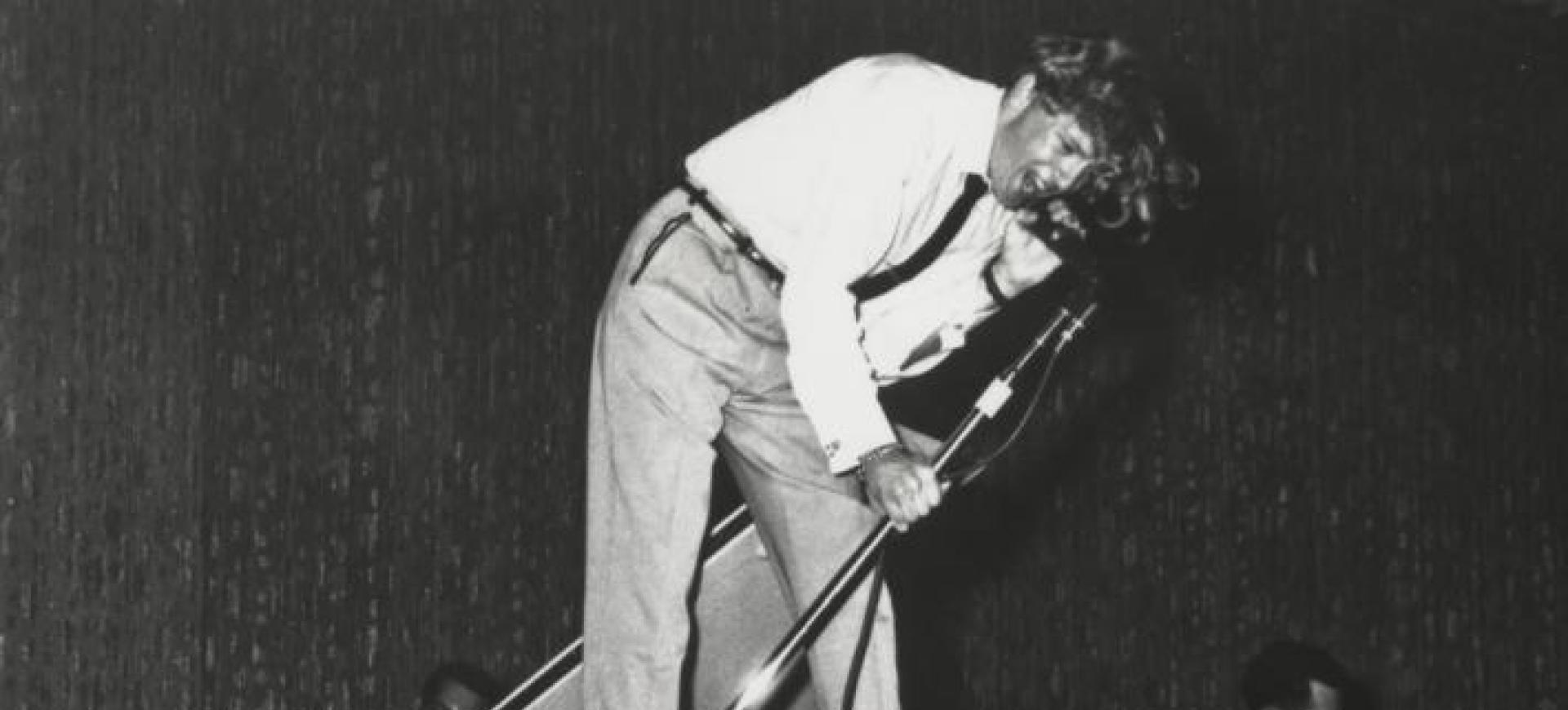
Jerry Lee Lewis is the wild man of rock and roll, embodying its most reckless and high-spirited impulses. On such piano-pounding rockers from the late Fifties as “Whole Lotta Shakin’ Goin’ On” and “Great Balls of Fire,” Lewis combined a ferocious, boogie-style instrumental style with rowdy, uninhibited vocals.
He migrated to Memphis from Ferriday, Louisiana, where he’d grown up learning how to play piano by ear based on the music around him: Western swing, boogie-woogie, uptempo R&B and Delta blues. Lewis’ first influence was the country-blues sound of Jimmie Rodgers, although he also absorbed the gospel and R&B of the local black community. His amalgamation of these indigenous styles, abetted by his brash temperament, made him a natural-born rock and roller - maybe the ultimate rock and roll rebel. Lewis found a home at Sam Phillips’ Sun Records label, whose stable of talent also included Elvis Presley, Johnny Cash and Roy Orbison. After a country-flavored audition for Philips in 1956, Lewis was told that if he could come up with some rock and roll, “we could probably do something.” Lewis didn’t write much himself, but he transformed other people’s songs into unbridled rock and roll that even he called “the Devil’s music.”
Lewis’ debut single was a rocking recasting of Ray Price’s country hit “Crazy Arms.” He followed it with “Whole Lotta Shakin’ Goin’ On,” which sold 6 million copies and went to #3, and “Great Balls of Fire,” a 5 million seller that reached #2. Both songs were from 1957, a watershed year for Lewis. The next year yielded more hits - “Breathless” and “High School Confidential” - and a role in a movie titled after the latter song. However, his career as a rock and roller took a precipitous tumble when the press discovered that he’d married his 13-year-old cousin in December 1957. Lewis managed to weather the controversy, enduring a ten-year drought on the charts to eventually realize a successful career as a country-music artist. Beginning in the late Sixties he launched such Top Ten hits as “Another Place, Another Time” and “What Made Milwaukee Famous (Made a Loser Out of Me).” By the early Eighties, he’d racked up a string of 30 country hits and also re-entered the rock and roll realm. In 1995, he marked his 60th year with a red-hot rock and roll album, Young Blood.
Through a life marked by controversy and personal tragedy, Lewis has remained a defiant and indefatigable figure who refuses to be contained by politesse or pigeonholes. As he declared from the stage of the Grand Ole Opry in 1973, “I am a rock and rollin’, country & western, rhythm & blues singing [expletive deleted]!”
TIMELINE
September 29, 1935: Jerry Lee Lewis is born in Ferriday, Louisiana.
November 19, 1949: A 14-year-old Jerry Lee Lewis makes his debut at the opening of a Ford dealership in Ferriday. He plays “Drinking Wine, Spo-Dee-O-Dee.”
September 1, 1950: On the eve of his 15th birthday, Jerry Lee Lewis enrolls at Southwestern Bible Institute in Waxahatchie, Texas. He is expelled three months later.
September 1, 1956: Jerry Lee Lewis, hoping to audition for Sun Records, travels to Memphis with his father, Elmo. As owner Sam Phillips is out of town, Lewis plays for engineer Jack Clement, who advises him to learn some rock and roll.
November 14, 1956: Jerry Lee Lewis cuts his first record - “End of the Road” b/w “Crazy Arms” for Sun. It is credited to Jerry Lee Lewis and His Pumping Piano.
December 4, 1956: Four legendary past and present Sun Records recording artists—Elvis Presley, Jerry Lee Lewis, Carl Perkins and Johnny Cash—gather at Sun for an informal jam session. Later dubbed the Million Dollar Quartet, the stars (sans Cash, who stays only briefly) perform gospel standards and recent hits in relaxed, impromptu fashion.
December 4, 1956: The “Million Dollar Quartet"—Presley, Perkins, Cash and Jerry Lee Lewis—records old gospel, country and pop songs at an impromptu session. The recordings aren’t officially released until the mid-Eighties.
January 12, 1957: Sun releases “Flyin’ Saucer Rock n’ Roll” by Billy Riley and His Little Green men. Featuring Roland Janes on guitar and Jerry Lee Lewis on piano, the song is a rockabilly classic. In September, Sun releases Riley’s “Red Hot.”
March 1, 1957: “Whole Lotta Shakin’ Goin’ On,” the second single by Jerry Lee Lewis, is released on Sun Records.
July 15, 1957: “Whole Lotta Shakin’ Goin’ On” enters the Top Forty, remaining there for 20 weeks. The song gets a boost when Jerry Lee Lewis performs it on The Steve Allen Show on July 28. It peaks at #3 and tops the country and R&B charts.
November 1, 1957: Jerry Lee Lewis’ “Great Balls of Fire” hits Number One for Sun Records. Near the end of the year, he marries his 13-year-old cousin, Myra Gale Brown.
November 3, 1957: Sun Records releases “Great Balls of Fire,” written by Otis Blackwell (who penned “Don’t Be Cruel” and others for Elvis Presley). By the second week in December, the single is ensconced in the Top Ten on the pop, country and R&B charts. It becomes the best-selling record in Sun’s history.
December 12, 1957: Jerry Lee Lewis marries his second cousin, Myra Gale Brown, in Hernando, Mississippi. She’s the daughter of J.W. Brown, his bass player and cousin. Myra is 13 years old, though she claims in the marriage license to be 20.
February 1, 1958: Jerry Lee Lewis hits Number One with “Breathless.” In April, he scores again, with “High School Confidential.”
March 28, 1958: Opening night of “Alan Freed’s Big Beat Show,” a two-month tour, finds Jerry Lee Lewis arguing with Chuck Berry over who will close the show. Freed decides Berry will get to go last, inciting a literally incendiary performance by Lewis, who torches his piano during his set-closing “Great Balls of Fire.”
April 1, 1958:"Breathless," Jerry Lee Lewis’ third Top Ten single, peaks at #7.
May 22, 1958: As Jerry Lee Lewis begins a British tour, a scandal erupts over his marriage to a barely teenage relative, as well as his two prior divorces. Lewis is booed offstage, the tour is canceled after three shows, and he returns to the U.S. to find himself mired in controversy.
June 9, 1958
“High School Confidential,” the title track from a film aimed at the teen market, enters the Top Forty. Jerry Lee Lewis simultaneously takes out a full-page ad in Billboard. It reads, in part: “I confess that my life has been stormy....I hope that if I am washed up as an entertainer, it won’t be because of this bad publicity.”
May 1, 1961: Jerry Lee Lewis’ last Top Forty hit of the rock and roll era, a blistering version of Ray Charles’ “What’d I Say,” peaks at #30.
September 6, 1963: Jerry Lee Lewis leaves Sun Records and signs a new contract with Smash Records, a Mercury subsidiary.
March 23, 1968: Having made the stylistic shift from rock and roll to country and western, Jerry Lee Lewis lands “Another Place Another Time,” his first big C&W hit, on Billboard’s country chart. In the four years between March 1968 and March 1972, Lewis will rack up 15 Top Ten C&W hits.
February 1, 1969: “To Make Love Sweeter for You” becomes Jerry Lee Lewis’ first #1 C&W hit. There will be three others: “There Must Be More to Love Than This” (1970), “Would You Take Another Chance On Me” (1971), and “Chantilly Lace” (1972).
April 1, 1972: The “Killer” Rocks On, a new album, returns Jerry Lee Lewis to rock and roll.
March 1, 1973: The Session, an album of rerecorded oldies that finds Jerry Lee Lewis accompanied by such British luminaries as Peter Frampton and Alvin Lee, reaches #37. It is the highest-charting album of his career.
November 22, 1976: Jerry Lewis is arrested for drunk driving in Memphis. Later, at three a.m., he appears at Graceland, Elvis Presley’s residence, brandishing a pistol and demanding to see Elvis. He is handcuffed and taken to jail.
June 30, 1981: Hospitalized in Memphis, Jerry Lee Lewis nearly dies of a bleeding ulcer.
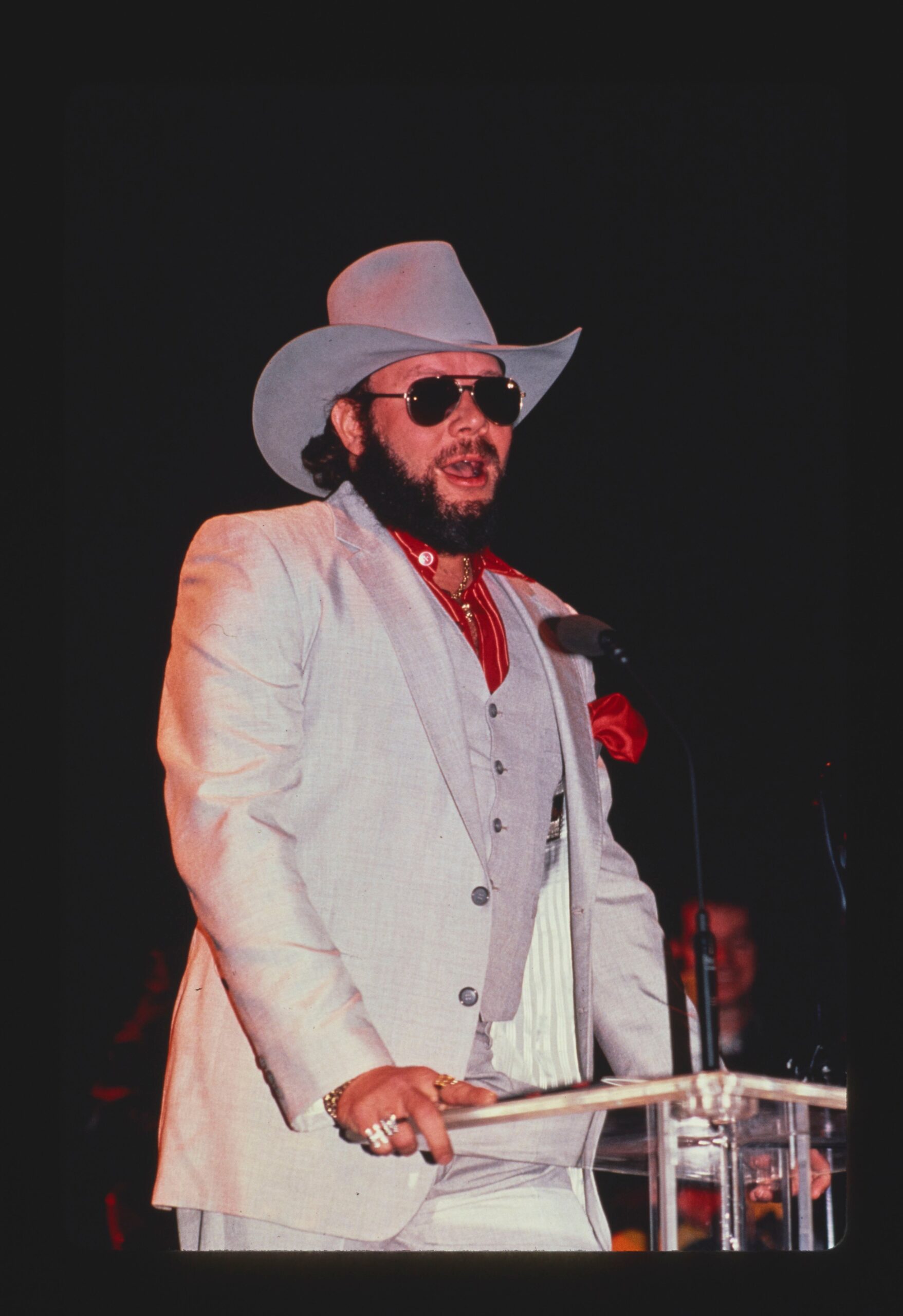
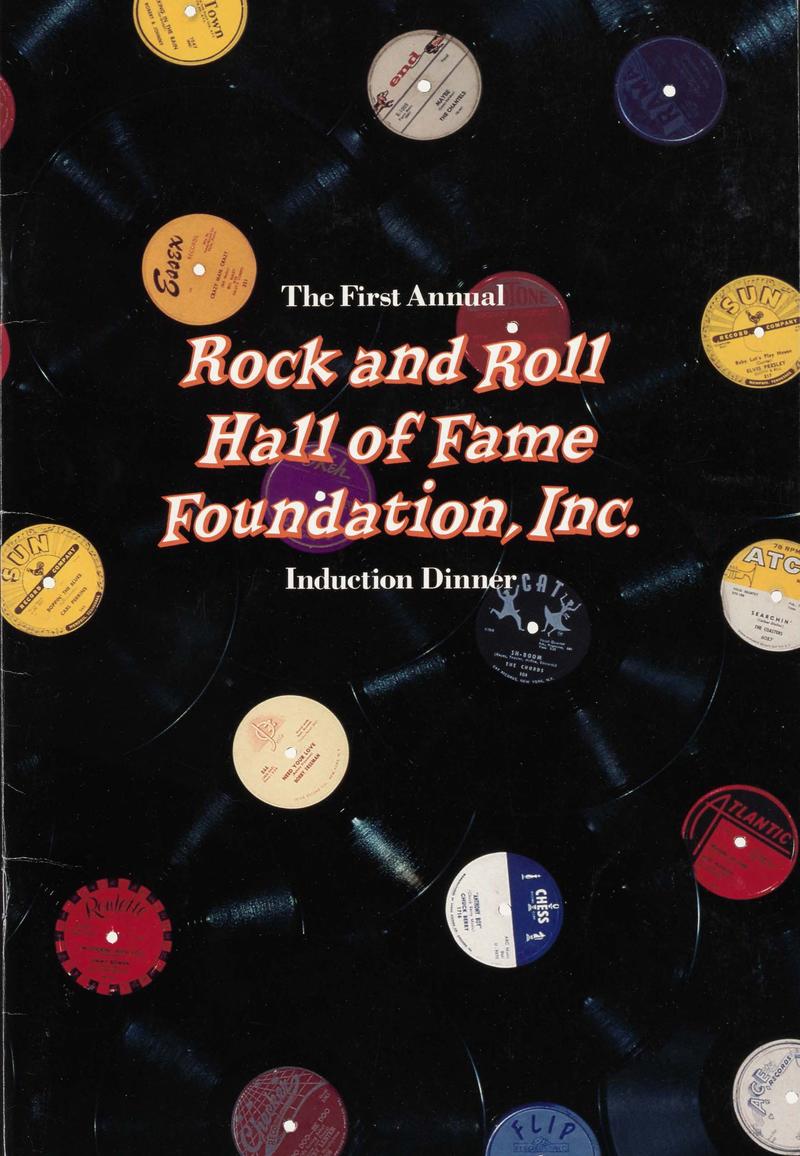
January 23, 1986: Jerry Lee Lewis is inducted into the Rock and Roll Hall of Fame at the first induction dinner, held in New York City.
July 1, 1989: The film biography Great Balls of Fire, with Dennis Quaid in the role of Jerry Lee Lewis, opens across the U.S.
May 23, 1995: Jerry Lee Lewis releases his first rock and roll album of the Nineties, Young Blood, calling it “my best album ever!”
September 2, 1995: Backed by Bruce Springsteen and the E Street Band, Jerry Lee Lewis sings “Whole Lotta Shakin’ Goin’ On” and “Great Balls of Fire” at the Concert for the Rock and Roll Hall of Fame in Cleveland.