Jimmy Reed
Induction Year: 1991
Induction Category: Performer
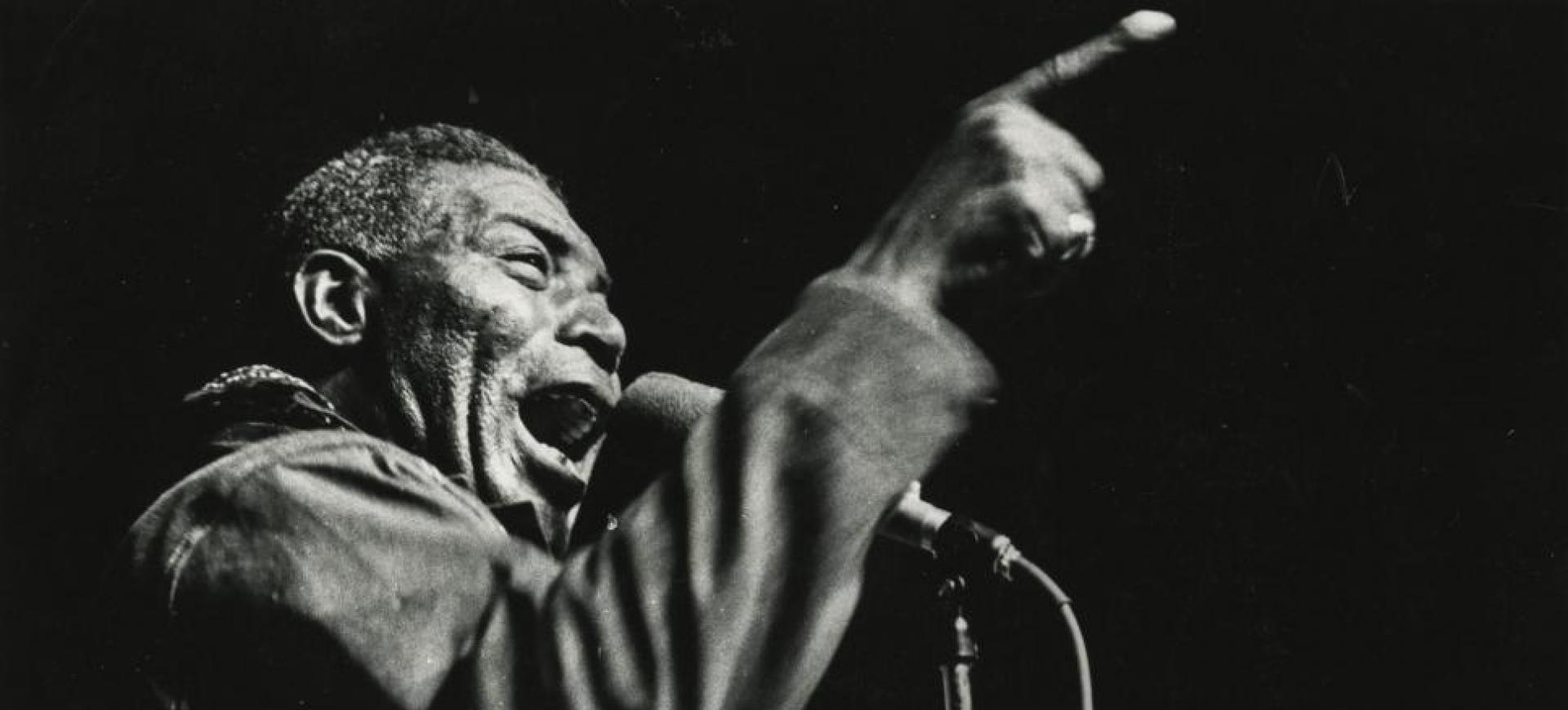
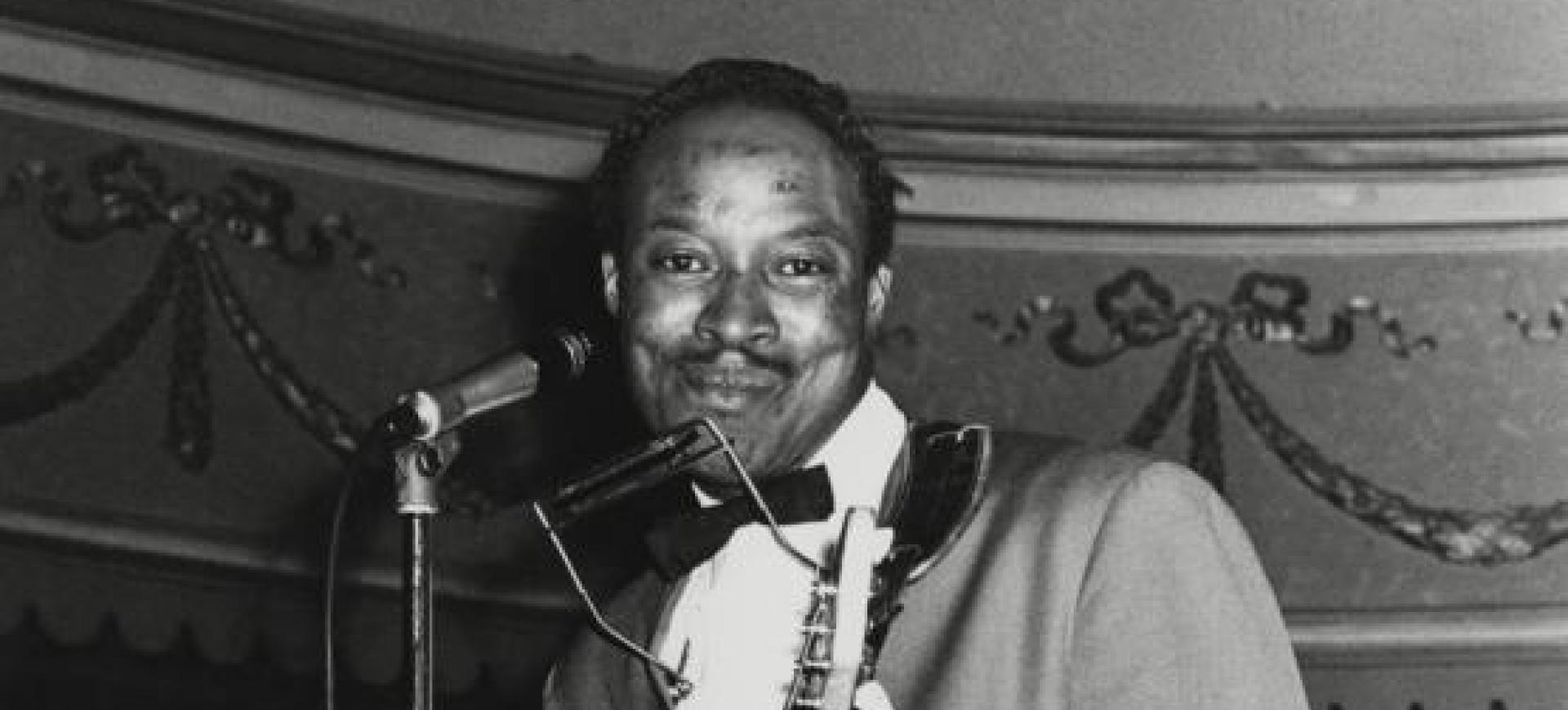
Jimmy Reed rates as one of the most popular and significant bluesmen of the postwar era. No one, save for B.B. King, so effectively reached both black and white audiences in the Fifties and Sixties. His most popular songs are indelible in their simplicity and accessibility. They include such classics of the genre as “Big Boss Man,” “Bright Lights, Big City,” “Baby What You Want Me to Do” and “Ain’t That Lovin’ You Baby.” But that just scratches the surface of a very prolific artist who recorded extensively throughout his lifetime.
Like many blues artists of that era, Reed was born and raised in Mississippi and migrated north in his twenties. Unlike a lot of his Chicago contemporaries, however, Reed performed in a more relaxed, measured style typified by foot-tapping rhythms and a casual vocal delivery. He played guitar and harmonica, strumming time with the former and adding riffs and solos on the latter. His longtime accompanist, Eddie Taylor, contributed to the melodic warmth and laid-back charm of Reed’s music.
He was born Mathis James Reed on September 6, 1925. Reed was one of ten children in a sharecropping family that lived in and around Leland, Mississippi. He moved to Gary, Indiana, in 1948, and two years later, at age 25, quit his job in a steel foundry to become a full-time musician. He signed with a new label, Vee-Jay Records, in 1953, and cracked the R&B charts in 1955 with “You Don’t Have to Go.” Many more followed, as Reed scored a remarkable 18 Top Twenty R&B hits on Vee-Jay between 1955 and 1961. The highest-charting of these was his classic “Bright Lights, Big City,” which rose to #3 in September 1961. At the same time, he entered the pop charts on a dozen occasions, his most notable success being “Baby What You Want Me to Do.”
Reed’s crossover appeal peaked during the revival of interest in the blues during the early Sixties, a period that found him playing such hallowed venues as Carnegie Hall and the Apollo Theater. He also toured England, where he was revered by musicians such as the Rolling Stones, who covered “Honest I Do,” and Van Morrison, who recorded “Bright Lights, Big City” while with the group Them. Back in America, Reed’s influence extended to such groups as the Grateful Dead, who performed his songs in their jugband days and recorded “Big Boss Man” on a 1971 live album. Reed continued recording and performing into the Seventies, but his career was hampered by health and drinking problems. In 1976, Reed died after suffering an epileptic seizure at age 51. In music writer Pete Welding’s words, the lasting appeal of Jimmy Reed’s music stems from the fact that “it was honest and simple...and it drew its strength from the authenticity and clarity of Reed’s observations abut the everyday affairs of ordinary people.”
TIMELINE
September 6, 1925: Jimmy Reed was born.
1955: Jimmy Reed scores first hit with “You Don’t Have To Go”.
August 29, 1976: Jimmy Reed died in Oakland, CA after suffering an epileptic seizure at age 51.
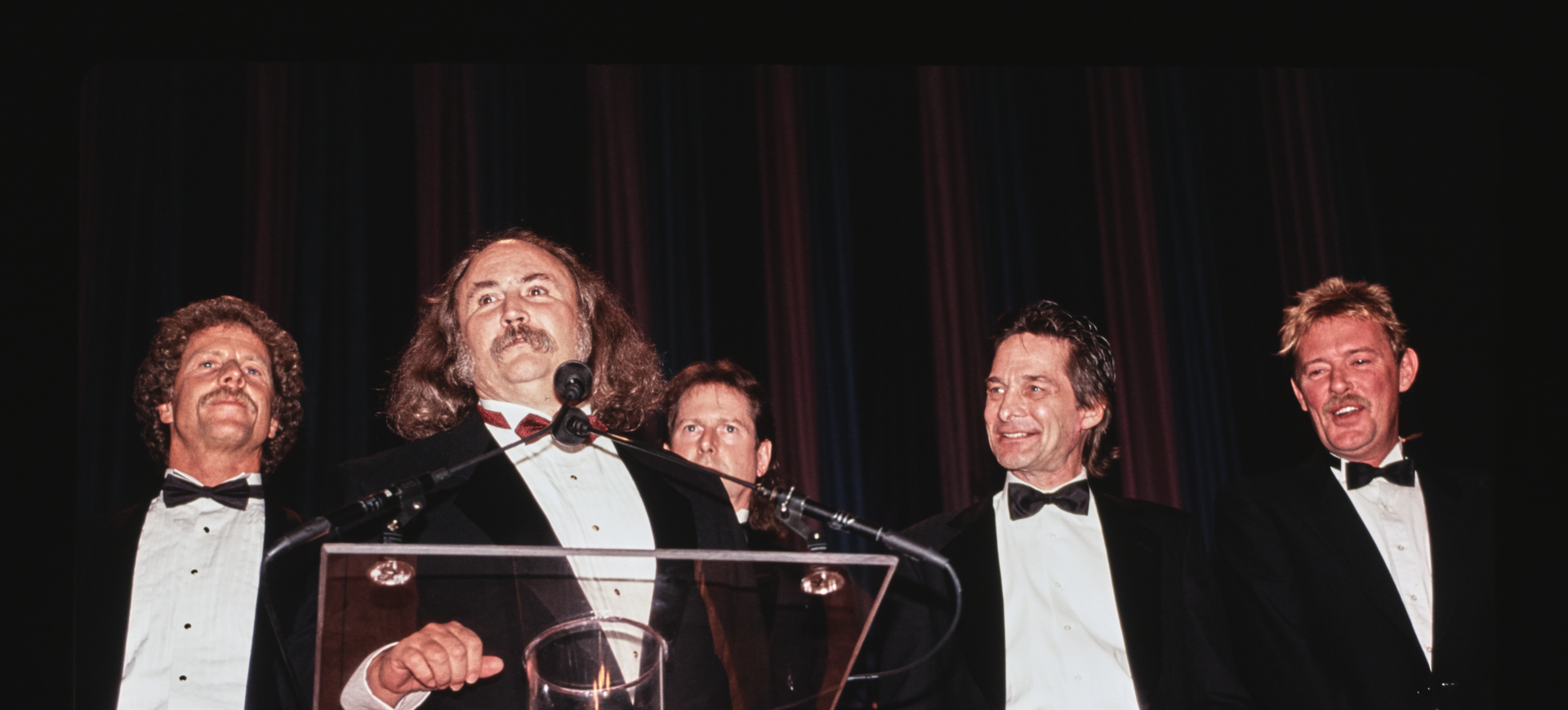
1991: Jimmy Reed is inducted into the Rock and Roll Hall of Fame.
Essential Songs
Baby What Do You Want Me To Do
Bright Lights, Big City
Ain’t That Lovin’ You Baby
Big Boss Man
I Ain’t Got You
You Got Me Dizzy
Found Love
I’m Gonna Get My Baby
Honest I Do
You Don’t Have to Go