Rock and Roll Hall of Fame and Museum

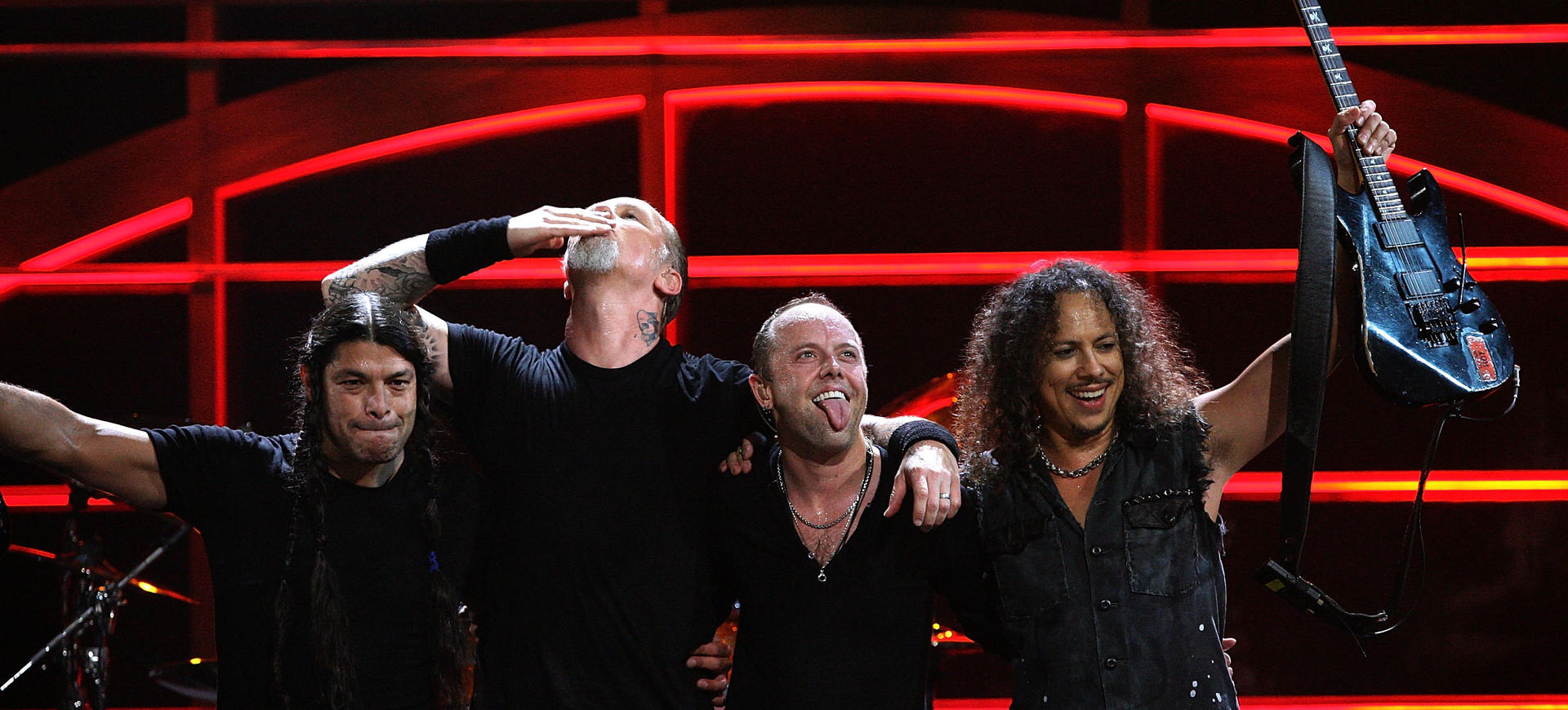
Metallica

Induction Year: 2009

Induction Category: Performer

James Hetfield (vocals, guitar; born August 3, 1963), Kirk Hammett (guitar; born November 18, 1962), Jason Newsted (bass; born March 4, 1963), Lars Ulrich (drums; born December 26, 1963), Cliff Burton (bass; born February 10, 1962, died September 27, 1986), Robert Trujillo (bass; born October 23, 1964)

invented heavy metal in the Seventies, and Metallica redefined it in the Eighties. Since erupting on the scene with their debut album, Kill ‘Em All, in 1983, Metallica has been a cutting-edge band – the standard by which metal’s vitality and virtuosity are measured. No band has loomed larger, rocked heavier, raged more angrily or pushed the limits further than Metallica.

The group formed in 1981 around the core of James Hetfield and Lars Ulrich, who both lived in Los Angeles They met when Hetfield answered an ad placed looking for someone to jam with. The pair bonded over their mutual love of metal – especially the “New Wave of British Heavy Metal.” Ulrich, a Danish immigrant, turned Hetfield on to this faster, punkier wave of British heavy metal. The sensibility of that movement – feisty, aggressive, anti-fashion and, most of all, independent in spirit – rubbed off as they assembled an American band that would break free of commercial glam-metal cliches. The name Metallica unambiguously expressed their metal salvage mission, and they became identified with the subgenre known as thrash-metal.

In addition to singer/guitarist Hetfield and drummer Ulrich, Metallica’s first lineup included guitarist Dave Mustaine (who’d found Megadeth after leaving) and bassist Ron McGovney. Their first release was a seven-song tape, No Life ’Til Leather, that spread their name through heavy-metal’s rabid tape-trading underground. After slogging it out on the L.A. scene for two years, Metallica relocated to San Francisco. With a revamped lineup that included bassist Cliff Burton and lead guitarist Kirk Hammett, they flew to New York to cut their first full-length album. Kill ‘Em All, released in 1983 on the Megaforce label, revitalized the stale domestic metal scene. It was one of heavy-metal’s most significant debuts, helping to establish the thrash-metal sound in America. It also revealed the group’s obsession with themes of death, destruction and the darker realms of the human psyche.

Metallica followed Kill ‘Em All with Ride the Lightning (1984) and Master of Puppets (1986). Shortly after the release of Ride the Lightning, Metallica signed to Elektra Records, making them the first American thrash-metal band to land a major-label contract. Ride the Lightning peaked at #100 but spent a year on the charts and sold more than 5 million copies over the next 20 years. Recorded in Copenhagen, Denmark, Master of Puppets proved to be another pinnacle, exhibiting considerable ambition and intensity. Metallica opened for Ozzy Osbourne on a six-month tour that furthered the album’s success and returned their previous releases to the charts as well. A headlining tour of England and Europe followed, ending in tragedy when Metallica’s tour bus ran off an icy road in Sweden. Bassist Burton was killed instantly.

Much like after the sudden death of vocalist Bon Scott, Metallica soldiered on, convinced that Burton would have wanted them to do so. Metallica recruited Jason Newsted, from a band called Flotsam & Jetsam, as Burton’s replacement and returned to the road to play the unfulfilled dates. Once off the road, Metallica pondered the future. They would eventually record several major metal masterworks, but first they dealt with all the changes and an injury – Hetfield suffered a compound arm fracture in a skateboarding mishap – by getting back to basics. While warming up for their next project in Ulrich’s garage, they covered some of their British metal and punk favorites. They inexpensively packaged the best of them as The $5.98 EP: Garage Days Re-Revisited.

Then came the hard work. It took a full year for Metallica to record ...And Justice for All, a pulverizing double-album showcase of lyrical rage, intricate arrangements and expert musicianship. Its songs were built from the ground up, starting with riffs and themes and painstakingly assembled from there until each complex piece was complete. Containing such favorites as “One” and “Blackened,” ...And Justice for All represented a giant step forward for Metallica.

In an article written before its release of, Jon Pareles incisively described their music: “Metallica pounds out irregular, stop-start rhythms, squeezing bits of melody between salvos of guitar chords. Its jumpy, skittish music is closer in structure to art-rock than that of most of the band’s heavy-metal cohorts. The songs move far too fast and unpredictably to sound like pop. And the lyrics have nothing to do with fun, escapism or lust.”

After all the demanding complexity of ...And Justice or All, Metallica made an album of shorter, less intricate songs. Simply titled Metallica, producer Bob Rock gave the collection a slightly more accessible edge. There was still plenty of sepulchral gloom, and the all-black cover – fans called it “The Black Album” – bore witness to the darkness within. It turned out to be the right album at the right time, vaulting Metallica into the hard-rock stratosphere.
All of a sudden, on its own terms, headbanging thrash metal became went mainstream via Metallica’s untitled masterpiece. Metallica entered the album chart at #1 and stayed there for four weeks. The album has sold more than 14 million copies in the U.S. alone. It even introduced Metallica to the Top Forty with the singles “Enter Sandman” (#16), “Nothing Else Matters” (#34) and “The Unforgiven” (#35).

Moreover, the music industry began an unlikely love affair with metal and Metallica, bestowing the first of seven Grammys (to date) on the group with Metallica’s victory in the Heavy Metal Album category at the 1992 awards ceremony. (Somewhat controversially, Metallica lost to Jethro Tull in the same category in 1989.)

“Everyone has one album when everything comes together,” said Ulrich of Metallica. “This was ours.”

The band toured for two years in the wake of Metallica’s release and then took time to assemble a big box of live Metallica for hardcore fans. Titled Live Shit: Binge and Purge, it included two entire concerts (spread across three videotapes), a CD of a third concert, a 72-page booklet, and tour souvenirs. All told, there were nine hours of music on Binge and Purge, which was packaged like an equipment crate and retailed for $90.

In 1995, Metallica set to work on a batch of material that would seed two studio albums: Load and Re-Load. “We wrote 27 songs, 1 to 27, and we recorded 27 songs, 1 to 27,” said Lars Ulrich. Load came out in 1996, a year that also saw them headline the Lollapalooza alternative music festival. After that, they embarked on an extended headlining tour, performing in the round on two revolving stages that formed a figure 8. The tour, as usual, upped the ante for staging, pyrotechnics (225 explosions!) and performance. The second set of material from the prolific 1995 writing sessions was completed and released as Re-Load in 1997. Both Load and Re-Load topped the charts, giving Metallica three consecutive #1 albums in the Nineties.

In 1998 Metallica returned to the Garage Days concept, quickly cutting a batch of hard-rock and heavy-metal covers. They combined a disc these with a second disc that included the out-of-print Garage Days Re-Revisited EP and various other covers that had turned up on B-sides and non-album projects. The artists covered included everything from Motorhead to Diamond Head, the Misfits to Mercyful Fate. The result was the hard-hitting, fan-pleasing 27-song double-disc Garage, Inc.

On April 21st and 22nd, 1999, Metallica appeared with the San Francisco Orchestra. The two-night stand, performed at Berkeley’s Community Theater, was edited into a distillation punningly entitled S&M (i.e., “Symphony and Metallica”). A period of group therapy and sobriety ensued for Metallica in the early years of the new millennium. As they worked on a new album, St. Anger, as well as themselves, longtime bassist Jason Newsted left the band and was replaced by Robert Trujillo. This difficult time of change and confrontation was forthrightly documented in the 2004 film Some Kind of Monster. St. Anger divided longtime fans, some of whom were already upset with Metallica for their litigious stance on illegal music downloads over peer-to-peer networks like the original Napster. Nonetheless, St. Anger became Metallica’s fourth #1 album, sold two million copies and won the group another Grammy for Best Metal Performance.

Working with Rick Rubin, Metallica returned to its harder, riff-rocking roots with Death Magnetic, released in 2008. An album of lengthy, multi-part songs, it returned the group to the thrashy sound and style of its late-Eighties epics, Master of Puppets and ...And Justice for All. It also gave Metallica their fifth chart-topping album, and the old-school thrash-metal approach attracted some formerly alienated fans back into the fold.
Over the course of three decades, Metallica has conquered the world, selling over 100 million albums and playing for millions in concert all over the world. They created a mass audience for the metal genre and made it possible for many other aggressive-sounding bands to get signed and heard. Metallica has always opted for honesty over artifice. They’ve also challenged themselves relentlessly, thinking big and acting ambitiously. They continue to make a mighty compelling noise.

TIMELINE
February 10, 1962: Cliff Burton, bassist for Metallica, is born in Castro Valley, California.

November 18, 1962: Kirk Hammett, guitarist for Metallica, is born in San Francisco.

March 3, 1963: Jason Newsted, bassist for Metallica, is born in Battle Creek, Michigan.

August 3, 1963: James Hetfield, singer and guitarist for Metallica, is born in Los Angeles.

December 26, 1963: Lars Ulrich, drummer for Metallica, is born in Copenhagen, Denmark.

October 23, 1964: Robert Trujillo, bassist for Metallica, is born in Santa Monica, California.

1981: Inspired by the new wave of British heavy metal, James Hetfield and Lars Ulrich form Metallica in Los Angeles. Their first recorded song, “Hit the Lights,” is included on Metal Massacre, a multi-band compilation on the Metal Blade label.

July 1982: Metallica records a seven-song tape, No Life ‘Til Leather.

May 1983: Metallica records its first album, Kill ‘Em All, a tour de force of virtuosic thrash metal. It is released on the Megaforce label and re-released by Elektra Records in 1986 and (with bonus tracks) in 1988.

August 1984: Metallica’s second album, Ride the Lightning, is released on Megaforce Records. It will be re-released three months later on their new label, Elektra Records).

February 1986: Master of Puppets, Metallica’s third album, is released. It will become Metallica’s first gold album.

September 27, 1986: Cliff Burton, bassist for Metallica, dies instantly when the band’s tour bus crashes on an icy highway in Sweden.

August 1987: Metallica releases The $5.98 EP: Garage Days Re-Revisited. It comprises covers of five favorite British metal numbers.

1988: Metallica releases Cliff ‘Em All, their first long-form video, consisting largely of fan-filmed concert footage. It would eventually be certified four times platinum by the RIAA.

May 27, 1988: The Monsters of Rock tour, a hard-rock and heavy-metal package tour, begins in Michigan. The bands include Metallica, , Scorpions, Dokken and Kingdom Come.

September 2, 1988: ...And Justice for All, by Metallica, is released. This titanic double album includes “One” (#35), their first hit single.

November 15, 1988: Metallica commences its first headlining tour of American arenas, a 120-date marathon.

February 21, 1990: “One” wins Metallica its first Grammy for Best Metal Performance at the 32nd annual Grammy Awards.

August 12, 1991: Metallica’s untitled fifth album (a.k.a. “The Black Album”) is released. The album yields five hit singles, including “Enter Sandman” (#16), “The Unforgiven” (#35) and “Nothing Else Matters” (#34).

February 25, 1992: Metallica wins a Grammy for Best Heavy Metal Album for Metallica (a.k.a. “The Black Album”) at the 34th annual Grammy Awards.

November 23, 1993: Metallica issues a triple-CD, triple-videotape box set titled Live Shit: Binge and Purge.

June 22, 1996: Metallica’s Load is released. It enters the album chart at #1, selling 680,000 copies in the first week and becoming the year’s best-selling rock album.

June 27, 1996: This summer edition of the Lollapalooza tour, headlined by Metallica, kicks off in Kansas City.

November 13, 1997: Metallica issues Re-Load, the followup and companion album to Load. Like its predecessor, it reaches #1.

November 24, 1998: Metallica’s Garage, Inc., a double-disc of metal and hard-rock covers, is released. It reaches #2 on the album chart.

April 7, 1999: The mayor of San Francisco proclaims “Metallica Day.” Later this month, Metallica performs two concerts with the San Francisco Symphony, the highlights of which are released in November as the two-disc S&M.

2001: Longtime bassist Jason Newsted quits Metallica. His replacement, Robert Trujillo, isn’t hired until 2003.

June 5, 2003: Metallica releases St. Anger, its eighth studio album of original material and fifth #1 album.

January 2004: Some Kind of Monster, a candid documentary about Metallica’s efforts to confront its long-simmering demons with psychotherapy, debuts at the Sundance Film Festival.

December 17, 2003: Metallica’s self-titled 1991 release (a.k.a. “The Black Album”) is certified 14 time platinum (signifying 14 million copies sold) by the RIAA. Their Binge and Purge CD and video box set is certified 15 times platinum on the same day.

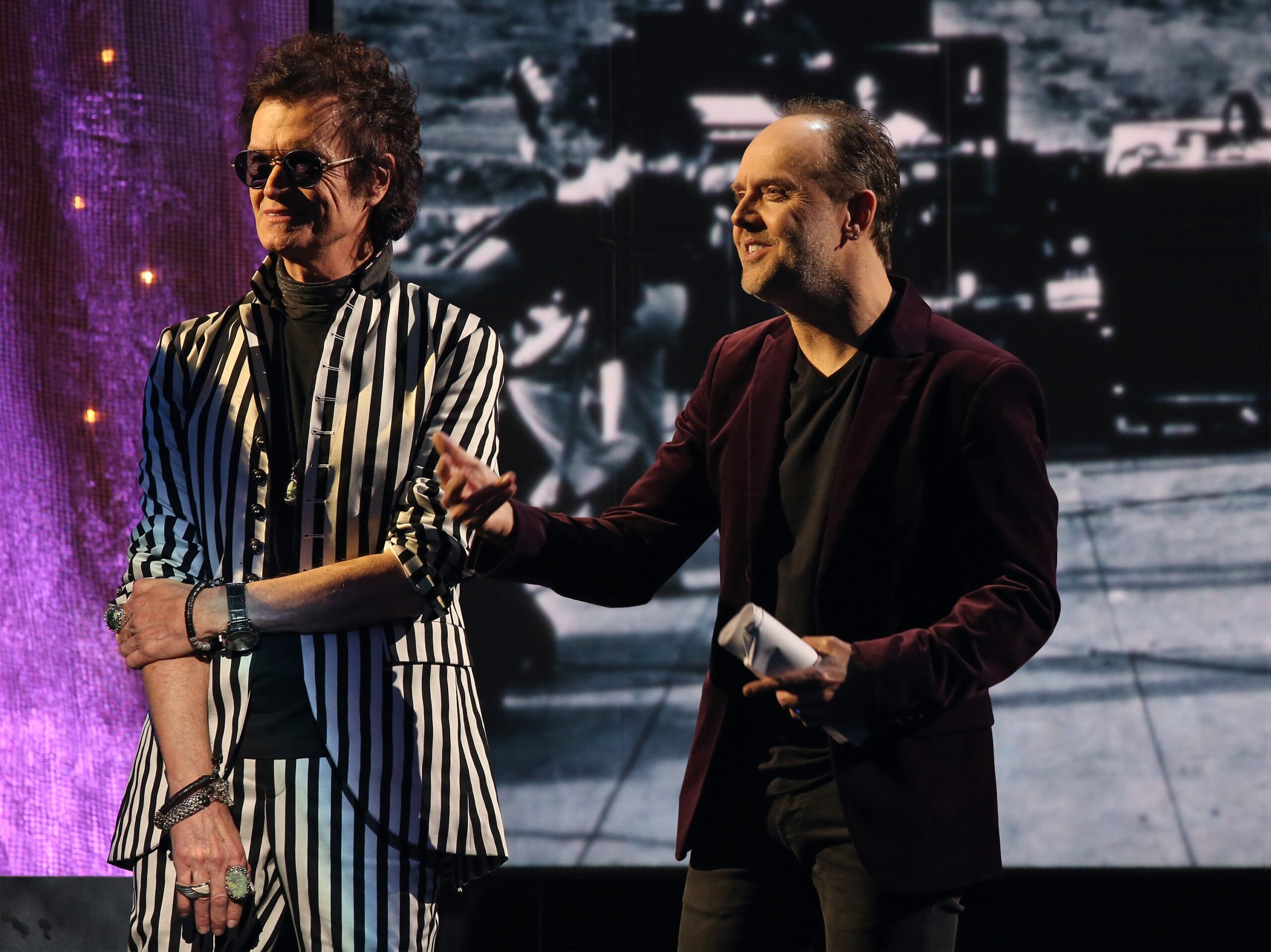
March 13, 2006: For ’s induction into the Rock and Roll Hall of Fame, Metallica performs several of the British metal pioneers’ songs at the induction ceremony.

September 12, 2008: Metallica’s Death Magnetic, the group’s 10th studio album, is released. It enters Billboard’s album chart at #1 and receives platinum certification (1 million copies sold) a month later.

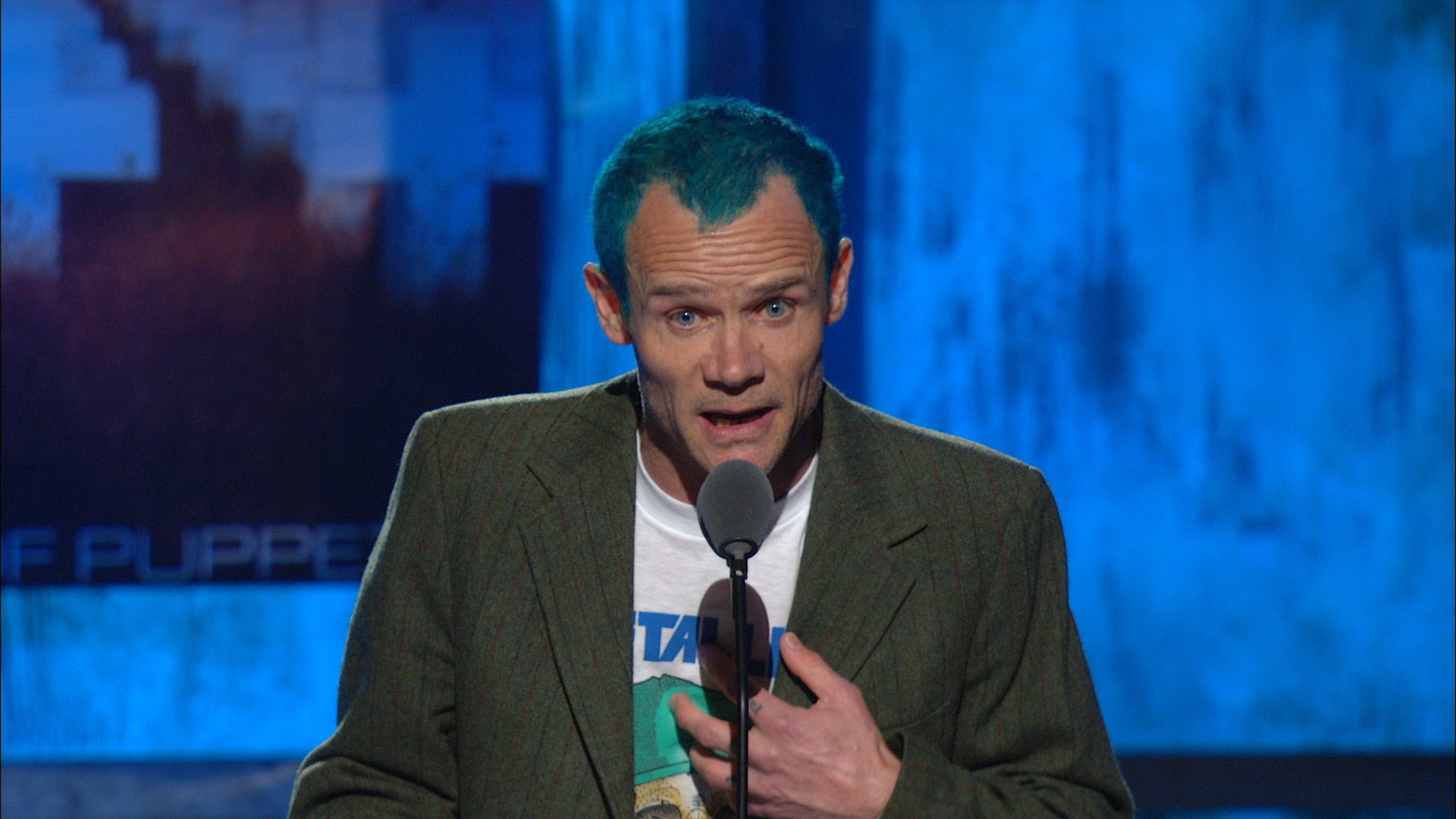
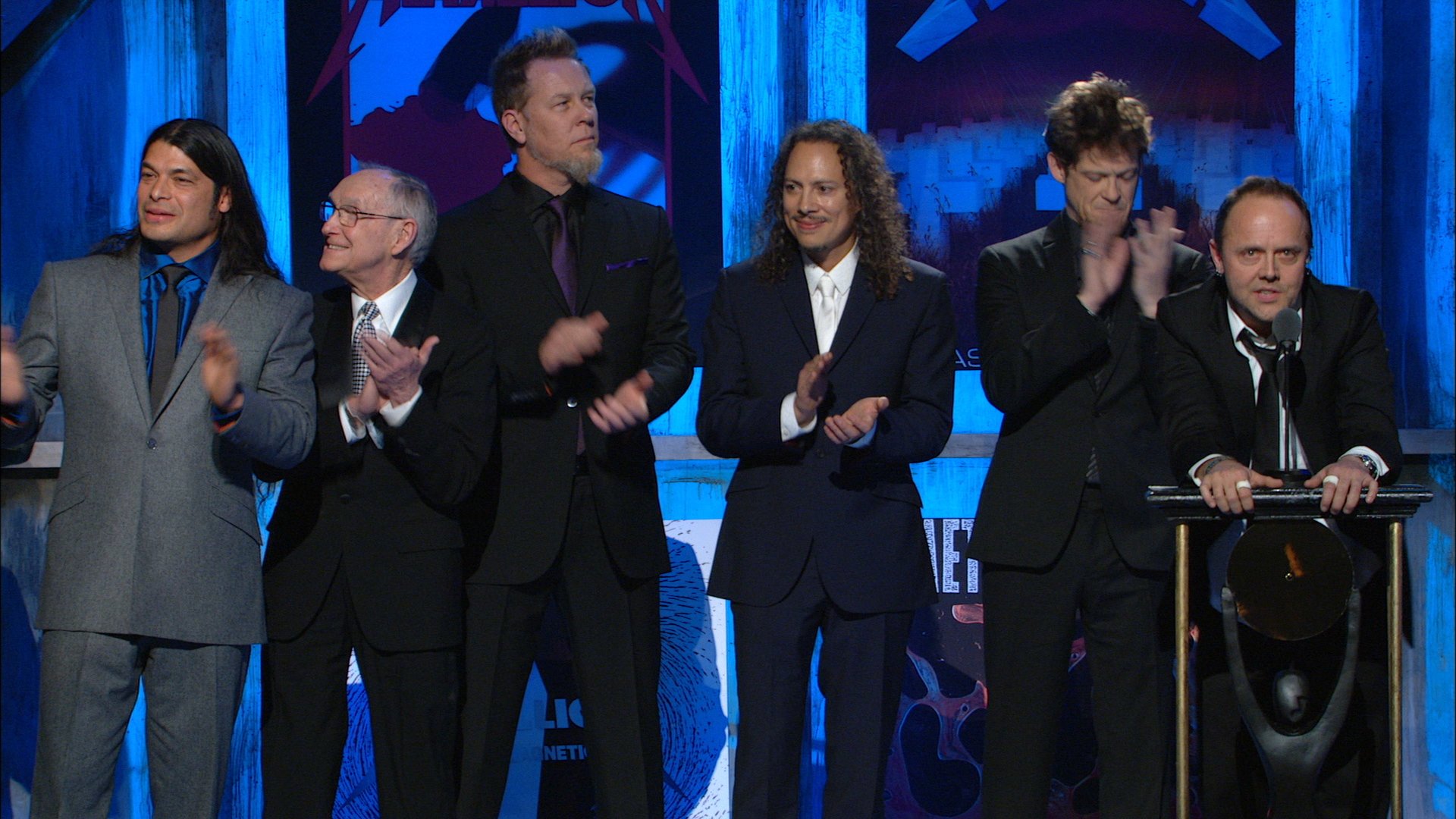
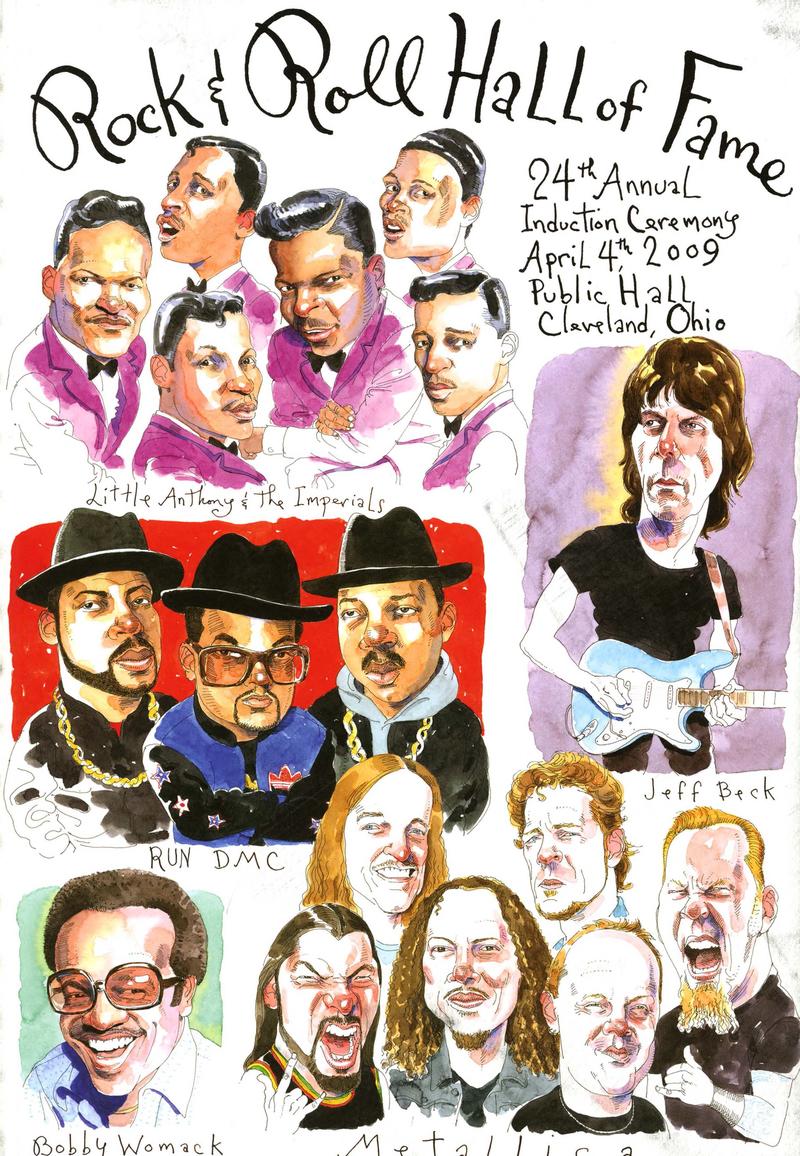
April 4, 2009: Metallica is inducted into the Rock and Roll Hall of Fame at the 24th Annual Ceremony. Flea is their presenter.

RECOMMENDED TRACKS

1. One
2. Enter Sandman
3. Master of Puppets
4. The Unforgiven
5. Fade to Black
6. Whiplash
7. Blackened
8. Wherever I May Roam
9. Harvester of Sorrow
10. Hit the Lights

RECOMMENDED READING

Behrlinger, Joe. Metallica: This Monster Lives – The Inside Story of Some Kind of Monster. New York: St. Martin’s Press, 2005.

Doughton, K.C. Metallica Unbound. New York: Grand Central Publishing, 1993.

Fricke, David. “Don’t Tread On Me: Metallica’s James Hetfield.” Rolling Stone (April 15, 1993): 42-46.

Fricke, David. “Louder, Faster, Stronger: How Metallica Conquered Bad Habits, Group Therapy and Ego Clashes to Make Their Heaviest Record Ever.” Rolling Stone (October 2, 2008): 58-67.

McIver, Joel. Justice for All: The Truth About Metallica. London: Omnibus Press, 2004

Pareles, Jon. “Heavy Metal, Weighty Words.” New York Times Magazine (July 10, 1988).

Pillsbury, Glenn T. Damage Incorporated: Metallica and the Production of Musical Identity. New York: Routledge, 2006.


Chuck Berry's Gibson ES-335 Electric Guitar

Photo by Andrew Moore
Collection of Chuck Berry