Rock and Roll Hall of Fame and Museum

Miles Davis

Induction Year: 2006

Induction Category: Performer


Miles Davis (trumpet, keyboards; born May 25, 1926, died September 28, 1991)

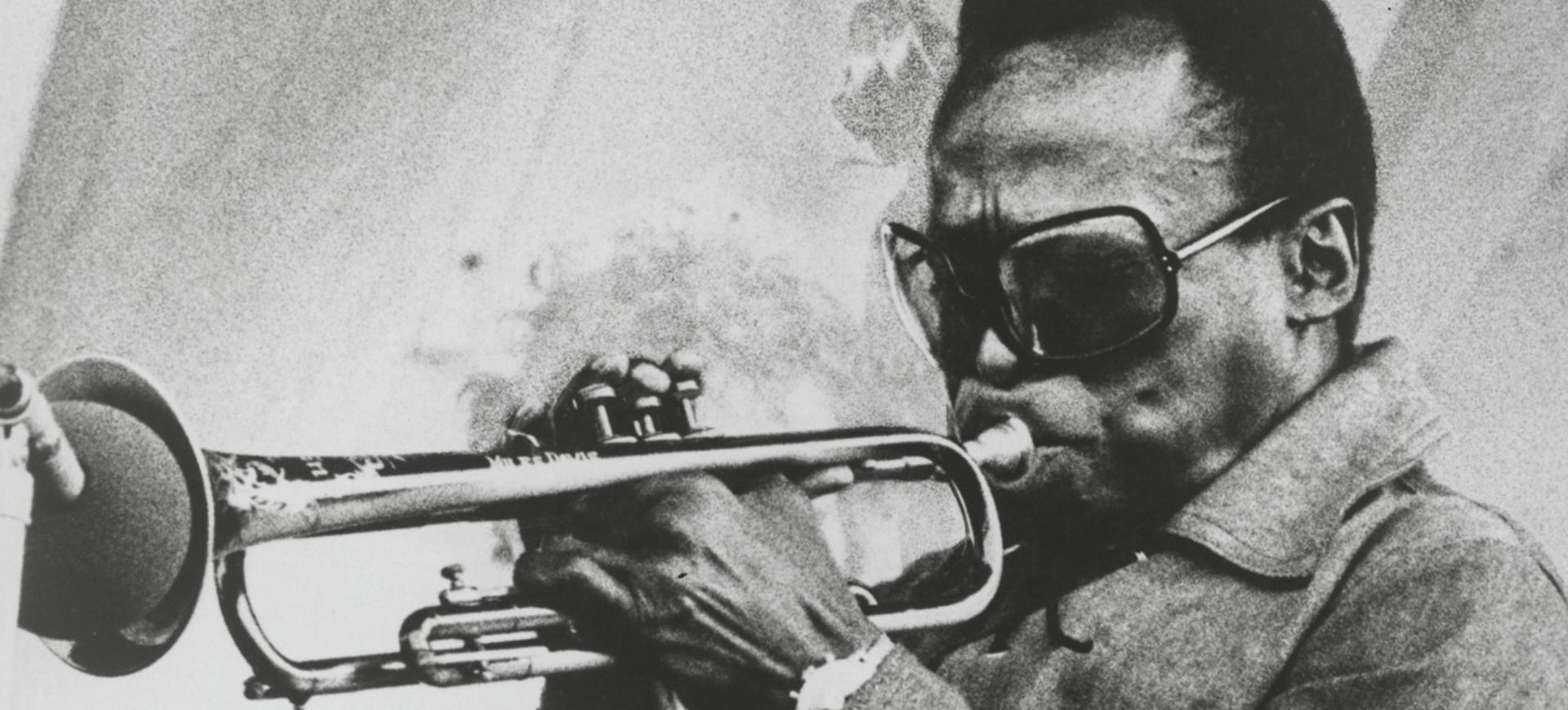
Miles Davis is one of the key figures in the history of jazz, and his place in vanguard of that pantheon is secure. His induction as a performer into the Rock and Roll Hall of Fame is a subtler and less obvious matter. Davis never played rock or rhythm & blues, though he experimented with funk grooves on 1972’s On the Corner and in some of his later bands. However, his work intrigued a sizable segment of rock’s more ambitious fans in a way that no other serious jazz figure had ever done - and not retroactively but while he was alive and making some of his most challenging music. In particular, the boldly experimental soundscapes of Davis’ 1969 album Bitches Brew spoke to the sensibilities of rock fans who’d been digesting the Grateful Dead’s expansive improvisations. Davis’ was acutely attuned to his environment and he once remarked, “We play what the day recommends.”

Davis’ exposure to the rock audience owes much to concert promoter , who booked Davis at his Fillmore Auditoriums. Graham figured that his open-eared audiences would make the connection between venturesome San Francisco jam bands (like the Dead, Quicksilver and ) and Davis’ free-flowing ensemble. This exposure allowed Davis to cross over without compromise, and he actually recorded albums - Miles Davis at Fillmore and Black Beauty - at Graham’s Fillmore East and Fillmore West, respectively.

It is important to note that Miles Davis did not make jazz-rock - a briefly popular hybrid in the late Sixties and early Seventies, whose chief proponents were Blood, Sweat & Tears and Chicago. Davis played jazz, period. But his forward-thinking sensibility, insatiably curious muse and eagerness to move music into uncharted realms made him a contemporary musician, irrespective of genre. The bond he established with rock’s more inquisitive listeners at that time carried through to his death in 1991. Moreover, his career-long example of pushing the boundaries has influenced many of rock’s leading lights, particularly those who eschewed the status quo for musical explorations on rock’s more experimental tip. He possessed one of the most gifted and curious minds in music history, and compromise was not in his blood.

As a French jazz magazine wrote of him in 1960, “The behavior of Miles Davis is not that of an ordinary star. It is that of a man who has decided to live without hypocrisy.”

Born in the St. Louis suburb of Alton, Illinois, Miles Dewey Davis III was the son of a successful dental surgeon. His mother played piano and violin, and Miles received tutoring on the trumpet. In 1942 he joined Eddie Randle’s Blue Devils, with whom he played throughout high school. Davis first heard modern jazz at 18 when Billy Eckstine’s ensemble - which included saxophonist Charlie Parker and trumpeter Dizzy Gillespie - came to town for a two-week residency. Davis wound up replacing a trumpet player in the band who had taken ill. He accompanied Eckstine back to New York, where he studied classical music at Juilliard by day and played jazz clubs at night. Davis joined Parker’s quintet in 1945 and made his recording debut as a bandleader two years later.

Jazz writer Nat Hentoff identified the fundamental elements of Davis’ style: “spareness, evocative use of space, intense lyricism, and deep fire underneath it all.” The innovations he brought to jazz in the second half of the 20th century were profound in their scope and consequences. With The Birth of the Cool, a series of sessions cut with a nine-piece band in 1949 and 1950, Davis tempered bop’s heat with a more supple, serene lyricism. As Robert Palmer wrote many years later, “[The Birth of the Cool] initiated a still-evolving exchange between of ideas between jazz and European classical music.”

Davis changed courses in the mid-Fifties with Walkin’, a bluesier, more muscular effort (recorded during a stint with Prestige Records) that ushered in the hard-bop era. He’d formed a legendary quintet that included pianist Red Garland, bassist Paul Chambers, drummer Philly Joe Jones and a young saxophonist named John Coltrane. They went on to record other milestones, such as Round About Midnight, which inaugurated Davis’ 30-year association with Columbia Records. Davis followed this with the ambitious Miles Ahead (1957), credited to “Miles Davis + 19.” This big-band session renewed Davis’ fruitful partnership with arranger Gil Evans (who’d also worked on The Birth of the Cool). Theirs has been called “the most important relationship ever forged between a jazz soloist and an arranger.”

The innovations came fast and furious as the Fifties segued into the Sixties. Working with a sextet that included pianist Bill Evans and saxophonists Coltrane and Cannonball Adderley, Davis recorded the understated masterpiece Kind of Blue in the spring of 1959. The musicians soloed in uncluttered settings typified by “melodic rather than harmonic variation,” in Davis’ words. The album included the classic originals “All Blues,” “So What” and “Flamenco Sketches.” Sketches of Spain, a large-scale orchestral project, appeared a year later. It was the apex in a series of expressive collaborations between Davis and arranger/composer Gil Evans. Both albums highlighted Davis’ painterly approach to horn-playing. Unsurprisingly, painting would later become another mode of self-expression for Davis.

During the Sixties, Davis led a stellar quintet that included tenor saxophonist Wayne Shorter, pianist Herbie Hancock, bassist Ron Carter and drumming prodigy Tony Williams (who was only seventeen when he first performed with Davis). Their many notable works included E.S.P. (1965), Miles Smiles (1967), Sorcerer (1967), Nefertiti (1968) and Filles de Kilimanjaro (1969). Davis would then move in a more electric direction, occasioning the same sort of controversy in the jazz world that Bob Dylan’s embrace of amplified instruments had generated in the folk world at mid-decade. His first step in this direction was the atmospheric In a Silent Way (1969), which saw him joined by guitarist John McLaughlin and keyboardists Chick Corea and Joe Zawinul. This album pointed the way to Davis’ groundbreaking Bitches Brew, one of the most challenging and innovative musical works ever made.

Enamored of the rock styles of and Sly Stone, Davis had expressed a desire to form “the world’s baddest rock band.” He didn’t literally do that, but he did bring a fiery, rock-inspired sensibility to Bitches Brew (1969), Jack Johnson (1971) and Live-Evil (1972). During this highly productive period he employed musicians who would go on to become household names in the Seventies: Joe Zawinul and Wayne Shorter (who cofounded Weather Report); Chick Corea (who’d make waves with Return to Forever); Billy Cobham and John McLaughlin (who’d form Mahavishnu Orchestra); Harvey Brooks (from the rock group Electric Flag); Lenny White (who’d join Larry Coryell’s fusion band, the Eleventh House); Ron Carter and Airto Moreira (key figures on the CTI label’s new-wave jazz roster); and others. Davis wasn’t so much leading a band as conducting an extended seminar on new directions for jazz, and its impact would be felt for decades.

Davis’ infatuation with rock and funk peaked with 1972’s On the Corner. He drew from numerous influences, including Sly Stone, Parliament/Funkadelic, , German composer Karlheinz Stockhausen, and British composer/arranger Paul Buckmaster. Thereafter he kept two or three electric guitarists in his band, and the music turned even more spectral and extreme. Such albums as Agharta, Pangaea and Dark Magus made for difficult listening. They subsequently influenced movements on rock’s fringe like No Wave, industrial, electronica, punk-funk and grunge. Those albums also reflected Davis’ turmoil during one of the darker periods in his life. He actually dropped out of the music scene from 1975 to 1981. Davis resurfaced in 1981 with The Man With the Horn. It was followed by the double live album We Want Miles and Star People, which was Davis’ most blues-minded recording in many years. He closed out his thirty-year run on Columbia Records with the albums Decoy (1984) and You’re Under Arrest (1985). The latter included Davis’ interpretations of Michael Jackson’s “Human Nature” and Cyndi Lauper’s “Time After Time.”

Davis’ comeback continued with a move to Warner Bros. in the mid-Eighties, where he continued to push the envelope with such albums as Tutu (1986) and Siesta (1986). In 1989, Davis published a frank, uncensored memoir entitled Miles: The Autobiography, which made the best-seller lists. Davis’ final studio project, Doo Bop, found him collaborating with Brooklyn rapper Easy Mo Bee on a synthesis of hip-hop, doo-wop and be-bop. Unsurprisingly, he was still forging new connections and avenues of expression until the very end of his life.

Davis succumbed to a combination of pneumonia, stroke and respiratory failure at a hospital in Santa Monica, California, in 1991. In the flood of tributes that followed, Vernon Reid (of Living Colour) perhaps stated it best: “Miles shares with a handful of artists of this century the ineffable mystery of creation at its highest level.”

In Davis’ own words, “The way you change and help music is by tryin’ to invent new ways to play.” For nearly fifty years, Miles Davis did just that.

TIMELINE

May 25, 1926: Miles Dewey Davis III is born in Alton, Illinois, a suburb of St. Louis.

July 1944: Miles Davis sits in with Billy Eckstine’s band, which includes Charlie Parker and Dizzy Gillespie, when they pass through St. Louis.

September 1944: Miles Davis moves from St. Louis to New York, where he enrolls at the Juilliard School of Music and involves himself on the jazz scene as a protégé of Charlie Parker and Dizzy Gillespie.

November 1945: Miles Davis records as a member of Charlie Parker’s quintet on sessions for Savoy Records.

August 14, 1947: Miles Davis makes his first recordings as a bandleader, cutting sides for Savoy that are credited to the Miles Davis All-Stars.

September 1948: The Miles Davis Nonet performs a series of shows at New York’s Royal Roost jazz club, premiering a “cooler” new sound.

January 1949: Miles Davis cuts the first of three sessions for Capitol Records with a nine-piece band. The recordings are released as 78 rpm singles and later collected in album form as The Birth of the Cool.

July 1955: Having kicked a heroin habit, Miles Davis appears at the first Newport Jazz Festival, where his show-stopping performance helps land a new contract with Columbia Records

1956: Davis releases the sophisticated ’Round About Midnight on Columbia Records, where he’ll remain for the next thirty years.

May 6-27, 1957: Miles Davis records Miles Ahead, collaborating with arranger Gil Evans and a nineteen-piece band on an album that was, in producer George Avakian’s words, “spectacularly different.”

March 2, 1959: The first of two sessions for Miles Davis’ Kind of Blue is held in New York. Released in August, the album goes on to become the best-selling and best-loved jazz album of all time.

April 12, 1961: Miles Davis wins the first of eight career Grammys for “Sketches of Spain.” It is given in the somewhat arcane category “Jazz Composition of More Than Five Minutes Duration.”

April 21-22, 1961: Miles Davis performs a weekend gig at San Francisco’s Blackhawk nightclub with his quintet. The album Miles Davis In Person (Friday And Saturday Nights at the Blackhawk) is his first to make Billboard’s album chart, reaching #68. In 2003, all four sets are released in a four-disc box set.

February 20, 1964: Miles Davis plays “My Funny Valentine” at New York’s Philharmonic Hall, and his performance of this pop standard serves as the title track of a popular album released a year later.

October 1966: Miles Davis records Miles Smiles with an acoustic quintet. Such pieces as “Footprints” and “Circles” are more venturesome and abstract, pointing the way toward Davis’ late-Sixties breakthroughs.

February 18, 1969: Miles Davis records “In a Silent Way,” the title track of an album that will move him into the world of electronic instruments and pave the way for his masterful Bitches Brew.

August 19-21, 1969: Miles Davis records Bitches Brew in a three-day period with a stellar cast of musicians that includes keyboardist Joe Zawinul and tenor saxophonist Wayne Shorter.

April 7, 1970: Miles Davis records “Right Off,” a 27-minute piece that will appear as side one of A Tribute to Jack Johnson. “Yesterday,” which is nearly as long, is cut on November 11. His band includes such future jazz-fusion mainstays as John McLaughlin, Herbie Hancock and Billy Cobham.

May 16, 1970: Miles Davis’ double-album Bitches Brew enters the Billboard Top 200, where it will become his highest-charting album, reaching #35.

December 1970: Miles Davis at Fillmore, recorded at ’s Fillmore East in New York City, is released. Another double album set, recorded at Fillmore West, is later released as Black Beauty.

March 16, 1971: Miles Davis wins his second Grammy - for Best Jazz Performance, Large Group or Soloist with Large Group - for the album Bitches Brew.

June 1972: Miles Davis records On the Corner, the trumpet player’s deepest venture into funk, world music and fusion.

January 1975: Miles Davis’ Get Up With It is released. This double album - highlighted by “He Loved Him Madly,” a tribute to Duke Ellington - represents his last new studio recordings until the early Eighties.

September 1975: Miles Davis performs at the Shaefer Summer Music Festival in New York’s Central Park. That is the last the public will hear from him for nearly six years, as he battles drug addiction and a debilitating bone disease.

July 1981: Miles Davis releases The Man With the Horn, the first new release in a comeback that will find him re-energized and active until his death ten years later.

February 23, 1983: Miles wins a Grammy for “Best Jazz Instrumental Performance” for the double live album We Want Miles, released the previous year.

November 6, 1983: “Miles Ahead: A Tribute to an American Music Legend” is held at New York’s Radio City Music Hall. The event is hosted by Bill Cosby and features the Miles Davis Alumni Orchestra, including Wayne Shorter, Tony Williams and Ron Carter.

May 23, 1984: A major exhibition of artwork by trumpeter Miles Davis opens at New York’s Tower Gallery.

December 14, 1984: Miles Davis accepts the Sonning Award, Europe’s most prestigious music award, in Copenhagen, Denmark. Previous winners include Leonard Bernstein, Andre Segovia and Igor Stravinsky.

August 1985: Miles Davis releases You’re Under Arrest. It is his final album of new material for Columbia Records, ending a thirty-year association.

September 1986: Miles Davis’ Tutu, his first album for the Warner Bros. label, is released. It will earn Davis his fourth Grammy.

December 6, 1988: Miles Davis: The Columbia Years 1955-1985 is released. The box set is thematically organized, with an album apiece devoted to blues, standards, originals, “moods” and “electric.”

July 8, 1991: Miles Davis joins Quincy Davis onstage at the Montreux Jazz Festival for a set that draws extensively from Davis’ early work with arranger Gil Evans. The performance is released as Miles & Quincy Live at Montreux.

September 28, 1991: Miles Davis dies of pneumonia at St. John’s Hospital and Health Center in Santa Monica, California, at age 65.

June 30, 1992: Miles Davis’ last studio recording, Doo-Bop - cut with rapper Eazy Mo Bee - is released.

February 24, 1993: Miles Davis posthumously wins his eight and final Grammy, for Best Rhythm & Blues Instrumental Performance, for Doo-Bop.

January 16, 2002: Miles Davis’ Kind of Blue receives its third platinum certification from the RIAA, signifying sales of 3 million copies.

September 22, 2003: Miles Davis’ Bitches Brew receives platinum certification from the RIAA, signifying sales of one million copies, nearly a quarter century after its initial release.

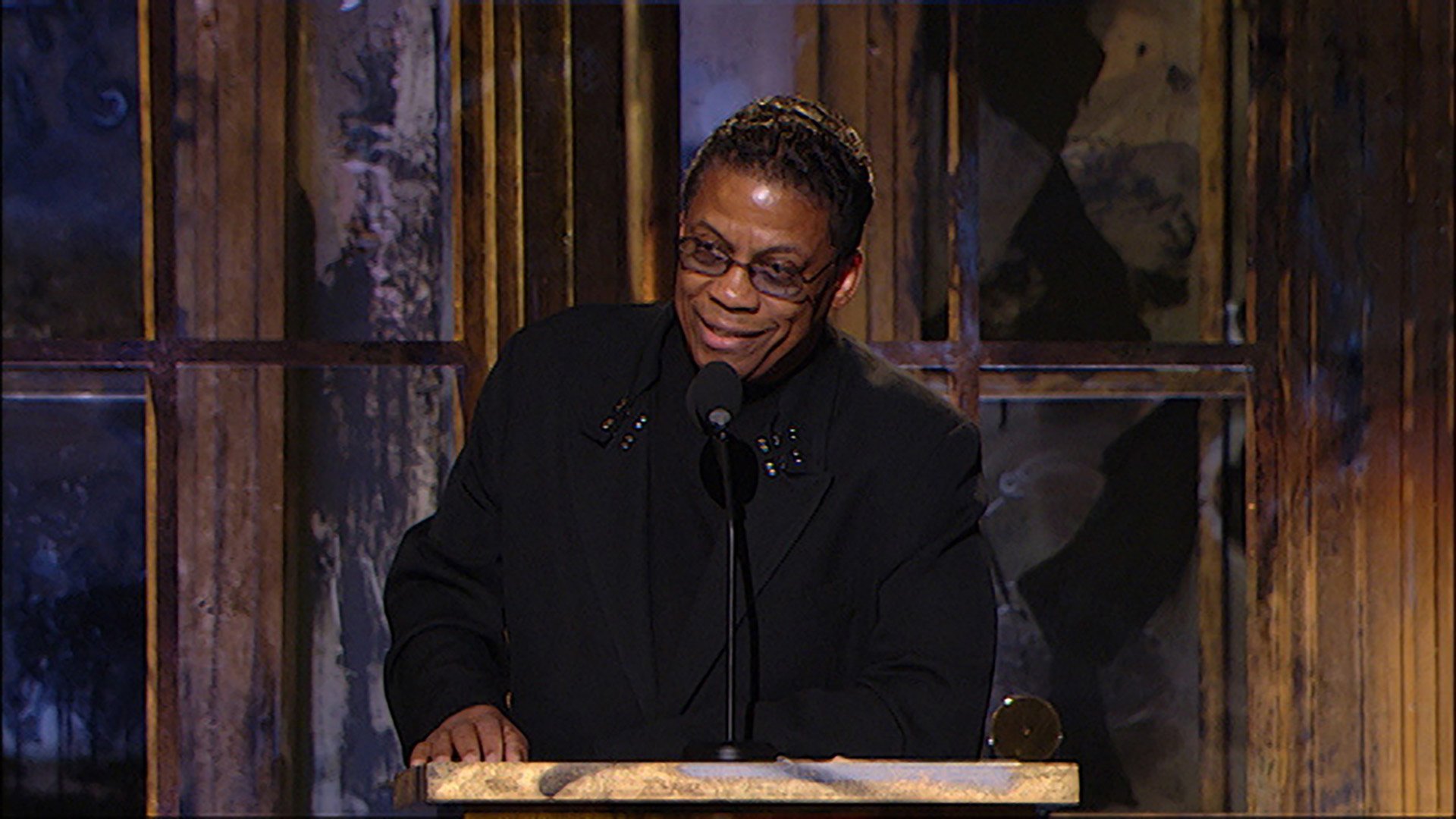
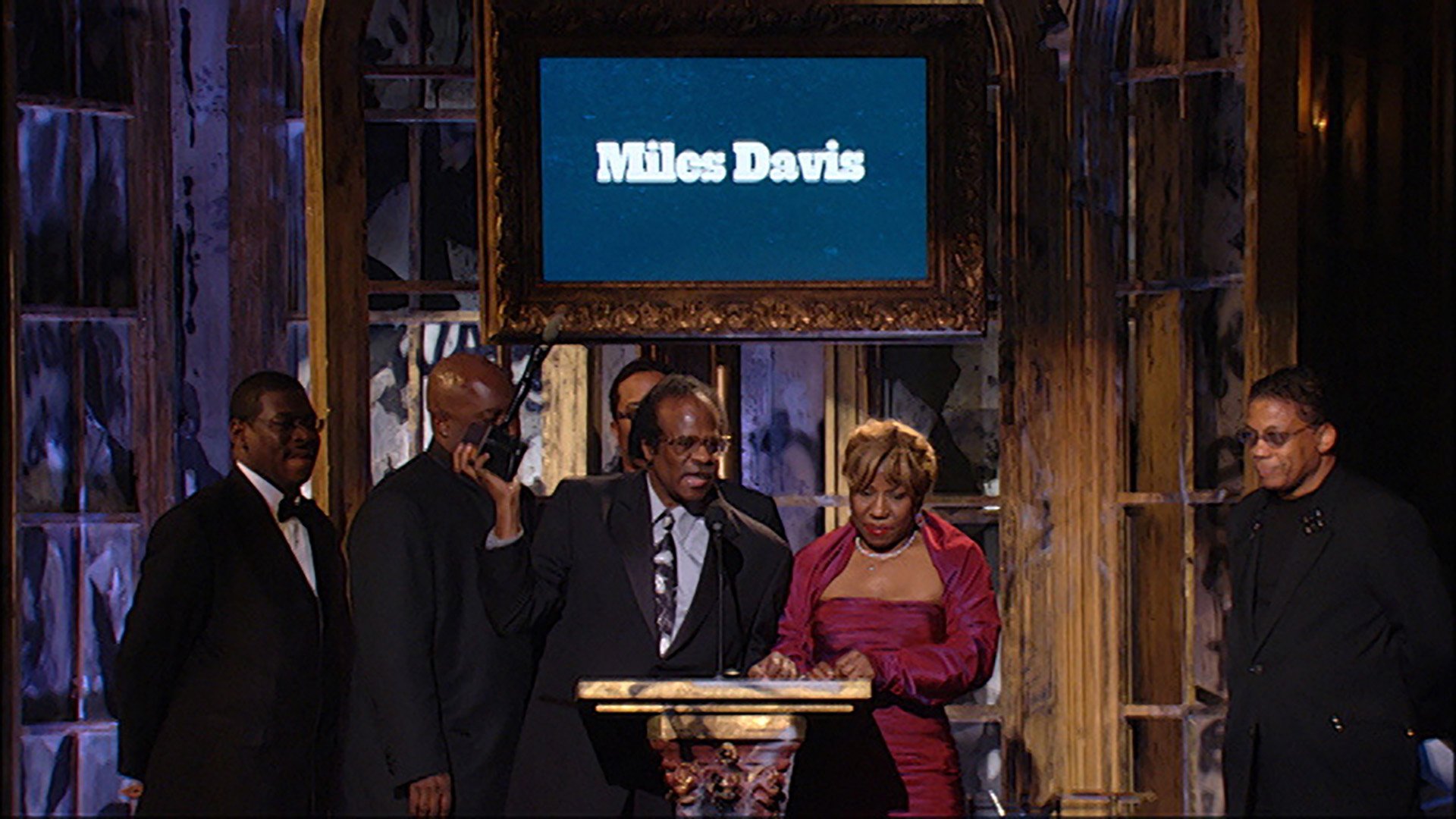
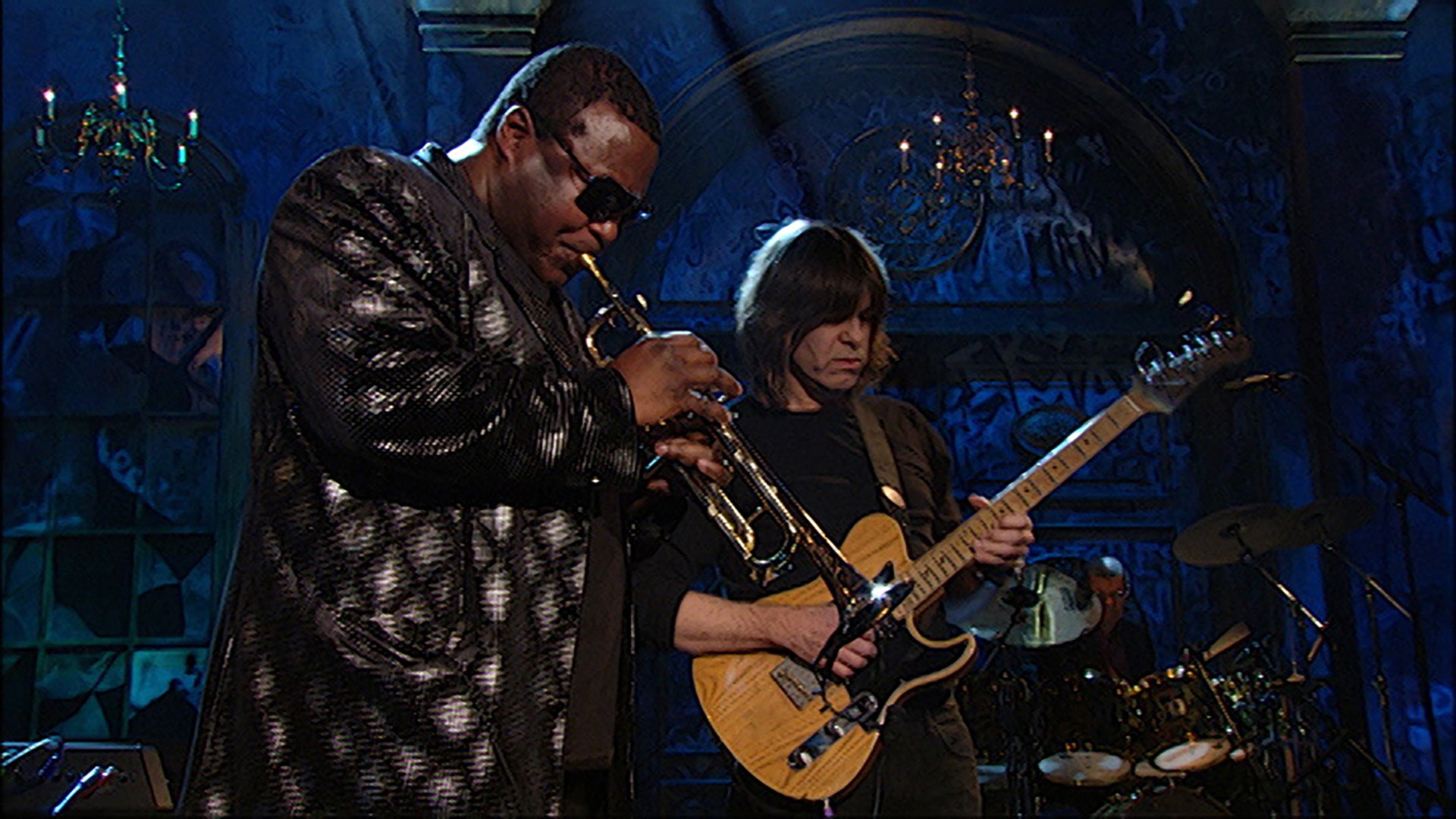
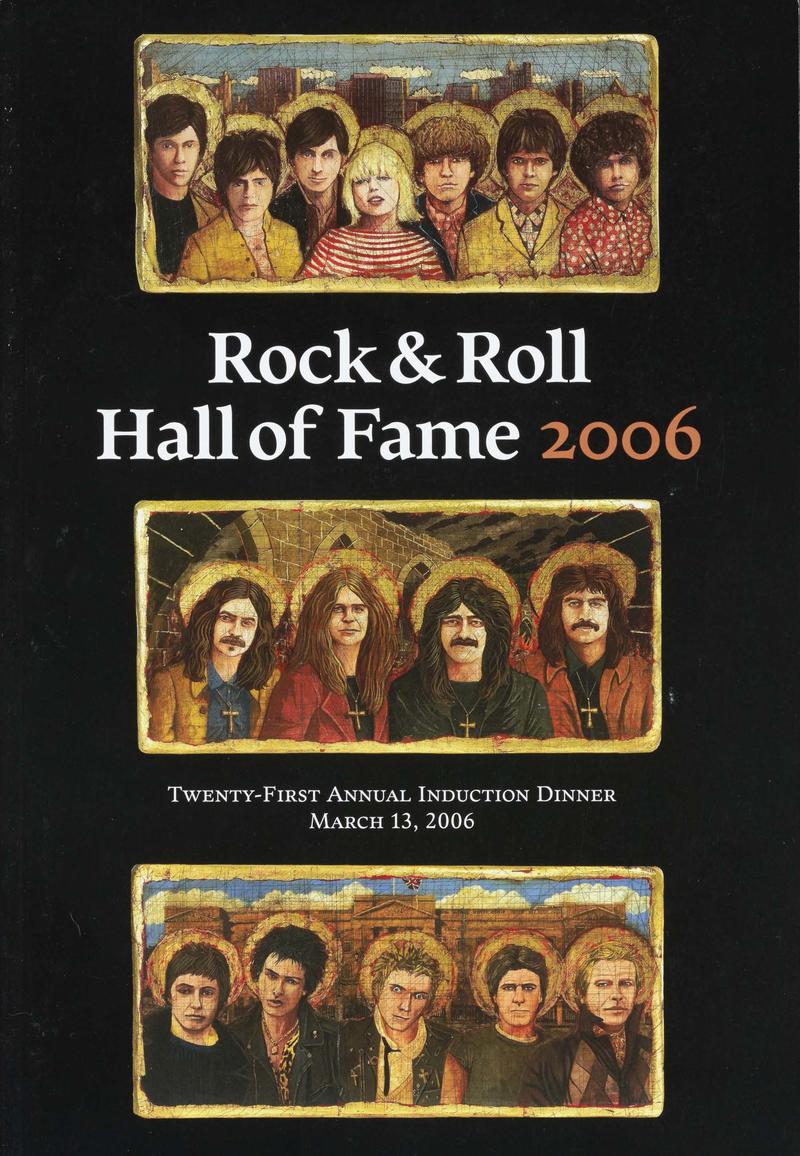
March 13, 2006: Miles Davis is inducted into the Rock and Roll Hall of Fame at the 21st annual induction dinner. tk is his presenter.

Essential Recordings

All Blues
Bitches Brew
Boplicity
Milestones
My Funny Valentine
So What
Seven Steps to Heaven
Walkin’
Right Off
He Loved Him Madly

Recommended Reading

Miles Davis: An Autobiography.
Ian Carr. New York: Quill, 1984.

Milestones: The Music and Times of Miles Davis.
Jack Chambers. New York: Quill, 1983.

The Last Miles: The Music of Miles Davis, 1980-1991.
George Cole. Ann Arbor: University of Michigan Press, 2005.

Miles: The Autobiography.
Miles Davis with Quincy Troupe. New York: Simon & Schuster, 1989.

The Man Who Changed Music.
Robert Palmer. Rolling Stone (November 14, 1991): 41-47.

Miles Styles: An Overview of the Recordings of Miles Davis.
William Ruhlman. Goldmine (July 31, 1990):


Neil Young's Fringed Leather Jacket

Photo by Design Photography
Collection of Neil Young