Rock and Roll Hall of Fame and Museum

Muddy Waters

Induction Year: 1987

Induction Category: Performer


Muddy Waters (vocals, guitar; born April 4, 1915, died April 30, 1983)

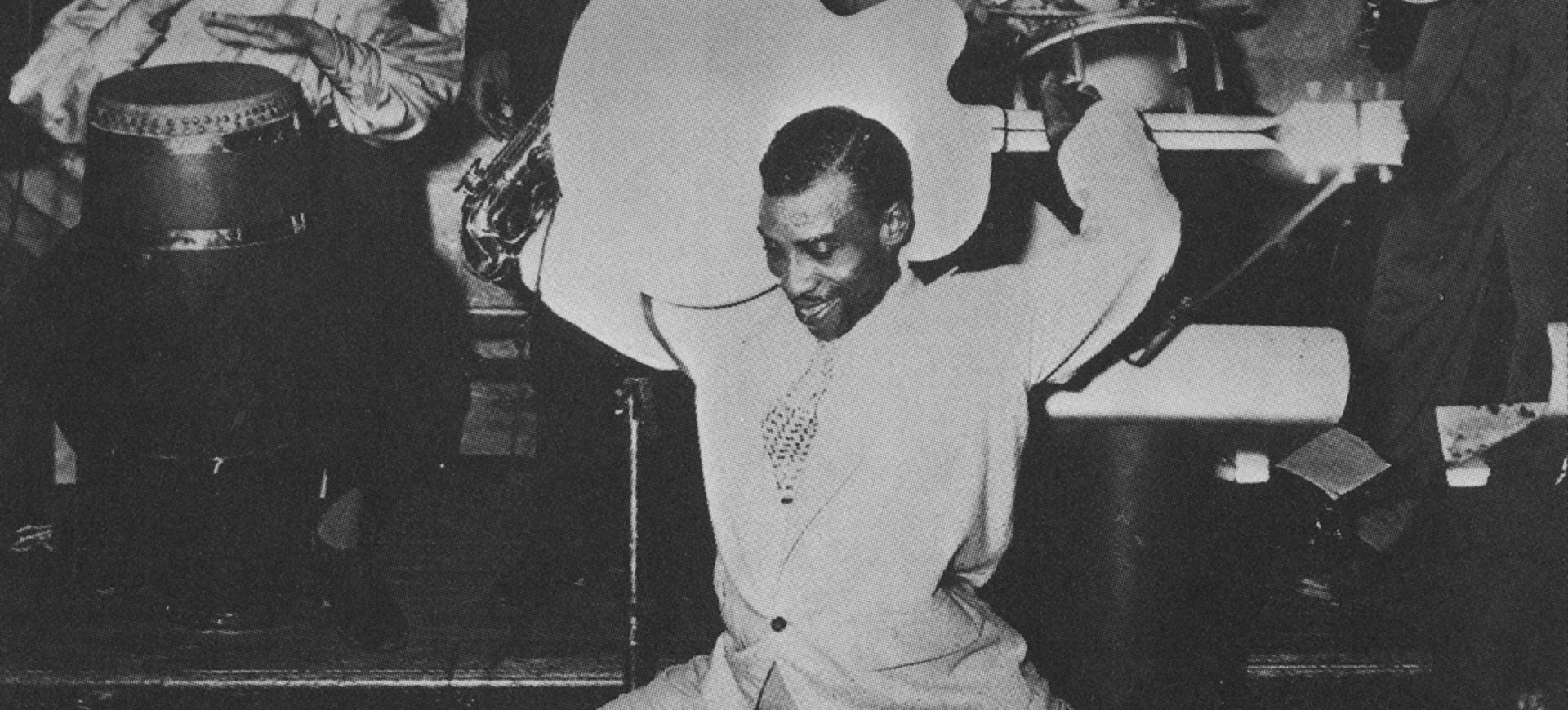
Muddy Waters transformed the soul of the rural South into the sound of the city, electrifying the blues at a pivotal point in the early postwar period. His recorded legacy, particularly the wealth of sides he cut in the Fifties, is one of the great musical treasures of this century. Aside from , no single figure is more important in the history and development of the blues than Waters. The real question as regards his lasting impact on popular music isn’t “Who did he influence?” but - as Goldmine magazine asked in 2001 - “Who didn’t he influence?”

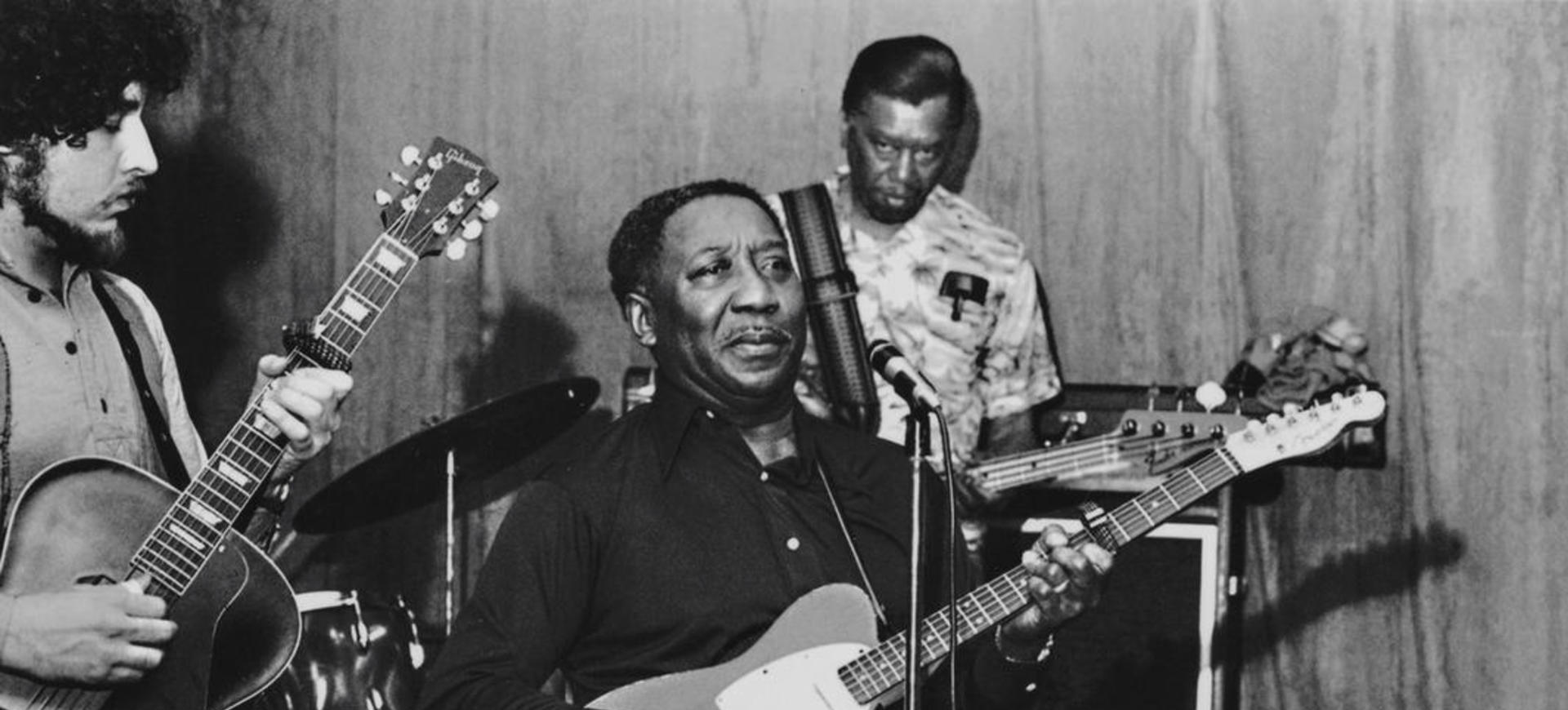
Above all others, it was Waters who linked the country blues of his native Mississippi Delta with the urban blues that were born in Chicago. Waters bought his first electric guitar in 1944 and revolutionized the blues with the recordings he began making for Chess Records in 1948. His amplified combo consisted of himself on slide guitar and vocals, a second guitarist, bass, drums, piano and harmonica. The Muddy Waters Blues Band bore all the earmarks - in terms of size, volume and attitude - of the great rock and roll bands that would follow in its wake.

He was born McKinley Morganfield in Rolling Fork, Mississippi, in 1915. At the age of three he was sent to live with his grandmother, on the Stovall Plantation north of Clarksdale, after his mother died. There he acquired the nickname “Muddy” for his penchant for playing in nearby creeks and puddles. Waters began playing harmonica at the age of seven and took up guitar at seventeen. He picked cotton on the plantation for fifty cents a day and played music as part of a trio at fish fries and house parties on weekends. Folklorist Alan Lomax, while making field recordings for the Library of Congress, tracked down and recorded Waters in 1941 on the Stovall Plantation, near Clarksdale, Miss. Several of these performances were released on Library of Congress anthologies and stand as his first recordings. In May 1943, Waters made the move from the rural plantation to the big city, heading north to Chicago by train.

Waters’ approach to the blues underwent a dramatic metamorphosis after moving to Chicago, where he befriended and played with such estimable figures as Big Bill Broonzy and John Lee “Sonny Boy” Williamson. Waters switched from acoustic to electric guitar in order to be heard over the din of patrons at the clubs he played on Chicago’s South Side. After a few false starts, Waters’ recording career began in earnest soon after pianist Sunnyland Slim introduced him to , co-owner of the Aristocrat label (later Chess Records). Working at the famed Chess Studios on South Michigan Avenue, Waters cut many of the greatest recordings in the blues canon. He developed a fruitful team approach to record-making with producer , bassist/songwriter , and various musical associates.

In a relaxed, informal studio setting Waters and band laid down a string of citified, plugged-in electric blues that bore the rustic stamp of their Mississippi Delta underpinnings. A flood of blues-standards-to-be from Waters commenced with the 1948 release of “I Can’t Be Satisfied,” a raw, uncut Delta blues. Other classic sides included songs written for Waters by ("I’m Your Hoochie Coochie Man,” “I Just Want to Make Love to You,” “I’m Ready") and by Waters himself ("Got My Mojo Working,” “Mannish Boy,” “Rollin’ and Tumblin’").

Waters was a fierce singer and slashing slide guitarist whose uncut blues bore the stamp of his mentors, and Son House. For his own part, Waters served to mentor or at least launch many prominent blues musicians, many of whom went on to careers as bandleaders in their own right. The list of notable musicians who passed through Waters’ band includes harmonica players “Little Walter” Jacobs, “Big Walter” Horton, Junior Wells and James Cotton; guitarists Jimmy Rogers, Pat Hare, Luther Tucker and Earl Hooker; pianists Memphis Slim, Otis Spann and Pinetop Perkins; and drummers Elgin Evans, Fred Below and Francis Clay.

Waters’ greatest studio recordings were released as singles during the Fifties, and his first album - a collection of singles entitled The Best of Muddy Waters - didn’t appear until 1958. The Sixties found Waters performing to an ever-widening and appreciative audience as the younger generation acquired an insight into rock and roll’s essential grounding in the blues. In 1960, Waters performed a fiery, unforgettable set at the Newport Folk Festival, released that same year as Muddy Waters at Newport.

Waters also capitalized on the folk-music craze of the late Fifties and early Sixties with a series of albums that found him assaying acoustic blues on such albums as Muddy Waters Sings Big Bill (a tribute to rural bluesman Big Bill Broonzy, released in 1960), Muddy Waters, Folk Singer (1964) and The Real Folk Blues (1966). Less successful were attempts to contemporize his sound with such ill-advised efforts as “Muddy Waters Twist” (a 1962 single) and Electric Mud (an album of psychedelic blues from 1968). More satisfying by far were a couple of albums - Fathers and Sons (1969) and The London Muddy Waters Sessions (1972) - that found Waters accompanied by such vanguard rock musicians as Mike Bloomfield and . His thirty-year tenure with Chess Records ended in 1976 with the release of The Muddy Waters Woodstock Album. From here, he moved to the Blue Sky label (a Columbia subsidiary).

Waters’ audience grew exponentially following his electrifying performance in The Last Waltz, a film documentary (produced by Martin Scorsese) of ’s farewell concert. Staged at San Francisco’s Winterland ballroom, the Thanksgiving 1976 event was a star-studded affair. Water’s scalding rendition of “Mannish Boy” - on which he was accompanied by and Paul Butterfield on harmonica - was an unforgettable highlight. Subsequent to that, he kept the momentum going with a series of uncompromising albums for Blue Sky that were produced by longtime fan Johnny Winter. These included Hard Again (1977), I’m Ready (1978), Muddy Mississippi Waters Live (1981) and King Bee (1982). All were critical and popular successes.

In addition to his musical legacy, Waters helped cultivate a great respect for the blues as one of its most commanding and articulate figureheads. Drummer Levon Helm of , who worked with him on The Muddy Waters Woodstock Album and at The Last Waltz, had this to say about him in a Goldmine magazine interview: “Muddy taught us to take things in context, to be respectful, and to be serious about our music, as he was. He showed us music is a sacred thing.”

Waters, who remained active till the end, died of a heart attack in 1983. He was 68 years old. In the years since his death, the one-room cedar shack in which he lived on the Stovall Plantation has been preserved as a memorial to Waters’ humble origins.

TIMELINE

April 4, 1915: McKinley Morganfield - a.k.a. Muddy Waters - is born in Rolling Fork, Mississippi.

1932: Muddy Waters sells a horse to buy his first guitar, a Stella acoustic ordered from a catalog for $2.50.

August 1941: While on a field trip through the South, folklorists Alan Lomax and John Work record Muddy Waters (then in his mid-twenties) for the Library of Congress. He would return to record him some more in July 1942.

May 1943: Muddy Waters takes the train from Clarksdale, Mississippi, to Chicago, Illinois, where he’ll seek fame and fortune as a blues musician.

September 1946: Muddy Waters cuts his first sides after his move to Chicago. Recorded for the Columbia label, they remain unreleased until 1971.

1947: Muddy Waters and Sunnyland Slim record together at Waters’ first session for Aristocrat Records. “Gypsy Woman” is the first record released under Waters’ name.

April 1948: Muddy Waters’ “I Can’t Be Satisfied” is released. Striking a chord with transplanted Southerners, it sells out in Chicago and becomes Waters’ breakthrough.

June 1950: “Rollin’ Stone,” credited to “Muddy Waters & his guitar,” becomes one of the first releases on Chess Records, formed after brothers Leonard and Phil Chess buy out their partner at Aristocrat Records.

1953: Muddy Waters assembles the world’s greatest blues band, having added harmonica player Little Walter, second guitarist Jimmy Rogers and pianist Otis Spann.

March 1954: Muddy Waters scores one of his biggest hits when “I’m Your Hoochie Coochie Man” his #3 on Billboard’s R&B chart. This memorable year will also yield “I Just Want to Make Love to You,” “I’m Ready,” “Mannish Boy” and “Trouble No More.”

July 30 1955: “Mannish Boy,” Muddy Waters’ signature song, is released. It will reach #5 on the R&B chart.

1957: The Best of Muddy Waters, a collection of singles, becomes the bluesman’s first long-player. It would be re-released in 1969 as Sail On.

1958: “Close to You,” by Muddy Waters, enters the R&B chart, where it will peak at #9. It is the last of Waters’ string of sixteen charting singles.

1959: Muddy Waters Sings Big Bill is released on Chess Records. On it, Waters plays songs associated with acoustic bluesman Big Bill Broonzy, who died the previous year.

July 3, 1960: Muddy Waters closes the Newport Folk Festival with a historic set that is preserved on the classic album Muddy Waters at Newport 1960.

January 30, 1964: Muddy Waters: Folk Singer, an album of acoustic folk-blues designed to capitalize on the burgeoning folk movement, is released.

March 16, 1971: Muddy Waters receives his first Grammy Award (“Best Ethnic or Traditional Recording”) for the album They Call Me Muddy Waters.

April 1972: The London Muddy Waters Sessions, on which Waters is joined by some of Britain’s hottest blues musicians, is released.

March 1974: Muddy Waters’ final release for Chess Records, The Muddy Waters Woodstock Album, is released shortly before the label ceases operations.

November 25, 1976: Muddy Waters performs “Mannish Boy,” backed by and Paul Butterfield, at ’s farewell concert, The Last Waltz. Waters is introduced to a new generation of fans when film documentary of the event hits movie theaters.

February 1977: Hard Again, by Muddy Waters, is released. It is the first of four albums on which fellow bluesman Johnny Winter is involved, and it will win Waters his fourth Grammy.

August 1978: Muddy Waters performs for President Jimmy Carter and his staff at the White House.

February 25, 1981: Muddy Waters wins the sixth and last Grammy Award of his career, for Muddy “Mississippi” Waters Live, released the previous year.

April 30, 1983: Having been diagnosed with lung cancer the previous year, Muddy Waters dies in his sleep of a heart attack.

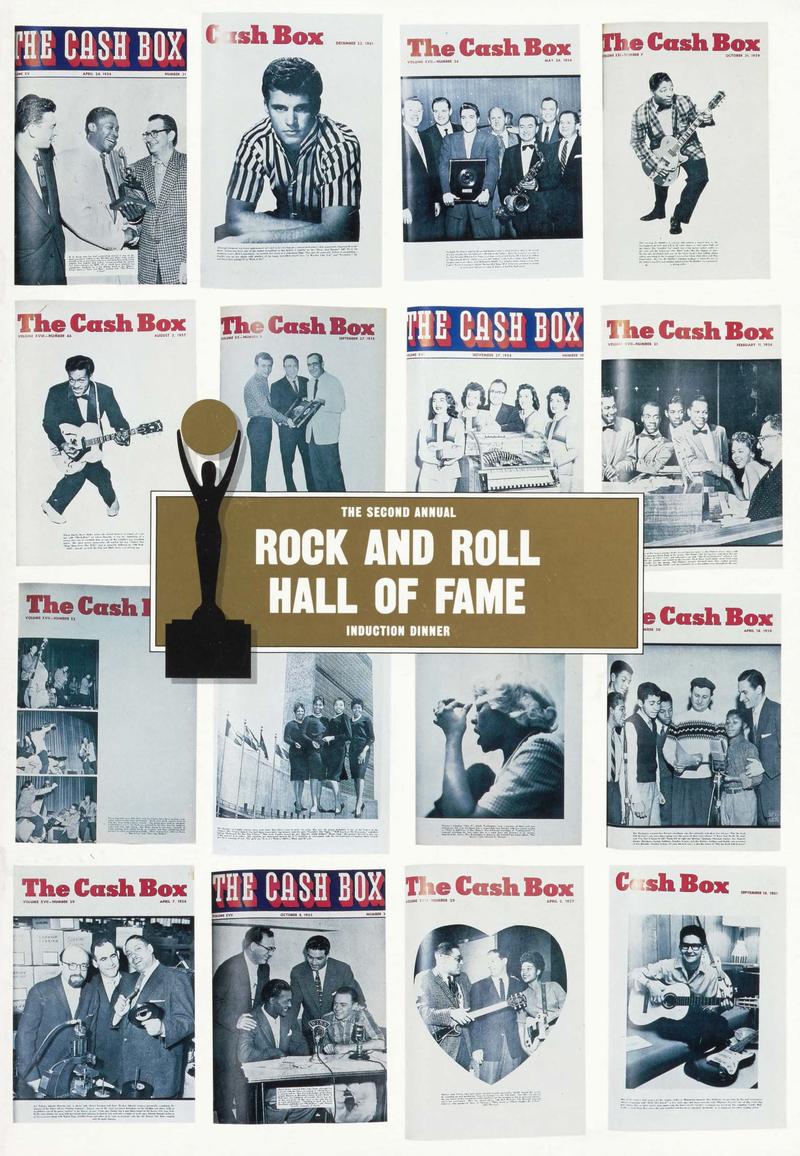
January 21, 1987: Muddy Waters is inducted into the Rock and Roll Hall of Fame at the 2nd annual induction dinner. Paul Butterfield is his presenter.

May 1993: The Complete Plantation Recordings of Muddy Waters, comprising field recordings made in 1941 and 1942, is released on MCA Records.

July 7, 2000: Muddy Waters: Rollin’ Stone/The Golden Anniversary Collection is issued on MCA/Chess/UME. Celebrating the fifty-year anniversary of Chess Records and its first hit - Waters’ “Rollin’ Stone” - the double disc collects Waters’ first fifty recordings.

September 2000: The Rock and Roll Hall of Fame honors’ Muddy Waters’ legacy with a month-long tribute and celebration.

Essential Recordings

Mannish Boy
(I’m Your) I’m Your Hoochie Coochie Man
Rollin’ Stone
I Can’t Be Satisfied
I’m Ready
Rollin’ and Tumblin’
Trouble No More
Got My Mojo Working
I Just Want to Make Love to You
Long Distance Call

Recommended Reading

Spinning Blues into Gold: The Chess Brothers and the Legendary Chess Records
Nadine Cohodas. New York: St. Martin’s Press, 2000.

Can’t Be Satisfied: The Life and Times of Muddy Waters
Robert Gordon. New York: Little, Brown & Co., 2002.

“Muddy Waters: A Man of the Blues.”
Peter Guralnik. Rolling Stone (September 16, 1971): 36-39.

“Muddy Waters: The Delta Son Never Sets.”
Robert Palmer. Rolling Stone (October 5, 1978): 53-57.

“Muddy Waters: 1915 - 1983.”
Robert Palmer. Rolling Stone (June 23, 1983): 37-42.

Liner notes for The Chess Box, by Muddy Waters
Robert Palmer. Chess Records, 1989.

“Muddy Waters: Who Didn’t He Influence?”
Richard Skelly. Goldmine (April 6, 2001): 14-19.

Muddy Waters: The Mojo Man
Sandra B. Tooze. Toronto: ECW Press, 1997.


The Beatles' Table Top Promotional Display for Parlophone Records, 1963

Photo by Design Photography
Collection of Peter J. Howard / ICE Magazine