Rock and Roll Hall of Fame and Museum

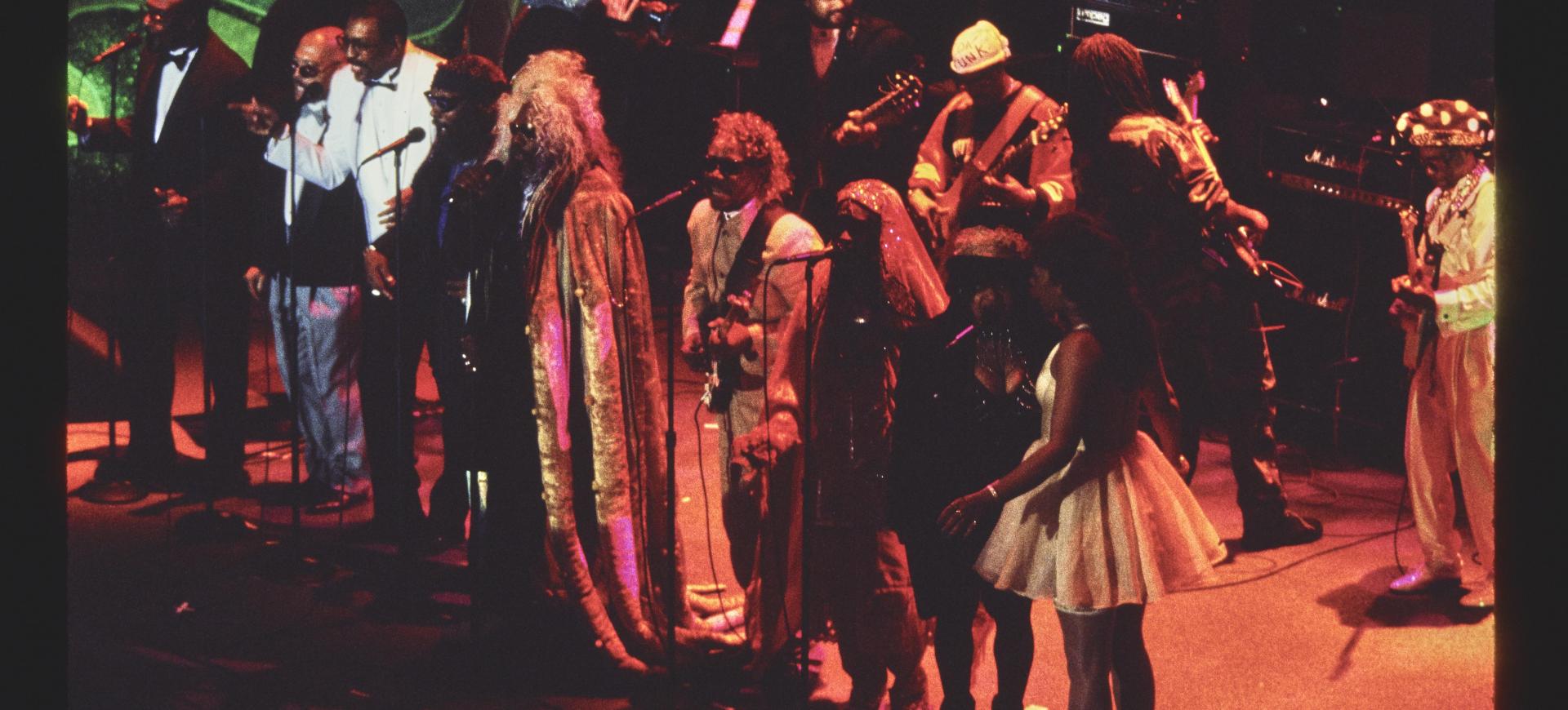
Parliament-Funkadelic

Induction Year: 1997

Induction Category: Performer


Inductees: George Clinton (vocals; born July 22, 1940), Jerome “Bigfoot” Brailey (drums; born August 20, 1950), William “Bootsy” Collins (bass, vocals; born October 26, 1951), Raymond Davis (vocals; born March 29, 1940), Tiki Fulwood (drums, vocals; born May 23, 1944), Glenn Lamont Goins (vocals, guitar; born tk, died 1978), Michael Hampton (guitar; born November 15, 1956), Clarence “Fuzzy” Haskins (vocals; born June 8, 1941), Eddie Hazel (guitar, vocals; born April 10, 1950, died 1992), Walter “Junie” Morrison (keyboards, synthesizers; born tk), Cordell “Boogie” Mosson Jr. (bass; born October 16, 1952), William “Billy Bass” Nelson Jr. (bass; born January 28, 1951), Gary Shider (vocals, guitar; born July 24, 1953), Calvin “Thang” Simon (vocals; born May 22, 1942), Grady Thomas (vocals; born January 5, 1941), Bernie Worrell (keyboards, vocals, born April 19, 1944)

Under the guiding hand of mastermind George Clinton, the affiliated groups Parliament and Funkadelic established funk as an heir to and outgrowth of soul. If is funk’s founding father, Clinton has been its chief architect and tactician. Over the decades, he’s presided over a musical empire that’s included Parliament and Funkadelic, plus numerous offshoots (such as the Brides of Funkenstein and Parlet), solo careers (Clinton’s and bassist Bootsy Collins’ being the notable) and aggregates (the P-Funk All-Stars). The pioneering work of Parliament and Funkadelic in the Seventies—driven by Clinton’s conceptually inventive mind and the band members’ tight ensemble playing and stretched-out jamming—prefigured everything from rap and hip-hop to techno and alternative. Clinton’s latter-day disciples include Prince and the Red Hot Chili Peppers.

Between them, Parliament and Funkadelic virtually defined the melting pot known as funk: a melding of rhythm & blues, jazz, gospel and psychedelic rock. With them, Clinton has purveyed larger-than-life characters and concepts from the stage, culminating in such theatrical milestones as the Mothership, a mock flying saucer from which the black space “aliens” of Clinton’s musical entourage alighted onstage. Though his musical productions have been typified by danceable grooves and driven by a laser-sharp sociological wit, Clinton’s ultimate goal is serious: “I am intent on making the word funk as legitimate as jazz and rock and roll.”

George Clinton spent his teenage years in Plainfield, New Jersey, where he founded a vocal group called the Parliaments. They recorded as far back as 1956 but didn’t impact the charts until 1967, when “(I Wanna) Testify"—a prescient mix of Sixties soul, rock and pop—went #3 R&B and #20 pop. That year, Clinton began listening to the new wave of psychedelic rock by bands such as , Vanilla Fudge and . The dual influence of cutting-edge soul and rock served as inspirations to Funkadelic. In 1970, Clinton dropped the “s” from his other band, and Parliament was born.

Each group had a distinct identity and alternated releases into the late Seventies on a variety of labels—Invictus, Westbound, Warner Bros.—with Clinton dividing his time between them. Parliament was essentially a horn-based soul group and Funkadelic a guitar-based rock group, but both were built on a foundation of funk. Parliament and Funkadelic were flip sides of the same coin, and these overlapping entities’ respective outputs were referred to in stylistic shorthand as “P-Funk.” In Parliament’s self-referential theme song, “P-Funk (Wants to Get Funked Up),” Clinton and entourage referred to themselves as “dealers of funky music, P-Funk, uncut funk, The Bomb.”

Parliament and Funkadelic frequently resorted to allegorical concept albums to make larger points about societal injustices and ways in which a community of like-minded souls could liberate themselves from its constrictions. Clinton animated the moral conflict between opposing forces of good (the trippy funkateer “Starchild") and evil (the uptight, uptight “Sir Nose D’Void of Funk") over the course of a five-year run of Parliament albums, from Mothership Connection (1976) to Trombipulation (1981). Meanwhile, Funkadelic gelled on one of the finest funk albums ever produced, One Nation Under a Groove, whose title track was a rousing anthem of union and community.

Parliament and Funkadelic dominated and revolutionized the music scene in the latter half of the Seventies—particularly in 1978 and 1979, when they racked up four #1 R&B hits: “Flash Light,” “One Nation Under a Groove,” Aqua Boogie” and “(Not Just) Knee Deep.” Clinton’s main collaborators during Parliament-Funkadelic’s heyday included keyboardists Bernie Worrell and Walter “Junie” Morrison and bassist William “Bootsy” Collins. Known for his star-shaped sunglasses, glittery “space bass” and cartoonish demeanor, Collins became a funk icon and solo star in his own right. Melding soul, funk, jazz and psychedelia, a succession of P-Funk guitarists—including the late Eddie Hazel, Mike Hampton and DeWayne “Blackbyrd” McKnight—have carried forward the legacy of with their adventurous, exploratory soloing.

During the 1970s, Parliament, Funkadelic and a host of related offshoots placed roughly 60 singles on the R&B charts and were among the hottest attractions on the concert circuit. They were responsible for some of the most theatrical tours ever undertaken, deploying one of the largest props—the otherworldly “Mothership"—ever dragged from city to city. Financial, legal and personal problems grounded the Mothership in 1980, but Clinton resurfaced stronger than ever as a solo artist on Capitol Records.. “Atomic Dog,” the popular dance-funk centerpiece of 1982’s Computer Games—one of Rolling Stone‘s 100 Greatest Albums of the 80’s—topped the R&B chart for four weeks. In 1983, Clinton also released an album credited to “the P-Funk All-Stars,” which drew on the talents of various members of Parliament and Funkadelic (including Bootsy Collins), plus guests like Sly Stone and Bobby Womack.

A new generation of hip young listeners discovered P-Funk via rap and hip-hop records that heavily sampled Clinton’s vast body of work. By the Nineties, Clinton was widely recognized as a black-music patriarch and pioneer whose contributions put him in a league with . In fact, Clinton is second only to Brown as the most heavily sampled artist. Meanwhile, the Parliament-Funkadelic juggernaut has shown no signs of slowing down, remaining active on the recording and touring fronts as George Clinton and the P-Funk All-Stars. One of their later albums—The Awesome Power of a Fully Operational Mothership (T.A.P.O.A.F.O.M.), released in 1996—returned the funk collective to the concept that helped establish them as visionaries 20 years earlier.

TIMELINE

March 29, 1940: Raymond Davis was born.

July 22, 1940: George Clinton, the visionary leader of the Parliament-Funkadelic empire, is born in Kannapolis, North Carolina.

January 5, 1941: Gene Grady Thomas was born.

June 8, 1941: Clarence “Fuzzy” Haskins was born.

May 22, 1942: Calvin “Thang” Simon was born.

April 19, 1944: Bernie Worrel was born.

May 23, 1944: Tiki Fulwood was born.

April 10, 1950: Eddie Hazel was born.

August 20, 1950: Jerome Brailey was born.

January 28, 1951: William “Billy Bass” Nelson Jr. is born.

October 26, 1951: Bootsy Collins was born.

October 16, 1952: Cordell “Boogie” Mosson Jr. is born.

July 24, 1953: Gary Shider was born.

1955: George Clinton forms the Parliaments with fellow classmates at Clinton Place Junior High School in Plainfield, New Jersey.

September 2, 1967: “(I Wanna) Testify,” by the Parliaments, enters the R&B singles chart. It is a massive R&B hit (#3) that also rises to #20 on the pop Top Forty. Seven years later it is recut by Parliament (with the s lopped off) as “Testify.”

1967: “(I Wanna) Testify” by the Parliaments reaches #20.

1969: The untitled first album by Funkadelic, including the defining track “Mommy, What’s a Funkadelic...?,” is released.

1970: ‘Osmium’, the first album by Parliament, is released.

1971: ‘Maggot Brain’, the third Funkadelic album, is highlighted by the title track, a landmark ten-minute guitar solo from Eddie Hazel.

1972: Funkadelic’s most overtly political album (and only double LP), ‘America Eats Its Young’, is released.

1974: ‘Up for the Downstroke’ revives the Parliament name. With overlapping personnel, Parliament and Funkadelic operate on different but parallel tracks through the end of the decade.

1975: Parliament releases the breakthrough album Mothership Connection, whose audacious concept loosely hinges on the notion that Planet Earth was originally settled by a tribe of black outer-space aliens who would one day return to liberate their descendants.

December 27, 1977: ‘Funkentelechy Vs. the Placebo Syndrome’, another concept album building on the story line first articulated on ‘Mothership Connection’, enters the charts. It reaches #13, tying ‘Mothership Connection’ as the highest-charting Parliament album.

1978: Funkadelic hits #28 with “One Nation Under a Groove”.

January 28, 1978: Parliament’s “Flash Light,” driven by a synthesized bass line, enters the R&B chart, which it will top for three weeks. It is a Top Twenty single on the pop charts as well.

1978: Parliament hits #16 with “Flashlight”.

October 27, 1978: Funkadelic releases ‘One Nation Under a Groove’. Its anthemic title track tops the R&B charts for six weeks and is the only Funkadelic single ever to reach the pop Top Forty.

1978: Glenn Lamont Goins died.

December 9, 1978: Parliament’s “Aqua Boogie” enters the R&B charts, which it will top for four weeks.

August 25, 1979: Funkadelic’s second biggest hit, “(Not Just) Knee Deep,” enters the R&B charts, which it will top for three weeks.

November 13, 1982: George Clinton’s first solo album, ‘Computer Games’, is released. “Atomic Dog” becomes a huge R&B, club and video hit (though it entirely misses the pop singles chart).

1983: ‘Urban Dancefloor Guerrillas’, by the P.Funk All-Stars—an agglomeration that draws from all corners of the Parliament-Funkadelic empire—appears on the CBS Associated label.

1983: George Clinton releases “Atomic Dog”.

1986: George Clinton releases “Do Fries Go With That Shake”.

1989: ‘The Cinderella Theory’, George Clinton’s fifth solo album and first for Prince’s Paisley Park label, is released.

1992: Eddie Hazel died.

January 12, 1993: are inducted into the Rock and Roll Hall of Fame at the eighth annual induction dinner, held in Los Angeles. George Clinton is the presenter.

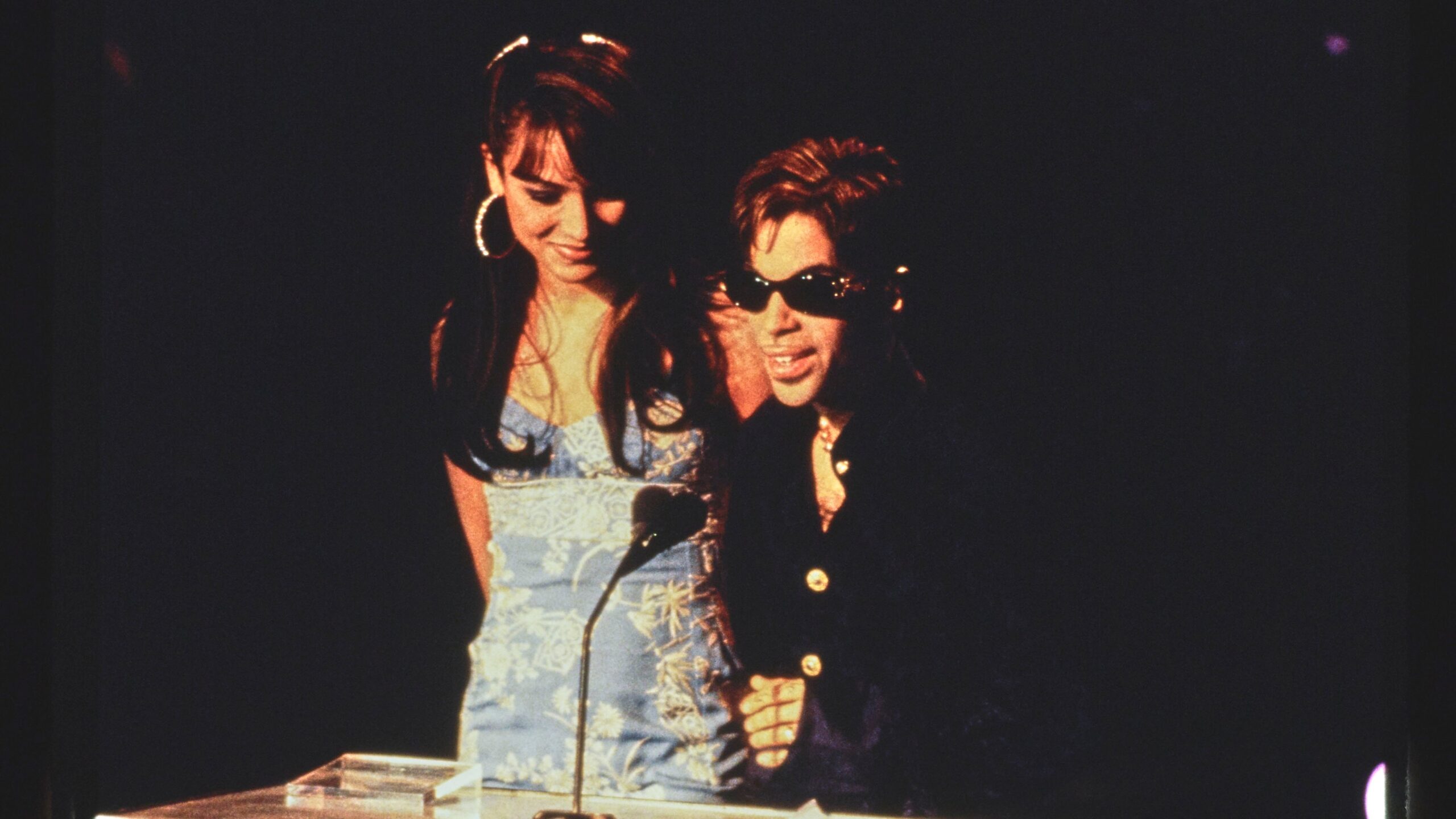
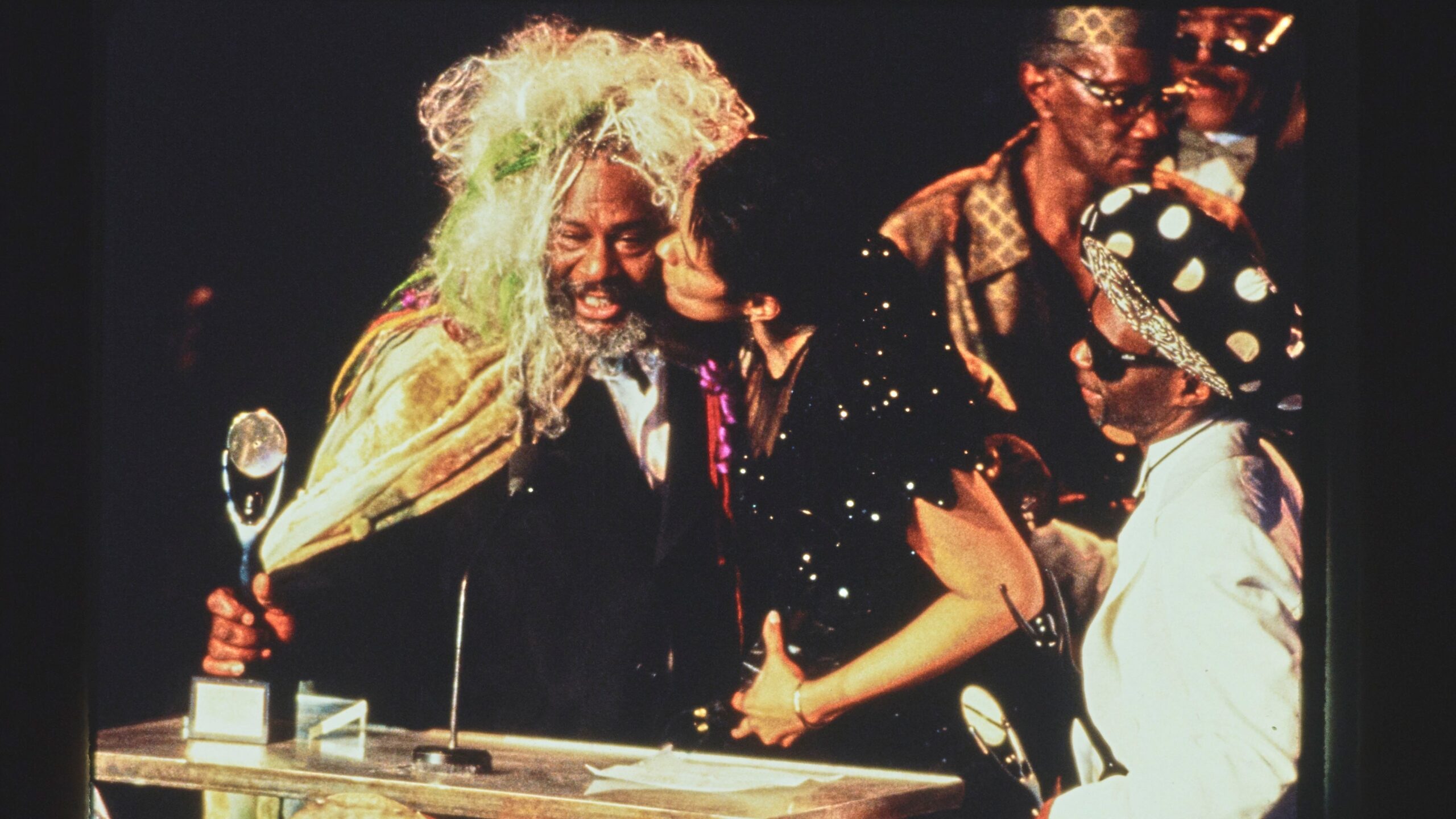
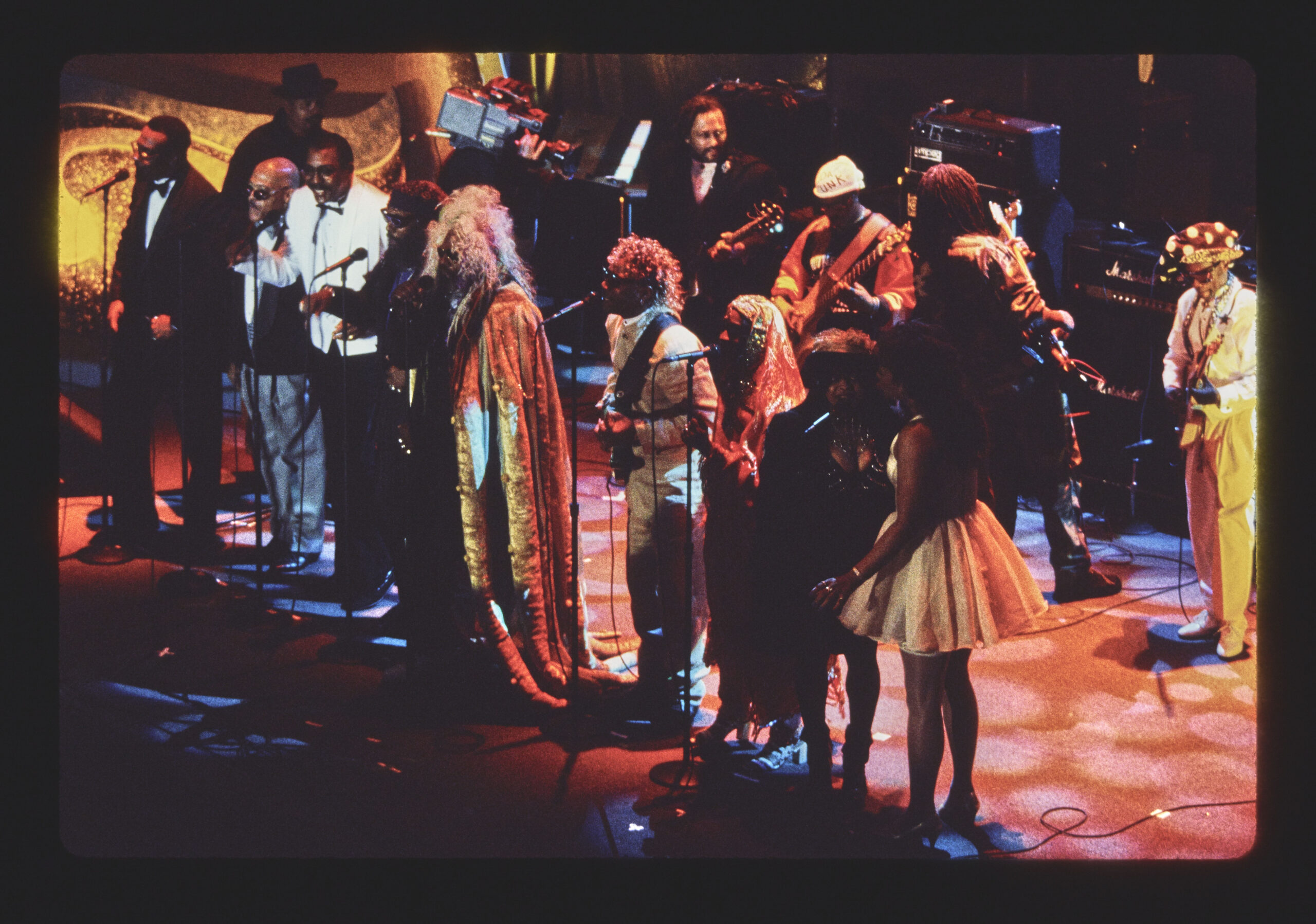
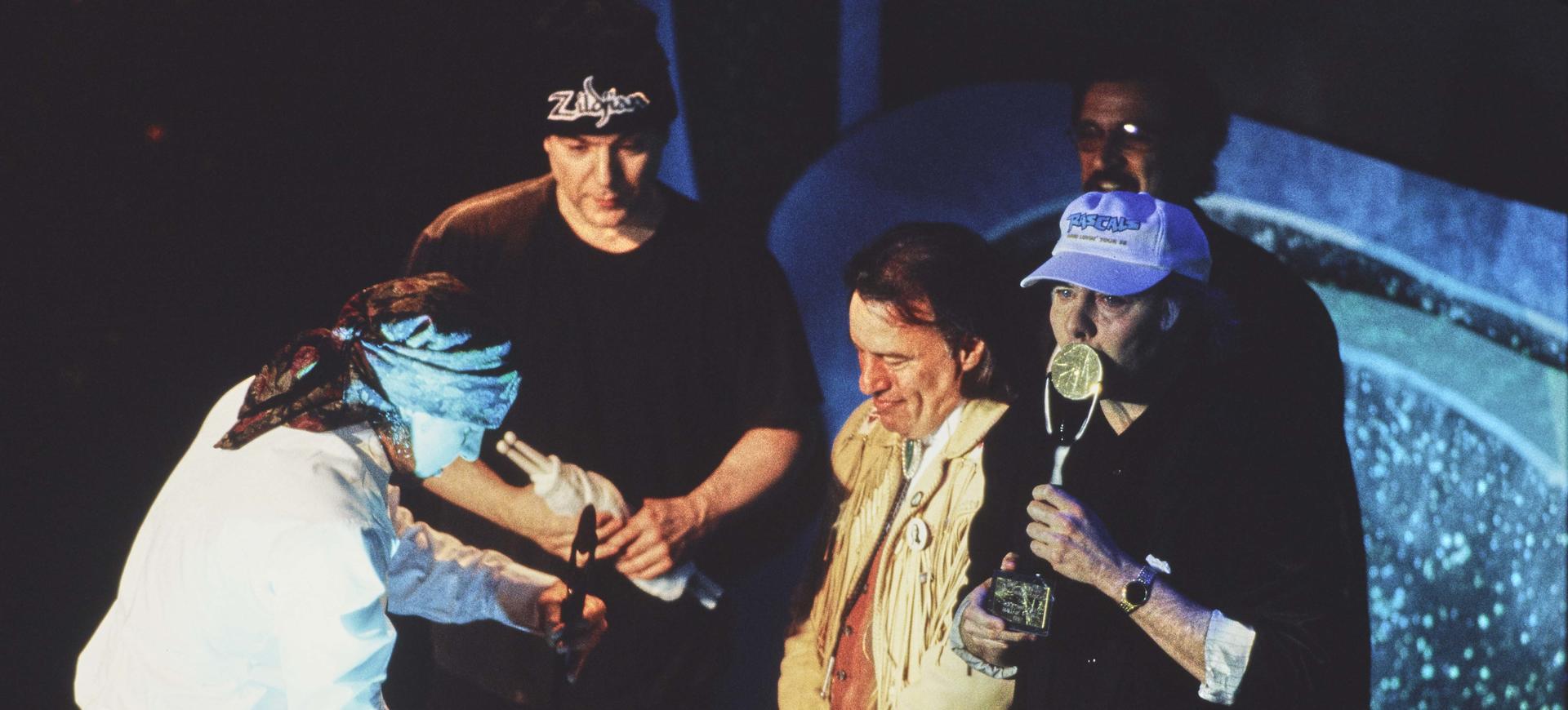
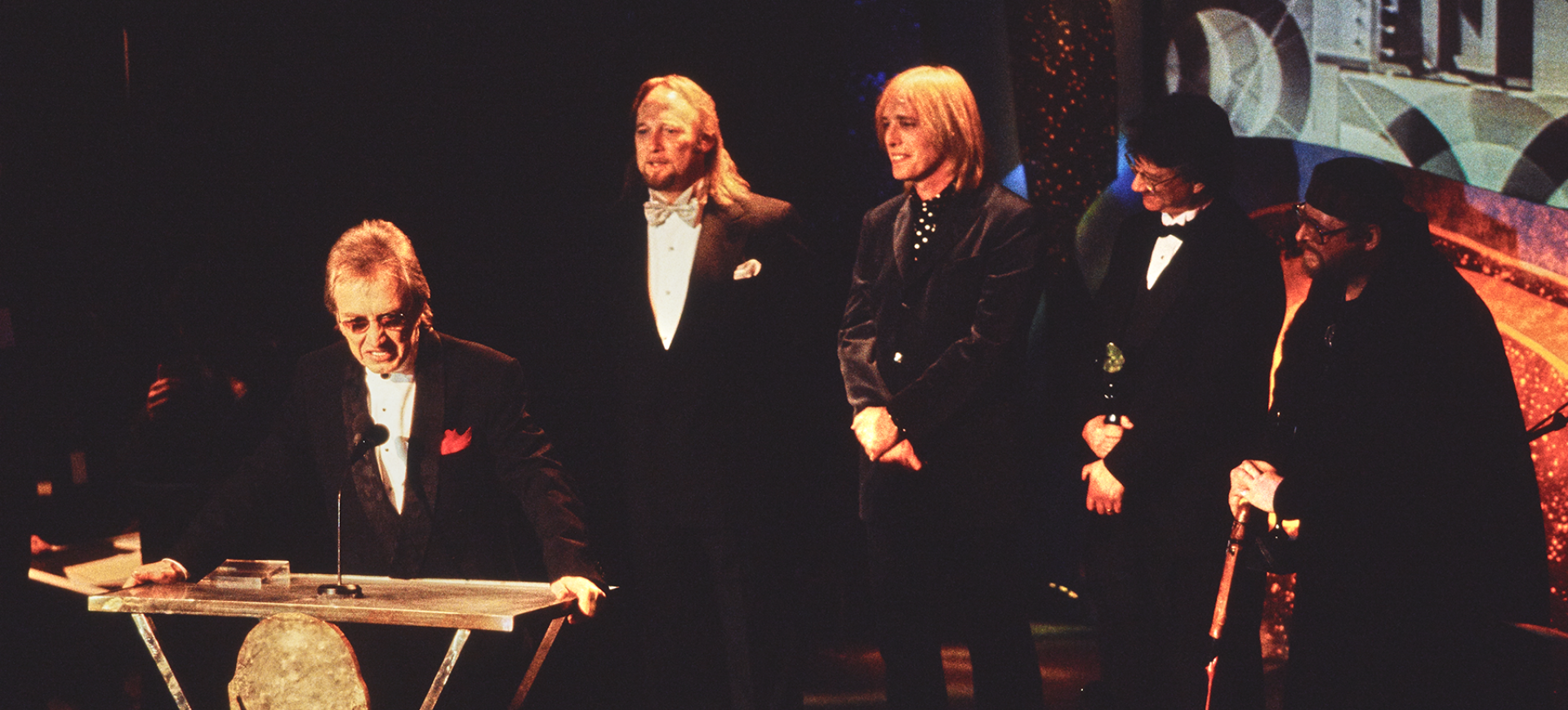
May 6, 1997: Parliament-Funkadelic is inducted into the Rock and Roll Hall of Fame at the twelfth annual induction dinner. Prince is their presenter.

Essential Songs


One Nation Under a Groove
Give Up the Funk (Tear the Roof Off the Sucker)
Mothership Connection (Starchild)
Atomic Dog
Flashlight
P. Funk (Wants to Get Funked Up)
Maggot Brain
Cosmic Slop
(Not Just) Knee Deep
Funkentelechy

Recommended Reading


“The Doctor Is On: The George Clinton Interview”
Robert Puter and Peter Jebsen. Goldmine (January 25, 1991), pp. 8-14+.

Funk: The Music, the People and the Rhythm of the One
Rickey Vincent. New York: St. Martin’s Press, 1996.


Lloyd Price Singles (On The Specialty Label)

"Forgive Me Clawdy," "Baby Please Come Home," "Rock 'n' Roll Dance"

Photo by Design Photography
Collection of Lloyd Price