Pete Seeger
Induction Year: 1996
Induction Category: Early Influence
Inductee: Pete Seeger (banjo, guitar, mandolin, vocals; born May 3, 1919)
Pete Seeger’s contribution to folk music, both in terms of its revival and survival, cannot be overstated. With the possible exception of Woody Guthrie, Seeger is the greatest influence on folk music of the last century. Born in New York City, he was the son of musicologist Charles Seeger. He took up the banjo in his teens and in 1938, at the age of 19, assisted noted folk archivist and field recorder Alan Lomax on his song-collecting trips through the American South. He soon began performing on banjo, guitar and vocals. In 1940, he formed a highly politicized folk trio, the Almanac Singers, which recorded union songs and antiwar anthems. They toured the country, performing at union halls for gas money, and recorded three albums. Woody Guthrie joined in 1941.
The Almanac Singers broke up with the advent of World War II. After a short stint in the army, Seeger formed the Weavers in 1948. They were a popular concert attraction who were at one point America’s favorite singing group. Their best-known numbers include such singalongs as “The Roving Kind,” “On Top of Old Smoky,” “Kisses Sweeter than Wine,” “Goodnight Irene” and “Wimoweh” (a.k.a. “The Lion Sleeps Tonight”). Their popularity cut across all boundaries. As American poet Carl Sandberg attested, “The Weavers are out of the grassroots of America. When I hear America singing, the Weavers are there.”
During the communist witch-hunts of the early Fifties, however, the Weavers were blacklisted, resulting in canceled concert dates and the loss of their recording contract with Decca Records. Under congressional subpoena to testify before the House Un-American Activities Committee, Seeger asserted his First Amendment rights, scolding the committee, “I am not going to answer any questions as to my associations, my philosophical or my religious beliefs, or how I voted in any election or any of these private affairs. I think these are very improper questions for any American to be asked.” Unlike many entertainers and writers who careers were ruined in the McCarthy era, Seeger stood his ground and persevered – even though he was sent to jail, albeit briefly, for defending his beliefs.
After leaving the Weavers in 1959, Seeger was signed to Columbia Records. He recorded prolifically for the label. His popularity hit a new peak with We Shall Overcome, a live album recorded at Carnegie Hall that is estimated to have sold half a million copies. Seeger is responsible for such folk standards as “If I Had a Hammer” (originally written by Seeger and Lee Hays of the Weavers as “The Hammer Song”) and “Where Have All the Flowers Gone.” Seeger’s one dalliance with the pop charts came in 1964, when his version of folksinger Malvina Reynolds’ exercise in suburban mockery, “Little Boxes,” reached #70. Seeger’s songs were also popularized by others, principally Peter, Paul and Mary (“If I Had a Hammer,” “Where Have All the Flowers Gone”) and the Byrds (“Turn! Turn! Turn!,” “The Bells of Rhymney”).
Though he had objected to Dylan’s use of electric instruments at the Newport Folk Festival in July 1965, Seeger himself recorded with electric guitarist Danny Kalb (of the Blues Project) two years later on his album Waist Deep in the Big Muddy and Other Love Songs. Seeger, with his outspoken commitment to the peace movement, often wrote directly or metaphorically of the Vietnam war in the Sixties. A tireless champion of causes, Seeger has devoted himself to environmental issues, particularly the cleanup of his beloved Hudson River.
In Seeger’s capable hands, from the Forties to the present day, a concert isn’t regarded as a one-way proceeding but a group singalong. Indeed, Seeger’s gently assertive insistence that his audience sing out can be read as a larger metaphor for the necessary involvement of citizens to insure the healthy functioning of democracy in America. Seeger has recorded and performed tirelessly throughout his career, honoring the folksingers’ timeless commitment to spread the word and involve an audience. “My ability lies in being able to get a crowd to sing along with me,” he said in a 1971 interview. “When I get upon a stage, I look on my job as trying to tell a story. I use songs to illustrate my story and dialogue between songs to carry the story forward.”
TIMELINE
May 19, 1919: Pete Seeger was born.
1941: Pete Seeger and Woody Guthrie assemble the Almanac Singers.
June 3, 1941: ‘Songs for John Doe,’ by the Almanac Singers, appears on the Almanac Records label. The trio—Pete Seeger, Lee Hays and Millard Lampell—is joined on record by Josh White and Same Gary. Producer John Hammond had a hand in organizing and releasing the session, which appears in three 78 rpm records.
1948: Pete Seeger forms the Weavers with Lee Hays, Fred Hellerman, and Ronnie Gilbert.
1950: The Weavers score a double-sided hit with “Tzena, Tzena, Tzena” (#2) b/w Lead Belly’s “Goodnight Irene” (#1 for 13 weeks).
May 26, 1950: The Weavers record Leadbelly’s “Goodnight, Irene,” which becomes a popular hit for them.
1950: Pete Seeger releases a 10-inch record called ‘Darling Corey,’ his first as a aolo artist and among the first releases on Moses Asch’s fledging Folkways Records.
December 24, 1955: Carnegie Hall concert featuring the Weavers seen as the beginning of the folk revival.
March 26, 1957: As a result of his testimony during the McCarthy-era Communist witch-hunts, Pete Seeger is indicted be a federal jury on ten counts of contempt of Congress. Four years later, he is convicted on all counts and sentences to ten concurrent one-year prison terms. In 1962, the convistions are overturned on appeal.
1959: Pete Seeger leaves the Weavers after they record a commercial for Lucky Strikes cigarettes over his objections.
1961: Pete Seeger is signed to Columbia Records by his friend and A&R man, John Hammond. His first album for the label is ‘Story Songs.’
June 8, 1963: Pete Seeger performs a historic concert at New York’s Carnegie Hall, which is recorded and released as ‘We Shall Overcome.’ It reaches #42 and remains on the album charts for 36 weeks.
July 26-28, 1963: The Newport Folk Fetival, featuring Bob Dylan, Pete Seeger, Joan Baez and Phil Ochs, is held in Newport, Rhode Island. It is a defining moment in the folk-protest movement.
January 11, 1964: “Little Boxes,” by Pete Seeger, enters Billboard’s Top 100. It is his one and only entry on the pop charts.
June 26, 1969: Pete Seeger launches the restored sloop ‘Clearwater,’ which serves as his podium for advancing environmental issues over the next several decades. Among his pet causes is the cleanup of the Hudson River, and to this end General Electric is hauled into court for contaminating the river with PCBs.
November 15, 1969: The antiwar “Marching on Washington” draws 500,000 protesters. Notable performers include Pete Seeger, Arlo Guthrie, Peter, Paul & Mary, and John Denver. Among the speakers are George McGovern, Eugene McCarthy, Coretta Scott King and Dick Gregory.
1975: ‘Pete Seeger and Arlo Guthrie Together in Concert,’ a live collaboration between two generations of folk-music legends, is released. It will be followed by another, ‘Precious Friends,’ in 1982.
November 28-29, 1980
The Weavers reunite after two decades for a pair of shows at New York’s Carnegie Hall, scene of their greatest triumphs. The edited performance is released as ‘Together Again,’ on Vanguard Records.
1989: ‘The Complete Carnegie Hall Concert,’ an unabridged double-CD version of Pete Seeger’s historic ‘Carnegie Hall concert’ from 1963, is released.
December 4, 1994: Pete Seeger receives the Presidential Medal of the Arts, the nation’s highest artistic honor, at Kennedy Center in Washington, D.C.
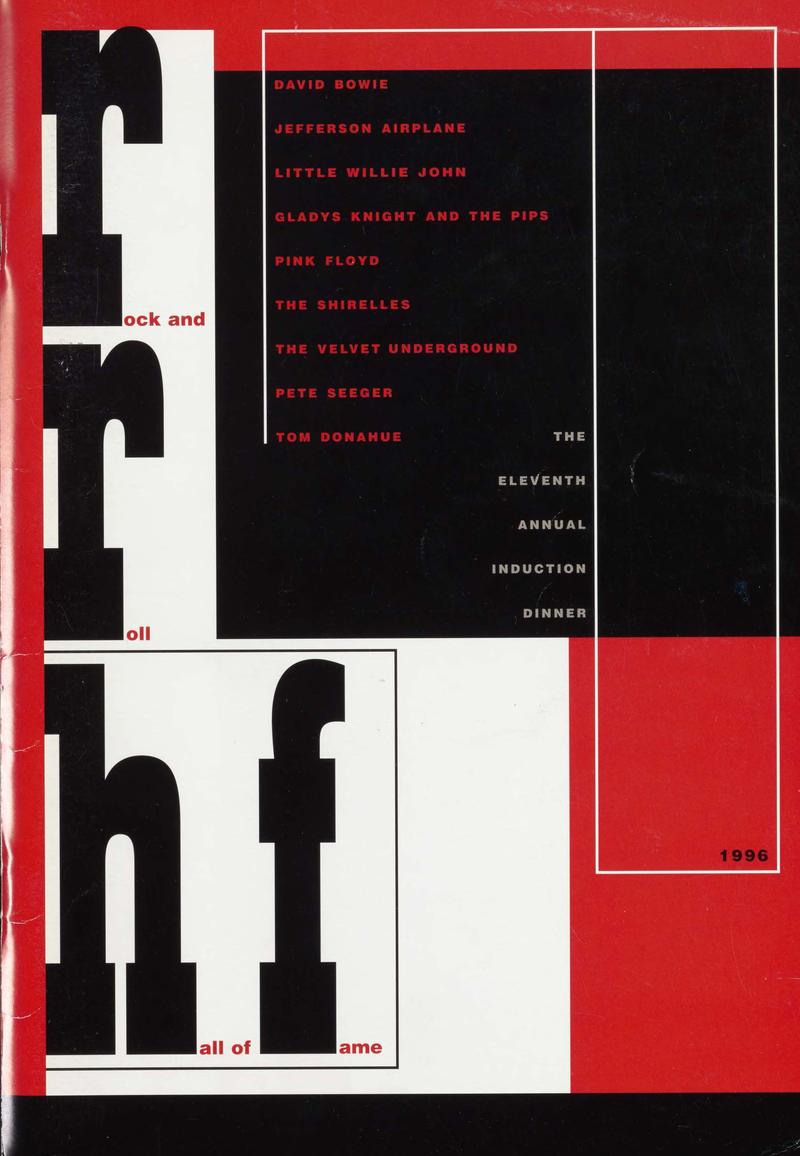
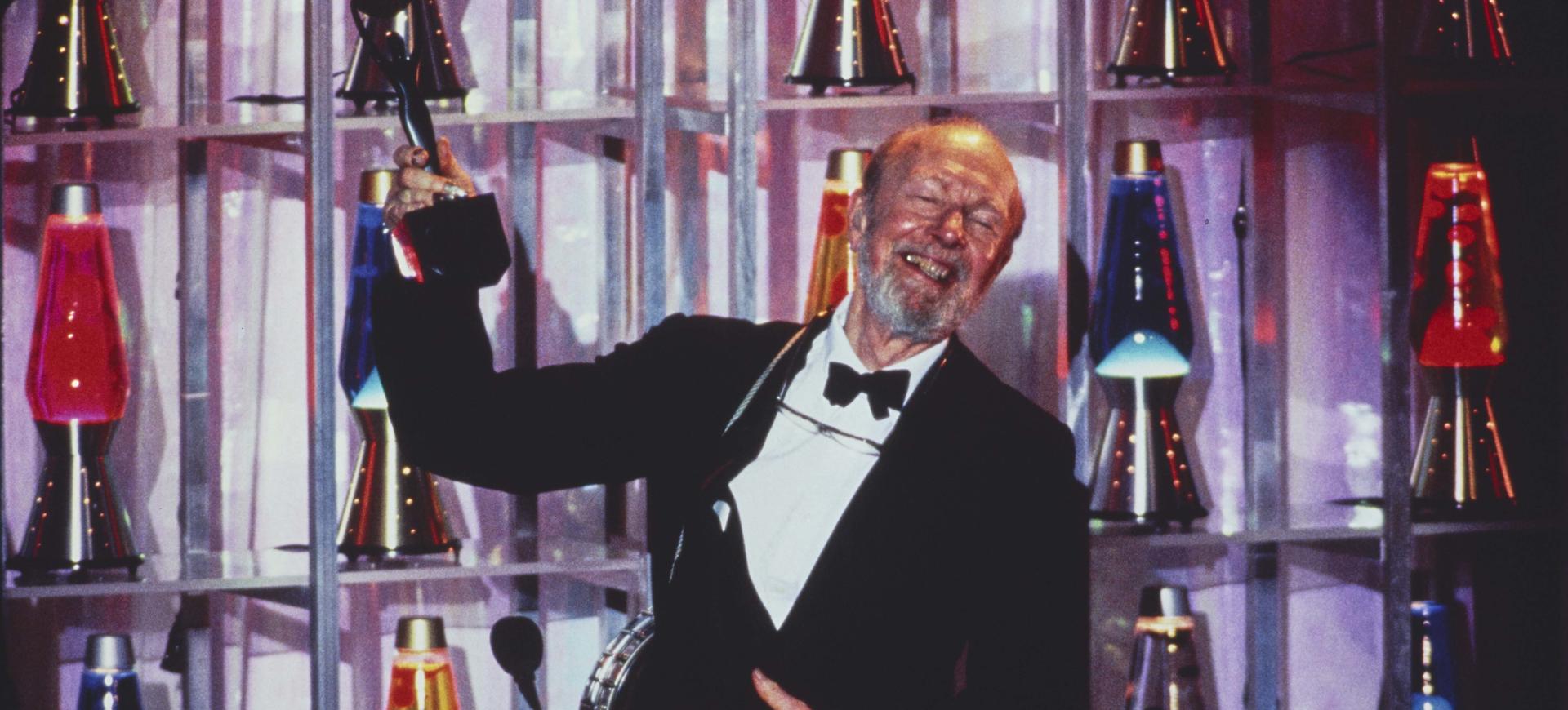
January 17, 1996: Pete Seeger is inducted into the Rock and Roll Hall of Fame at the eleventh annual induction dinner. Arlo Guthrie and Harry Belafonte are his presenters.
February 16, 1997: Pete Seeger wins a Grammy Award for Best Traditional Folk Album of 1996 for his album ‘Pete,’ on the Living Music label.
Essential Recordings
Where Have All the Flowers Gone
Turn! Turn! Turn! (To Everything There Is a Season)
If I Had a Hammer
We Shall Overcome
Down by the Riverside
Waste Deep in the Big Muddy
Last Train to Nuremburg
Little Boxes
What Did You Learn in School Today?
Guantanamera
Recommended Reading
How Can I Keep from Singing: Pete Seeger
David Dunaway. Cambridge, MA: Da Capo Press, 1990.
Where Have All the Flowers Gone?: A Musical Autobiography
Pete Seeger. New York: Sing Out! Books 1995.
The Incompleat Folksinger
Pete Seeger with Jo M. Schwartz (ed.). Lincoln, NE: University of Nebraska Press, 1992.
“Pete Seeger: American Dreamer – The Life of a Modern-Day Johnny Appleseed.”
Bruce Sylvester. Goldmine (April 11, 1997): 16-19+.