Rock and Roll Hall of Fame and Museum

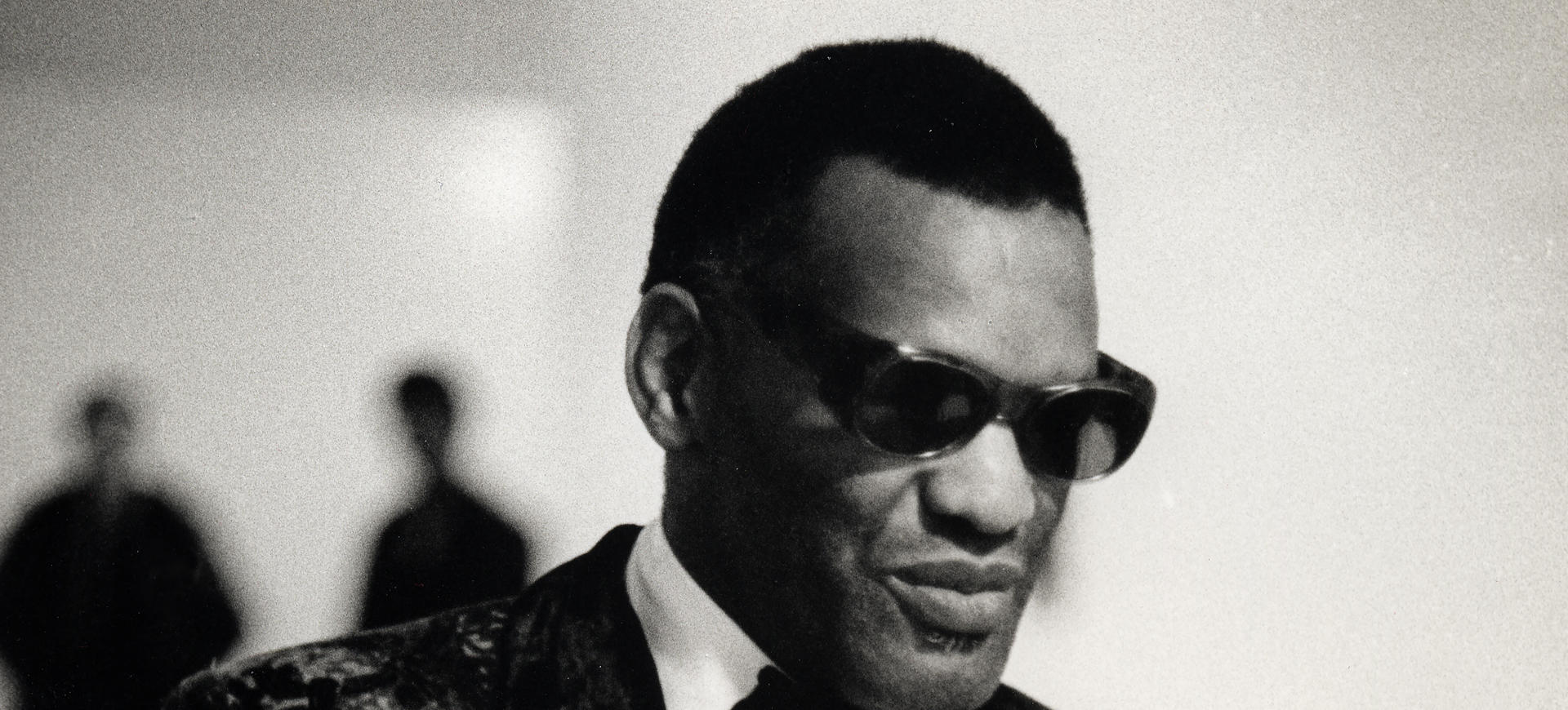
Ray Charles

Induction Year: 1986

Induction Category: Performer


"Many musicians possess elements of genius, but only one—the great Ray Charles—so completely embodies the term that it’s been bestowed upon him as a nickname. Charles displayed his genius by combining elements of gospel and blues into a fervid, exuberant style that would come to be known as soul music. While recording for Atlantic Records during the Fifties, the innovative singer, pianist and bandleader broke down the barriers between sacred and secular music. The gospel sound he’d heard growing up in the church found its way into the music he made as an adult. In his own words, he fostered “a crossover between gospel music and the rhythm patterns of the blues.” But he didn’t stop there: over the decades, elements of country & western and big-band jazz have infused his music as well. He is as complete and well-rounded a musical talent as this century has produced. .”

Born in Albany, Georgia, on September 23, 1930, Charles was raised in Greenville, Florida, where he made the acquaintance of a piano-playing neighbor. As a youngster, Charles apprenticed with him at his small store-cum-juke joint while digesting the blues, boogie-woogie and big-band swing records on his jukebox. At age six, he contracted glaucoma, which eventually left him blind. Charles studied composition and mastered a variety of instruments, piano and saxophone principal among them, during nine years spent at the St. Augustine School for the Deaf and the Blind. Thereafter, he played around Florida in a variety of bands and then headed for the West Coast, where he led a jazz-blues trio that performed in the polished style of Nat “King” Cole and . After cutting singles for labels such as Downbeat and Swingtime, Charles wound up on Atlantic Records in 1952. It turned out to be an ideal match between artist and label, as both were just beginning to find their feet. .”

Given artistic control at Atlantic after demonstrating his knack as an arranger with Guitar Slim’s “Things That I Used to Do”—the biggest R&B hit of 1954—Charles responded with a string of recordings in which he truly found his voice. This extended hit streak, which carried him through the end of the decade, included such unbridled R&B milestones as “I Got a Woman,” “Hallelujah I Love Her So,” “Drown in My Own Tears” and the feverish call-and-response classic “What’d I Say.” All were sung in Charles’ gruff, soulful voice and accompanied by the percussive punctuations of his piano and a horn section. After his groundbreaking Atlantic years, Charles moved to ABC/Paramount, where he claimed the unlikeliest of genres as his own with Modern Sounds in Country and Western Music, an album that topped the Billboard chart for 14 weeks in 1962. He has remained active as a performer and recording artist through to the present day, still pursuing that uncategorizable blend of idioms that is best described with a single word: soul. .”

And just what is soul, according to Ray Charles? As he told Time magazine in 1968, “It’s a force that can light a room. The force radiates from a sense of selfhood, a sense of knowing where you’ve been and what it means. Soul is a way of life—but it’s always the hard way.”

TIMELINE

September 23, 1930: Ray Charles Robinson is born in Albany, Georgia.

April 9, 1949: Ray Charles makes his chart debut with a solid hit, “Confessin’ Blues,” which appeared on the Downbeat (later Swingtime) label.

September 1, 1952: Atlantic Records buys Ray Charles’ contract from Swingtime, where Charles had been recording in the mellower, bluesy style of Nat King Cole and .

September 8, 1952: Ray Charles does his first session for Atlantic, cutting four songs. Over the next seven years, he will record such classics as “Mess Around,” “I Got a Woman,” “Hallelujah, I Love Her So” and “What’d I Say.”

November 18, 1954: Ray Charles records “I Got a Woman,” a seminal moment in the adaptation of sacred gospel to secular rhythm & blues, in Atlanta, Georgia.

March 16, 1955: Ray Charles hits #2 on the R&B charts with the Atlantic single “I Got A Woman”, widely considered the first song to be labeled “soul”—a blending of R&B and gospel.

1956: Ray Charles hits #1 on the R&B chart with the Atlantic single “Drown in My Own Tears.”

November 25, 1957: “Swannee River Rock” becomes Ray Charles’ first single to cross over onto the pop charts.

February 18, 1959: “What’d I Say,” a song that evolved in concert as a call-and-response between Ray Charles and his female backup singers, the Raeletts, is recorded in New York City. It becomes Charles’ biggest hit to date, reaching #1 on the R&B and #6 on the pop charts.

November 1, 1959: Ray Charles leaves Atlantic Records for ABC-Paramount, which offers him extremely favorable contract terms, including the eventual ownership of his master recordings. Atlantic releases “I’m Movin’ On,” Charles’ cover of Hank Snow’s country classic, a month later.

November 14, 1960: “Georgia On My Mind,” a cover of Hoagy Carmichael’s 1930 standard, becomes the first of three #1 pop hits for Ray Charles.

December 3, 1960: Ray Charles has his first Top Ten album with ‘The Genius Hits the Road,’ his debut on the ABC label after leaving Atlantic Records.

December 31, 1960: Ray Charles hits #28 with “Ruby”.

May 1, 1961: Ray Charles hits #8 with “One Mint Julep”.

October 9, 1961: Ray Charles hits #1 with “Hit the Road Jack”.

January 13, 1962: Ray Charles hits #9 with “Unchain My Heart”.

June 1, 1962: The landmark album Modern Sounds in Country and Western Music, which marks Ray Charles’ first full-length foray into the county genre, is issued. It tops the album chart for three and a half months and inspires a second volume later the same year.

June 2, 1962: Ray Charles hits #1 with “I Can’t Stop Loving You”.

September 8, 1962: Ray Charles hits #2 with “You Don’t Know Me”.

December 29, 1962: Ray Charles hits #1 on the R&B chart and #7 on the pop chart with “You Are My Sunshine”.

May 25, 1963: Ray Charles hits #8 with “Take These Chains From My Heart”.

October 19, 1963: Ray Charles hits #4 with “Busted”.

February 19, 1966: Ray Charles hits #6 with “Crying Time”.

December 3, 1966: After being convicted of possessing heroin and marijuana, Ray Charles is given a five-year suspended sentence. A drug user since the age of 16, he thereupon kicks his heroin addiction at a California sanitarium.

March 2, 1967: Ray Charles’ hit single “Crying Time” wins two Grammys: for Best R&B Recording and Best R&B Solo Vocal Performance, Male.

July 15, 1967: Ray Charles hits #15 with “Here We Go Again”.

May 22, 1971: Ray Charles Orchestra hits #36 with “Booty Butt”

December 1, 1971: A 25th Anniversary in Show Business Salute to Ray Charles, a cooperative venture between Atlantic and ABC comprising material from both labels, is released.

1979: Ray Charles’ version of “Georgia On My Mind” is declared “the official song of the State of Georgia.”

June 20, 1980: The film The Blues Brothers, which features Ray Charles in the role of a streetwise storeowner, opens across America.

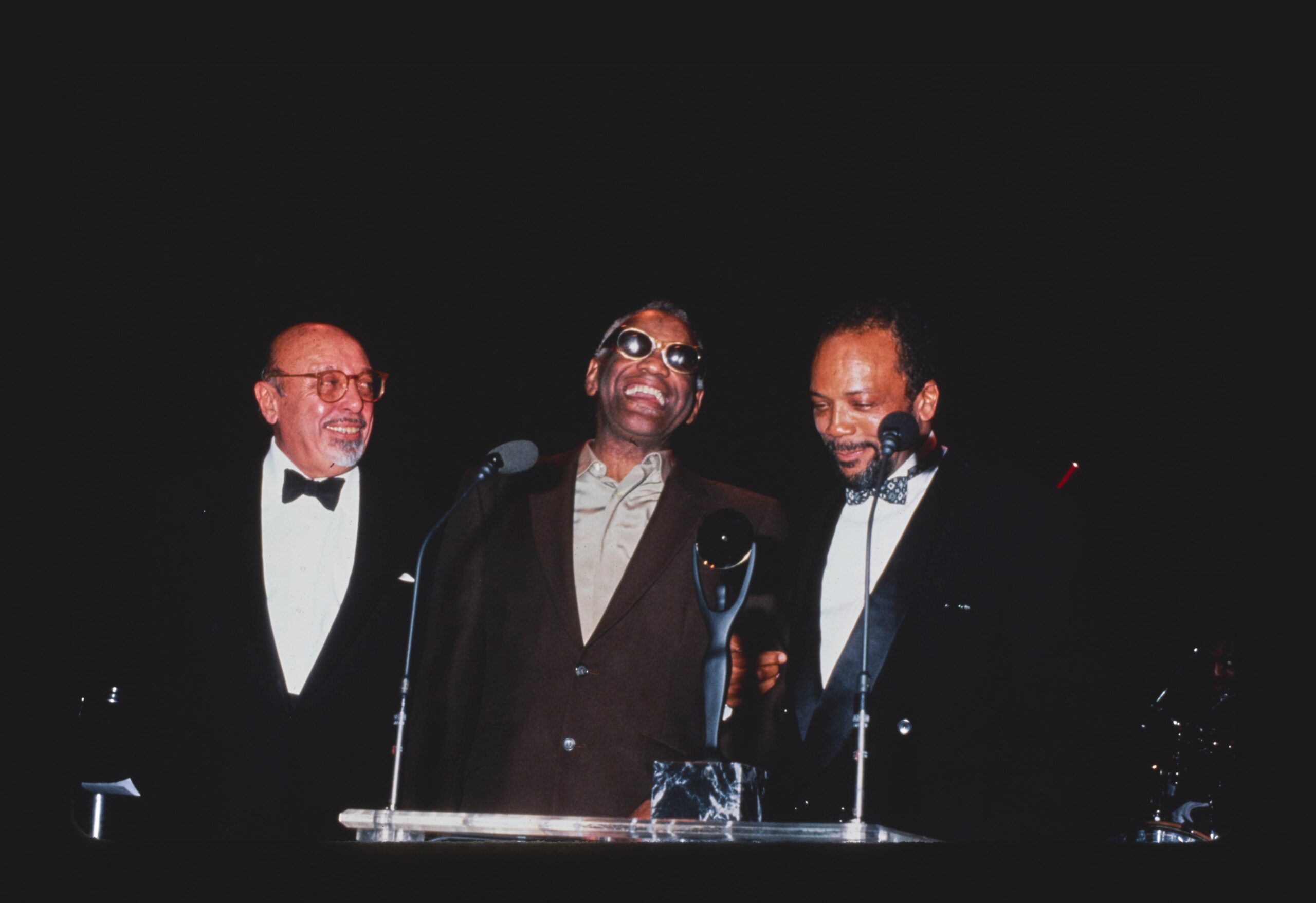
January 23, 1986: Ray Charles is inducted into the Rock and Roll Hall of Fame at the first induction dinner, held in New York City. Quincy Jones is his presenter.

March 2, 1988: Ray Charles receives a Lifetime Achievement Award at the 30th annual Grammy Awards. It is noted that “he is the father of soul...[having] personified the true essence of soul music in all his...performances of basic blues, pop ballads, jazz tunes and even country music.”

June 2, 1993: A Lifetime Achievement Award is awarded to Ray Charles by the Songwriters Hall of Fame, with as his presenter.

March 1, 1994: Ray Charles wins the 12th Grammy of his career, this one for Best Male R&B Performance ("A Song for You").

March 2, 1995: Ray Charles is given the Lifetime Achievement Award at the Rhythm & Blues Foundation’s annual Pioneer Awards. 

Essential Recordings

What’d I Say
Lonely Avenue
I Can’t Stop Loving You
I Got a Woman
Hallelujah, I Love Her So
Leave My Woman Alone
Mess Around
I’m Movin’ On
Georgia on My Mind
Hit the Road, Jack


Jeff Beck's (The Yardbirds) Fender Esquire Electric Guitar

Photo by Design Photography
Collection of Seymour W. Duncan. Chairman Seymour Duncan Pick-ups, Santa Barbara