Rock and Roll Hall of Fame and Museum

R.E.M.

Induction Year: 2007

Induction Category: Performer


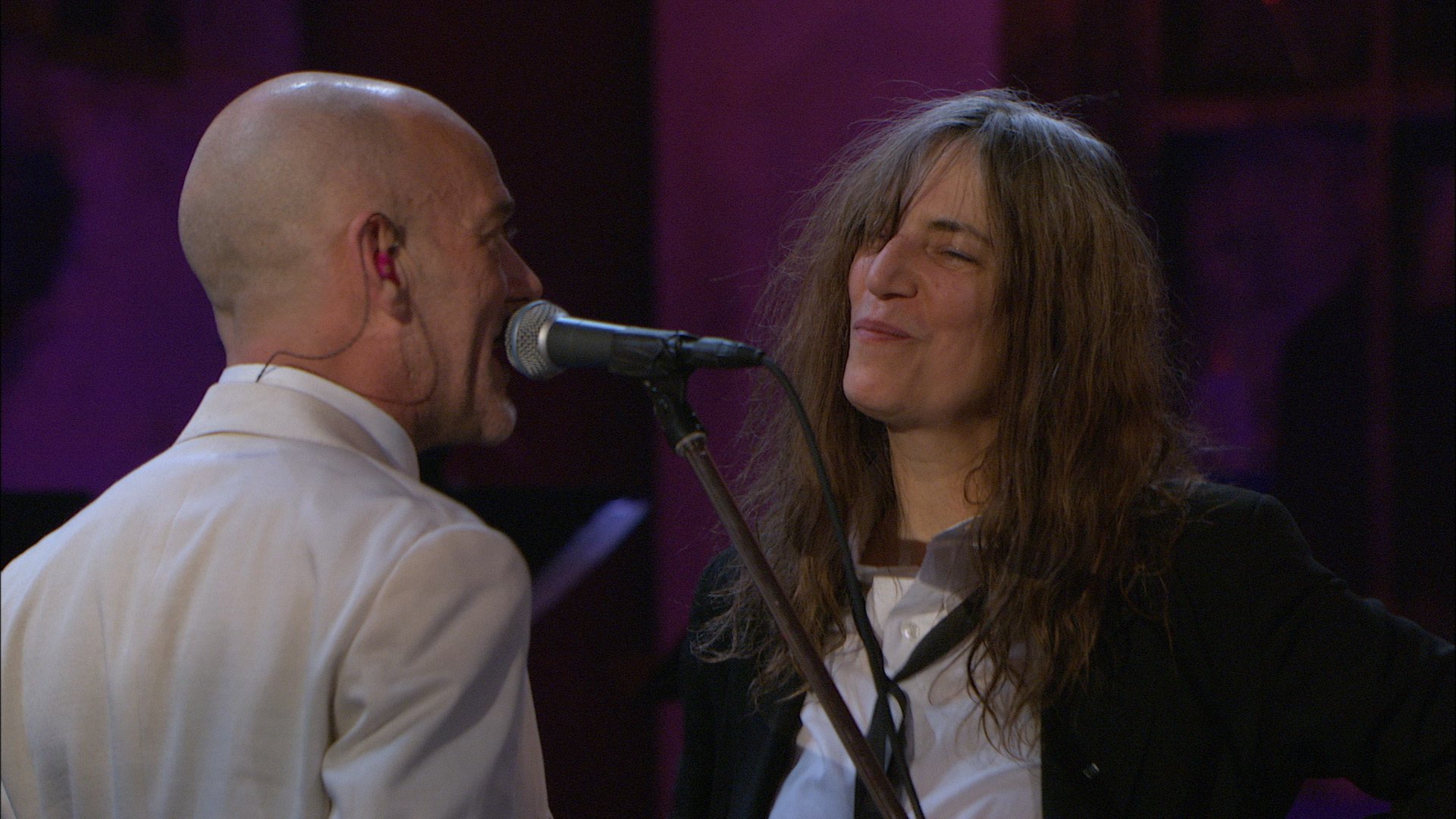
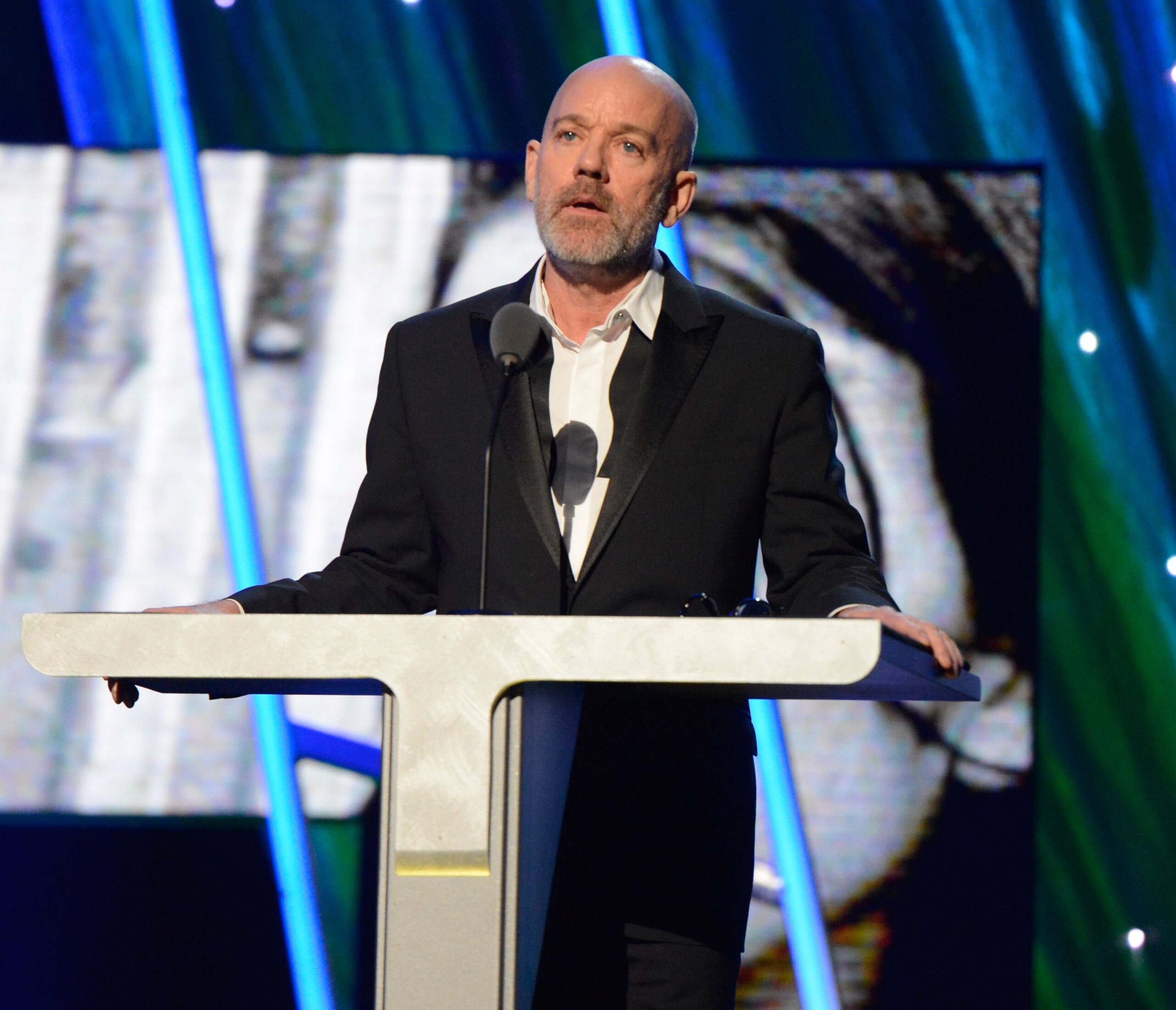
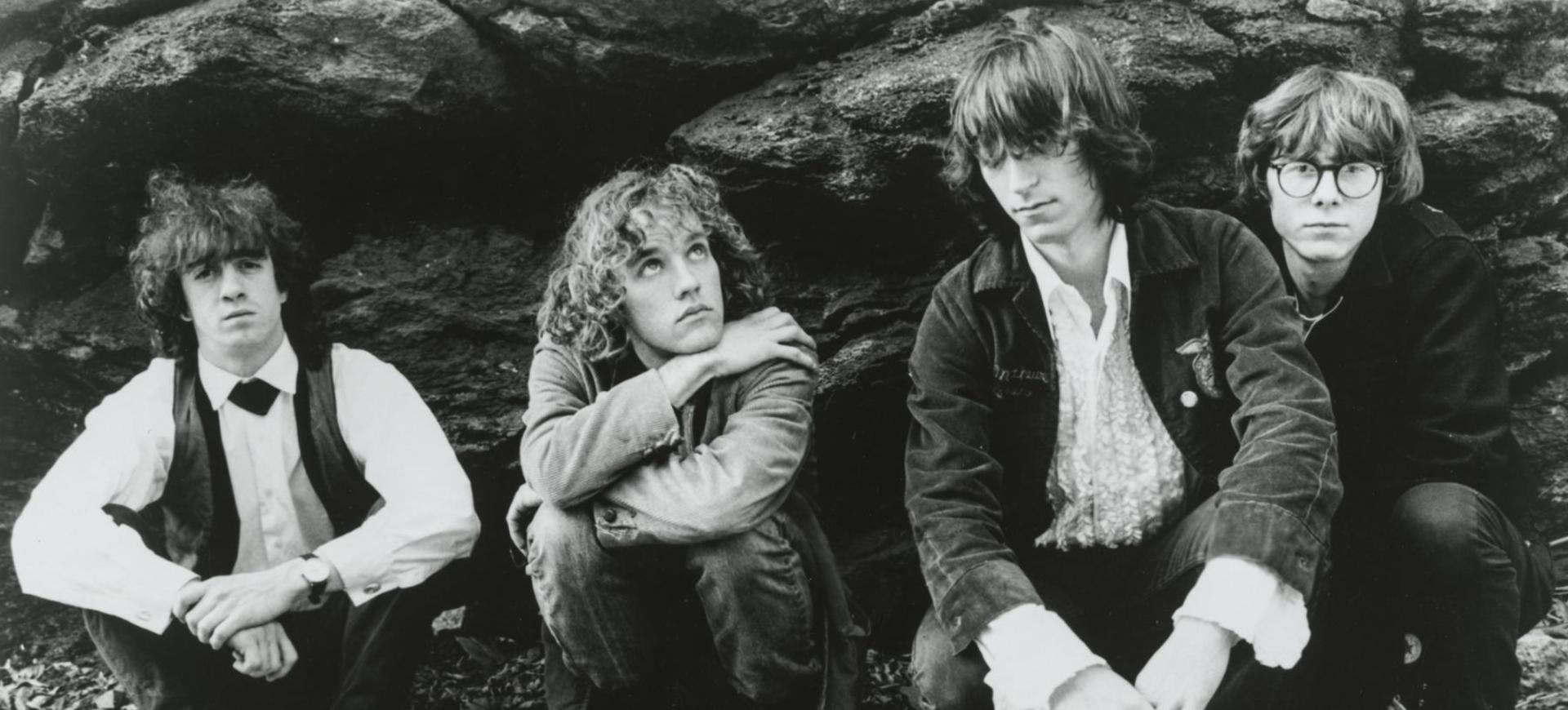
Bill Berry (drums; born July 31, 1958), Peter Buck (guitar; born December 6, 1956), Mike Mills (bass, keyboards, vocals; born December 17, 1958), Michael Stipe (vocals; born January 4, 1960)

The rise of R.E.M. from cult heroes to superstars during the New Wave era proved that deserving, non-gimmicky American rock bands could still make it on their own terms. R.E.M.’s example of inspiration, hard work and self-belief served as a beacon that illuminated an alternative path for many musicians in the Eighties and Nineties. Without R.E.M., it’s hard to imagine the alt-rock, indie-rock and college-rock movements of the last two decades. The patient, deliberate way in which R.E.M.’s career unfolded could serve as a textbook example on balancing art and commerce without compromise. As David Fricke wrote in Rolling Stone, “R.E.M.’s success has proven to America’s post-punk generation the power of underground virtues in the overground world.” In 2003 Buck told the New York Times, “For us it was always about the music, our music.”

R.E.M. formed in Athens, Georgia, home to the University of Georgia, where all four studied (though none graduated). Bassist Mike Mills and drummer Bill Berry were best friends who’d met in Macon, where they’d played in bands during their high-school years. Guitarist Peter Buck was a California emigre whose family settled in Atlanta when he was in his mid-teens. Singer Michael Stipe was born in Decatur, an Atlanta suburb, though he lived in many other places because of his father’s military career.

The group made its debut in 1981 with “Radio Free Europe,” released on the tiny Hib-Tone label. The single became a critics’ favorite, and the group signed with I.R.S., an independent label whose roster featured several bands on the cutting edge of New Wave. The mini-album Chronic Town (1982) and the full-length Murmur (1983) and Reckoning (1984) were all produced in North Carolina by Mitch Easter and Don Dixon, like-minded Southerners who were also musicians. These three releases announced R.E.M. as a band with one foot in the Sixties ( and being principal touchstones) and the other planted in more modern territory. Buck described the material on those early albums as being “uptempo folk songs” in which familiar strains of Byrdsy folk-rock were suffused with nervous energy and murky mystique.

Fables of the Reconstruction (1985) was cut in England with British folk producer Joe Boyd (who’d worked with the likes of Fairport Convention and Nick Drake). It was R.E.M.’s most varied and ambitious work up to that point. Next they teamed up with producer Don Gehman (John Mellencamp) for Lifes Rich Pageant (1986), which brimmed with confidence and flirted with accessibility while still maintaining an aura of uniqueness and inscrutability. This paved the way for R.E.M.’s breakthrough with Document (1987), a powerful and coherent musical statement that moved the group to rock’s forefront. Both the album and single “The One I Love” made the Top 10.

At this point, a Rolling Stone cover line proclaimed R.E.M. “America’s Best Rock & Roll Band.” As a group that opened many mainstream ears to alternative music, R.E.M. represented, in Buck’s sly phraseology, “the acceptable edge of the unacceptable stuff.” Document marked the end of R.E.M.’s contract with I.R.S., triggering a bidding war for the group’s services. Yet success can have its drawbacks in the alternative realm. R.E.M.’s stature as indie-rock standard-bearers was sorely tested when they signed a multimillion-dollar deal with Warner Bros. Still, Peter Buck’s production of numerous left-field artists and R.E.M.’s penchant for edgy, hand-picked opening acts—including the Replacements, Hüsker Dü and Sonic Youth—helped maintain credibility.

Ironically, R.E.M.’s first album for Warner Bros., Green, failed to chart as high as Document. Still, the album produced another smash single, “Stand” (Number Six). The group undertook a nearly year-long arena tour that raised its profile substantially.

What happened next, however, was surprising even for a band as unpredictable as R.E.M. The group withdrew from the road for five years and became studio hermits, cutting a pair of carefully nuanced and introspective recordings: Out of Time (1991) and Automatic for the People (1992). Despite their reduced visibility, R.E.M.’s popularity scaled new heights when “Losing My Religion,” a mandolin-tinged plaint about spiritual disenchantment, reached Number Four. “Shiny Happy People,” also from Out of Time, followed it into the Top 10, and Automatic for the People yielded a trio of Top 30 hits. Both albums sold more than 4 million copies in the U.S. alone, ushering R.E.M. into rock’s upper echelon.

The logical next step was a loud, rocking album and a return to the road. Monster was, according to writer Anthony DeCurtis, “a noisy, abrasive, postmodern, sexually charged maelstrom.” During the world tour that followed, R.E.M. decided to work on new material at soundchecks, in effect readying their next album, New Adventures in Hi-Fi, while touring the current one. The tour was not without mishap, as drummer Bill Berry suffered a near-fatal brain aneurysm, and other maladies—an intestinal tumor for Mills and a hernia for Stipe, both necessitating surgery— afflicted the band.

Drummer Berry dropped a bombshell in 1997 with the announcement that he would be leaving the band. The group briefly considered disbanding, but the three remaining members decided to continue. They cut Up (1998) as a three-piece, and the results were unsurprisingly atmospheric and understated. “We literally had to reinvent how we made records,” noted bassist Mills of the painstakingly assembled, keyboard-dominated album.

They followed Up with the pastoral, reflective Reveal (2001), which found them more comfortable with the trio format. “The whole experience has been very liberating,” Stipe noted. “We’ve become acclimated to new conditions and potentials.” On the road, R.E.M. expanded its lineup with outside musicians, including drummer Joey Waronker and guitarist Scott McCaughey.

The release of In Time: The Best of R.E.M., 1988-2003 gathered the high points from R.E.M.’s tenure on Warner Bros. The band’s early catalog was given a similar treatment on the 2006 release And I Feel Fine…The Best of the I.R.S. Years, 1982-1987. Both compilations were issued alone and as deluxe packages with a bonus disc of rarities. In 2004 R.E.M. released Around the Sun, its strongest album as a trio. It contained such pensive, arresting tracks as “Leaving New York.” Stipe noted that it covered “the usual R.E.M. territory of identity and memory and dreams and where the real world and the fantastic world come together and overlap.”

TIMELINE

December 6, 1956: Peter Buck, guitarist with R.E.M., is born in Berkeley, California.

July 31, 1958: Bill Berry, drummer with R.E.M., is born in Duluth, Minnesota.

December 17, 1958: Mike Mills, bassist for R.E.M., is born in Orange County, California.

January 4, 1960: Michael Stipe, vocalist for R.E.M., is born in Decatur, Georgia.

April 5, 1980: Debuting as the “Twisted Kites,” R.E.M. plays its first show in its Athens, Georgia, hometown. They perform at a party in a converted church that serves as the group’s rehearsal space.

1981: R.E.M. releases its first single, “Radio Free Europe” b/w “Standing Still,” on the local Hib-Tone label. One thousand copies are pressed.

March 1982: R.E.M. signs to I.R.S. Records, which will release a five-song mini-album entitled Chronic Town.

May 1983: R.E.M.’s first album, Murmur, is issued to critical acclaim and respectable sales, reaching #36.

May 1984: Reckoning, R.E.M.’s second album, debuts on the chart, where it will stay for a year. Featuring a painting by Georgia folk artist Howard Finster on its cover, it contains “So. Central Rain (I’m Sorry)” (#85), R.E.M’s first charting single.

December 31, 1984: R.E.M. conclude their Little America tour - which took them around the U.S. and Canada, as well as England and Japan - in Atlanta.

June 29, 1985: Fables of the Reconstruction, R.E.M.’s third album, enters Billboard‘s album chart, where it will peak at #28.

August 23, 1986: Lifes Rich Pageant, the fourth album by R.E.M., makes its chart debut. It will peak at #21 and yield the near-hit “Fall On Me” (#94).

January 23, 1987: Lifes Rich Pageant is certified by the RIAA as R.E.M.’s first gold album (500,000 copies sold).

December 5, 1987: R.E.M.’s first Top Forty hit, “The One I Love,” peaks at #9.  Document, the album from which it was drawn, will reach #10, their highest-charting album to date.

January 25, 1988: Document, by R.E.M., receives certification from the RIAA as the New Wave pioneers’ first platinum album (1 million sold).

November 7, 1988: R.E.M. issues Green, their sixth album (and first for Warner Bros.), on Election Day. Highlights include such rousing tracks as “Pop Song 89” (#86), “Stand” (#6) and “Orange Crush.”

November 1989: R.E.M. concludes its nearly year-long Green World Tour.

March 12, 1991: Out of Time, R.E.M.’s seventh album, is released. It will be the group’s first #1 album and spawn two Top Ten hits, “Losing My Religion” (#4) and “Shiny Happy People” (#10).

June 25, 1992: Out of Time receives its fourth platinum certification by the RIAA, signifying sales of 4 million. The albums that follow - Automatic for the People and Monster - will reach the quadruple platinum sales plateau as well.

October 6, 1992: R.E.M. scale another artistic pinnacle with the release of Automatic for the People, their eighth album. Three singles crack the Top Forty: “Drive” (#28), “Man on the Moon” (#30) and “Everybody Hurts” (#29).

September 27, 1994 Monster, a noisy about-face from R.E.M.’s preceding two albums, is released.

January 13, 1995: R.E.M. kicks off its first tour in over five years in Australia. The tour will end in November with three sold-out dates in Atlanta.

March 1, 1995: Bill Berry leaves the stage during the middle of a show in Lausanne, Switzerland, complaining of a migraine. Two days later he will undergo a craniotomy for a brain aneurysm, and the tour will be canceled for ten weeks.

September 28, 1996: New Adventures in Hi-Fi, R.E.M.’s tenth studio album, is released. Much of it was recorded at soundchecks during the Monster tour.

October 1997: Drummer Bill Berry announces his decision to leave R.E.M., which decides to continue without him. Berry retreats to his spread in rural Georgia, where he turns to farming.

October 27, 1998: R.E.M. releases Up, their most experimental album and first without departed drummer Bill Berry.

December 22, 1999: Man on the Moon, a film about the late comedian Andy Kaufman, opens in theaters. Its title is taken from a song about Kaufman by R.E.M., which provides the bulk of the soundtrack.

April 16, 2001: Reveal is unveiled, becoming R.E.M.’s first album of the new millennium and twelfth overall. Key tracks: “Imitation of Life,” “All the Way to Reno.”

October 5, 2004: R.E.M. releases Around the Sun, their 13th studio album, which contains the haunting, post-9/11 track “Leaving New York.”

February 15, 2005: R.E.M.’s entire Warner Bros. catalog - eight discrete albums and one best-of - are reissued as double-disc CD/DVD-A combos with new surround mixes, documentary video and other bonus material.

September 12, 2006: A retrospective of R.E.M.’s early work, And I Feel Fine…The Best of the I.R.S. Years, 1982-1987, is released by I.R.S./Capitol.

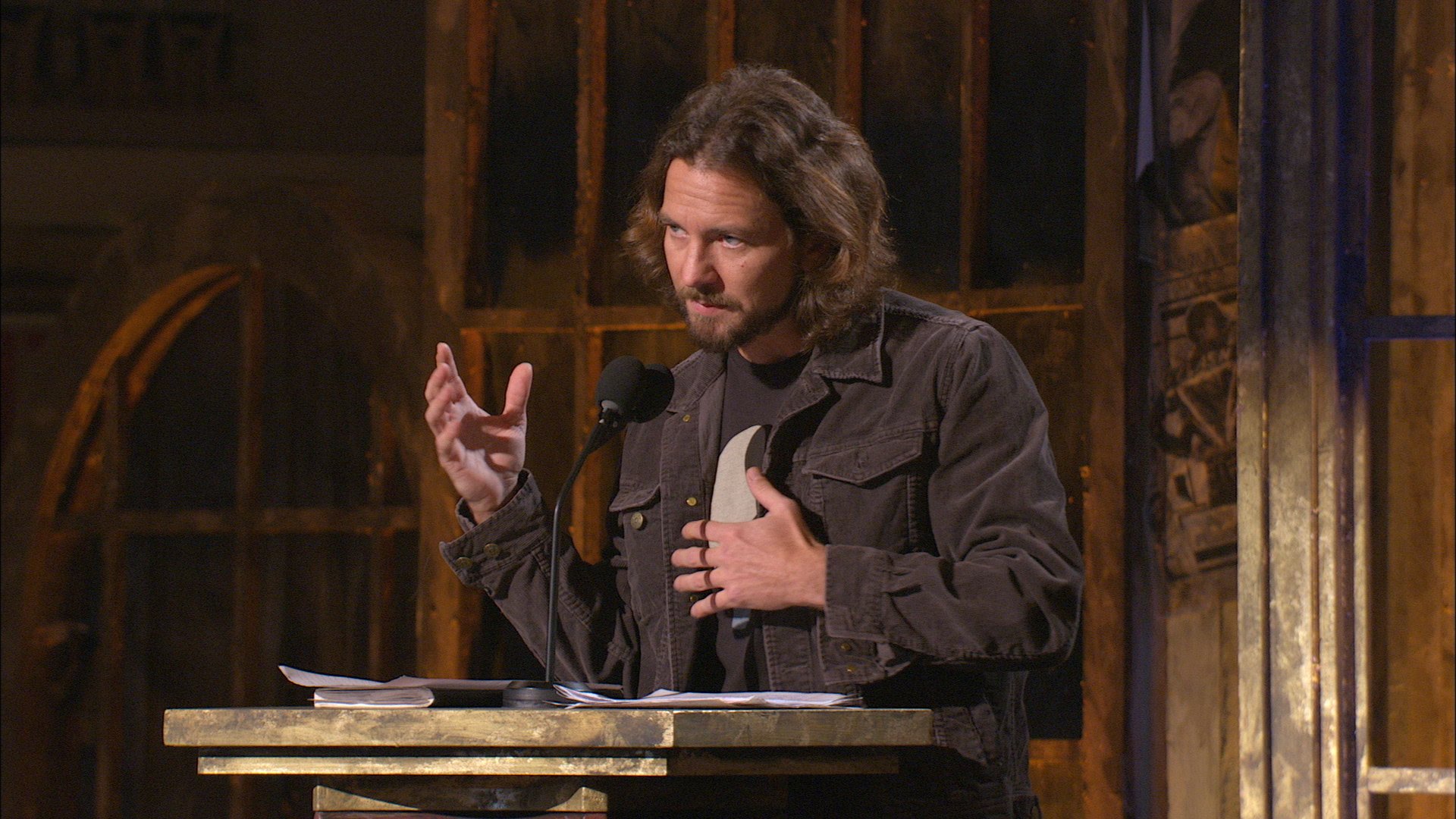
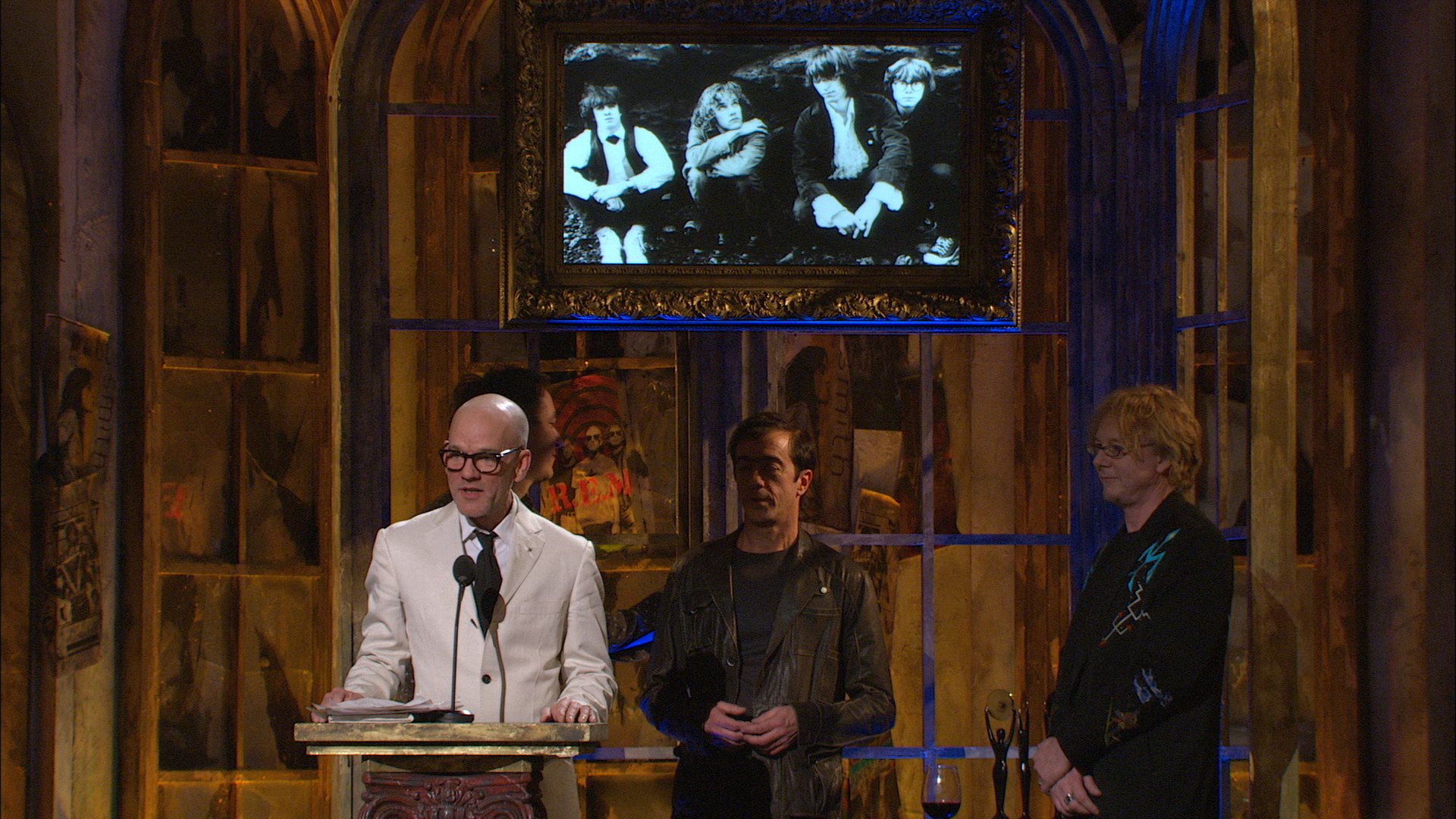
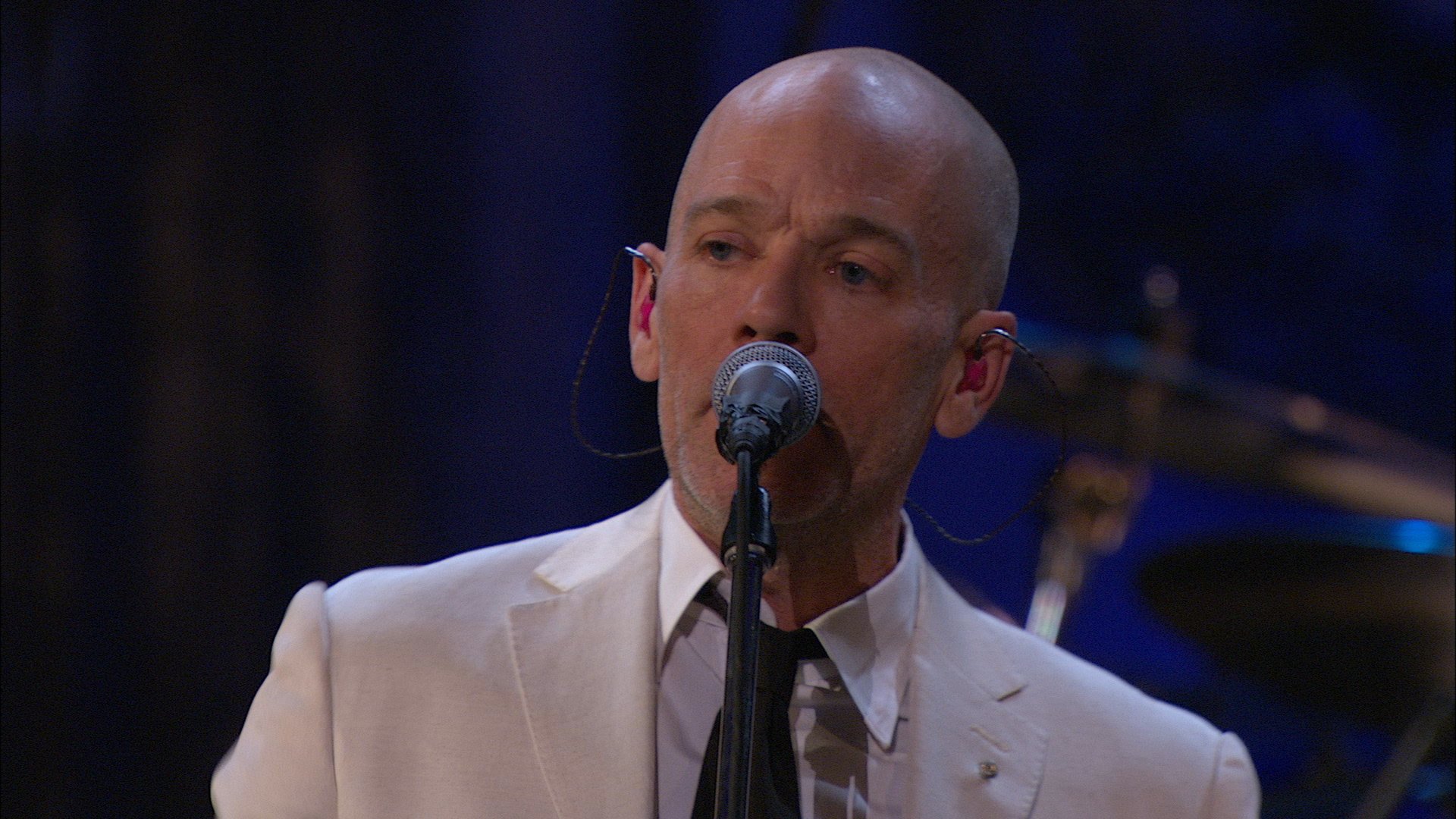
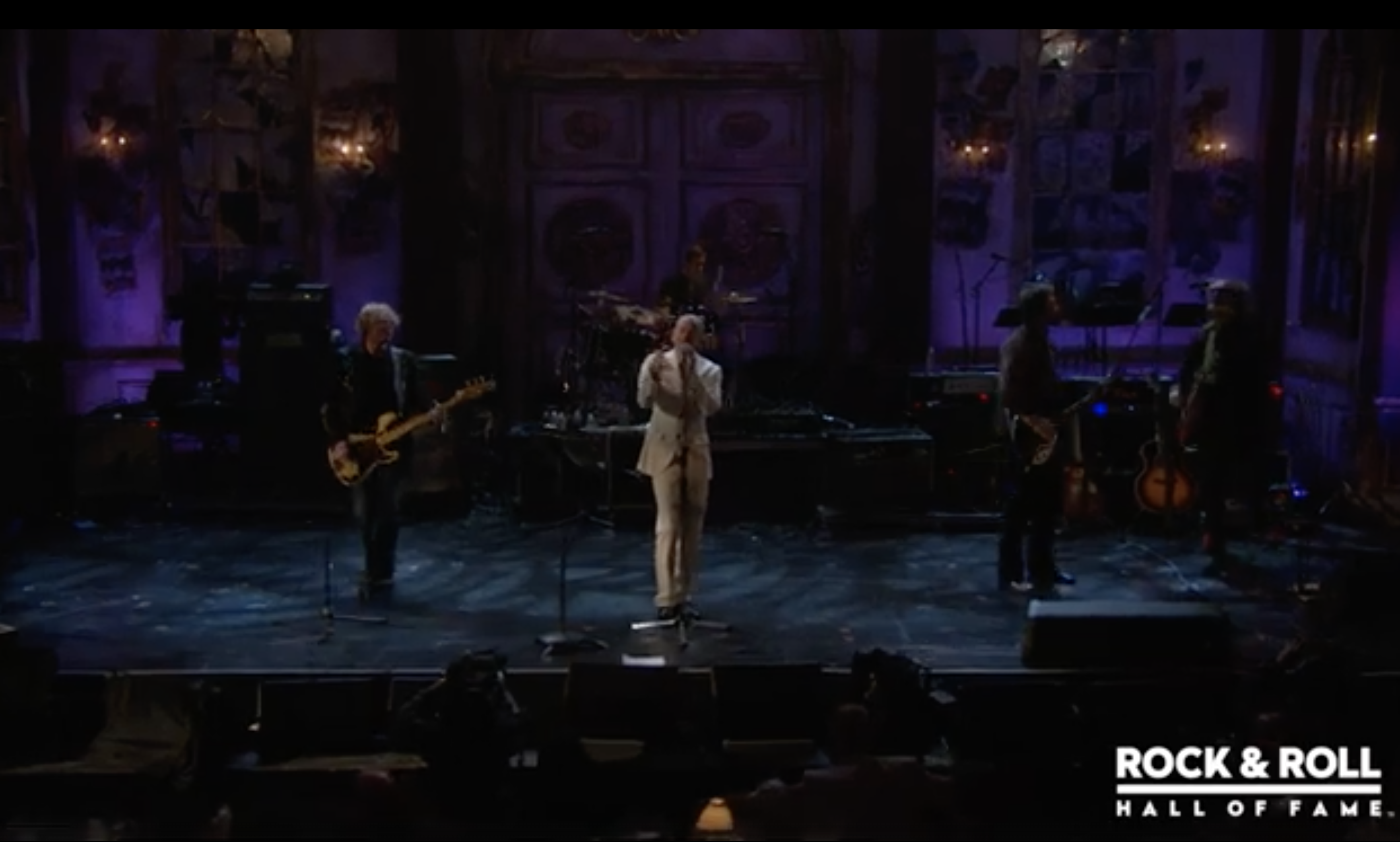
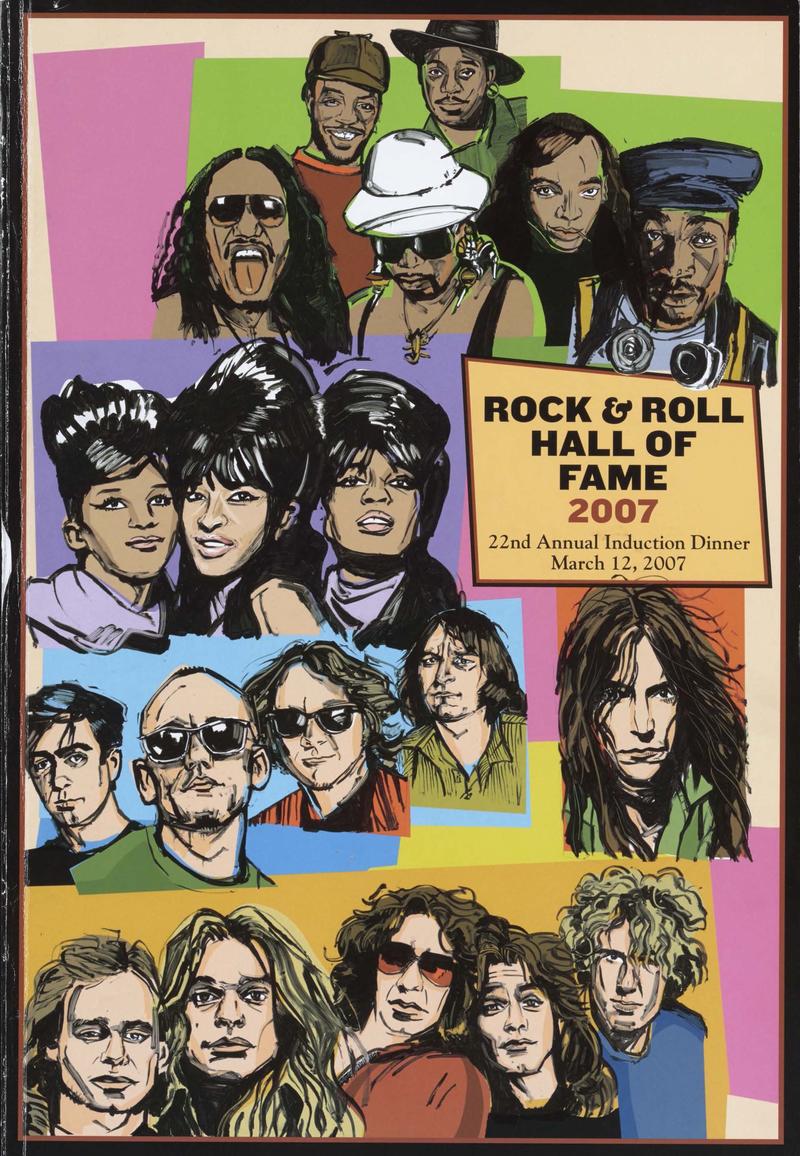
March 12, 2007: R.E.M. is inducted into the Rock and Roll Hall of Fame at the 22nd annual induction dinner. Eddie Vedder is their presenter.

Essential Songs

Losing My Religion
It’s the End of the World As We Know It (And I Feel Fine)
Radio Free Europe
Man on the Moon
The One I Love
Fall On Me
Leaving New York
The Great Beyond
Everybody Hurts
What’s the Frequency, Kenneth?

Recommended Reading

Reveal: The Story of R.E.M.
Johnny Black. San Francisco: Backbeat Books, 2004.

“R.E.M.: Monster Madness.”
Anthony DeCurtis. Rolling Stone (October 20, 1994): 58-64+.

“R.E.M.: An Oral Discography.”
Eric Flaum. Goldmine (July 31, 1987): 8-12.

It Crawled from the South: An R.E.M. Companion.
Marcus Gray. New York: Perseus, 1997.

“R.E.M. in the Real World: Rock’s Most Influential College Band Graduates.”
Steve Pond. Rolling Stone (December 3, 1987): 47-55.

R.E.M. Inside Out: The Stories Behind Every Song.
Craig Rosen. New York: Thunder’s Mouth Press, 1997.


Little Richard's Black Jacket With Appliques

Photo by Design Photography