Rock and Roll Hall of Fame and Museum

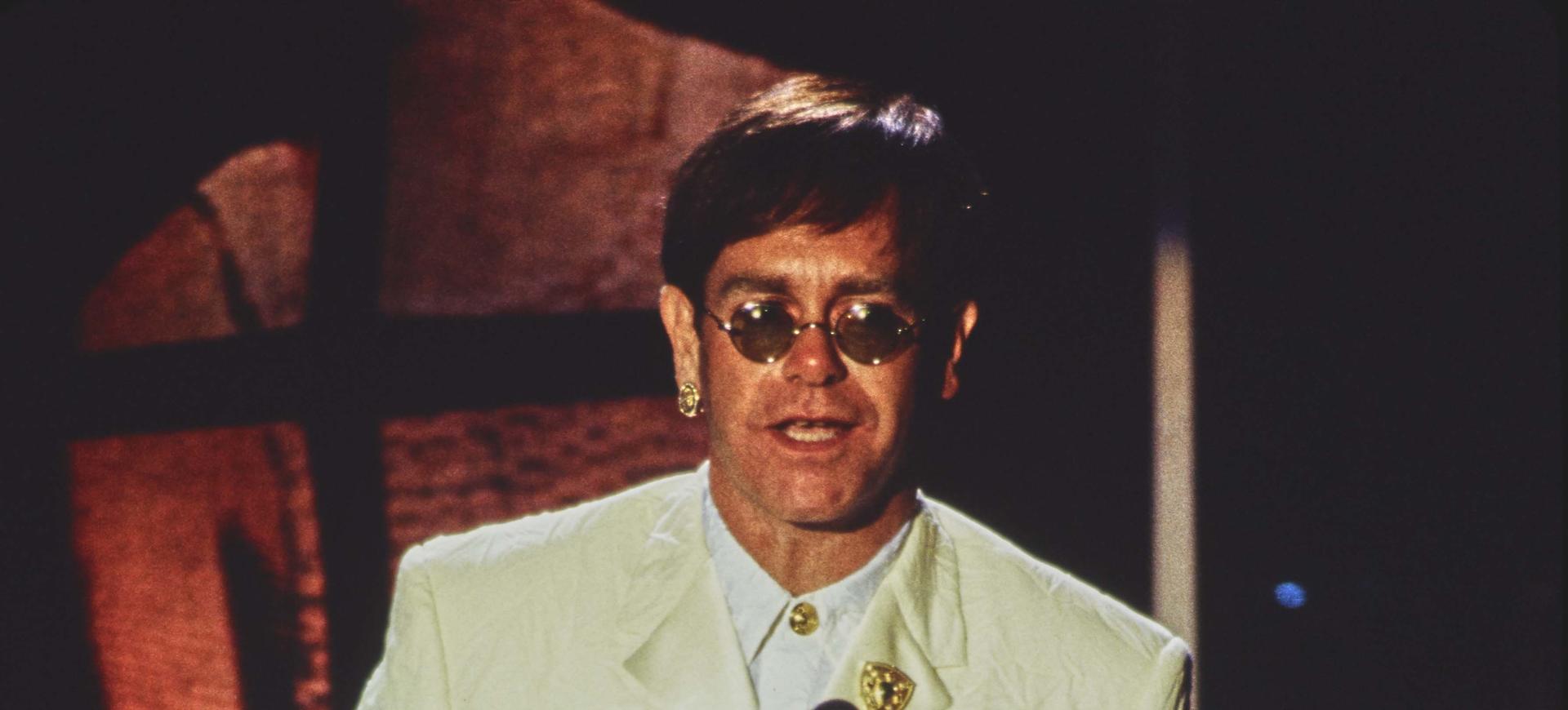
Rod Stewart

Induction Year: 1994

Induction Category: Performer


Inductee: Rod Stewart (vocals; born January 10, 1945)

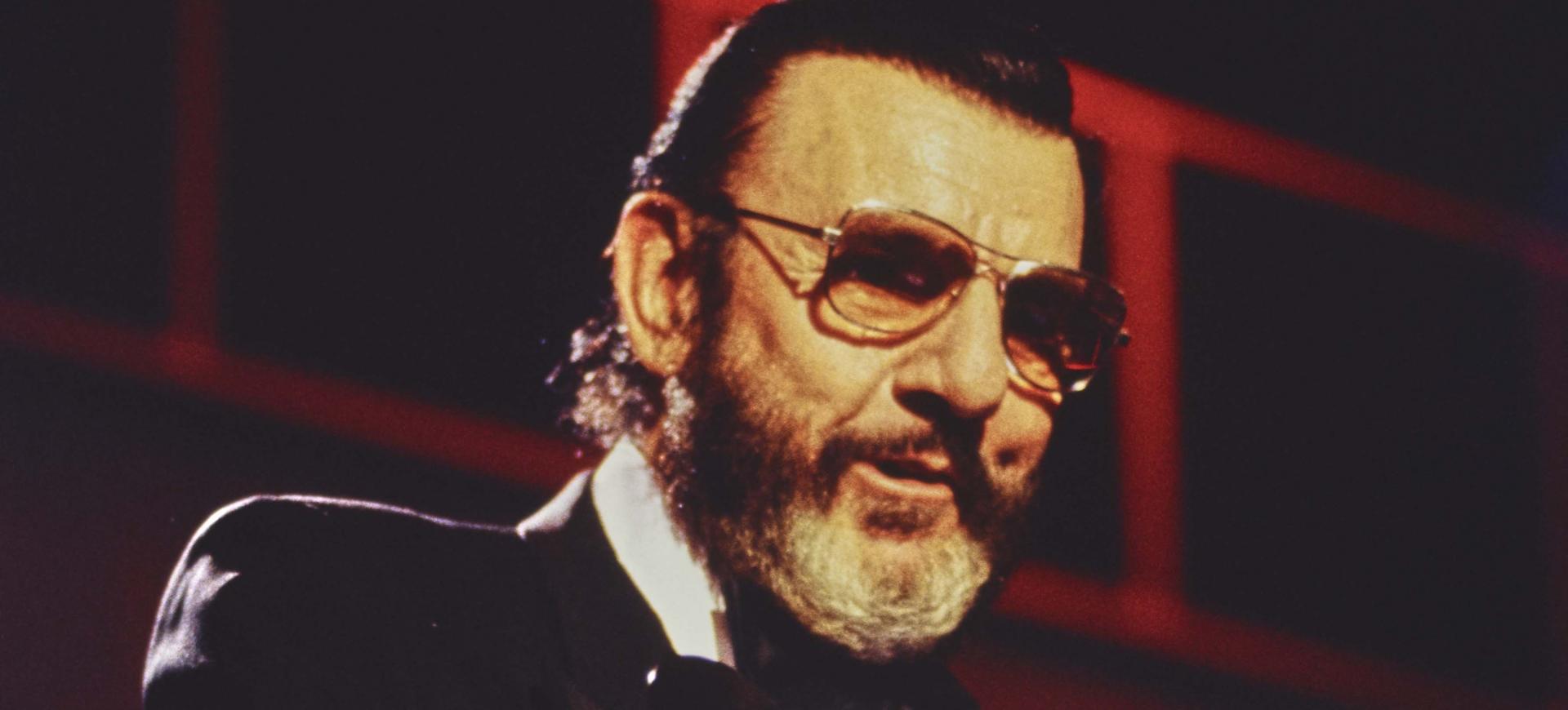
Rod Stewart can be regarded as the rock generation’s heir to . Like Cooke, Stewart delivers both romantic ballads and uptempo material with conviction and panache, and he sings in a warm, soulful rasp. A singer’s singer, Stewart seemed made to inhabit the spotlight. The London-born Stewart’s long-lived career extends back to 1964, when he cut his first record (the blues standard “Good Morning Little Schoolgirl"). Soon after, he began turning up in mid-Sixties R&B bands: as Long John Baldry’s Hoochie Coochie Men, Steampacket and Shotgun Express. Stewart really came into his own as the singer with the Jeff Beck Group, the guitarist’s post-Yardbirds ensemble, formed in 1968. From there, Stewart graduated to the Small Faces. He and guitarist Ron Wood joined founding members Ian McLagan, Ronnie Lane and Kenney Jones in the wake of Steve Marriott’s departure, and the Small Faces - which soon adopted the shortened name Faces - became an enormously popular touring group, rivaling for rollicking, good-natured rock and roll.

At the same time, Stewart inaugurated one of the great musical juggling acts of all time. He launched a parallel career as a solo artist, developing a distinctive voice and persona over the course of a brilliant string of albums that included The Rod Stewart Album (1969), Gasoline Alley (1970), Every Picture Tells a Story (1971) and Never a Dull Moment (1972). These four superlative solo albums were released in consecutive years. At the same time, Stewart served as the Faces’ frontman, contributing significantly to four fine group albums released during the same spell: First Step (1970), Long Player (1971), A Nod Is as Good as a Wink...to a Blind Horse (1971) and Ooh La La (1973). In short, Stewart was the main artist or frontman for eight albums released during a four-year period – an output remarkable for its quality and quantity. Has anyone in rock and roll ever been both so prolific and so superb during an equivalent span?

Stewart’s great talent resides in his synthesis of American soul (, ) and folk (, Ramblin’ Jack Elliott) influences, into which he distilled his own life experiences as a British-born busker and bohemian. Stewart’s solo career effectively went into orbit with the 1971 release of “Maggie May,” an enduring rock classic with a rustic, ramshackle style. It was his first charting single in the U.S. and it stayed at #1 for five weeks. It came from his third solo album, Every Picture Tells a Story, which is a rock classic and Stewart’s finest hour. His first five albums – The Rod Stewart Album, Gasoline Alley, Every Picture Tells a Story, Never a Dull Moment and Smiler – appeared in a yearly procession between 1969 and 1974 on the Mercury label, and many consider this to be his best work.

Stewart’s career did reach a divide with the album Atlantic Crossing in 1975, which found him recording for a new label (Warner Bros.) and newly relocated to America. By this time, the Faces had undergone a period of disarray as a prelude to disbanding. For Stewart, the picaresque tales and rootsy, knockabout rock and roll of his first five solo albums - not to mention his work with the Faces, especially on Long Player and A Nod Is as Good as a Wink (to a Blind Horse) - were largely behind him. He thereupon confidently assumed the mantle of glamorous Seventies rock star, anteing up such boudoir-minded love songs as “Tonight’s the Night” (a #1 hit for eight weeks in 1976) and discofied rockers like “Da Ya Think I’m Sexy” (a #1 hit for five weeks in 1981).

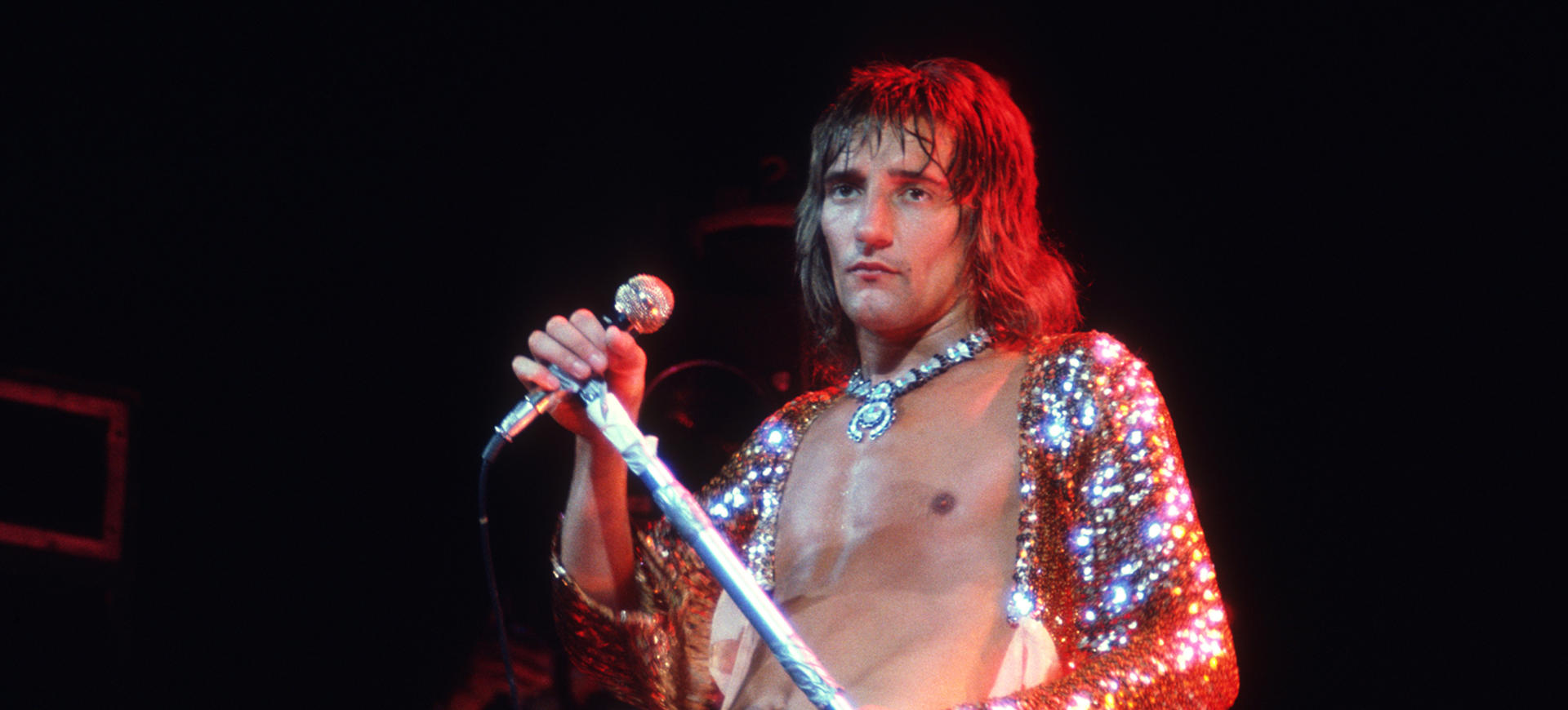
In concert, he’d twirl mike stands and kick soccer balls into the audience while strutting across stages in flashy garb. Though critics occasionally looked askance at his music and persona in the wake of his Atlantic crossing, the public stood by him every step of the way. Stewart charted hit singles and platinum albums in nearly every year from 1970 through 1995, and his paced has slowed only slightly since then. He has proved a remarkably durable talent who has been single-mindedly committed to his music, touring tirelessly and recording prolifically.

Through it all, Stewart has never failed to rise to the occasion in the presence of a great song. He’s asserted himself across the decades as a masterful songwriter ("Maggie May,” “You’re in My Heart,” “Young Turks") and skilled interpreter. Over the years, numbers originally associated with the likes of ("[I Know] I’m Losing You"), ("Have I Told You Lately"), Tom Waits ("Downtown Train"), ("Angel") and the Sutherland Brothers ("Sailing") have been definitely rendered by Stewart in his expressive and soulful voice.

His career came full circle in 1993 when he recorded Unplugged...and Seated for MTV’s “Unplugged” series, reuniting with his erstwhile collaborator, Ron Wood, for a run-through of vintage material. In 1998, he recorded one of his strongest albums in years, When We Were the New Boys, which harked back to the rough-and-tumble rock of the Faces era while paying respect to newer acts who’d come along in their wake, such as Oasis, Graham Parker and . In 2001 came Human, a more contemporary-minded production.

TIMELINE

January 10, 1945: Roderick David Stewart (a.k.a. Rod Stewart) is born in London.

October 4, 1964: Rod Stewart’s first single, “Good Morning Little School Girl,” is released in Britain. It fails to chart and Stewart will not, in fact, make the Top Forty as a solo artist until the 1971 release of “Reason to Believe”/”Maggie May.”

June 22, 1968: The Jeff Beck Group, featuring Beck, Rod Stewart, Ron Wood and Mickey Waller, makes its American performance debut at the Fillmore East in New York City.

August 24, 1968: The Jeff Beck Group, featuring Rod Stewart on lead vocals, releases its debut album, ‘Truth.’ It fails to chart in the U.K. but reaches #15 in the U.S.

July 12, 1969: ‘Beck-Ola,’ the second album by the Jeff Beck Group (with Rod Stewart on vocals), enters the U.S. album charts. Like it’s predecessor, ‘Truth,’ it reaches #15.

September 10, 1969: Vocalist Rod Stewart and bassist Ronnie Wood leave the Jeff Beck Group to join the Small Faces (later amended to, simply, the Faces). Wood reverts from bass to guitar, his original instrument.

November 9, 1969: Rod Stewart releases his first solo album, entitled An Old Raincoat Won’t Ever Let You Down in the U.K. and The Rod Stewart Album in the U.S.

November 19, 1969: Rod Stewart releases his first solo album, entitled ‘An Old Raincoat Won’t Ever Let You Down’ in the U.K. and ‘The Rod Stewart Album’ in the U.S.

April 17, 1970: ‘First Step,’ the first album by the re-formed Small Faces, with Rod Stewart and Ron Wood having replaced vocalist/guitarist Steve Marriott, is released.

June 20, 1970: Rod Stewart’s second album, ‘Gasoline Alley,’ enters the U.S. charts, where it will peak at #27. The album contains the favorites “It’s All Over Now,” “Cut Across, Shorty” and the title track.

June 19, 1971: Almost exactly a year to the day after the appearance of ‘Gasoline Alley’, Rod Stewart releases his self-produced masterpiece, ‘Every Picture Tells a Story.’ It tops the Billboard album chart for four weeks.

September 2, 1971: “Maggie May” b/w “Reason to Believe,” by Rod Stewart, becomes a double-sided hit, topping the singles chart for the first of five weeks.

September 16, 1972: ‘Never a Dull Moment,’ Rod Stewart’s fourth solo album, hits #1 in the U.K. It will reach #2 in the U.S. and launch a pair of hit singles in both countries: “You Wear It Well” (#13 U.S., #1 U.K.), “Angel” (#40 U.S., #4 U.K.).

September 8, 1975: Rod Stewart pointedly references his move from England to America with a new album (’Atlantic Crossing’) for a new label (Warner Bros.)

November 13, 1976: “Tonight’s the Night (Gonna Be Alright),” by Rod Stewart, tops the singles chart for the first of seven weeks.

May 21, 1977: “First Cut Is the Deepest,” Rod Stewart’s interpretation of a Cat Stevens songs, is lodged at #1 in the U.K., holding the Sex Pistols’ “God Save the Queen” at bay.

February 10, 1979: Rod Stewart’s “Da Ya Think I’m Sexy?” tops the singles charts for the first of four weeks. It owns the distinction of being the first 48-track 12-inch disco remix.

1979: 13 of the 23 #1 songs are disco, including Rod Stewart’s “Da Ya Think I’m Sexy?”, Blondie’s “Heart Of Glass”, and Michael Jackson’s “Don’t Stop ‘Til You Get Enough”; “Disco Demolition Night” at Chicago’s Comiskey Park, hosted by Steve Dahl, spearheads “Disco Sucks” movement

November 14, 1980: Rod Stewart kicks off his first tour in three years, supporting a strong new album (’Tonight I’m Yours’) that yields another pair of hits: “Tonight I’m Yours (Don’t Hurt Me)” (#20 U.S., #8 U.K.) and “Young Turks” (#5 U.S., #11).

February 19, 1981: “Passion,” from Rod Stewart’s ‘Foolish Behaviour’ album, hits #5.

July 24, 1984: “Infatuation,” from Rod Stewart’s ‘Camouflage’ album, hits #6. “Some Guys Have All the Luck,” from the same album, follows it into the Top Ten in October.

July 15, 1985: Rod Stewart and Jeff Beck team up for a version of Curtis Mayfield’s “People Get Ready,” which appears on Beck’s album ‘Flash.’

December 2, 1989: Rod Stewart’s version of Tom Waits’ “Downtown Train” enters the Top Forty, where it will peak at #3 – his highest showing in more than a decade. It is also his 25th Top Forty U.S. single.

January 13, 1990: ‘Storyteller/The Complete Anthology: 1964-1990,’ by Rod Stewart, peaks at #54. Released the previous month, this career-spanning box set goes on to sell double platinum.

April 7, 1990: Rod Stewart’s recut version of the Isley Brothers’ “This Old Heart of Mine,” with Ronald Isley on duet vocals, enters the Top Forty.

April 13, 1991: Rod Stewart releases ‘Vagabond Heart,’ which will peak at #10 – his most successful showing since ‘Blondes Have More Fun’ topped the chart in 1979. Hit singles: “Rhythm of My Heart” (#5), “The Motown Song” (#10), “Broken Arrow” (#20).

February 5, 1993: Rod Stewart tapes an “MTV Unplugged” appearance, which airs on May 5th.

June 12, 1993: The CD version of Rod Stewart’s “Unplugged” session, entitled ‘Unplugged...And Seated,’ hits #2 for the first of five weeks.

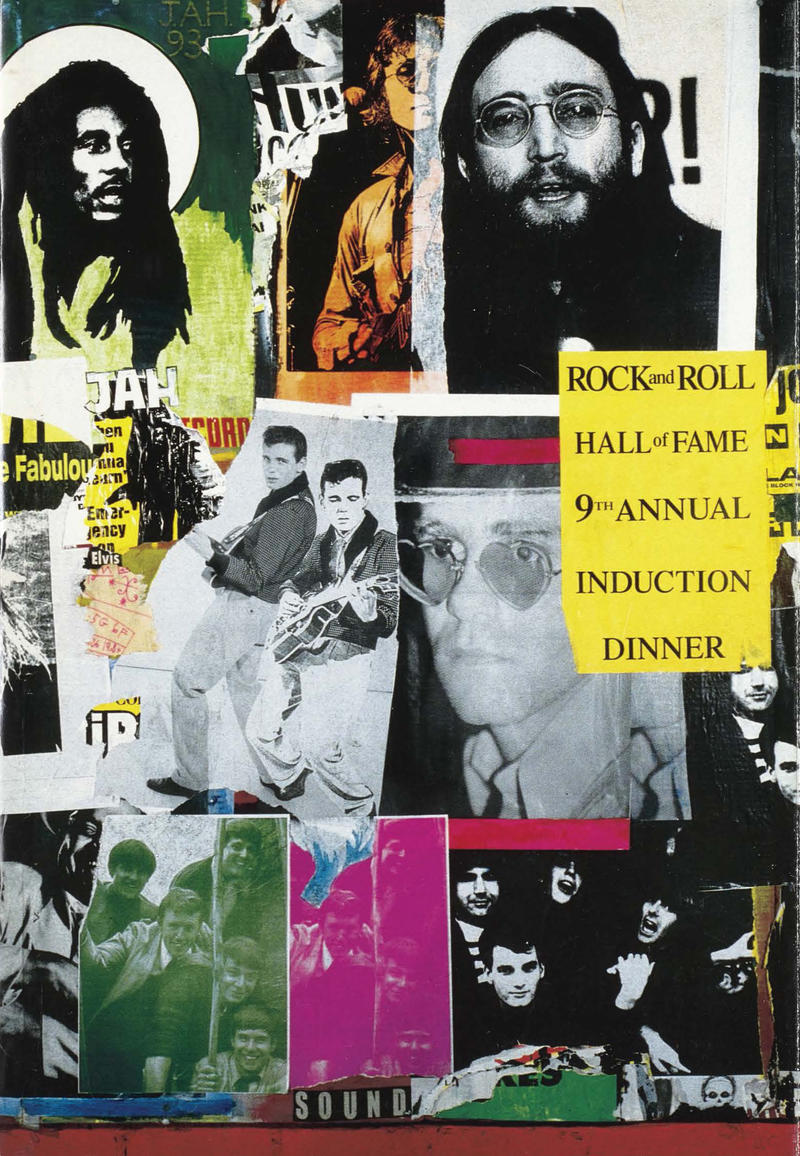
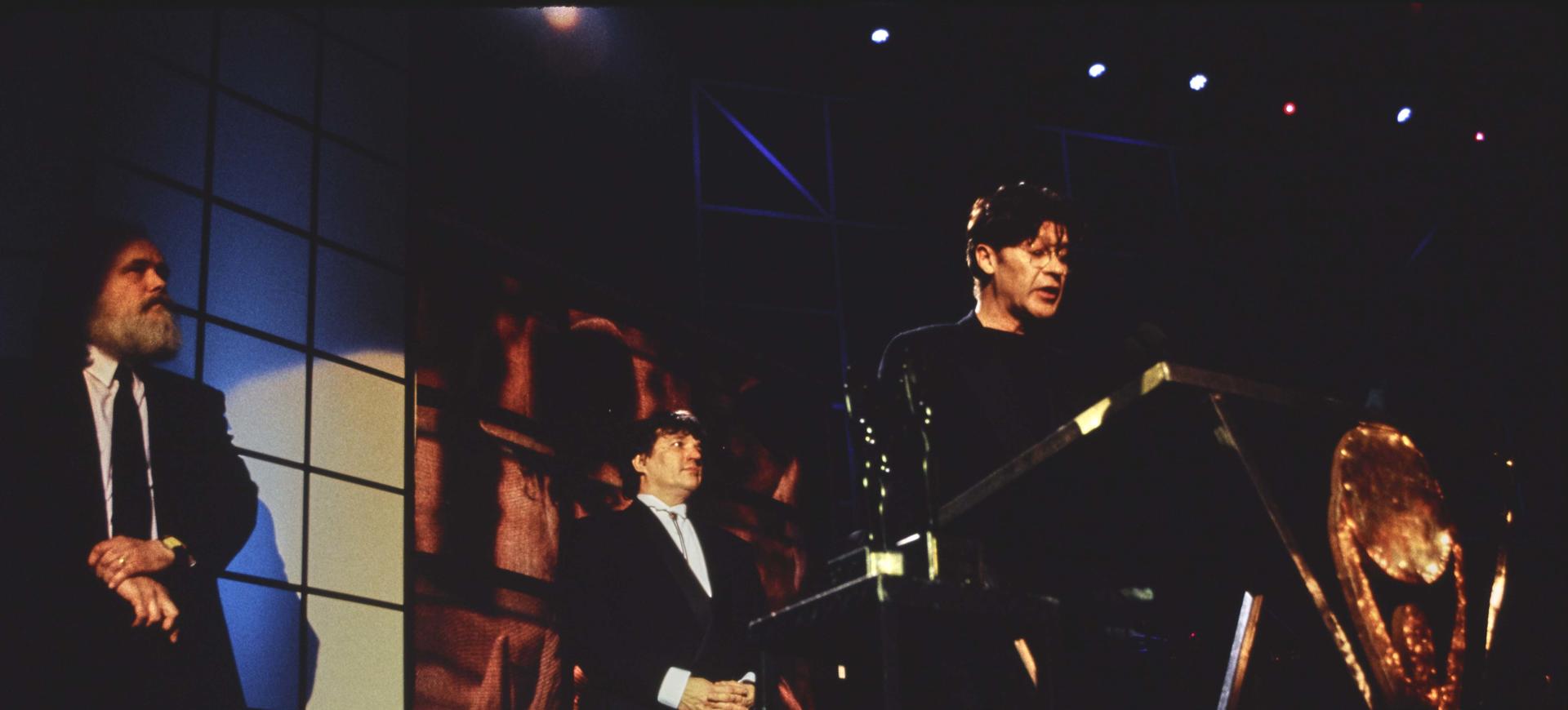
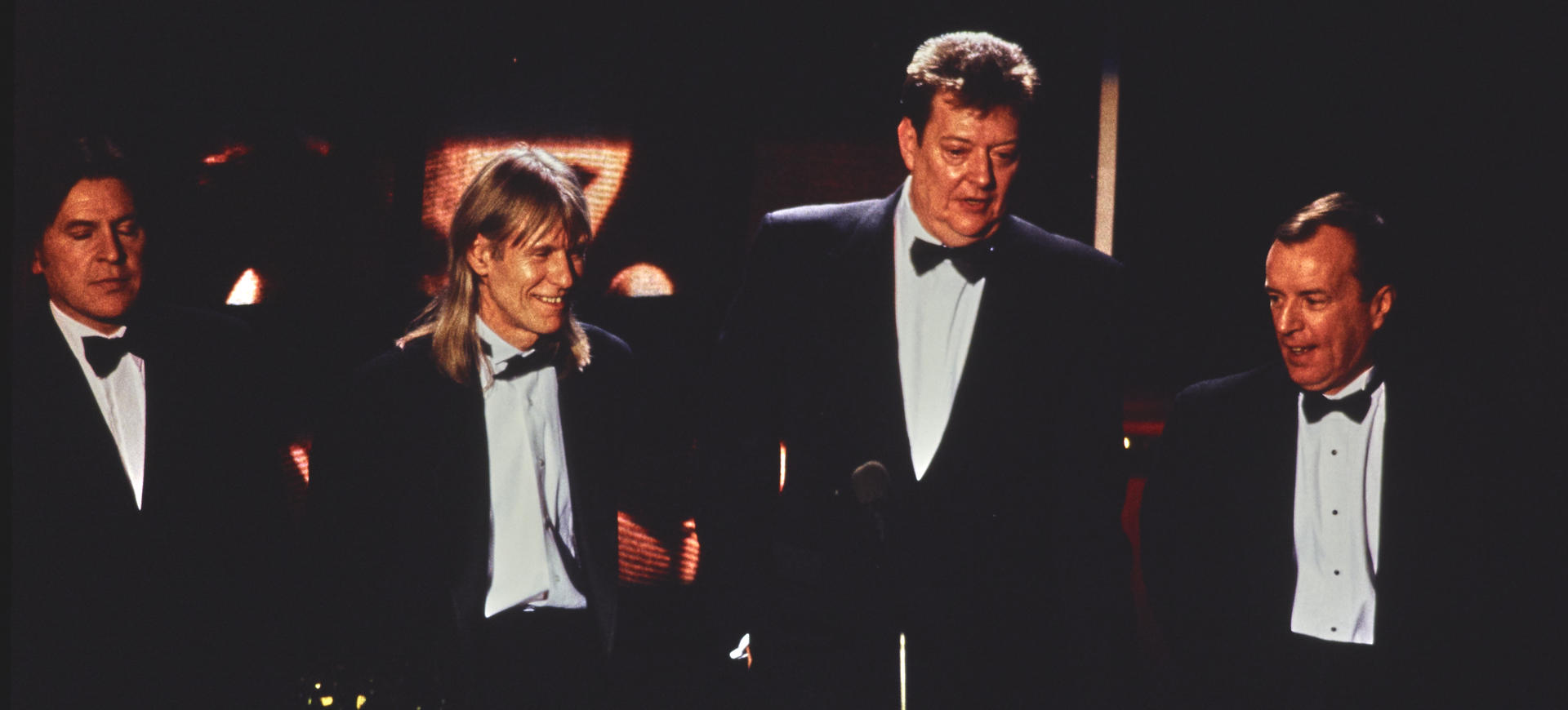
January 19, 1994: Rod Stewart is inducted into the Rock and Roll Hall of Fame at the ninth annual induction dinner. Jeff Beck is his presenter. Stewart himself misses the ceremony because of the Los Angeles earthquake two days earlier.

June 27, 1994: Rod Stewart’s ‘Greatest Hits, Volume I & II’ receives its third platinum certification from the Recording Industry Association of America, signifying sales of more than 3 million copies.

December 31, 1994: Rod Stewart performs on Copacabana Beach in Rio de Janeiro for an audience of 4.2 million people. He make into the Guinness Book of World Records for staging the largest outdoor concert in history.

May 19, 1998: Rod Stewart releases ‘When We Were the New Boys,’ which contains songs by Oasis, the Waterboys, , Graham Parker and Nick Lowe – as well as the Faces and Stewart himself.

November 14, 2000: Rod Stewart releases ‘Human,’ the 21st album of his career – not counting best-ofs, compilations and repackagings or his work with the Faces (five albums) and Jeff Beck Group (two albums). Whew!

Essential Recordings

Maggie May
Tonight’s the Night (Gonna Be Alright)
Every Picture Tells a Story
You Wear It Well
You’re In My Heart (The Final Acclaim)
Gasoline Alley
Reason to Believe
First Cut is the Deepest
Have I Told You Lately That I Love You
I Don’t Want to Talk About It

Recommended Reading


Rod Stewart: The Biography
Ray Coleman. London: Trafalgar Square, 1996.

Rod Stewart
Paul Nelson and Lester Bangs. New York: Delilah Books, 1981.

“Rod Stewart’s Early Years: The Story That Every Picture Tells.”
Dave Thompson. Goldmine (May 15, 1992): 8-15+.

The Rod Stewart Companion
Edward Wincentsen. Pickens, SC: Wynn Publishing, 2001.


Al Green's White Leather Jacket With Embroidery

Photo by Design Photography
Collection of Al Green