Rock and Roll Hall of Fame and Museum

Sex Pistols

Induction Year: 2006

Induction Category: Performer


Inductees: Johnny Rotten (vocals; born January 31, 1956), Paul Cook (drums; born July 20, 1956), Steve Jones (guitar; born May 3, 1955), Glen Matlock (bass; born August 27, 1956), Sid Vicious (bass; born May 10, 1957, died February 2, 1979)

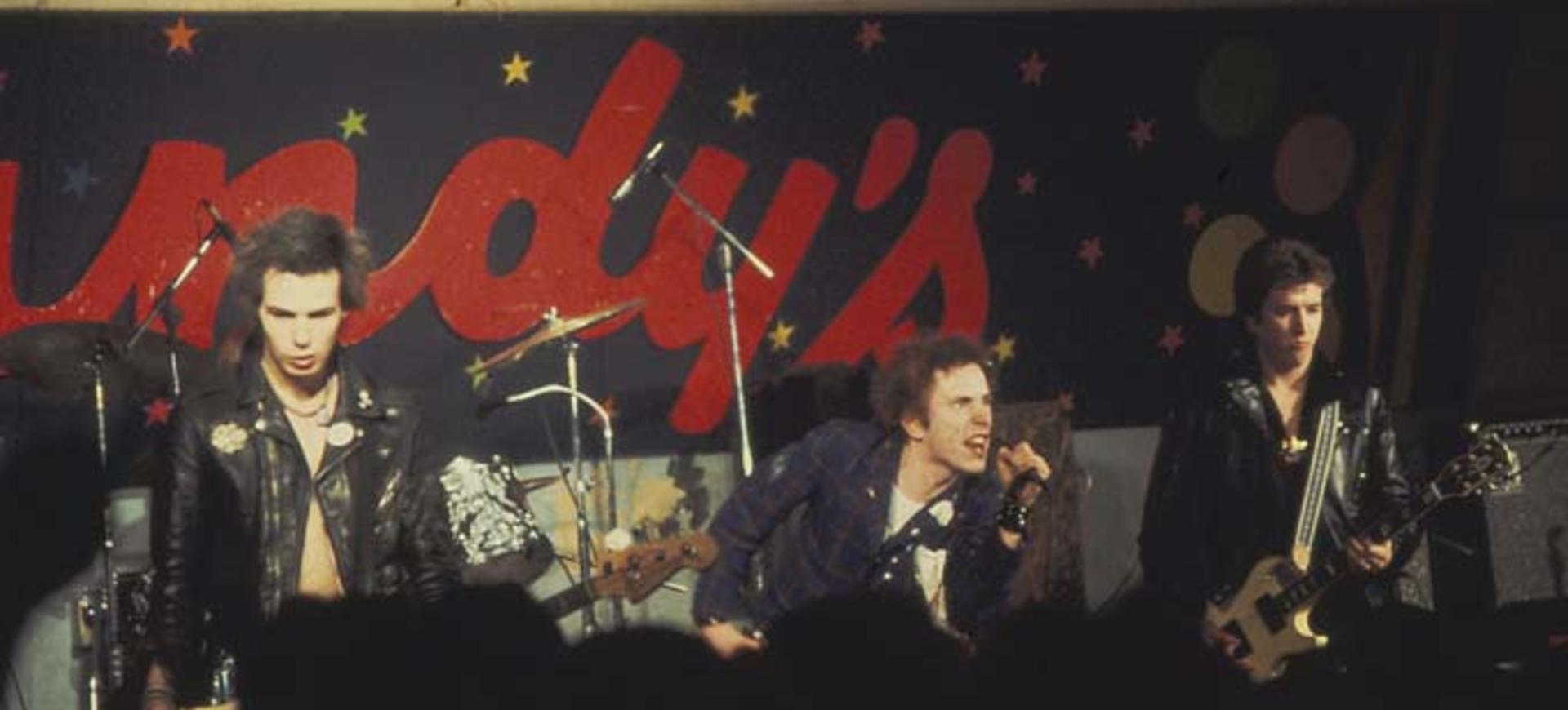
Rock and roll was never the same after the Sex Pistols. They ignited the punk-rock revolution in Britain, and the reverberations carried to all corners of the rock and roll world. Expressing the cynical, restive mood of youthful Britons, the Sex Pistols restored a sense of danger to rock music. This wasn’t the theatrical danger of Alice Cooper’s onstage guillotine but the very real possibility of injury to the body and a jolt to the senses. At Sex Pistols concerts during their two-year British heyday - from their first show on November 6, 1975, through the end of 1977 - there was gobbing (spitting), fistfights, flying bottles and insults hurled in both directions.

There was also gloriously loud, venomous rock and roll that took dead aim at whatever subjects incited vocalist Johnny Rotten’s ire, from British royalty (“God Save the Queen”) to record companies (“EMI”). They also unleashed the splenetic rock and roll anthem “Anarchy in the U.K.” The anarchy commenced in 1975, when Rotten hooked up with guitarist Steve Jones, bassist Glen Matlock and drummer Paul Cook at an outré London clothing shop called Sex. It was run by Malcolm McLaren and Vivienne Westwood, who became the Sex Pistols’ manager and would-be Svengali, plotting their conquest of recession-era Britain using controversy and confrontation.

Even without McLaren’s machinations, Johnny Rotten was a one-man publicity department who stated his views plainly and defiantly. Early in their career, Rotten had this to say about the Sex Pistols and the mainstream audience: “The great ignorant public don’t know why we’re in a band. It’s because we’re bored with all that old crap. Like every decent human being should be.”

“Actually, we’re not into music, we’re into chaos,” opined guitarist Jones.

The Sex Pistols were signed and quickly dropped by two major labels, EMI and A&M, with only the brief release of “Anarchy” emerging from either. (The group got to keep their enormous advances, however.) They wound up on Virgin Records, where they issued a viscerally powerful and stunning series of singles that rank among the most noteworthy events in rock history. In certain quarters, they were comparable in reach and impact to Elvis Presley’s Sun singles of the Fifties. These earth-shaking 45s were, in order: “Anarchy in the U.K.,” “God Save the Queen,” “Pretty Vacant” and “Holidays in the Sun.”

For a spell, every move the Sex Pistols made resulted in headlines and controversy. As word spread about the group, shows were canceled and bans implemented. The negative publicity only enhanced their notoriety. A few words of televised profanity uttered by group members after goading by a disapproving tea-time talk-show host resulted in screaming front-page headlines in the British press: “The Filth and the Fury!” and “Punk? Call It Filthy Lucre.”

The Sex Pistols shocked and scandalized the island nation, which was beleaguered by poverty, unemployment, workers’ strikes and the death of empire. The punks’ overt hostility, especially in the year of the Queen’s Silver Jubilee (1977), offended a country that had always taken pride in its mannerly ways. In effect, the Sex Pistols announced that the niceties were over. “God Save the Queen” found Rotten excoriating the Queen (“She ain’t no human being”). The song concluded with the chant “no future,” a taunt that could just as easily apply to the monarchy as Britain’s oppressed and unemployed. “God Save the Queen” went to #2 in Britain. By now, Matlock had been fired for “liking the Beatles” and replaced by John Simon Beverley (a.k.a. Sid Vicious), giving the group an even more menacing image.

Never Mind the Bollocks...Here’s the Sex Pistols, was issued in Britain in October 1977, where it quickly hit Number One. It fared somewhat less well in the U.S., where it peaked at a lowly #107 and then dropped off after 12 weeks. The Sex Pistols came to America for a bizarrely plotted seven-date tour through the South and Southwest. Their very presence in the country incited excitement and protest, and their crazed juggernaut concluded at the Winterland in San Francisco, whereupon the group broke up. “Ever get the feeling you’ve been cheated?” were Rotten’s last words from the stage as a Sex Pistol. He went on to form Public Image, Ltd. and reclaim his birth name (John Lydon).

Jones and Cook kept the Sex Pistols’ name alive for several more singles, including one made in Brazil with an on-the-lam Ronnie Biggs, who was among the gang that carried out Britain’s notorious Great Train Robbery. Sid Vicious took up residence in New York, where he attempted a solo career. It yielded the single “My Way,” a punky, sarcastic remake of Frank Sinatra’s hoary chestnut, and the album Sid Sings. He and his manager-girlfriend Nancy Spungeon lived out a tragic, drug-soaked pas de deux at the Chelsea Hotel that culminated in Spungeon’s fatal stabbing. While out on bail for murder charges, Vicious himself died of a heroin overdose. (The biographical movie Sid and Nancy was made about their decline and fall.)

Malcolm McLaren oversaw a fictionalized Sex Pistols film biography, The Great Rock and Roll Swindle, directed by Julian Temple and released in 1980. Johnny Rotten was conspicuously uninvolved, having plunged himself into a new group, Public Image Ltd. The double-album soundtrack that came out in Britain featured several early Sex Pistols recordings, later singles and live cuts. While marred by the inclusion of novelty numbers, it served to complement Never Mind the Bollocks in telling the band’s deliriously reckless story.

The tale of Sex Pistols might’ve ended there, except for the fact that the group’s stature kept growing as the extent of their achievement sunk in. What these four penniless punks had done was shock and upend the music industry, reclaiming by force of will a place within it for those who were young, restless, bored and angry. Punk-rock has never gone away since the Sex Pistols threw down the gauntlet, surviving over the decades as rock’s most combative and vital subgenre. It is hard to imagine Green Day’s “American Idiot” without the Sex Pistols’ “God Save the Queen” having come before it, and that is true of countless punk-rock recordings.

Given the reverence for the Sex Pistols’ legacy - Never Mind the Bollocks was judged the Number Two album of all time by the editors of Rolling Stone - it is perhaps not surprising that they reunited for a 20th anniversary tour. Still not lacking in black humor or pretending to conceal their motives, they dubbed this 1997 outing the “Filthy Lucre Tour,” and the ensuing live recording was entitled Filthy Lucre Live. It featured the original lineup of Johnny Rotten, Steve Jones, Paul Cook and Glen Matlock. They sounded (God forbid) musically tight and eager to please. If the very idea of a Sex Pistols cash-in tour motivated by punk-rock nostalgia went against the grain...well, isn’t that exactly what the Sex Pistols had always done best?

TIMELINE

May 3, 1955: Steve Jones, guitarist for the Sex Pistols, is born in London, England.

January 31, 1956: John Lydon (a.k.a. Johnny Rotten), vocalist for the Sex Pistols and Public Image Ltd., is born in London, England.

July 20, 1956: Paul Cook, drummer for the Sex Pistols, is born in London, England.

August 27, 1956: Glen Matlock, the original bassist for the Sex Pistols, is born in London, England.

May 10, 1957: John Simon Beverley (a.k.a. Sid Vicious), who replaces bassist Glen Matlock in the Sex Pistols, is born.

November 1976: EMI releases “Anarchy in the U.K.,” by the Sex Pistols, in the U.K..

December 1, 1976: The Sex Pistols’ appear as guests on Bill Grundy’s dinner-hour TV show, Today. The host provokes a confrontation that degenerates into profanity and shocks the British people.

January 12, 1977: The Sex Pistols are dropped by EMI and “Anarchy in the U.K.” is withdrawn. The group does get to keep their advance of 40,000 British pounds, however.

March 10, 1977: The Sex Pistols are signed to A&M Records for 50,000 British pounds and released a week later for another 25,000 British pounds after incidents of “vandalism” at the label’s London offices.

December 10, 1977: Never Mind the Bollocks, Here’s the Sex Pistols enters the U.S. charts for the first of twelve weeks that will see it peak at #106 on Billboard’s album chart. The American version of the album adds one song, “Sub-Mission,” to the U.K. original’s eleven tracks.

January 5, 1978: The Sex Pistols begin a seven-date U.S. tour at Atlanta’s Great Southeast Music Hall.

January 14, 1978: The Sex Pistols perform the final show of their U.S. tour at San Francisco’s Winterland and then break up amid chaos and acrimony.

October 12, 1978: Sid Vicious of the Sex Pistols stabs girlfriend Nancy Spungeon to death in their room at the Chelsea Hotel in New York City. Both were heroin addicts.

February 2, 1979: Sid Vicious, erstwhile bassist for the Sex Pistols, dies of a heroin overdose at a party in New York City while out on bail from charges he’d murdered his girlfriend, Nancy Spungeon.

March 26, 1992: The Sex Pistols’ Never Mind the Bollocks, Here’s the Sex Pistols is certified platinum (one million copies sold) by the RIAA.

March 18, 1996: The Sex Pistols announce a reunion tour. All four original members - Johnny Rotten, Steve Jones, Paul Cook and Glen Matlock - are on-board for the three-and-a-half month “Filthy Lucre Tour,” which yields the album Filthy Lucre Live.

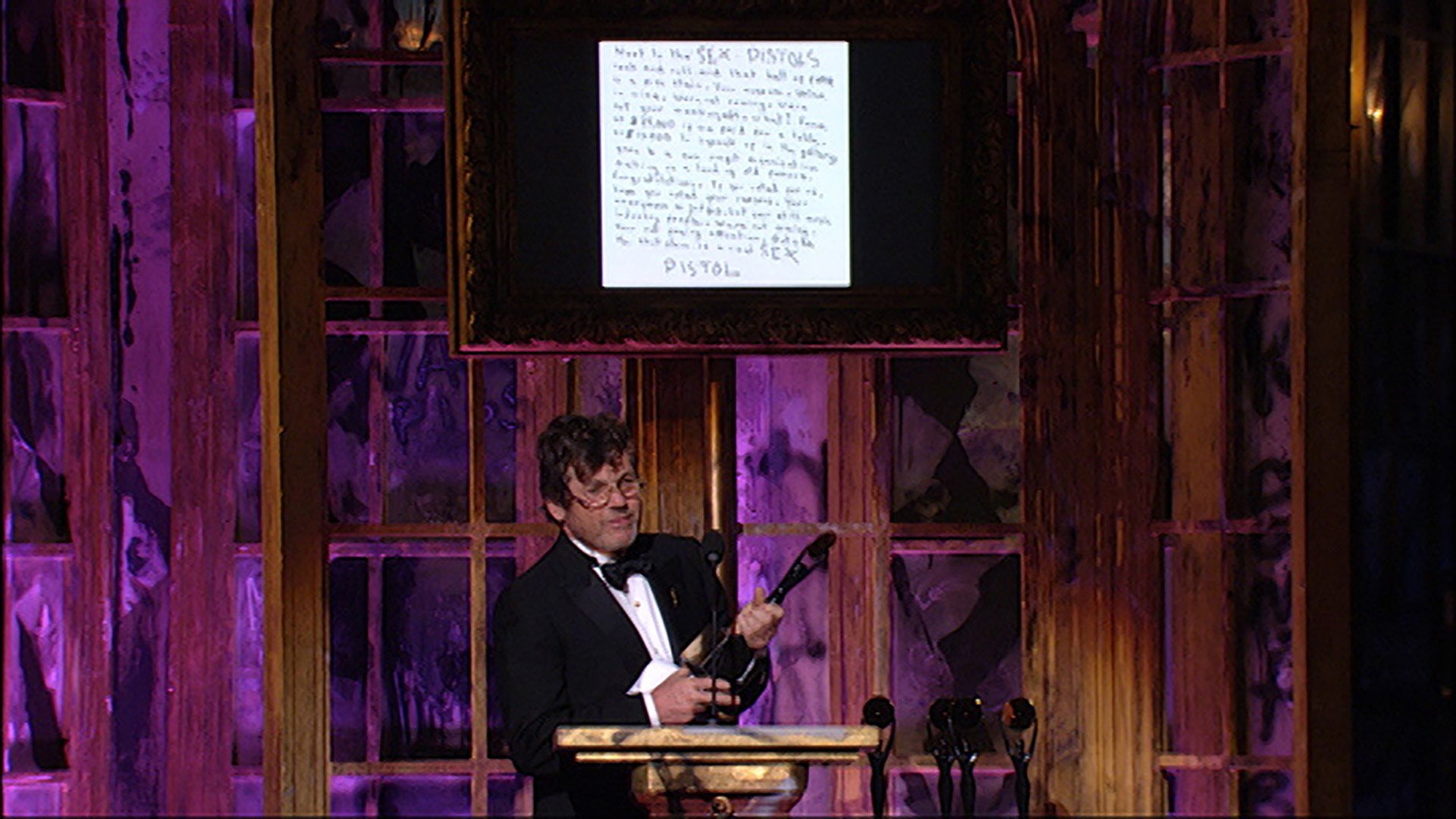
February 24, 2005: The Sex Pistols post a handwritten note on their website announcing that they will not be attending their induction into the Rock and Roll Hall of Fame.

Essential Songs

Anarchy in the U.K.
God Save the Queen
Pretty Vacant
Holidays in the Sun
No Feelings
Body
EMI
Problems
Liar
Did You No Wrong

Recommended Reading

Never Mind the Icons, Heres the Bollocks: How the Sex Pistols Changed the World, Not Necessarily to Their Advantage.”
Jo-Ann Greene. Goldmine (October 25, 1996): 18-72.

Rotten: No Irish - No Black - No Dogs.
Johnny Lydon with Keith Zimmerman. New York: St. Martins Press, 1994.

I Was a Teenage Sex Pistol.
Glen Matlock with Peter Silverton. London: Faber & Faber, 1990.

Englands Dreaming: Anarchy, Sex Pistols, Punk Rock and Beyond.
Jon Savage. New York: St. Martins Press, 1992.

Rock Is Sick and Living in London: A Report on the Sex Pistols.
Charles M. Young. Rolling Stone (October 20, 1977): 68-75.


Lloyd Price Singles (On The Specialty Label)

"Forgive Me Clawdy," "Baby Please Come Home," "Rock 'n' Roll Dance"

Photo by Design Photography
Collection of Lloyd Price