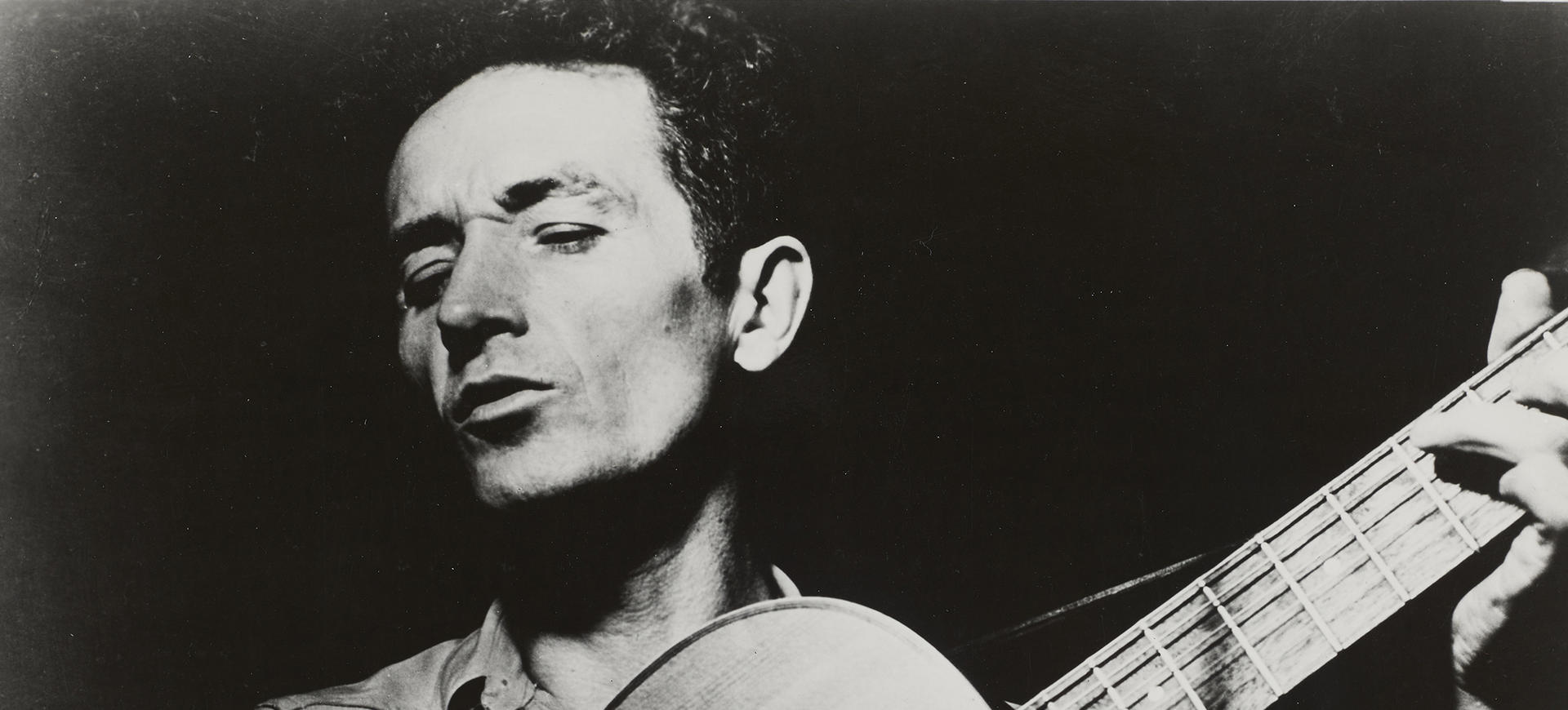
Woody Guthrie
Induction Year: 1988
Induction Category: Early Influence
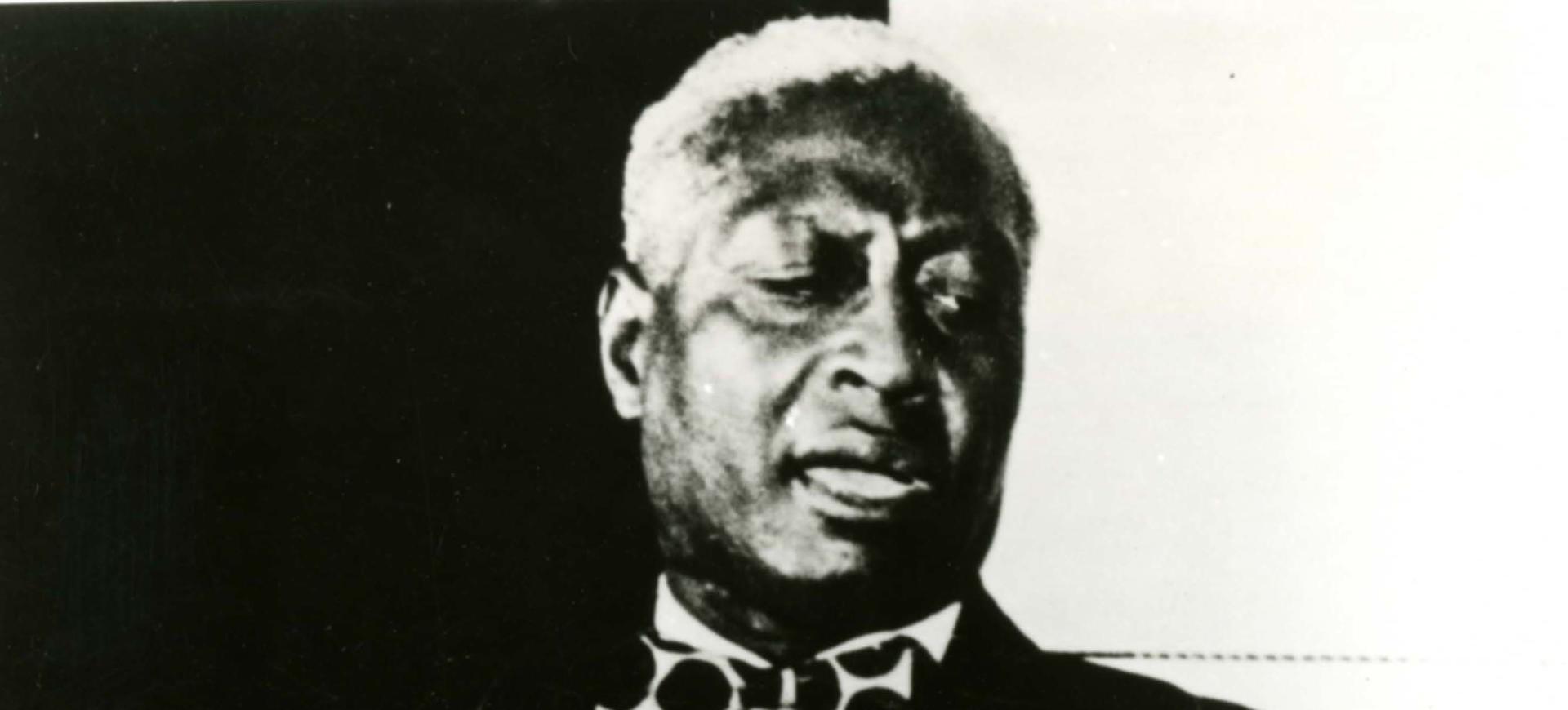
"Woody Guthrie is the original folk hero. It was Guthrie who, in the Thirties and Forties, transformed the folk ballad into a vehicle for social protest and observation. In so doing, he paved the way for Bob Dylan, Bruce Springsteen and a host of other folk and rock songwriters who have been moved by conscience to share experiences and voice opinions in a forthright manner. Guthrie wrote literally hundreds of songs, including such revered classics as “This Land Is Your Land,” “So Long, It’s Been Good to Know You,” “Grand Coulee Dam,” “I Ain’t Got No Home” and “Dust Bowl Refugees.” The colorful life he led became as legendary as the songs he wrote. Fueled by a boundless curiosity about the world, Guthrie hit the road during the Depression, hitchhiking and riding the rails across the Midwest and Far West. From those experiences came source material for his songs and a lifelong commitment to radical politics.
Woodrow Wilson Gurthrie was born on July 14th, 1912, in Okemah, Oklahoma. His father was a real-estate broker who fell on hard times, and his mother suffered from Huntington’s Chorea, a genetic nerve disorder that led to her death in a state mental hospital. Guthrie learned how to play guitar, mandolin, fiddle and harmonica in his adolescence. He also read and wrote voraciously, drew cartoons and painted. In the Thirties, Guthrie traveled and slept among migrants, hobos and Dust Bowl refugees, accumulating the life experiences that fueled his songs and stories (as well as an autobiography, Bound for Glory). By decade’s end, his populist convictions led him to embrace communism, although he was denied membership in the Communist Party because he refused to renounce religion.
Arriving in New York in 1940, Guthrie took the city’s left-wing community by storm. He performed on network radio, wrote a column for the Communist Daily Worker, played at strikes and rallies, and recorded prolifically for the Folkways label. All the while, the self-taught folksinger studied politics, economics, science and religion. By mid-decade, Guthrie began experiencing bouts of depression and disorientation that signaled the onset of Huntington’s Chorea (the genetic disorder that had afflicted his mother). His health slowly deteriorated and he was eventually confined to hospitals, where he was visited by young admirers like Bob Dylan When he died on October 3rd, 1967, Guthrie left behind three wives, eight children (including folksinger Arlo Guthrie) and about a thousand songs.”
TIMELINE
July 14, 1912: Woody Guthrie was born.
1933: Woody Guthrie releases ‘The Science of Sound.’
1941: Pete Seeger and Woody Guthrie assemble the Almanac Singers.
October 3, 1967: Woody Guthrie died of Huntington’s Chorea in Queens, NY.
January 20, 1968: A tribute concert to folksinger Woody Guthrie is held at New York’s Carnegie Hall. Featured artists include Bob Dylan, The Band, Judy Collins and Richie Havens.
1988: Woody Guthrie is inducted into the Rock and Roll Hall of Fame.
September 1, 1996: Woody Guthrie is honored at the Rock and Roll Hall of Fame and Museum’s American Music Masters series.
Essential Recordings
This Land Is Your Land
Pretty Boy Floyd
Pastures of Plenty
This Train Is Bound for Glory
I Ain’t Got No Home
Dusty Old Dust (So Long, It’s Been Good to Know Yuh)
Do-Re-Mi
Talkin’ Dust Bowl Blues
Deportee (Plane Wreck at Los Gatos)
Grand Coulee Dam